What an Adjustable Conveyor Bracket Does
An adjustable conveyor bracket is the mounting frame that holds idler rollers under a conveyor belt and lets maintenance crews change the trough angle without replacing the whole idler set. In a quarry, a cement plant, or a power plant coal yard, the same bracket frame can usually be set to 20, 30, 35, or 45 degrees, so a single spare part covers several positions on the line. The adjustable conveyor bracket is a support component, not a drive or tail pulley, and it should not be confused with those parts.
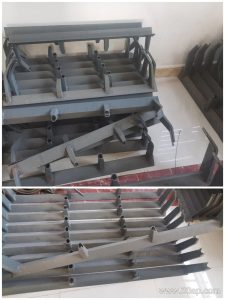
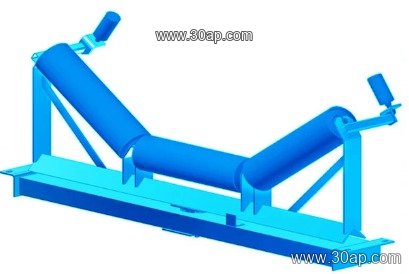
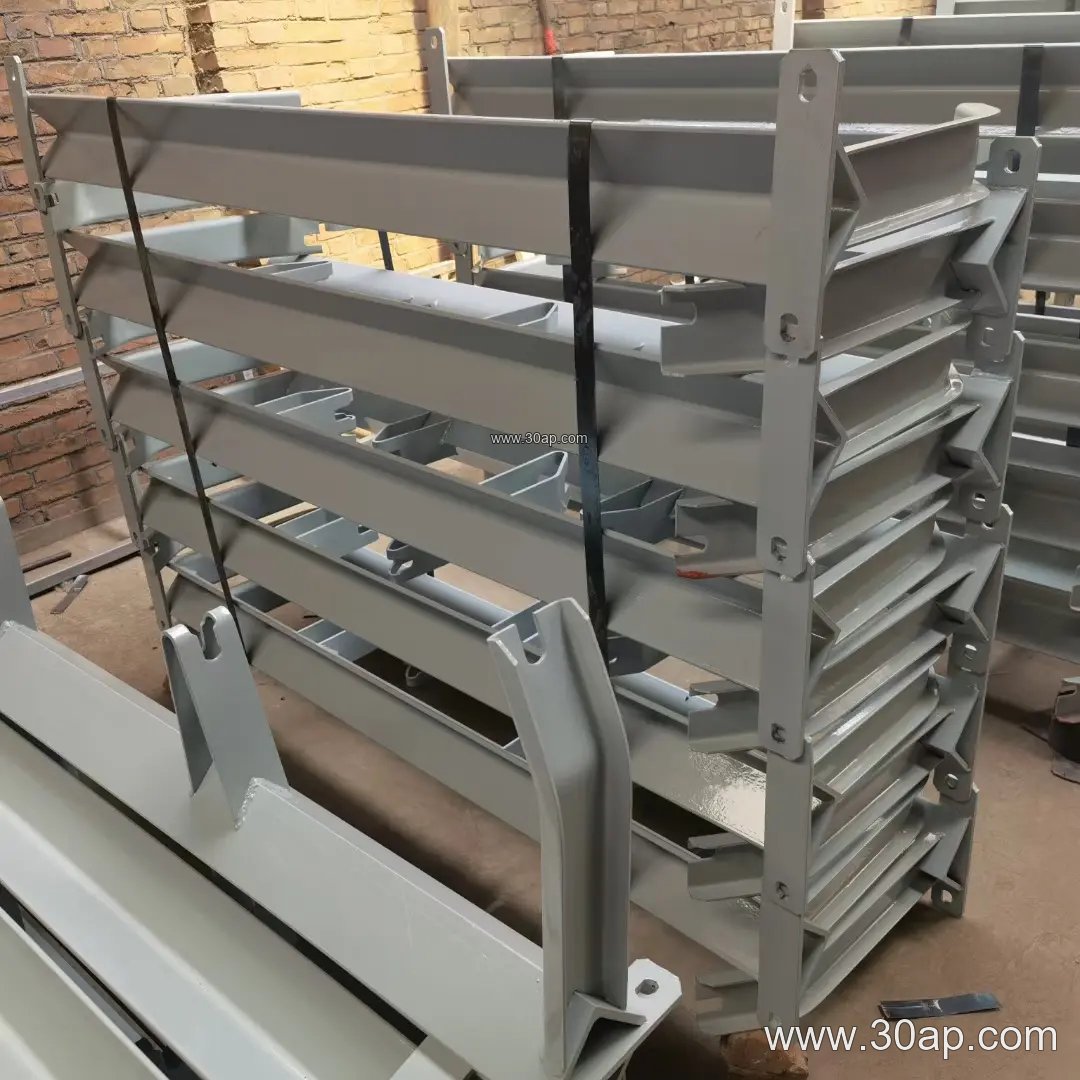
The frame is commonly fabricated from angle steel, channel steel, or folded steel plate. Slotted holes or pivoting arms carry the roller shafts, and locking bolts hold the chosen angle. Because the bracket position sets the belt profile, small changes here affect belt training, material spillage, and roller loading along the whole conveyor.
Where It Fits on the Conveyor
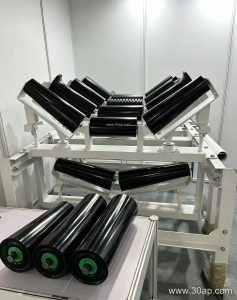
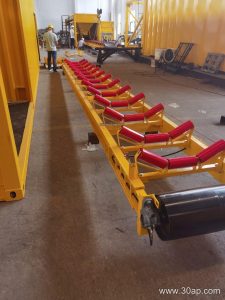
Adjustable brackets appear in several positions. Carry-side trough brackets hold three rollers in a trough. Transition brackets sit near the head and tail and ease the belt from flat to troughed. Return brackets and V-return brackets support the empty strand. Impact brackets go under loading points where rock or ore falls onto a heavy-duty mining conveyor belt. Self-aligning brackets work with training rollers to correct drift.
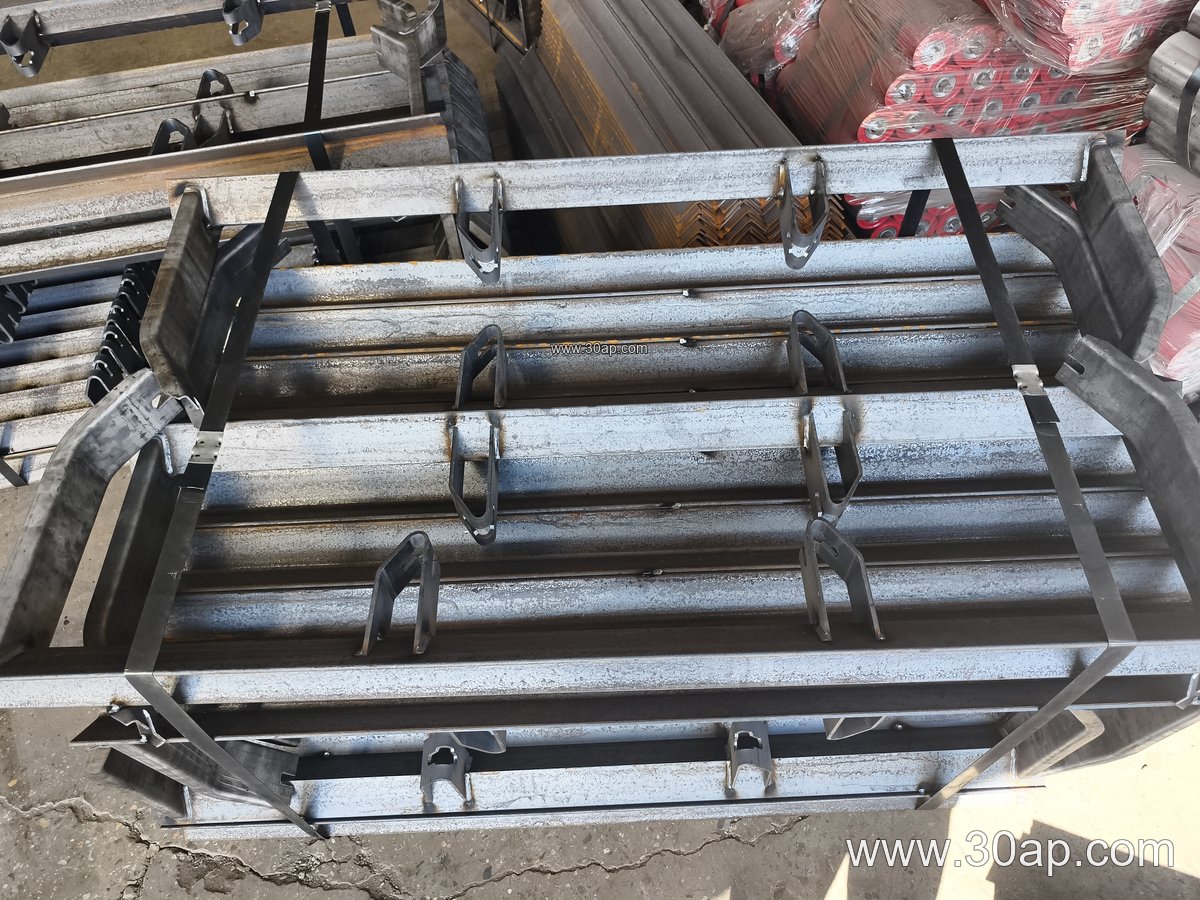
- Carry-side trough bracket with slotted arms for angle adjustment
- Transition bracket near drive and take-up zones
- Return and V-return bracket for the empty belt
- Impact bracket under crusher discharge and transfer chutes
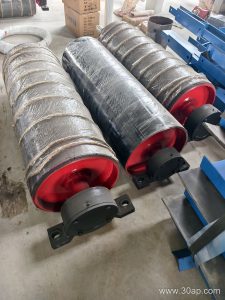
Driving, tail, and bend pulleys are separate assemblies with their own bearing housings; they are not interchangeable with a bracket, and the bracket does not replace them.
Trough Angle, Belt Width, and Roller Diameter
Belt width, trough angle, and roller diameter form a set that is decided by the conveyor design. A B800 belt at 35 degrees with Ø108 rollers is a common arrangement, as is B1200 at 45 degrees with Ø133 rollers or B650 at 30 degrees with Ø89 rollers. These are examples, not fixed rules: one belt width can be paired with more than one trough angle or roller diameter depending on capacity, material, and transition length.
Mounting hole spacing and beam length follow the belt width and the selected angle, so they are confirmed per project rather than taken as a constant. Typical roller diameters in these frames include Ø89, Ø108, Ø133, Ø159, and Ø194.
| Belt Width | Common Trough Angle | Typical Roller Diameter |
|---|---|---|
| B500 | 20–30 degrees | Ø89 |
| B650 | 30–35 degrees | Ø89 / Ø108 |
| B800 | 30–35 degrees | Ø108 |
| B1000 | 35 degrees | Ø108 / Ø133 |
| B1200 | 35–45 degrees | Ø133 |
| B1400 | 35–45 degrees | Ø133 / Ø159 |
| B1600 | 35–45 degrees | Ø159 |
| B1800 | 35–45 degrees | Ø159 / Ø194 |
Values are for reference; final selection follows conveyor design.
Working With the Belt and Rollers
On a fabric core conveyor belt or an EP conveyor belt, a well-set trough angle keeps the load centered and reduces edge wear. On a steel cord conveyor belt running at high tension, the transition bracket setting matters more, because a sharp change from flat to troughed can overstress the belt edges. In a coal mining conveyor belt installation, flame retardant conveyor belt grades are usual, and the bracket must not create pinch points that damage covers.
For sticky material in a sand and gravel line, a 20-degree or 30-degree setting may shed fines better than a deep trough. Where a chevron conveyor belt or a corrugated sidewall conveyor belt is used, check clearance between cleats and bracket arms before tightening. The bracket, idler roller, and conveyor pulley should be checked together during alignment work.
Buyer Checklist
- Confirm belt width and the angle range the frame must cover.
- Match roller shaft size and mounting hole spacing to the existing idler roller set.
- State the material and finish, for example hot-dip galvanized or painted steel.
- For underground coal mining conveyor belt lines, confirm that bracket and roller parts meet the site’s fire and anti-static requirements.
- Ask whether the design allows later angle changes without cutting or welding.
For related components such as conveyor bracket assemblies, idler roller sets, and conveyor pulley units, buyers at www.beltconveyorparts.com often compare frame drawings before ordering. A clear drawing of the adjustable conveyor bracket, with hole spacing and angle stops marked, prevents most installation problems at the mine, plant, or port.