What a Striped Lagged Pulley Is
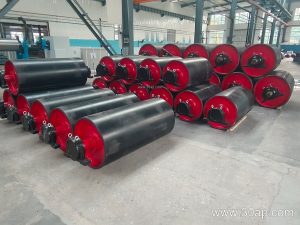
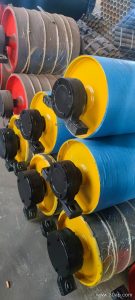
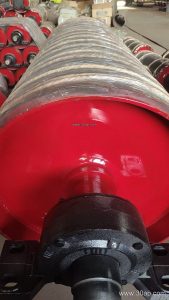
A striped lagged pulley is a conveyor pulley whose shell is covered with a rubber or ceramic lagging that carries a striped surface pattern. The stripes usually run in a chevron or diagonal arrangement, and their main job is to improve grip between the pulley and the conveyor belt while giving water, dust, and fines a path to escape. In bulk handling plants, this type of pulley is often specified as a striped lagged drum or a grooved lagging pulley, but it remains the same product: a pulley with a patterned lagging surface.
The striped pattern is not just decorative. On a drive pulley, the raised stripes press into the belt cover and increase friction; the grooves between them reduce the chance of material build-up that could cause belt misalignment. Because the pattern is cut or molded into the lagging, it also helps the pulley shed water in wet conditions, which is useful in wash-down areas and outdoor conveyors.
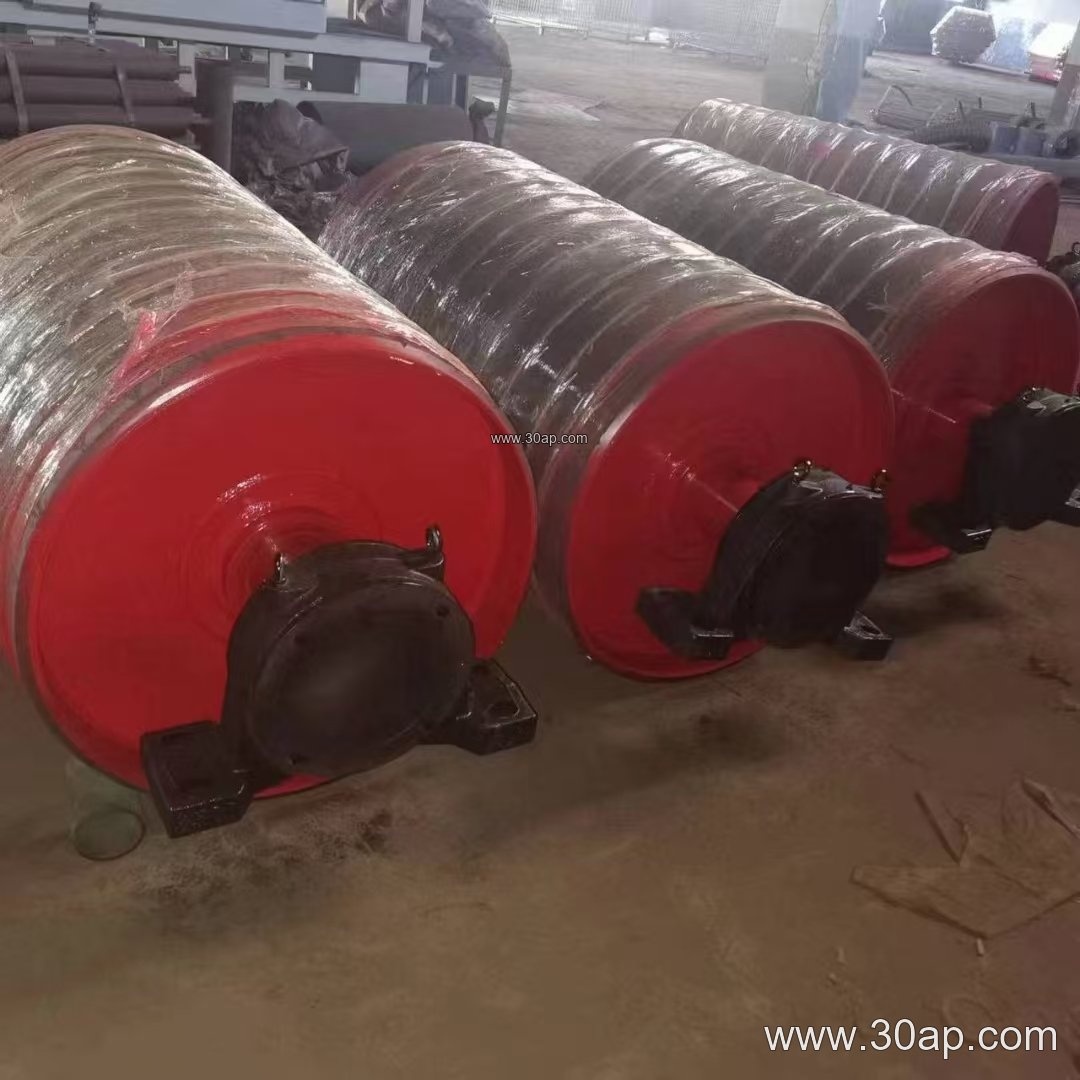
Construction and Surface Options
Most striped lagged pulleys start with a welded steel shell and hub assembly. The lagging is applied either as cold-bonded rubber, hot-vulcanized rubber, or in some cases ceramic tiles set into a rubber matrix. Striped patterns are commonly produced by molding or grooving the rubber surface. Typical lagging thicknesses range from 8 mm to 20 mm, and the stripe depth is usually a few millimeters. The shell width is normally wider than the belt — for example, a B800 belt often runs on a pulley face around 950 mm, and a B1200 belt on a face around 1400 mm. Diameters are selected by torque and belt tension, not by belt width alone; common pulley diameters include Ø500, Ø630, Ø800, and Ø1000, while shaft diameters may range from Ø80 to Ø180 depending on the load case.
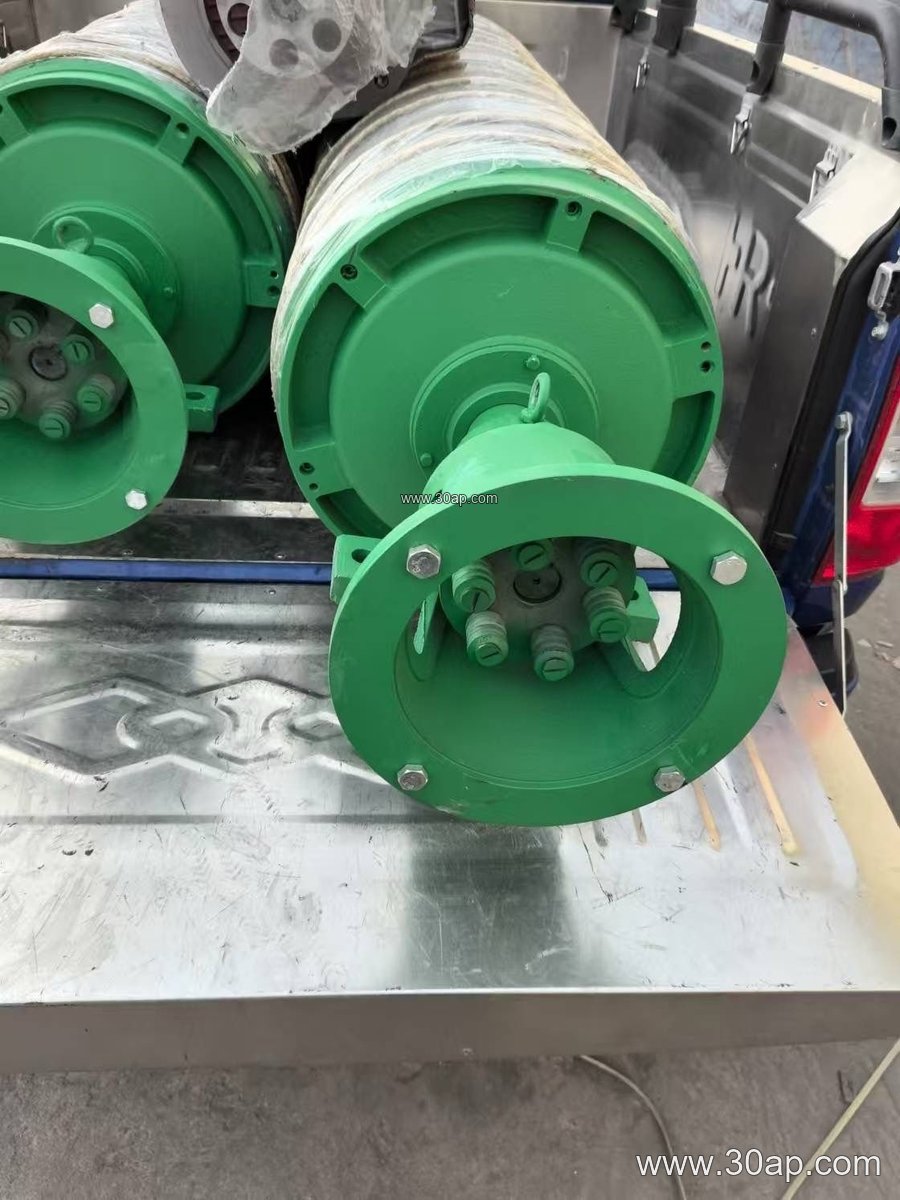
Buyers should note that a striped lagged pulley can be supplied as a drive pulley, tail pulley, or bend pulley, but these are different positions with different duties. A drive pulley needs maximum traction, while a bend pulley mainly changes belt direction and may use a lighter lagging pattern. The striped surface is most often chosen for drive and tail positions where slip and material carry-over are concerns.
Where It Fits in the Plant
You will see striped lagged pulleys in quarry and aggregate lines, cement plants, coal washing stations, and power plant coal handling systems. In a limestone crushing circuit, a striped lagged drive pulley helps keep the conveyor belt moving when the load is wet or uneven. In a coal preparation plant, the pattern reduces slip caused by fine coal dust. The same pulley style is also used on export conveyors at ports and in fertilizer and grain silo operations where cleanliness and drainage matter.
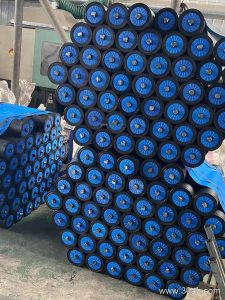
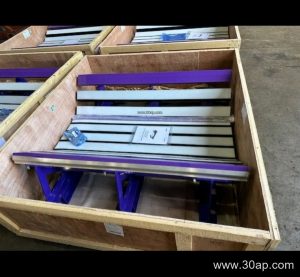
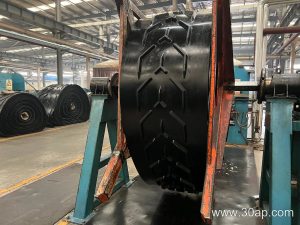
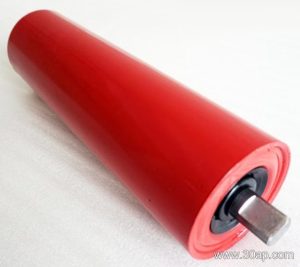
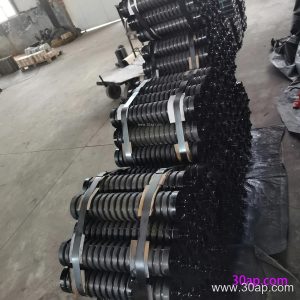
These pulleys work together with the conveyor belt, idler roller, and conveyor bracket. A typical conveyor frame may include a striped lagged pulley at the head, a wing pulley at the tail, and a series of carrying idlers. For abrasive bulk materials, the belt itself might be a Rubber Conveyor Belt or an Abrasion Resistant Conveyor Belt, while heavy-duty mining duties often call for a Steel Cord Conveyor Belt or a Flame Retardant Conveyor Belt. The pulley lagging should be matched to the belt cover hardness and the amount of slip expected.
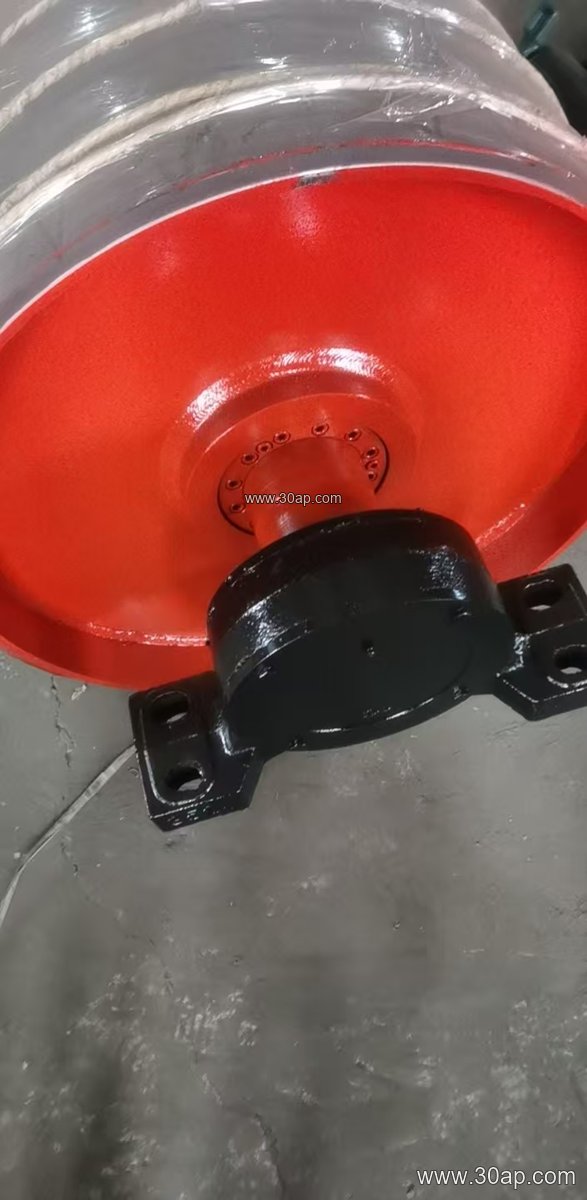
Selection and Maintenance Notes
When specifying a striped lagged pulley, provide the belt width, pulley diameter, shaft diameter, lagging thickness, and the required surface pattern. A common combination might be B1000 × Ø800 with 12 mm striped rubber lagging, or B1400 × Ø1000 with 15 mm lagging. Do not assume a fixed shaft size from belt width; shaft diameter is determined by torque, bearing life, and pulley load. Also, avoid mixing up pulley types: a drive pulley is not a tail pulley, and a bend pulley is not a tension pulley. Each has its own place in the conveyor.
Inspection should focus on stripe wear and lagging bond. Worn stripes reduce traction and can lead to belt slip, especially on inclined conveyors. Check for loose lagging edges, embedded material, and uneven wear across the face. Keep the pulley face clean and ensure the conveyor bracket and bearing housings are aligned. For more information on related conveyor components, visit www.example.com/conveyor-pulley or www.example.com/idler-roller.