What a Rubber Spiral Idler Does on a Conveying Line
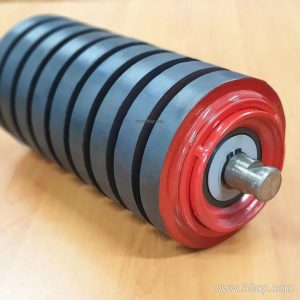
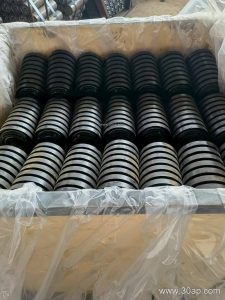
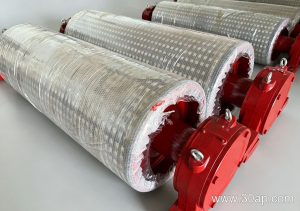
A rubber spiral idler is a return-side roller wrapped with a helical rubber profile around its shell. Instead of a plain steel surface, the spiral ribs contact the underside of the belt and continuously scrape off fines, dust and moist carryback. In a quarry, a coal washing plant or a cement plant, this small detail matters because sticky material that clings to the return strand builds up on plain rollers, causes belt tracking problems and shortens roller life. The rubber spiral idler, also called a spiral return roller with rubber covering, is a practical answer to that everyday housekeeping problem.
How the Roller Is Built
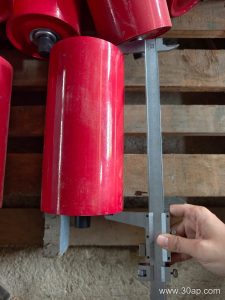
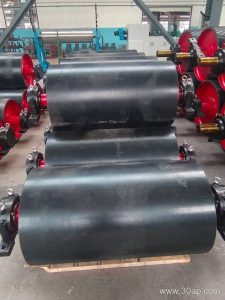
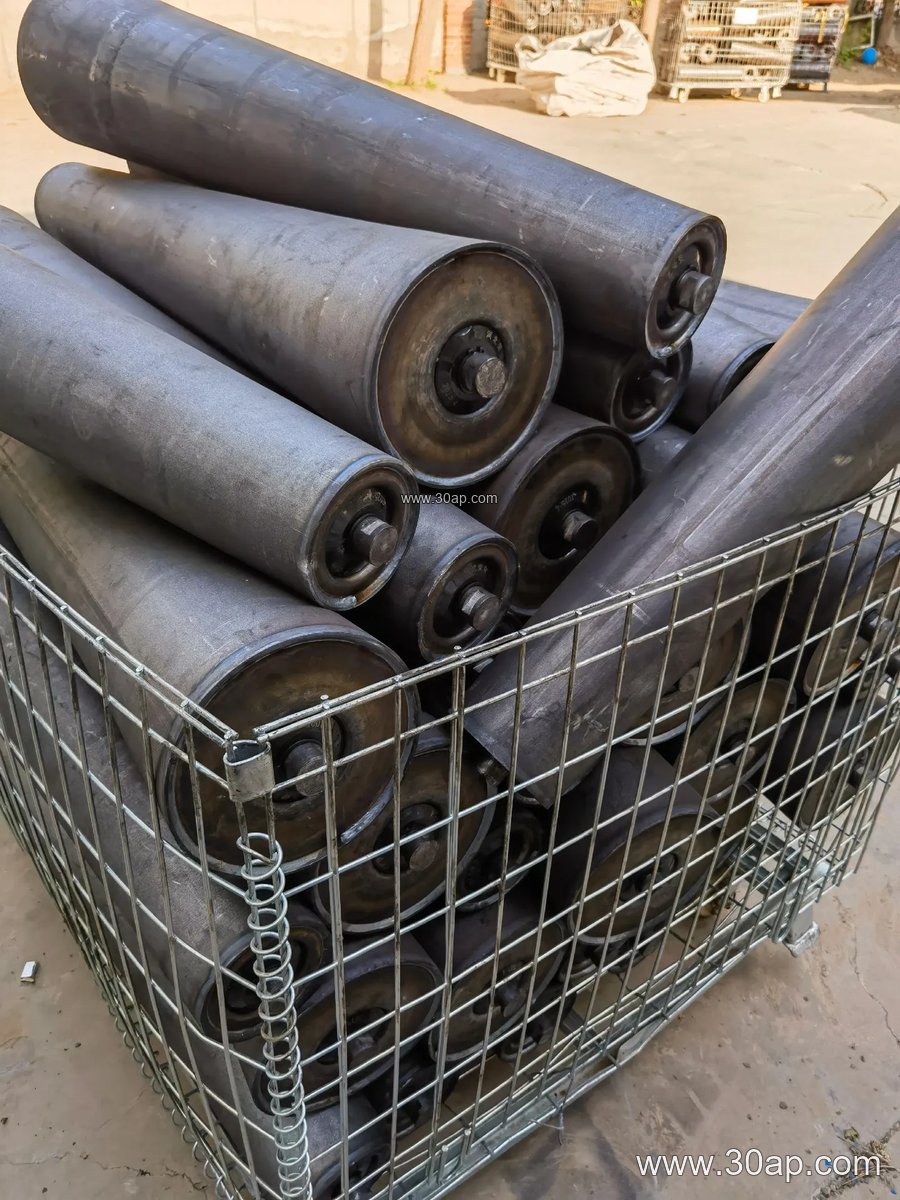
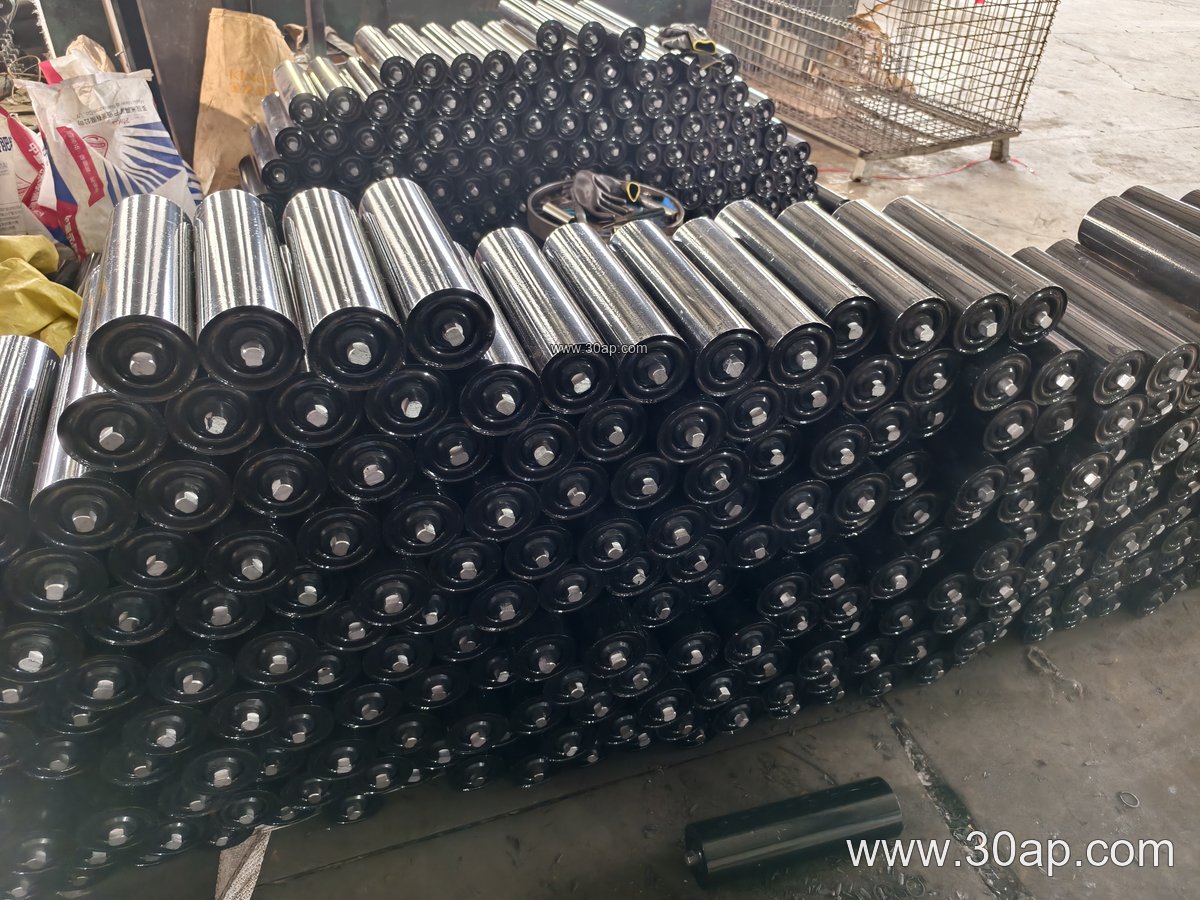
The core is usually a steel tube fitted with sealed bearings and a shaft, and the outer surface carries a moulded rubber spiral. The helix can be a single-start or double-start pattern, and the rubber grade is normally chosen for abrasion resistance rather than for carrying load. Common roll diameters include Ø89, Ø108, Ø127, Ø133 and Ø159 mm, while bearing sizes such as 6204, 6205, 6305, 6306 and 6308 appear across the range. Roll length follows belt width and frame design, so a B650 or B800 conveyor will use shorter rolls than a B1200 or B1400 line. The spiral should be inspected as a return component, not confused with a drive pulley, tail pulley or bend pulley, which perform completely different duties.
Structure at a Glance
- Steel shell with moulded rubber spiral ribs
- Sealed bearing housing and through shaft
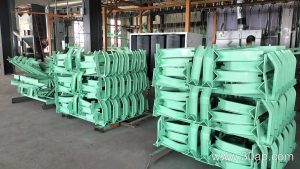
- Mounting through conveyor bracket or frame slots
- Return-side position under the carrying strand
Where It Fits in the Conveyor
The rubber spiral idler belongs on the return run, where it supports the empty belt and cleans the surface at the same time. It is common in sand and aggregate lines, limestone mines, iron ore handling, power plant coal conveying and crushing and screening circuits. On a conveyor that carries damp sand, clay-rich ore or cement clinker dust, the spiral ribs reduce the build-up that would otherwise create a crown on the roller and misalign the belt. It also works well ahead of a tail pulley, keeping the belt cleaner before it reaches the loading point.
For abrasive ore duties, a rubber spiral idler often runs alongside an abrasion resistant conveyor belt, while coal handling may combine it with a flame retardant conveyor belt. In cement plants it may sit under an EP conveyor belt or a fabric core conveyor belt, and in port terminals under a heavy-duty conveyor belt handling bulk material. Matching the idler to the belt and the environment gives better results than choosing on price alone.
Selection Notes for Buyers
Start with belt width and return frame dimensions, then confirm roll diameter, shaft ends and bearing type. Check the rubber hardness and spiral pitch, because a very aggressive spiral can wear a thin belt surface faster, while a shallow profile cleans less effectively. Consider the material being carried: wet fines, sticky clay and fibrous loads respond differently. Also confirm that the spiral roller is specified for the return side and that the frame uses compatible mounting brackets.
| Parameter | Typical Range | Note |
|---|---|---|
| Roll diameter | Ø89 to Ø159 mm | Selected by load and frame |
| Belt width reference | B500 to B2000 mm | Roll length varies with width |
| Bearing | 6204 to 6308 | Depends on shaft and duty |
| Rubber surface | Spiral rib, abrasion grade | Pitch and hardness vary |
Ask for the shaft diameter and bearing seat as separate data; belt width alone does not fix them. A B1000 line may run different shaft sizes depending on load and frame design, so the conveyor layout drawing should guide the order.
Installation and Maintenance
Mount the spiral roller square to the belt centreline and at the correct height so the belt rests lightly on the ribs. Misalignment causes edge wear and uneven cleaning. During routine checks, look for worn or torn spiral ribs, loose bearing seals and material packed between the helix turns. Replace a roller when the rubber is worn through to the shell or when the bearing becomes noisy. Keeping the return strand clean with a rubber spiral idler reduces carryback and supports the performance of the whole conveyor, from the loading zone to the discharge pulley.
For a complete review, compare the spiral return roller with the belt specification, the idler roller layout and the conveyor pulley arrangement. A balanced system is easier to maintain than one where a single component is over- or under-specified.