What an Impact Resistant Idler Does
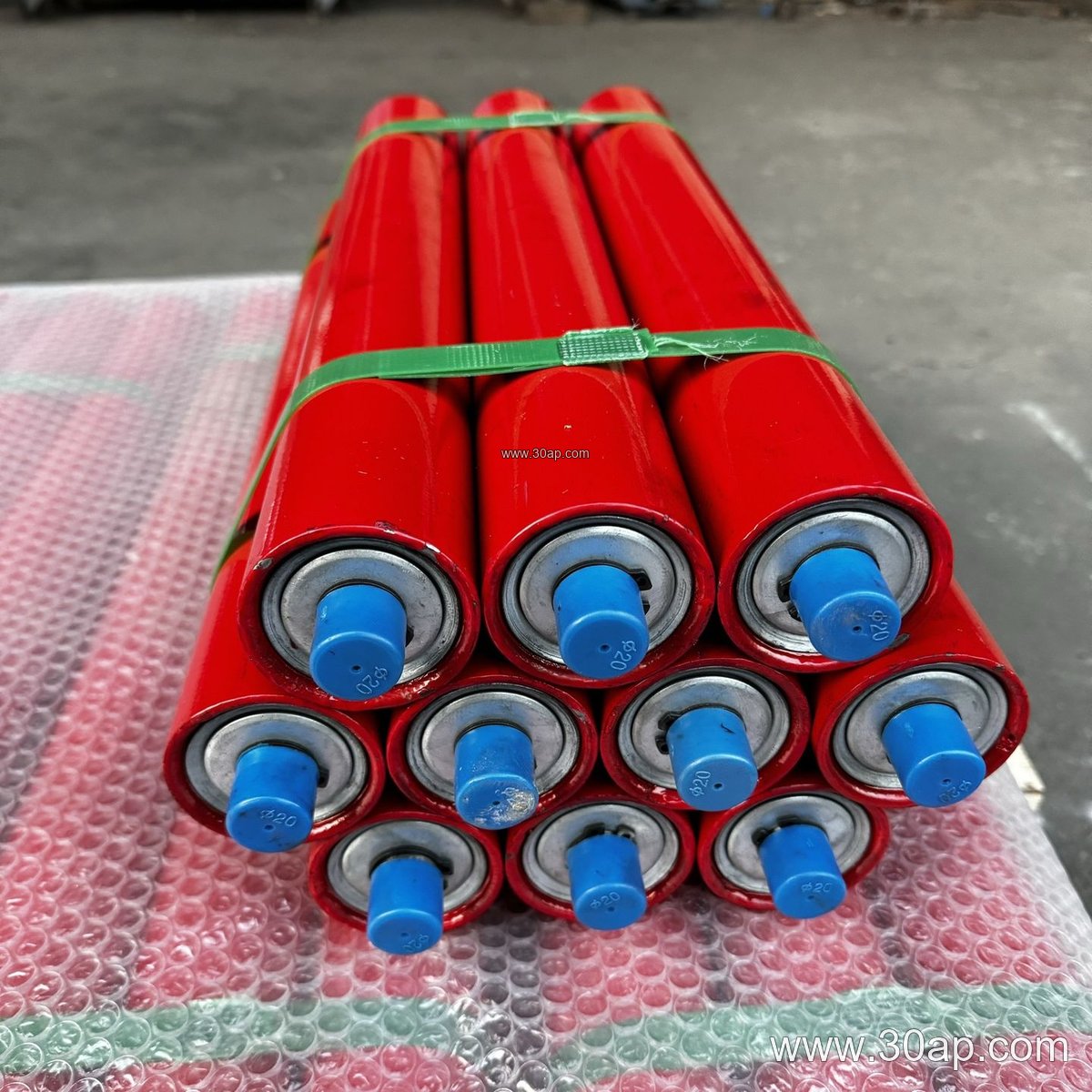
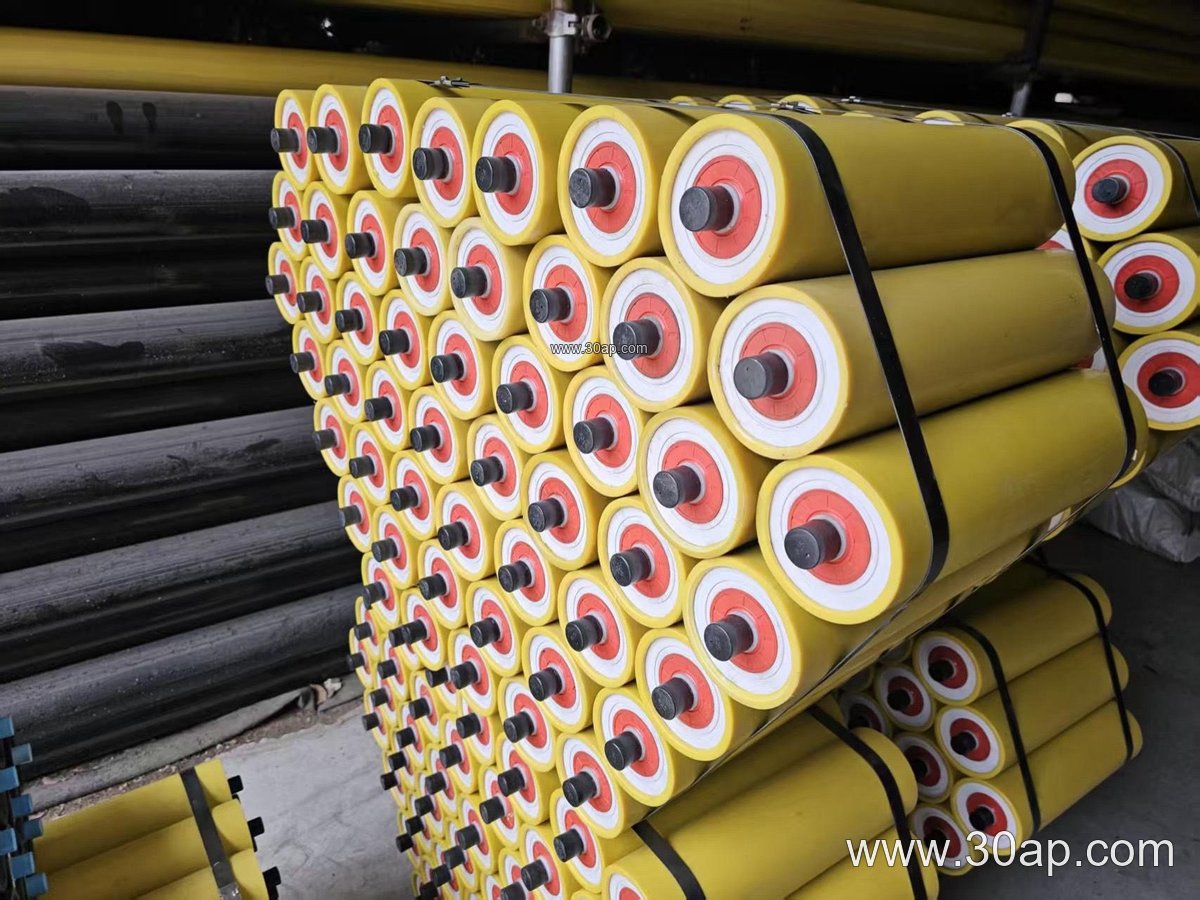
An impact resistant idler is the carry-side roller placed where material first lands on a conveyor belt. Instead of the steel shell used on a standard troughing idler, this roller carries a thick rubber ring or a set of rubber discs that absorb the energy of falling lump ore, crushed stone or clinker. The result is less shock on the belt cover, fewer punctures and a longer service life for the whole loading section of a bulk material conveyor belt.
The idler roller is mounted in the same frame position as an ordinary troughing roll, so it can be fitted during a new installation or retrofitted to an existing conveyor bracket without redesigning the stringer. In a quarry conveyor, a crusher conveyor or a cement plant feed line, the first two or three idler positions after the chute are usually the ones converted to this impact-absorbing design.
Construction and Surface Options
Most units combine a steel tube body with a rubber covering. The rubber may be a continuous sleeve or a series of stacked rings, and heavier duty versions add a reinforced carcass inside the rubber to resist tearing. Bearings are typically sealed deep-groove ball bearings such as 6205, 6305, 6306 or 6308, with labyrinth seals and grease retention to keep dust out in a stone crushing or sintering environment.
- Roller diameter: commonly Ø89, Ø108, Ø127, Ø133, Ø159 or Ø178 mm depending on belt width and load.
- Belt width range: B500, B650, B800, B1000, B1200, B1400, B1600, B1800 and beyond.
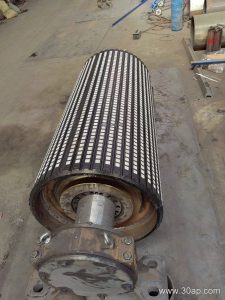
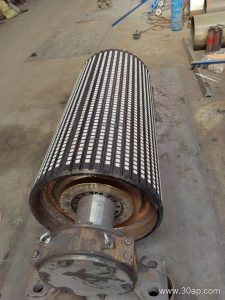
- Surface forms: plain rubber sleeve, rubber ring stack, or ceramic-faced versions for extreme abrasion.
- Trough angle: 20, 30, 35 or 45 degrees to match the existing idler set.
The table below gives common reference values only. Actual roll length, shaft size and bearing selection should follow the conveyor design and the material drop height.
Typical Reference Data
| Belt Width | Common Roll Length (3-roll set) | Common Roller Diameter | Typical Bearing |
|---|---|---|---|
| B500 | about 200 mm | Ø89 | 6204 / 6205 |
| B650 | about 250 mm | Ø89 / Ø108 | 6205 |
| B800 | about 315 mm | Ø108 / Ø127 | 6305 |
| B1000 | about 380 mm | Ø108 / Ø133 | 6306 |
| B1200 | about 465 mm | Ø133 / Ø159 | 6308 |
| B1400 | about 530 mm | Ø159 | 6308 / 6310 |
| B1600 | about 600 mm | Ø159 / Ø178 | 6310 |
| B1800 | about 670 mm | Ø178 | 6310 |
These are examples, not fixed matches. A wide belt may use a larger diameter for a heavy drop point, and side rolls in a three-roll set can differ from the centre roll.
Where It Fits on the Conveyor
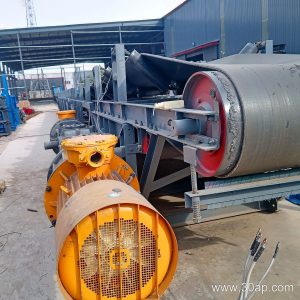
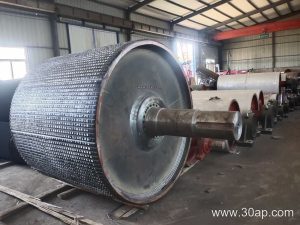
The impact idler belongs to the loading zone, not to the drive or return end. It works alongside the conveyor pulley that drives the belt at the head end and the tail pulley at the transfer point, but it is never a substitute for either. On a coal mining conveyor belt or an underground mining conveyor belt, the buffer rolls sit directly under the chute; the return run further along uses plain or V-return idlers, and the bend pulley handles direction changes.
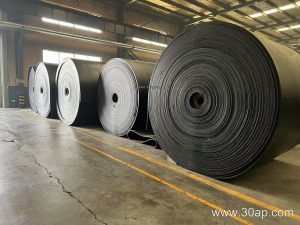
The choice of belt also matters. A heavy-duty mining conveyor belt with a thick top cover tolerates more punishment, while an EP conveyor belt or a steel cord conveyor belt used on a long overland route may need cushioning at every transfer. In a power plant coal handling line, a flame retardant conveyor belt is common, and the impact rolls must be compatible with that cover compound. For wet or sticky cargo such as ore slurry or damp limestone, a rubber ring design sheds build-up better than a smooth sleeve.
Selection Points for Buyers
Start with the drop height and the largest lump size, because these set the energy the roller must absorb. Then confirm the belt width, the existing trough angle and the frame fixing centres so the new roller fits the same conveyor bracket. Ask for the bearing brand and seal type if the site is dusty, and specify a rubber hardness suited to the load rather than the hardest compound available.
Check that the roller is supplied with the correct shaft ends and that the mounting slots match the stringer. For a quarry conveyor or aggregate conveyor belt handling sharp rock, a thicker rubber ring and a reinforced shell are worth the extra cost. For a food grade conveyor belt line, confirm the rubber compound is suitable for the product contact environment.
Maintenance Notes
Inspect the loading zone weekly during the first month, looking for cracked rubber, loose rings and grease leaks at the seals. A worn impact idler allows the belt to sag under the chute, which increases spillage and stresses the belt splice. Replace the roller when the rubber is worn through to the shell, and re-check the chute height at the same time. Keep spare rollers in the two most common diameters used on site, and record the roll length and bearing number so reordering is straightforward.