What a Conveyor Bracket Does on the Line
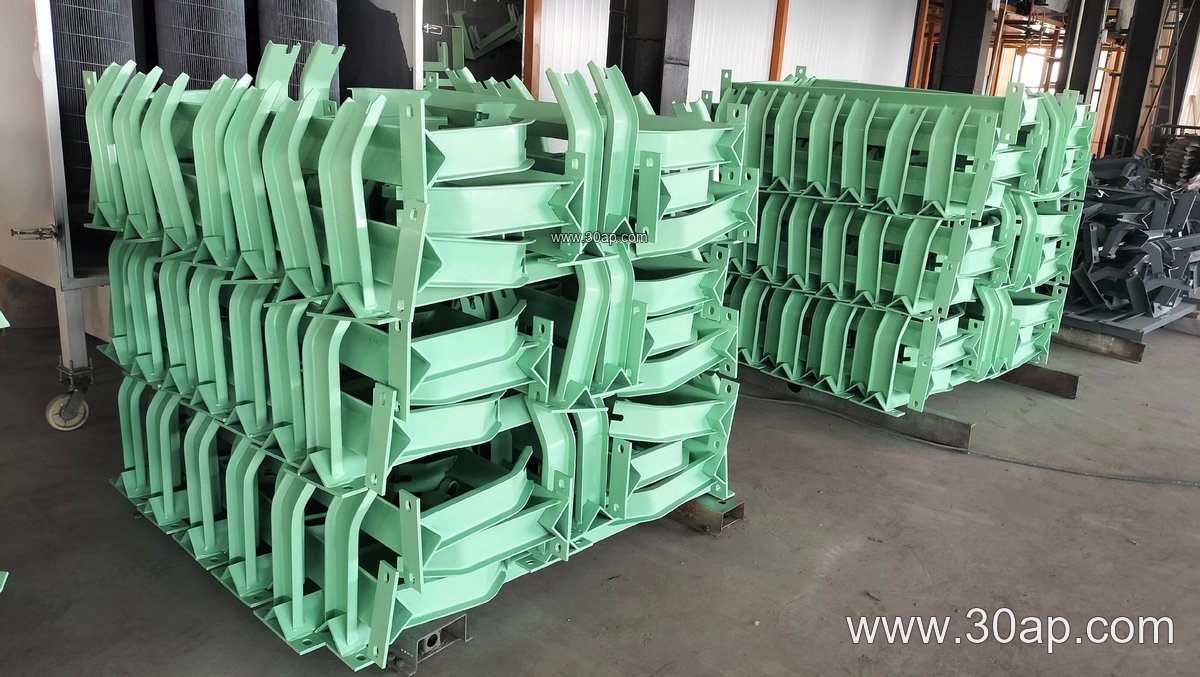
A conveyor bracket is the structural interface between the idler roller and the conveyor frame. It holds each roller at the correct height, angle, and spacing so the conveyor belt keeps its trough shape and tracks smoothly under load. In a quarry, cement plant, or power plant coal yard, a weak or mismatched bracket shows up quickly as belt wander, spilled material, and premature roller wear. Buying the right bracket is therefore less about picking a catalog number and more about matching the bracket to the belt width, trough angle, roller diameter, and duty of the line.
Procurement teams often treat brackets as minor hardware, but they determine how well a conveyor pulley, roller, and belt work together. A bracket that flexes under impact will not keep a heavy-duty mining conveyor belt aligned, no matter how good the roller is.
How Conveyor Brackets Are Built
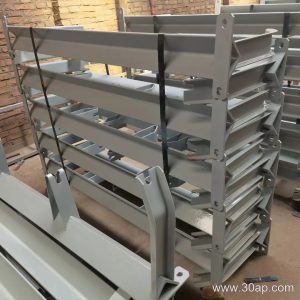
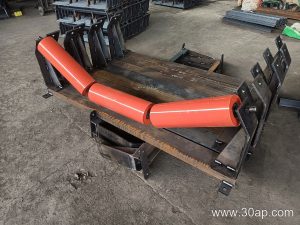
Most brackets are fabricated from angle steel, channel steel, or folded steel plate. The grade and thickness are chosen for the load and the environment, not for appearance. Common forms include:
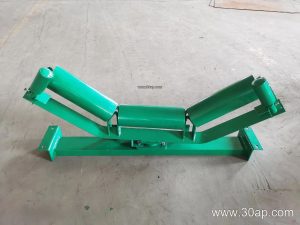
- Troughing brackets and upper trough brackets that set the carrying rollers at 20, 30, 35, or 45 degrees
- Transition brackets placed where the belt changes from flat to troughed
- Return brackets and V-return brackets that support the empty belt
- Impact bracket sets used under loading points
- Self-aligning and forward-tilted brackets, with the tilt usually around 1.5 to 2 degrees
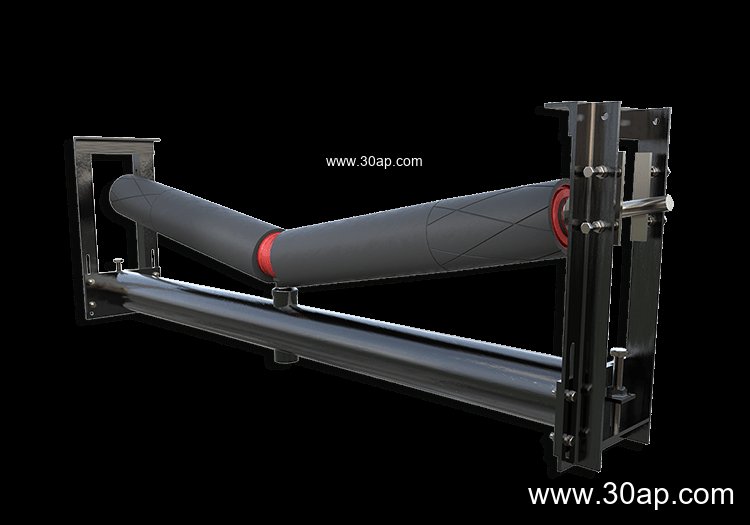
- Suspended and adjustable brackets for lines where the trough angle must change
Adjustable brackets let maintenance staff move between common trough angles without replacing the whole frame. Fixed brackets are simpler and stiffer but lock the geometry in place. Neither is universally better; the choice depends on whether the material flow and belt condition are stable.
Matching Bracket, Belt, and Roller
Belt width and roller diameter drive the bracket dimensions, including mounting hole spacing and crossbeam length. These are determined by design, not by a single fixed rule. A B800 line might run 35 degrees with Ø108 rollers, while a B1200 line could use 45 degrees and Ø133 rollers, and a B650 feeder might stay at 30 degrees with Ø89 rollers. Other combinations are common, and no belt width is tied to only one trough angle or roller size.
The table below shows reference combinations only. Actual values should be confirmed against the conveyor drawing.
| Belt Width | Typical Trough Angle | Reference Roller Diameter |
|---|---|---|
| B500 | 20–30 degrees | Ø89 |
| B650 | 30 degrees | Ø89 |
| B800 | 35 degrees | Ø108 |
| B1000 | 35–45 degrees | Ø108–Ø133 |
| B1200 | 35–45 degrees | Ø133 |
| B1400 | 35–45 degrees | Ø133–Ø159 |
| B1600 | 35–45 degrees | Ø159 |
| B1800 | 35–45 degrees | Ø159–Ø194 |
| B2000 | 35–45 degrees | Ø194 |
On the belt side, a fabric core conveyor belt such as an EP conveyor belt or NN conveyor belt is common in aggregate and cement service, while a steel cord conveyor belt suits long overland runs and high tension. Heat resistant conveyor belt grades are used near kilns and sinter lines, and flame retardant conveyor belt grades appear in coal handling. The bracket must tolerate the same environment: dust, moisture, vibration, and temperature.
Where These Brackets Are Used
In a limestone quarry or crushing and screening circuit, troughing brackets carry abrasive rock on a heavy-duty conveyor belt and impact brackets sit under the crusher discharge. In a power plant coal yard, return brackets and self-aligning sets keep the return strand steady on long conveyors. Cement plants, steel plants, and port ship loaders each place different demands on bracket stiffness and corrosion protection. A bracket that works well in a dry sand line may need a different finish in a wash plant.
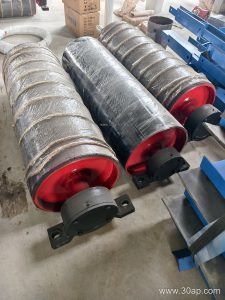
Brackets also interact with the conveyor pulley at the head and tail. Misaligned brackets can load the pulley face unevenly, so alignment should be checked whenever brackets are replaced.
Procurement Checklist
- Confirm belt width, trough angle, and roller diameter from the drawing, not from memory.
- State the material and thickness of the angle or channel steel.
- Ask for mounting hole spacing and crossbeam length as designed values.
- Specify fixed or adjustable geometry, and note the required trough angle range.
- Describe the environment so surface protection can be agreed.
- Check that brackets suit the roller type actually installed, since idler roller dimensions vary.
Good conveyor bracket procurement is a small part of the budget but a large part of uptime. Buy on fit and material quality, keep spare sets for high-wear loading points, and record the exact geometry of each line so future orders match.