What a Five-Roll Idler Bracket Does
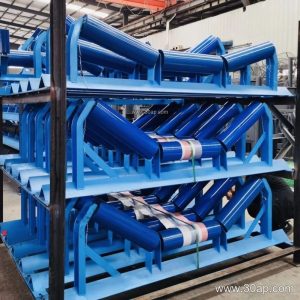
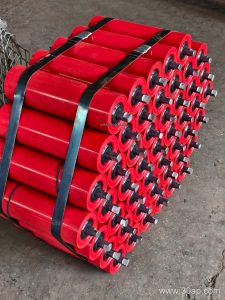
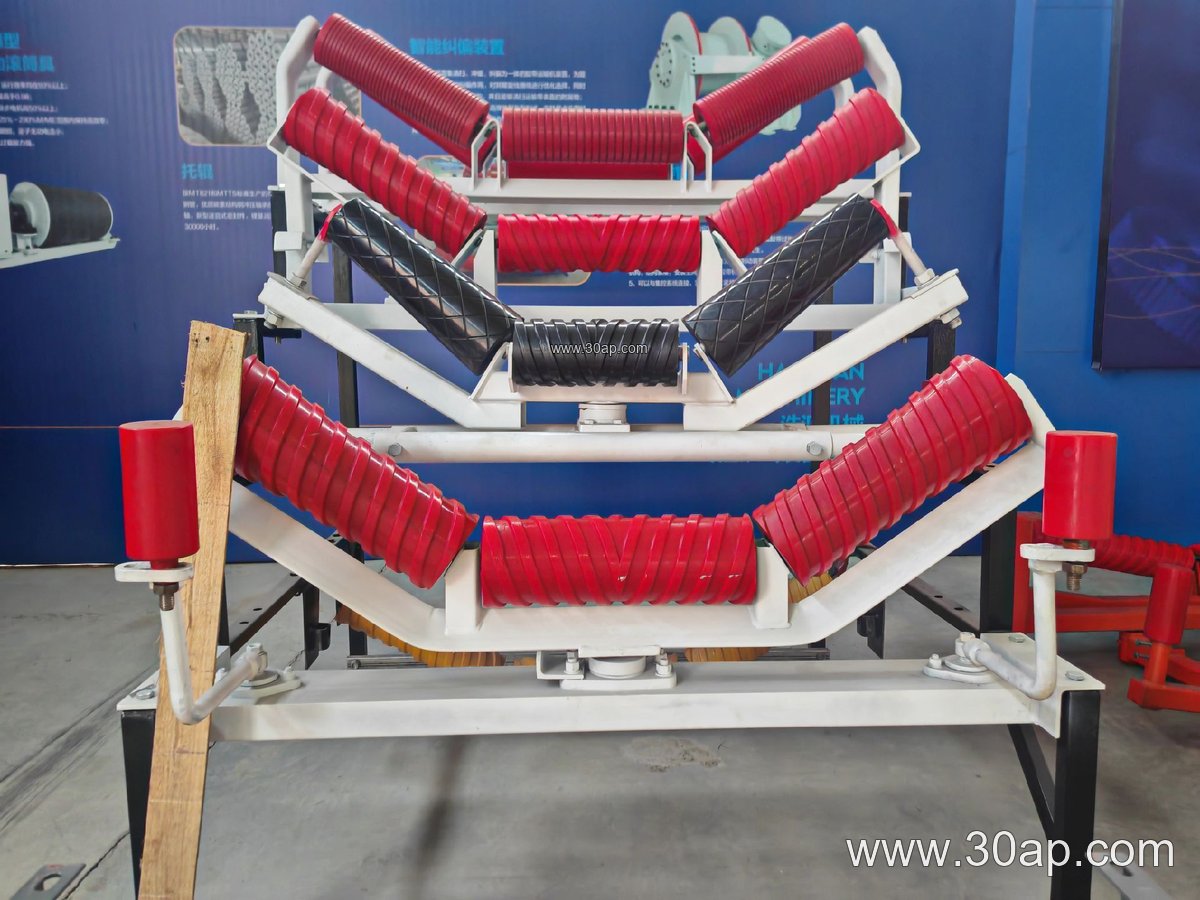
A five-roll idler bracket is a troughing support assembly that carries five idler rollers instead of the usual three. The two outer rolls sit at a steeper angle and the two intermediate rolls form a transition between the outer and centre rolls. This arrangement gives a deeper, more rounded trough profile across the belt, which helps contain material on wide belts and reduces spillage at transfer points. In quarry and aggregate circuits, where lump sizes vary and belts run fast, the extra roll contact spreads load more evenly and can extend roller life. The bracket itself is the steel frame that holds everything in place: it positions each idler roller at the correct angle and keeps the whole set square to the belt path.
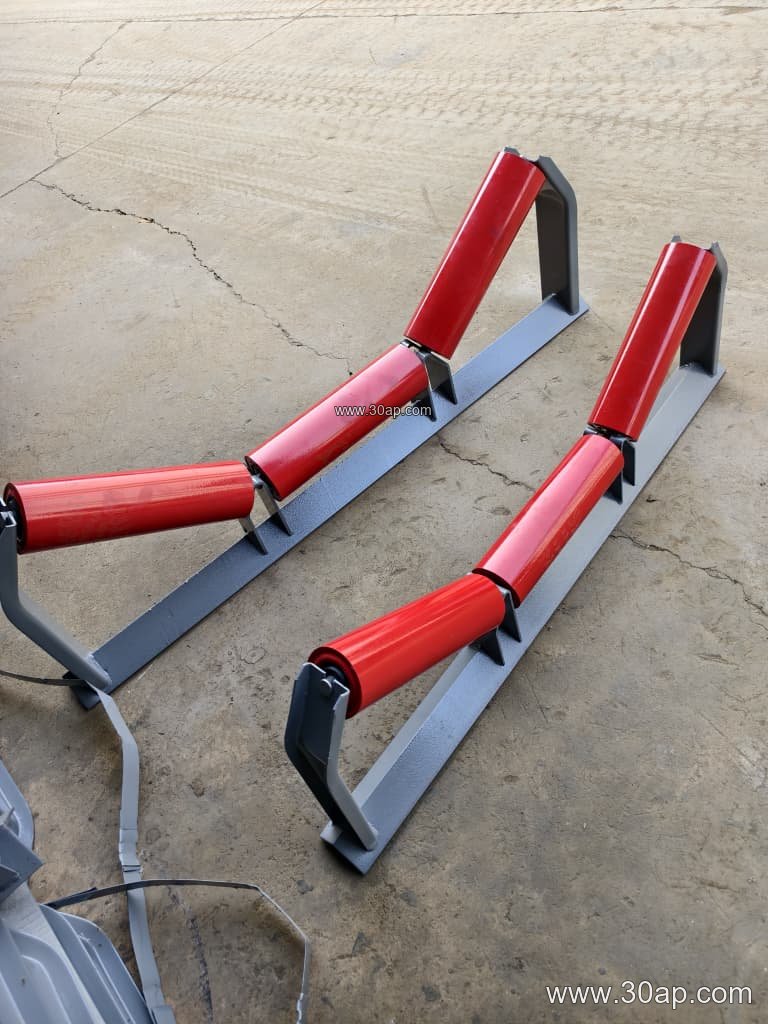
Construction and Materials
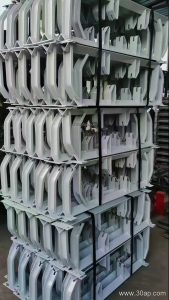
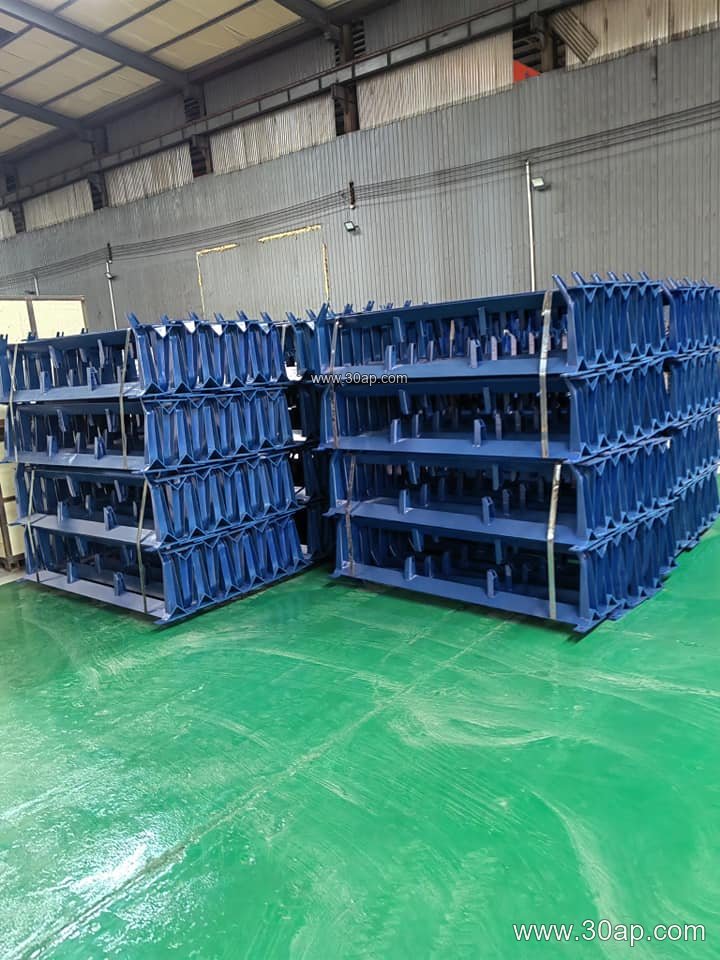
Most five-roll idler brackets are fabricated from angle steel, channel steel, or folded steel plate. The frame is welded or bolted, with mounting slots that allow the assembly to be fixed to the conveyor stringer. Because five-roll sets are often used on wider belts, the crossbeam is longer and the frame needs good torsional stiffness. Typical builds include:
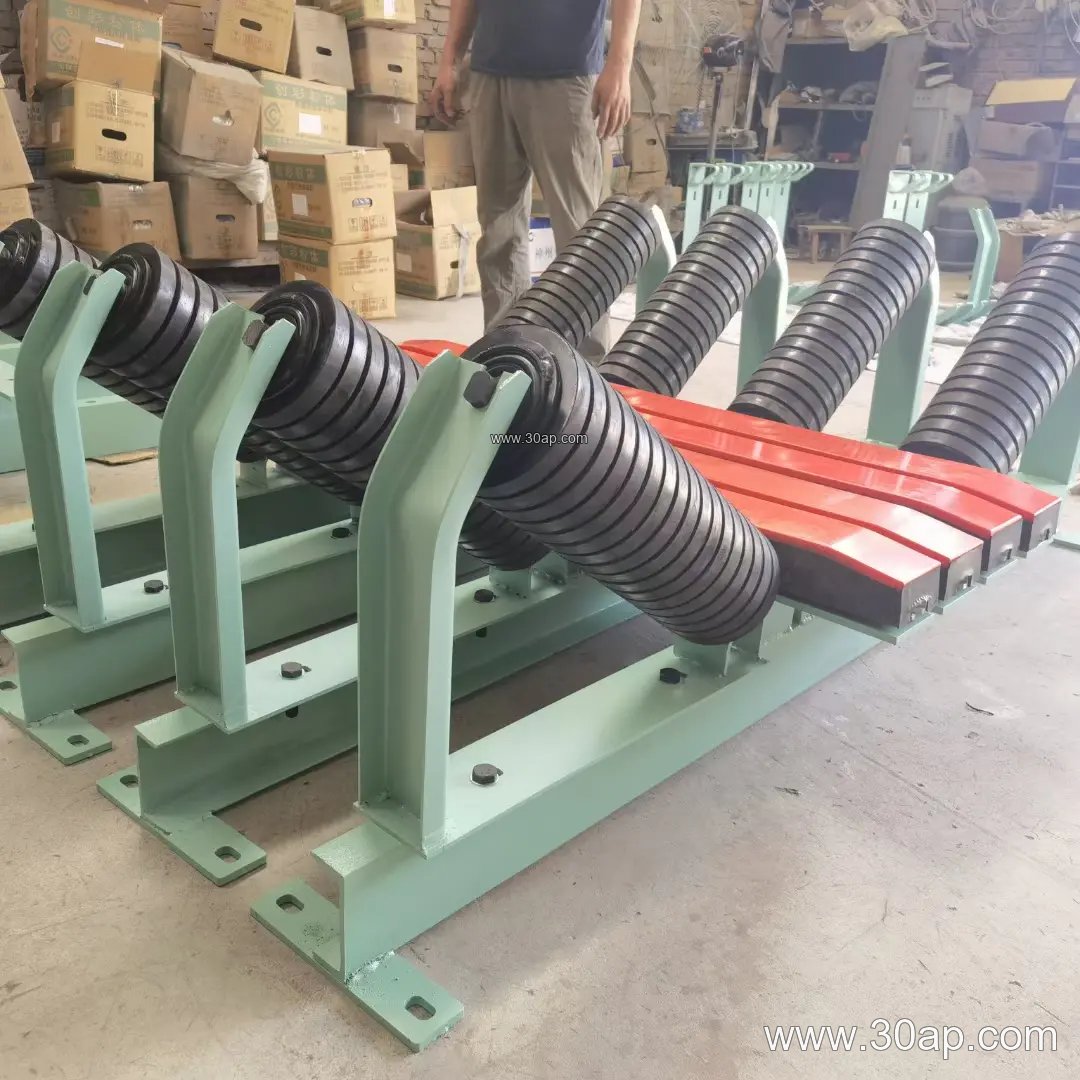
- Folded plate side arms with punched idler seats
- Channel steel crossbeams for heavy-duty mining conveyor lines
- Bolted joints so worn rolls can be replaced without cutting the frame
- Galvanised or painted finish for dusty, humid plant conditions
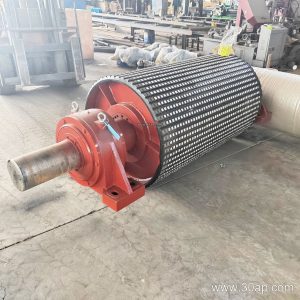
The idler seats are usually shaped so the roll shaft drops in and locks, which speeds maintenance during a shutdown. A five-roll idler bracket is not the same as a bend pulley or a tail pulley; it supports the carrying side of the belt, while pulleys drive or redirect it. The bracket also differs from a standard three-roll troughing set, which is why the two are compared rather than swapped.
Where Five-Roll Sets Are Used
The five-roll design suits applications where belt width is large and material must be kept centred. In a coal preparation plant, a five-roll idler bracket can be found on the main haulage belt feeding the wash box. In a limestone quarry, the same bracket type may support the primary crusher discharge belt, where sharp rock and uneven loading punish ordinary troughing sets. Cement plants also use them on clinker and raw meal belts that run at high tonnage. Other settings include power plant coal yards, iron ore stockyards, and port ship-loading conveyors. In each case the bracket works together with the conveyor belt, the idler roller set, and the conveyor bracket system as a whole.
Matching Belt Width, Trough Angle, and Roll Diameter
Selection starts with belt width and the required trough angle. Five-roll brackets are commonly built for B800, B1000, B1200, B1400, B1600, and wider belts, with trough angles of 20, 30, 35, or 45 degrees. The roll diameter follows load and speed rather than belt width alone, so a B1200 belt might use Ø108 or Ø133 rolls depending on the design. A B650 belt at 30 degrees with Ø89 rolls is a common light-duty combination, while a B1800 line at 45 degrees may run Ø159 or Ø194 rolls. These are reference examples, not fixed rules. Installation hole spacing and crossbeam length change with belt width and trough angle.
Buyer Checklist
- Confirm the belt width and the trough angle the conveyor was designed for.
- Check the idler roller shaft diameter and seat type so replacement rolls fit.
- Ask for the mounting hole pattern and crossbeam length for your stringer.
- Confirm frame material and finish for the site conditions, such as wet coal or abrasive ore.
- Decide whether a fixed or adjustable bracket is needed where trough angle may change.
- Review whether the belt is an EP conveyor belt, steel cord conveyor belt, or flame retardant conveyor belt, since belt stiffness affects how the five rolls share load.
On site, keep the bracket square and the rolls free-turning. A misaligned five-roll idler bracket can cause belt edge wear and uneven loading, so check alignment after installation and after any stringer repair. For related components, see the roller and pulley ranges at gsrconveyor.com, and compare bracket options before ordering a full set.