What the Head Drive Pulley Does
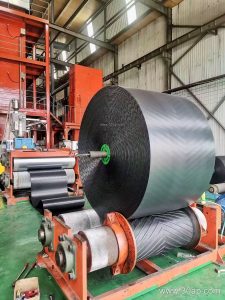
The head drive pulley is the powered drum at the discharge end of a belt conveyor. It grips the conveyor belt, transmits torque from the gearbox or motor, and turns the belt back on its return run. Because it sits at the head, it also sets the discharge point where material leaves the belt. In a quarry, a coal preparation plant, or a power plant coal handling line, this drum is the component that converts drive power into belt motion.
It is not the same as a tail pulley, a bend pulley, or a take-up pulley. Those drums guide or tension the belt. The head drive pulley is the one connected to the drive train, and its design has to match the belt width, the load, and the operating environment.
How It Is Built
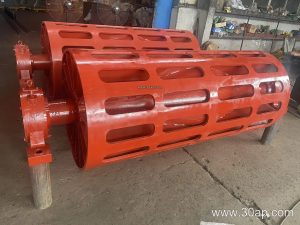
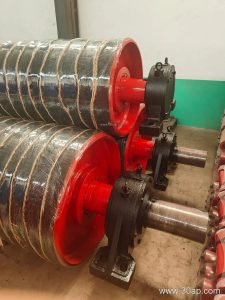
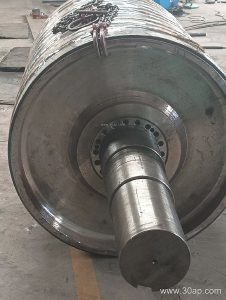
A typical head drive pulley uses a welded steel shell, two end discs, a shaft, and bearing housings. The shell surface may be plain, or it may carry lagging to raise friction between drum and belt. Common surface forms include hot vulcanized rubber, cold bonded rubber, diamond grooving, herringbone grooving, and ceramic lagging. Lagging thickness is often 8, 10, 12, 15, or 20 mm, chosen by duty.
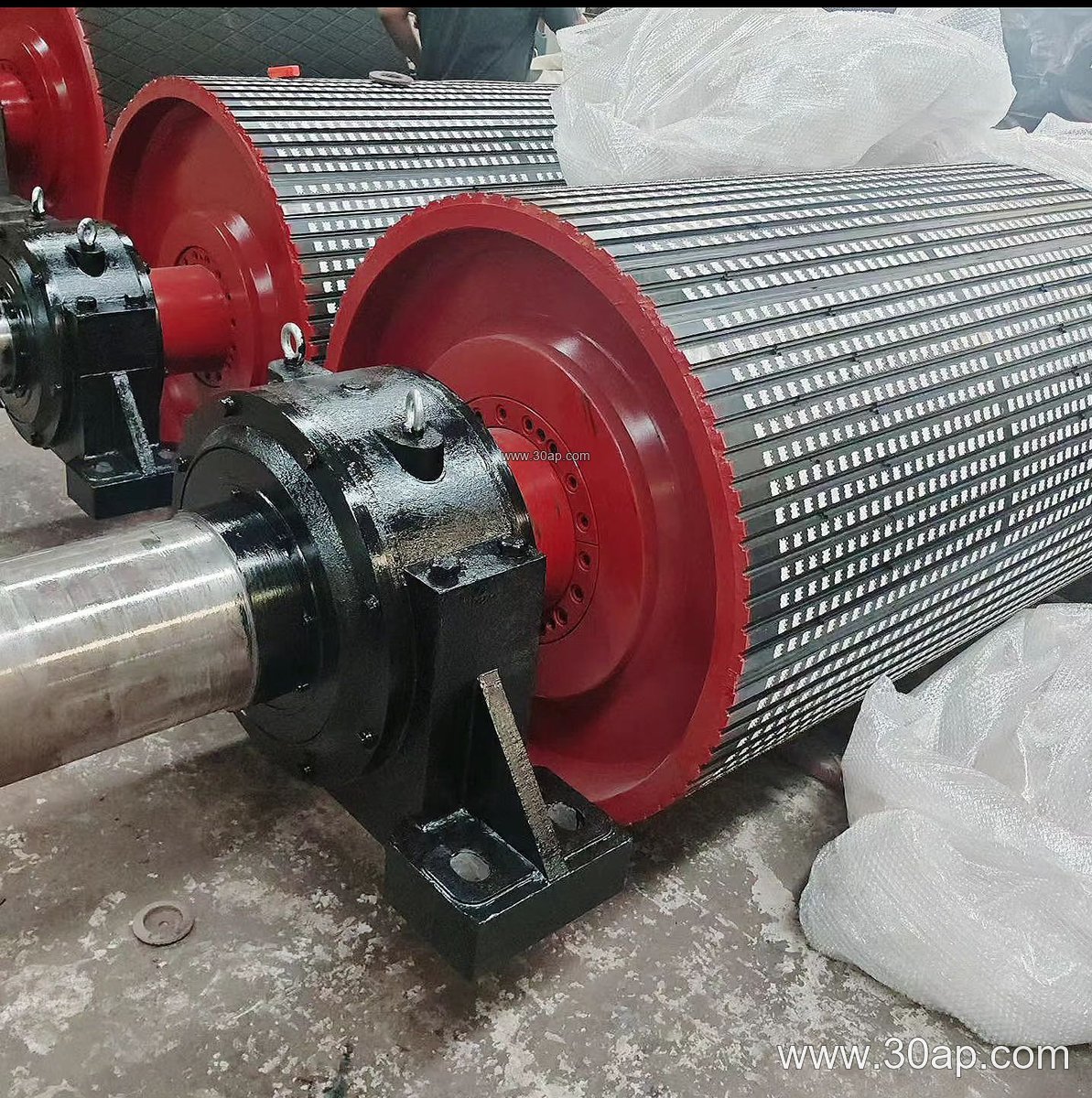
The shaft is sized by torque and radial load, not by belt width alone. Common shaft diameters include Ø80, Ø100, Ø120, Ø140, Ø160, Ø180, and Ø200 mm, but the final value comes from the drive calculation. The shell diameter is usually selected together with the belt tension and the required wrap angle.
The pulley works with a conveyor belt, conveyor pulley bearings, and a conveyor bracket that ties the assembly to the conveyor frame. Nearby idler rollers support the belt on both carry and return sides. In dusty lines such as a limestone mine or a cement clinker plant, sealed bearings and wear-resistant lagging make a practical difference.
Matching Diameter and Belt Width
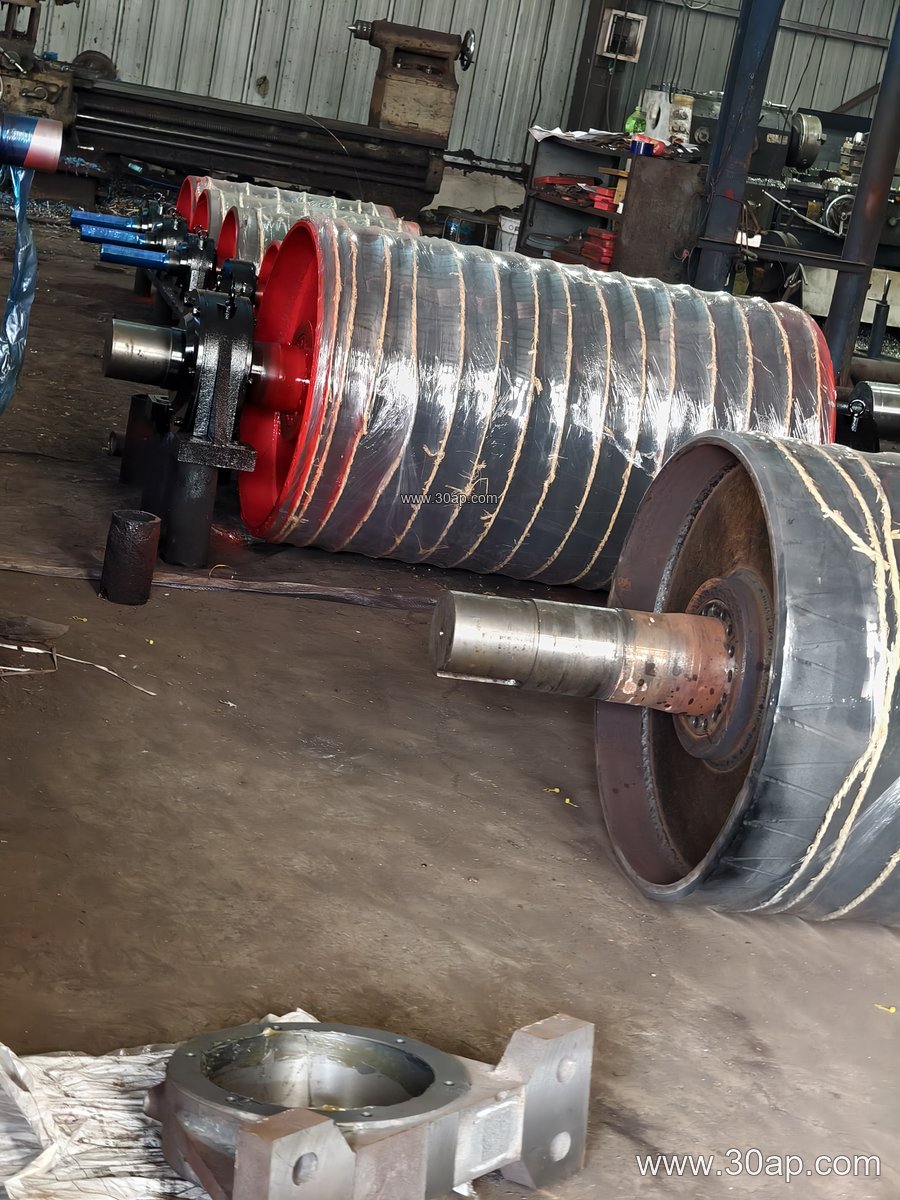
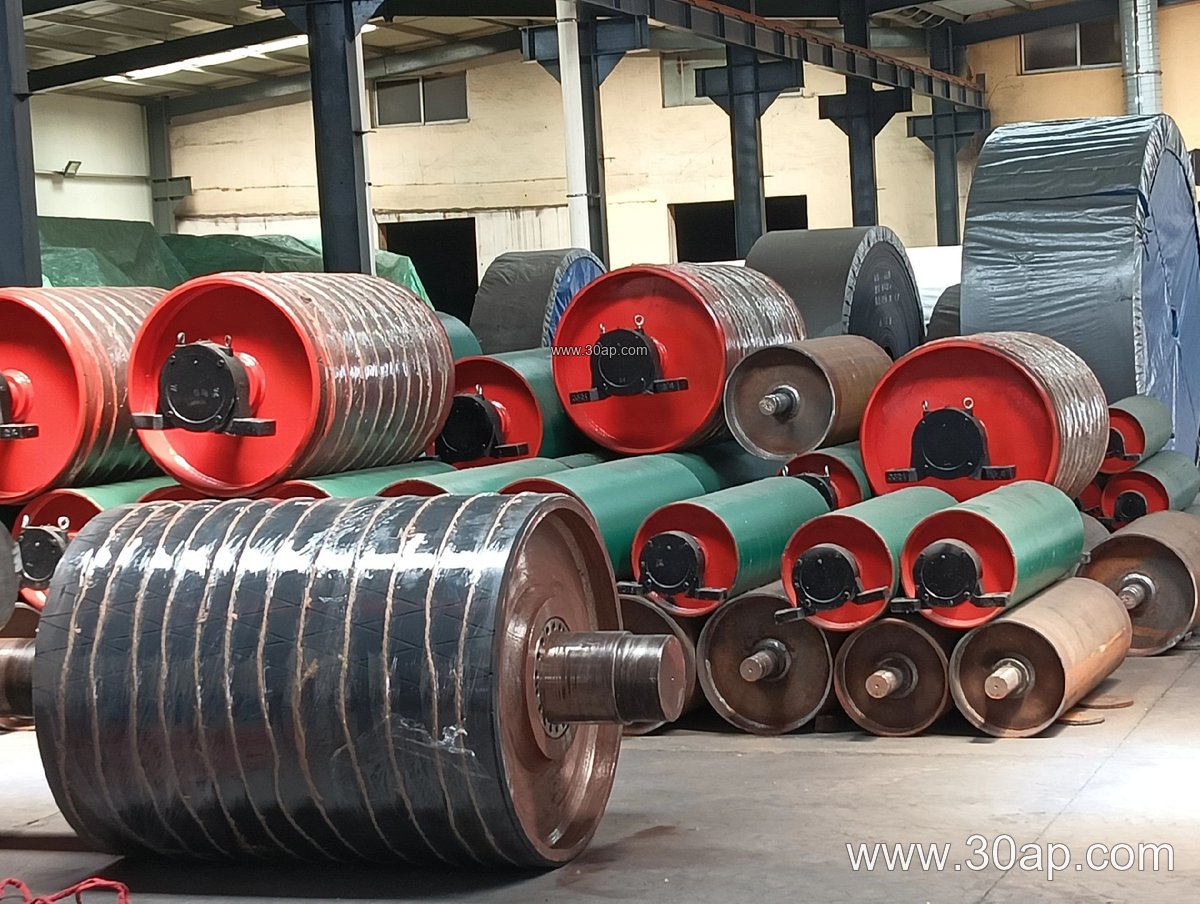
Belt width and pulley diameter are related but not fixed pairs. A wider belt usually needs a wider shell face, and the face width is normally a little larger than the belt width. For example, a B800 belt may run on a shell face of about 950 mm, and a B1200 belt on about 1400 mm. Typical diameter references include Ø500, Ø630, Ø800, Ø1000, and Ø1250 mm, with larger drums for high-tension drives.
Useful combinations such as B800 × Ø500, B1200 × Ø1000, or B1400 × Ø800 appear in real projects, but no rule says one belt width can only match one diameter. The choice depends on belt tension, wrap angle, speed, and the friction needed at the drive face.
| Belt width | Typical shell face | Reference diameters |
|---|---|---|
| B650 | about 750 mm | Ø400, Ø500, Ø630 |
| B1000 | about 1150 mm | Ø500, Ø630, Ø800 |
| B1400 | about 1600 mm | Ø800, Ø1000, Ø1250 |
| B1800 | about 2000 mm | Ø1000, Ø1250, Ø1400 |
These are common references, not universal specifications. Final sizes are confirmed by design.
Where It Fits in the Plant
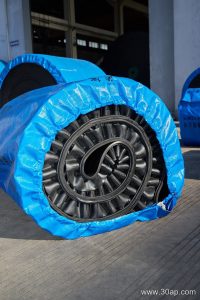
In an iron ore or copper ore concentrator, the head drive pulley often handles heavy, abrasive material and works with a high abrasion resistant conveyor belt. In a coal mining conveyor or underground coal mining conveyor, flame retardant and anti-static properties matter, and the drum may be paired with a PVG conveyor belt. In a port ship loading line, a wide head drum with diamond lagging helps maintain grip on a long, fast belt.
Other industries use the same principle. A sand and gravel plant may run an EP conveyor belt on a B1000 head pulley. A cement plant may use a heat resistant conveyor belt where clinker is involved. A food or fertilizer line may need a different belt compound, but the head drive pulley still does the same job. More conveyor belt and pulley references are available at www.beltconveyors.com and www.conveyorpulley.com.
Buyer Checklist
- Confirm the belt width, belt type, and maximum belt tension before sizing the drum.
- State the drive power, speed, and wrap angle so the shell and shaft can be checked.
- Choose lagging by condition: plain for light duty, rubber for general grip, ceramic or grooved for wet or oily belts.
- Check bearing type, sealing, and lubrication access for the site environment.
- Confirm the shaft diameter and keyway with the gearbox coupling, not from belt width alone.
- Plan lifting points, guards, and a maintenance window for lagging inspection.
For a quarry conveyor, a coal mining conveyor, or a steel plant conveyor, the head drive pulley is a wear part and a power transmission part at the same time. Get the drum, lagging, and belt specification reviewed together, and the conveyor will run with fewer tracking problems and less downtime.