What a Heavy-Duty Conveyor Pulley Does
A heavy-duty conveyor pulley is the rotating drum that transmits power, maintains belt tension, and guides the conveyor belt at key points along a bulk handling line. In a coal mining conveyor system or a quarry conveyor, this component carries some of the highest loads in the entire drive train. Unlike a standard-duty drum, a heavy-duty conveyor pulley is built with thicker shells, larger shafts, and reinforced end discs to withstand continuous shock loading, abrasive dust, and high belt tensions.
Drive, tail, and bend pulleys each serve a distinct function. The drive pulley, often called the head pulley, transfers torque from the gearbox to the belt. The tail pulley at the loading end maintains belt tracking and tension. Bend pulleys change the belt path around take-up systems. These roles are not interchangeable, and specifying the wrong subtype can lead to belt slip, premature wear, or structural failure.
Construction and Key Components
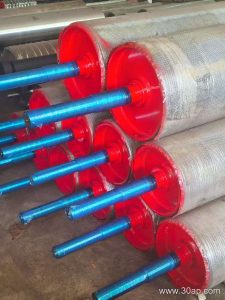
The typical heavy-duty conveyor pulley assembly includes a cylindrical shell, end discs, a shaft, hub connections, and bearing housings. Shell thickness and diameter are matched to the calculated belt tension and torque. Common diameters range from Ø200 mm for smaller tail positions up to Ø1800 mm for large drive applications, though the final size depends on the conveyor design rather than belt width alone. Shaft diameters commonly fall between Ø50 mm and Ø200 mm, determined by torque and radial load, not by a fixed rule tied to belt width.
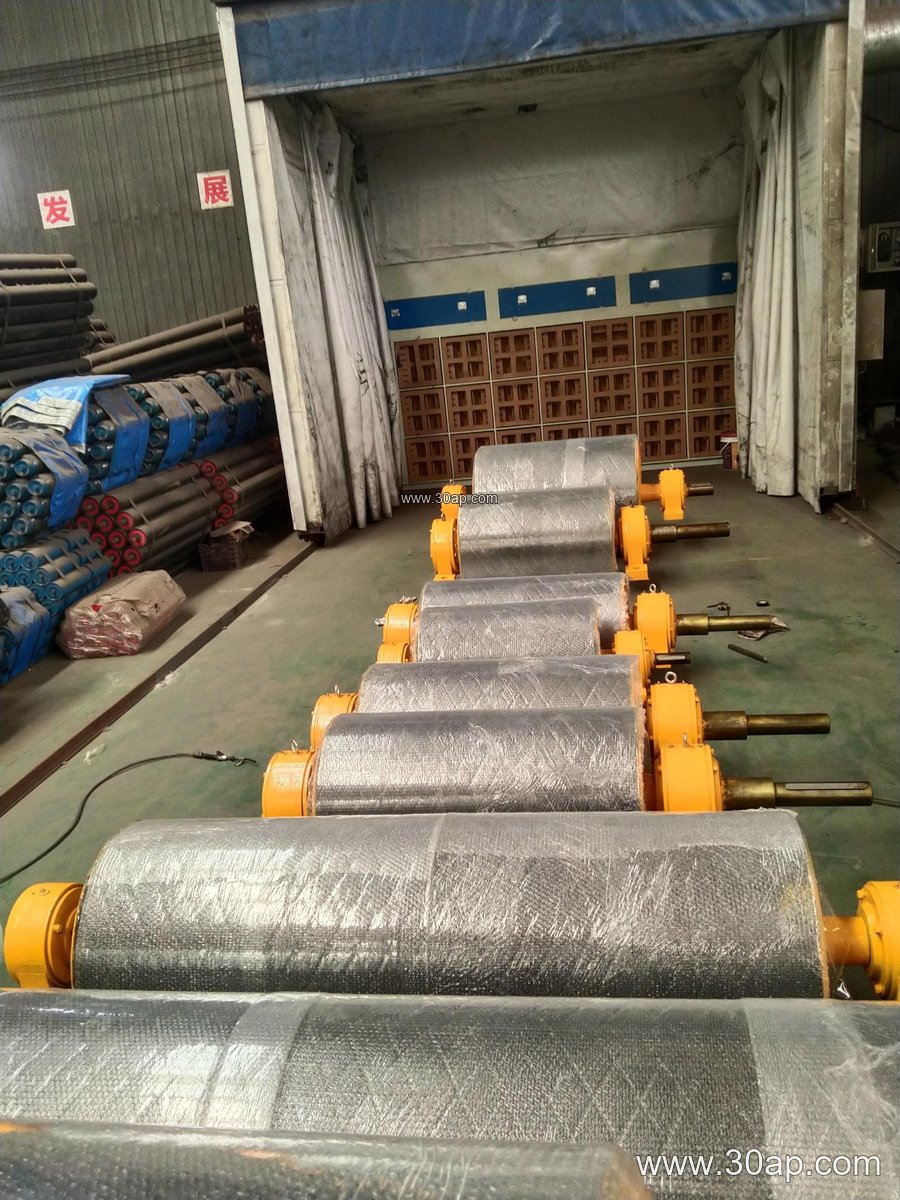
Surface options matter for grip and wear life. Plain finish is used where traction is not critical. Rubber lagging, applied by cold bonding or hot vulcanizing, improves friction and protects the shell. Diamond or herringbone grooving helps shed water and fines. Ceramic lagging is chosen for high-abrasion service in iron ore or copper ore handling. Lagging thickness commonly ranges from 8 mm to 20 mm depending on the duty.
Where Heavy-Duty Pulleys Are Used
These pulleys appear in primary crushing circuits, overland conveyors, and ship loading systems. In a cement plant, they handle clinker and limestone on wide belts. In a power plant coal yard, they work alongside idler rollers and conveyor brackets to keep the belt aligned under high tension. Sand and aggregate operations use them at crusher discharge points where impact and abrasion are severe. Underground coal mining conveyors rely on flame retardant and anti-static belt constructions, and the pulley must be matched to the belt’s tensile strength and tracking characteristics.
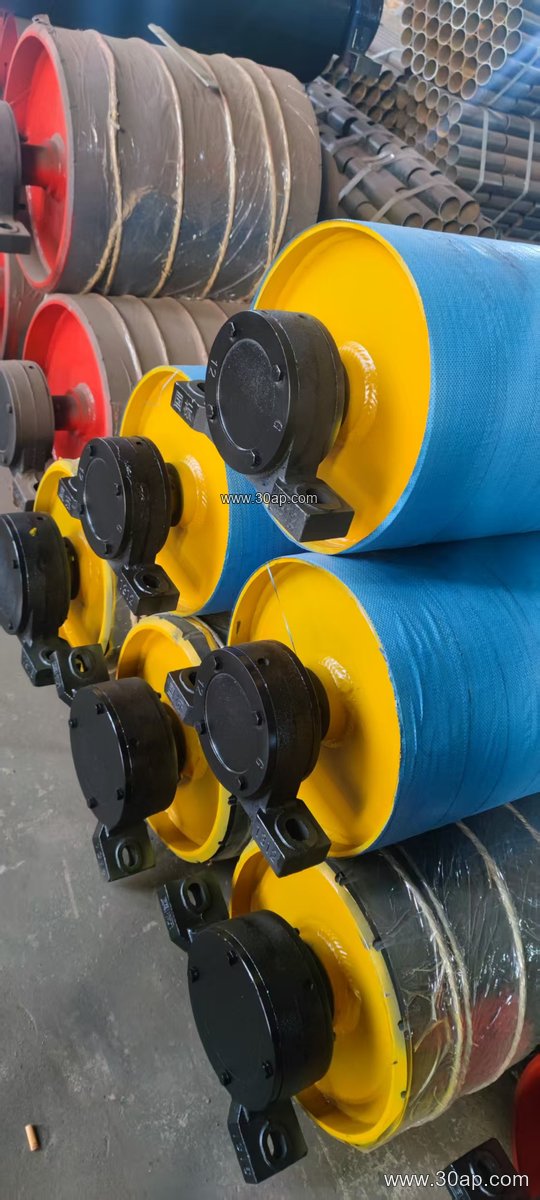
A heavy-duty conveyor pulley is often paired with a high-strength conveyor belt such as steel cord or multi-ply fabric core. For example, a B1200 belt on a main haulage conveyor might run with a Ø1000 drive pulley and a Ø800 bend pulley, but these combinations are design-specific. A B800 conveyor could use a Ø500 tail pulley with a 15 mm lagging for improved grip. The relationship between belt width and pulley diameter is not fixed; engineers calculate it from wrap angle, tension, and space constraints.
Buyer Checklist for Heavy-Duty Conveyor Pulleys
Before ordering, confirm the pulley subtype, shell diameter, face width, shaft size, lagging type and thickness, and bearing arrangement. Face width is usually slightly wider than the belt, for instance a B1000 belt may use a pulley face around 1150 mm, but always verify with the conveyor layout. Ask for the calculated radial load and torque so the shaft and bearings can be checked. Consider the environment: a quarry or cement plant may need abrasion-resistant lagging, while a port handling bulk materials may require corrosion protection. For coal mining conveyor systems, flame retardant and anti-static properties of the belt and pulley components should be reviewed together.
Maintenance planning should include periodic inspection of lagging wear, shaft deflection, and bearing condition. Keeping spare lagging sheets and fasteners on hand reduces downtime. When replacing a pulley, match the new unit to the existing belt tension and tracking setup rather than assuming a standard size fits all. The heavy-duty conveyor pulley is a long-life component, but its performance depends on correct selection and integration with the conveyor belt, idler roller, and conveyor bracket systems.