What a Guide Idler Bracket Does on a Conveyor
A guide idler bracket is the mounting component that holds a guide idler in the correct position relative to the belt path. In plain terms, it is a steel support that keeps the guide roller pressed lightly against the belt edge or belt surface so the belt stays centered as it travels. On a long overland conveyor at a quarry, or a short transfer conveyor in a cement plant, this small bracket often decides whether the belt runs true or drifts into the structure.
The bracket is not a pulley and should not be confused with one. Drive pulleys, tail pulleys and bend pulleys transmit power or change belt direction; a guide idler bracket simply positions a rotating guide roller. Its job is guidance, not traction.
Construction and Mounting
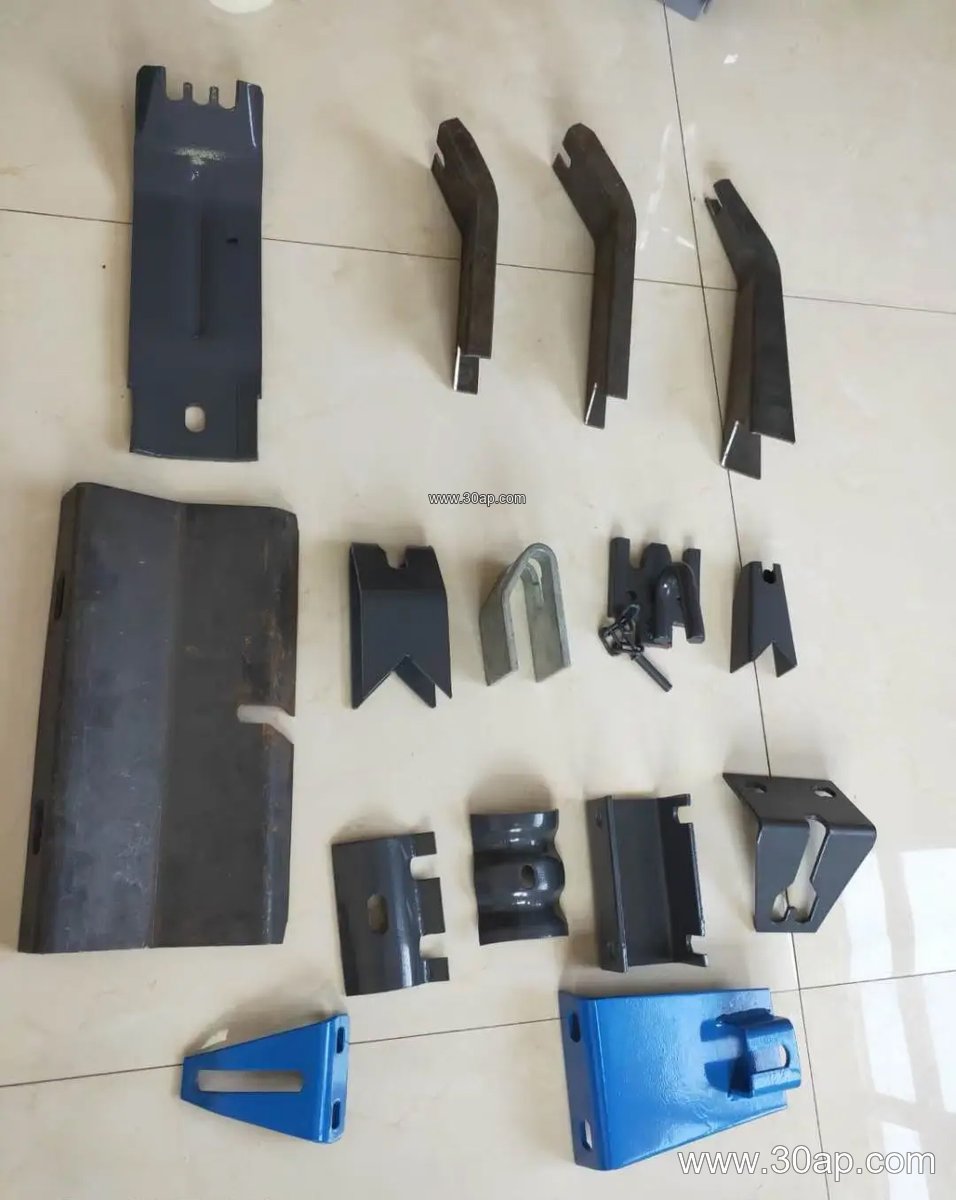
Most guide idler brackets are fabricated from angle steel, channel steel or folded steel plate, then drilled or slotted for mounting bolts. A typical unit includes a base plate that fastens to the conveyor frame, an upright or offset arm, and a shaft seat or clamp that accepts the idler shaft. Some designs are fixed, while adjustable versions allow the roller position to be fine-tuned after installation.
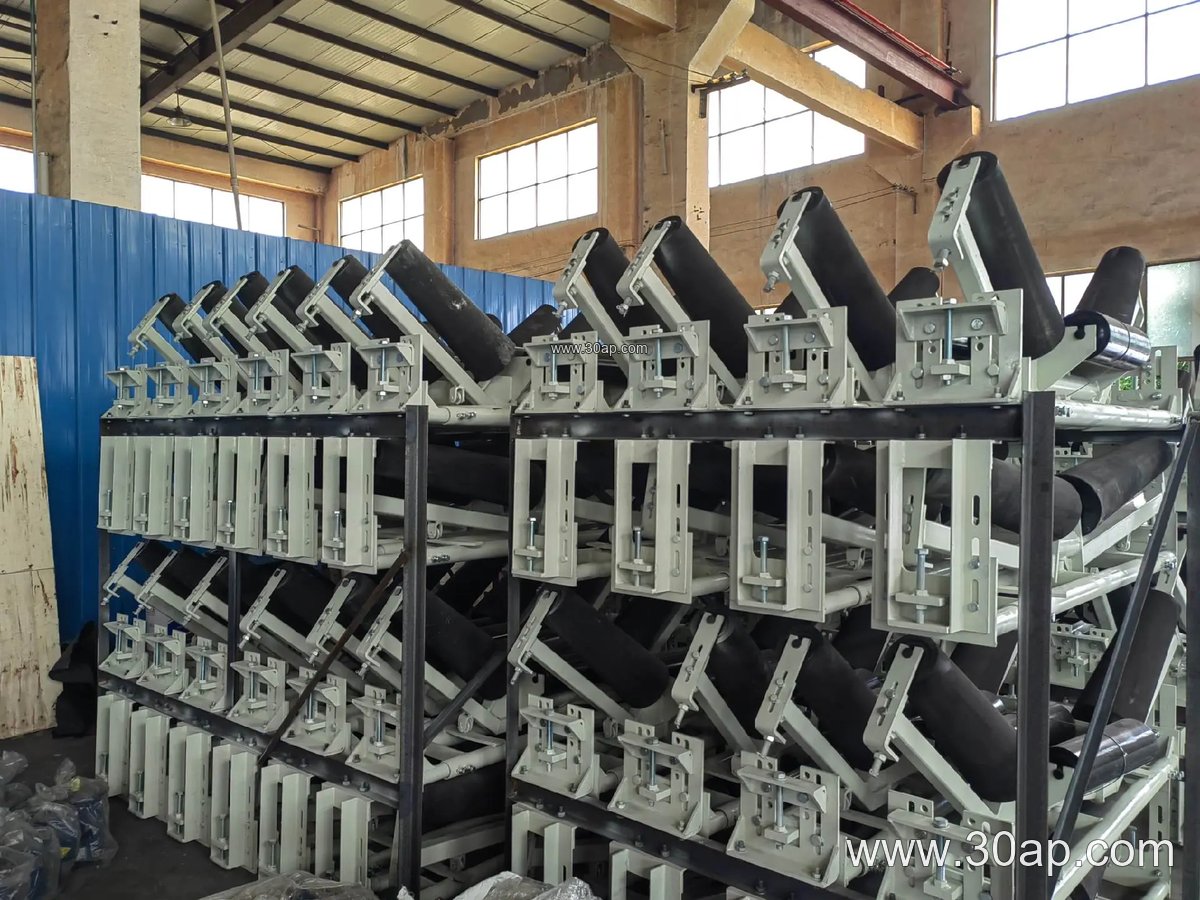
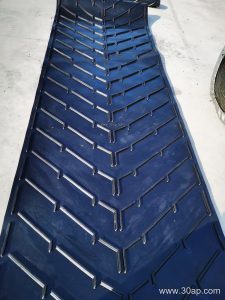
Because the bracket works close to the belt edge, edge quality matters. A conveyor belt with a ragged edge, or a chevron conveyor belt running slightly off-center, will load the guide roller and bracket unevenly. Inspection of the bracket foot and bolts is therefore part of routine belt tracking checks.
Common reference sizes
The table below shows typical bracket reference data. These are common ranges, not fixed rules; mounting hole spacing and crossbeam length are determined by belt width, trough angle and frame design.
- Belt width references: B500, B650, B800, B1000, B1200, B1400, B1600, B1800
- Idler diameter references: Ø89, Ø108, Ø133, Ø159
- Trough angle references: 20 degrees, 30 degrees, 35 degrees, 45 degrees
- Material options: angle steel, channel steel, folded plate
Where Guide Idler Brackets Are Used
These brackets appear wherever belt centering is critical. In a coal mining conveyor system feeding a wash plant, a guide bracket near the tail helps control the belt before it enters the loading zone. In a limestone crushing and screening line, brackets mounted ahead of a bend pulley reduce edge contact with the frame. Power plant coal handling, port ship loading conveyors and fertilizer silo discharge belts all use similar arrangements.
They are also common on conveyors carrying an abrasion resistant conveyor belt in an iron ore yard, where dust and fines make tracking harder. The bracket itself is passive hardware, but its placement affects how the belt, idler roller and conveyor pulley share the load.
Selection Points for Buyers
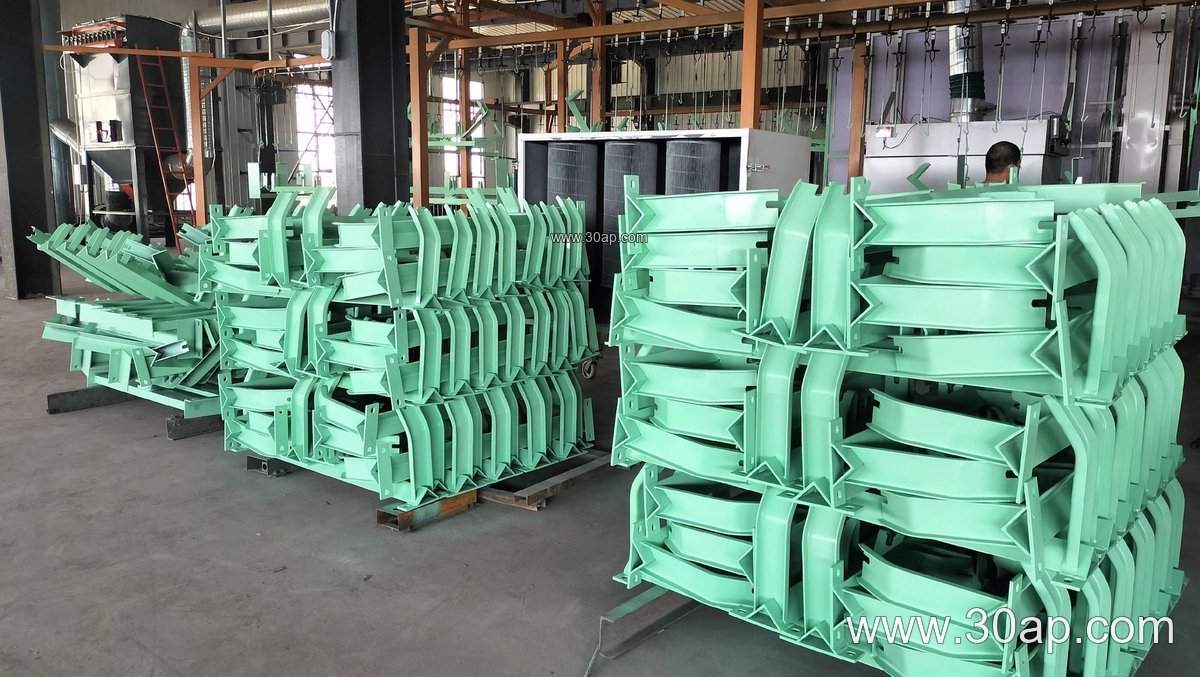
When specifying a guide idler bracket, match it to the frame, not just to the belt. Confirm the belt width, the guide roller diameter, the shaft end type, and whether the frame is flat or inclined. Ask whether adjustment is needed; an adjustable bracket can simplify commissioning on a new conveyor or after a belt replacement.
Consider the environment. A dusty quarry or a wet coal preparation plant calls for galvanized or painted finishes and secure bolt hardware. High-temperature areas, such as a clinker transfer point, may need heat-resistant components nearby, while a food grade conveyor belt line may require smooth, cleanable bracket surfaces.
Typical matching references
These combinations are examples only, offered to show how width, angle and roller diameter are read together:
- B650, 30 degrees, Ø89
- B800, 35 degrees, Ø108
- B1200, 45 degrees, Ø133
- B1400, 35 degrees, Ø159
Do not assume one belt width locks in a single trough angle or roller diameter. A B1000 frame may run 30 or 35 degrees depending on the material and belt stiffness, and the bracket must be ordered for the actual frame geometry.
Installation and Maintenance Notes
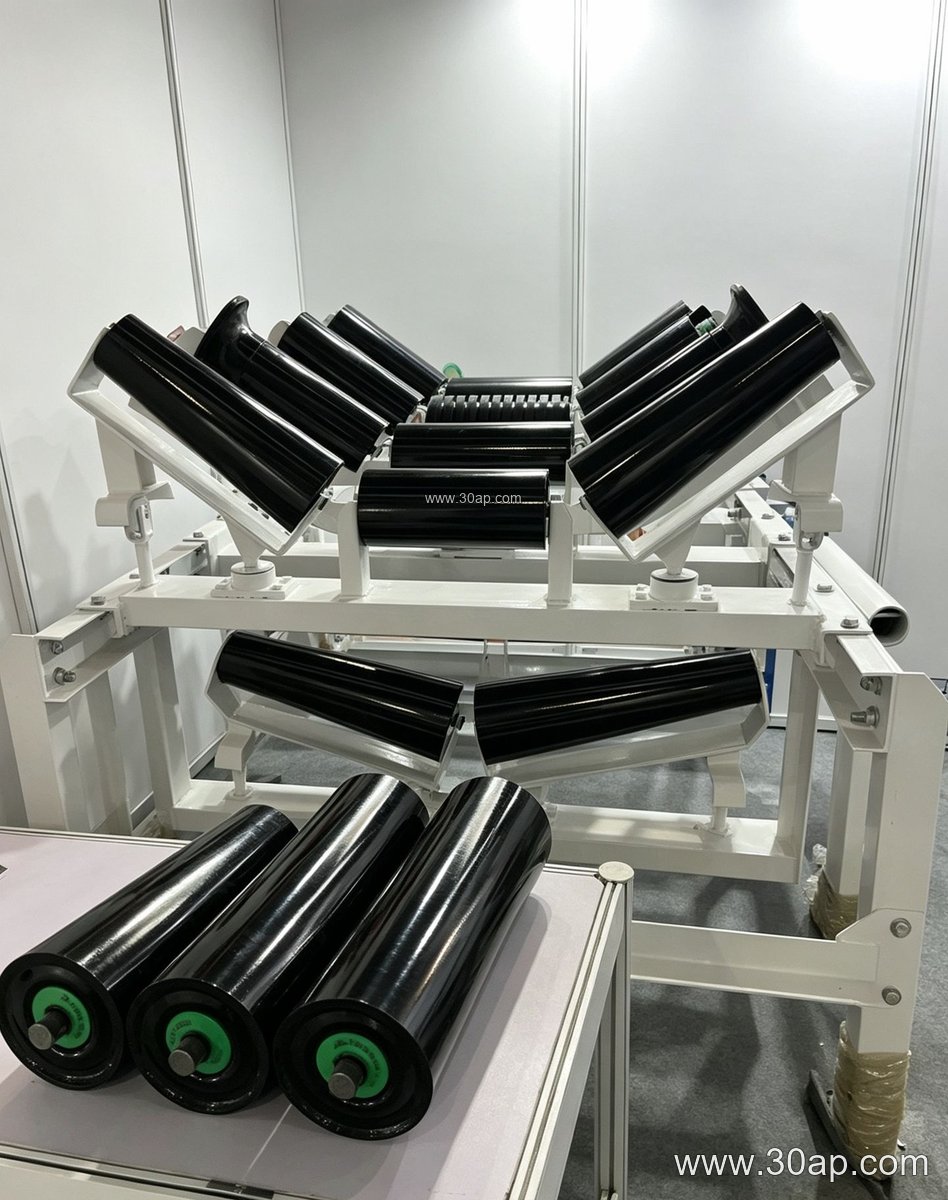
Mount the bracket square to the belt centerline and torque bolts to the frame manufacturer’s recommendation. Check that the guide roller spins freely and does not press hard against the belt edge. After the first week of operation, recheck alignment, because a new endless conveyor belt stretches and settles.
Inspect brackets during scheduled shutdowns. Look for bent arms, elongated bolt holes, corrosion at the foot, and worn shaft seats. Replace damaged units rather than bending them back into shape, since a distorted bracket can push the belt off track and damage the edge. Keeping spare brackets on hand is sensible for a busy sand and gravel plant or a steel plant sinter line.
Used together with well-aligned idler rollers and properly maintained pulleys, a guide idler bracket is a low-cost part that protects the belt and keeps production steady.