What a Turning Pulley Does on a Conveyor
A turning pulley is the drum that changes the direction of a conveyor belt without driving it. In many plants it is simply called a bend pulley, and that name is accurate: the belt wraps part of the drum, leaves at a new angle, and continues toward the head, tail, or tensioning zone. It is not a drive pulley, not a tail pulley, and not a tension pulley, although it may sit close to any of them in the same conveyor frame.
The job looks simple, but the turning pulley carries real belt tension on its shell and shaft. A poorly chosen bend drum can cause belt tracking problems, edge wear, and premature cover failure, especially where a heavy-duty mining conveyor belt runs at high tension through a transfer station or a shuttle section.
Construction and Surface Options
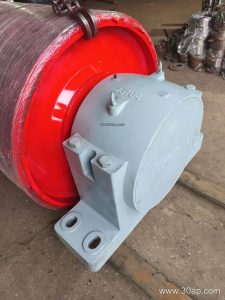
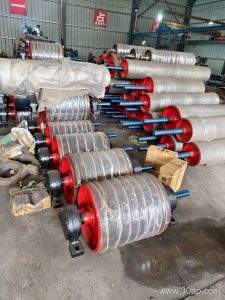
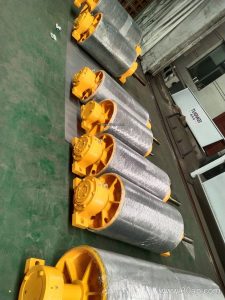
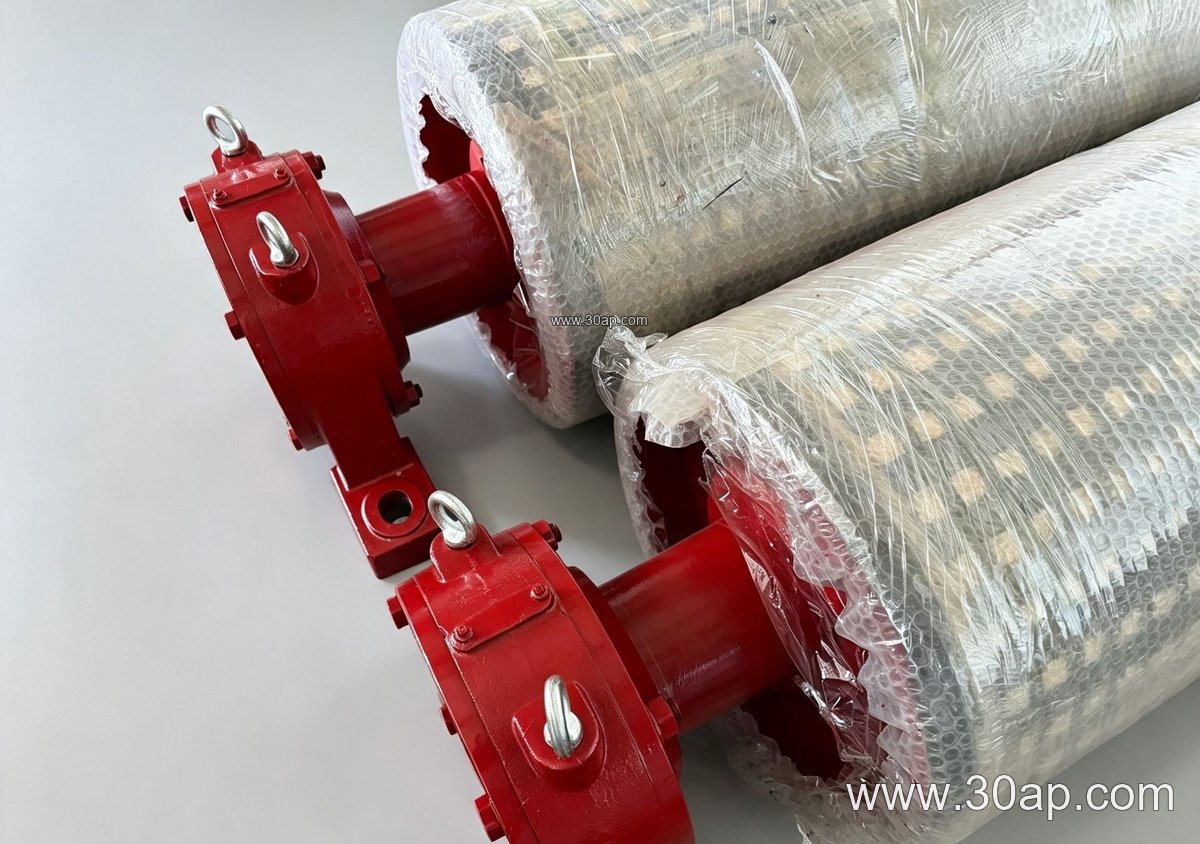
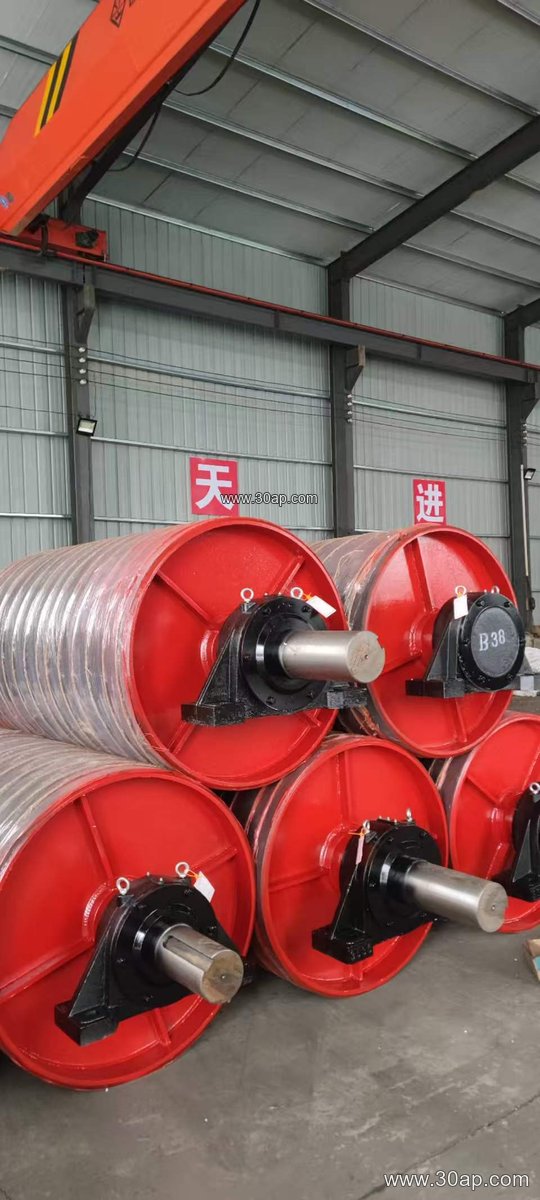
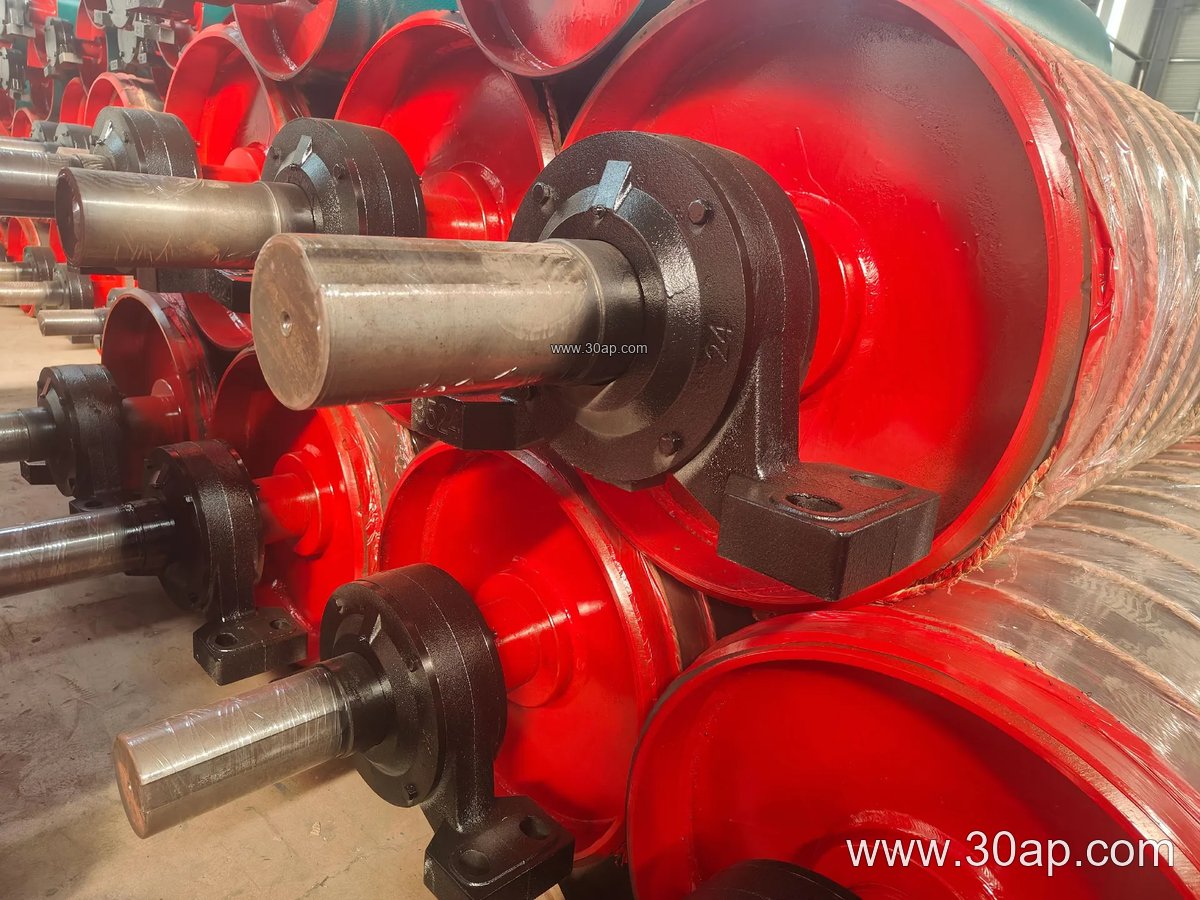
Most turning pulleys are built from a steel shell, welded end discs, a shaft, and bearing housings mounted on a sturdy conveyor bracket. The shell is machined to keep runout small so the belt does not wander. Lagging is where buyers have the most choices, and the right surface depends on slip risk, cleanliness, and the material being carried.
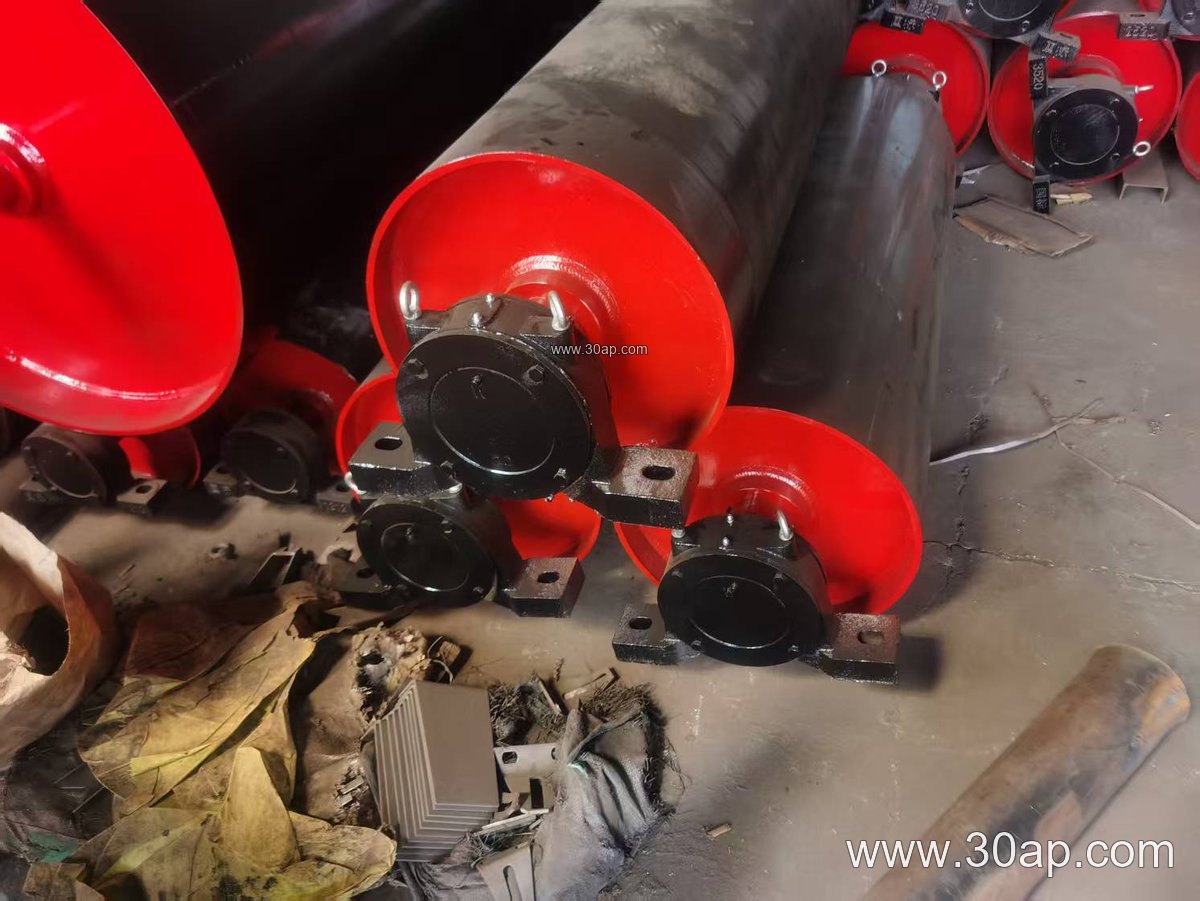
- Plain shell for light contact and low wrap angles
- Cold-bonded or hot-vulcanized rubber for general grip and wear protection
- Diamond or herringbone lagging to help shed water and fines
- Ceramic lagging where oily or wet conditions reduce friction
Common lagging thicknesses are 8, 10, 12, 15, and 20 mm. A thicker cover is not automatically better; it adds weight and cost, and it must match the pulley diameter and the belt tension. For a dusty quarry or a cement plant clinker line, a grooved rubber surface often helps keep the belt centered, while a clean power plant coal handling route may do well with a simpler plain or lightly lagged drum.
Where It Fits in the Conveyor Layout
Turning pulleys appear in several positions. A bend pulley may route the belt around an obstacle, take up slack before a transfer point, or create the wrap needed at a drive pulley. In a crushing and screening circuit, one or two turning drums often guide an abrasion resistant conveyor belt through a compact frame. In a port or ship loading system, they help a wide belt follow the boom structure.
The pulley works together with the conveyor belt, the idler roller set, and the frame. If the belt is a multi-ply fabric core type or a steel cord design, the turning drum must be sized for the actual belt tension and stiffness. A stiff steel cord conveyor belt needs a larger diameter than a thin fabric belt under similar load, but there is no fixed rule that ties one belt width to one drum diameter.
Common Sizes and How They Are Expressed
Buyers usually describe a turning pulley by belt width, drum diameter, shaft diameter, face width, and lagging. Face width is normally a little wider than the belt, as shown in the reference figures below. These are typical starting points, not universal specifications.
| Belt width | Typical pulley face width | Example drum diameter |
|---|---|---|
| B650 | about 750 mm | Ø400 to Ø500 |
| B800 | about 950 mm | Ø500 to Ø630 |
| B1000 | about 1150 mm | Ø630 to Ø800 |
| B1200 | about 1400 mm | Ø800 to Ø1000 |
| B1400 | about 1600 mm | Ø1000 to Ø1250 |
Shaft sizes are chosen from torque and bearing load, not from belt width alone. Common shaft diameters include Ø80, Ø100, Ø120, Ø140, Ø160, and Ø180 mm, but the final value comes from the conveyor designer. A B1200 × Ø1000 turning pulley and a B800 × Ø500 unit can both be correct for their own duty; neither proves a general rule.
Buyer Checklist
- Confirm the wrap angle and belt tension at the turning pulley, not just the belt width.
- Match lagging type to the environment: wet, oily, dusty, or high impact.
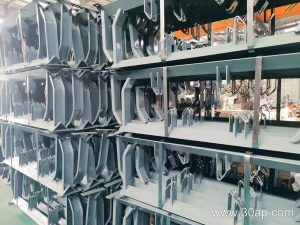
- Check that the bearing housings and conveyor bracket fit the existing frame.
- Ask for dynamic balance and runout data on larger drums.
- Keep spare lagging and bearings for critical routes such as a coal mining conveyor belt line.
On a well-designed conveyor, the turning pulley is a quiet component. It stays quiet only when its diameter, lagging, shaft, and bearings suit the belt it guides and the tonnage it carries. For more conveyor drum and belt guidance, visit www.zgconveyorbelt.com for conveyor pulley selection notes and www.zgconveyorbelt.com for matching belt and roller information.