What a Conveyor Idler Does on the Line
A conveyor idler is the rotating roller assembly that supports the conveyor belt and the material riding on it. Mounted in a frame or on a conveyor bracket, each idler roller carries a share of the belt load while allowing the belt to move with low friction. In a quarry conveyor line, a cement plant clinker route, or a power plant coal handling system, dozens or hundreds of these rollers work together to keep the belt tracking smoothly and to protect the belt carcass from sagging between support points.
The idler is a simple product in principle, but the details matter. Roll diameter, wall thickness, bearing selection, seal design and shaft fixing all influence how long the roller lasts and how much power the drive has to deliver.
How an Idler Roller Is Built
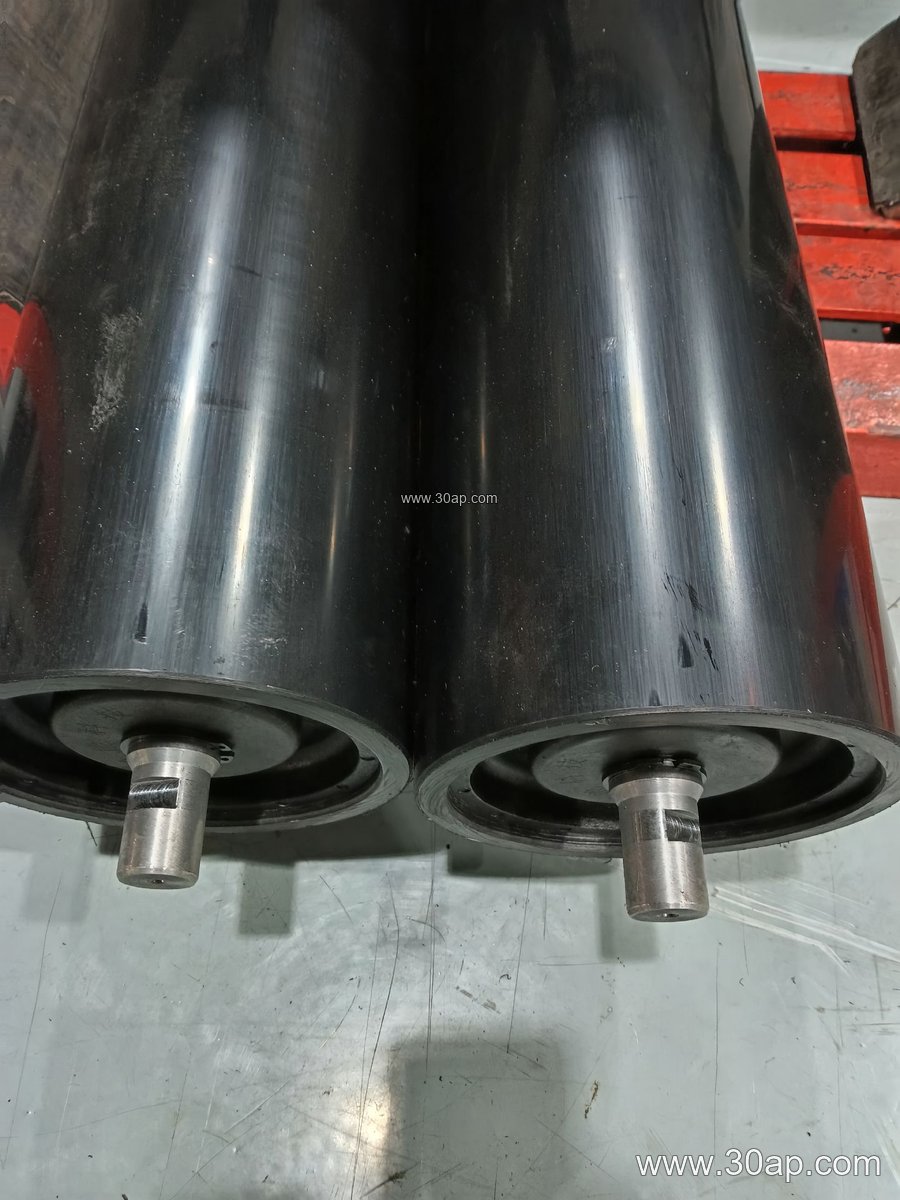
Most idlers share a common structure. A steel tube forms the roller shell, machined bearing housings are welded into each end, and a through shaft runs the length of the roller. Sealed ball bearings sit in the housings, often with a labyrinth seal or a combination seal to keep dust and water away from the bearing. The shaft ends are flattened or fitted with special ends so the roller can lock into the frame without turning.
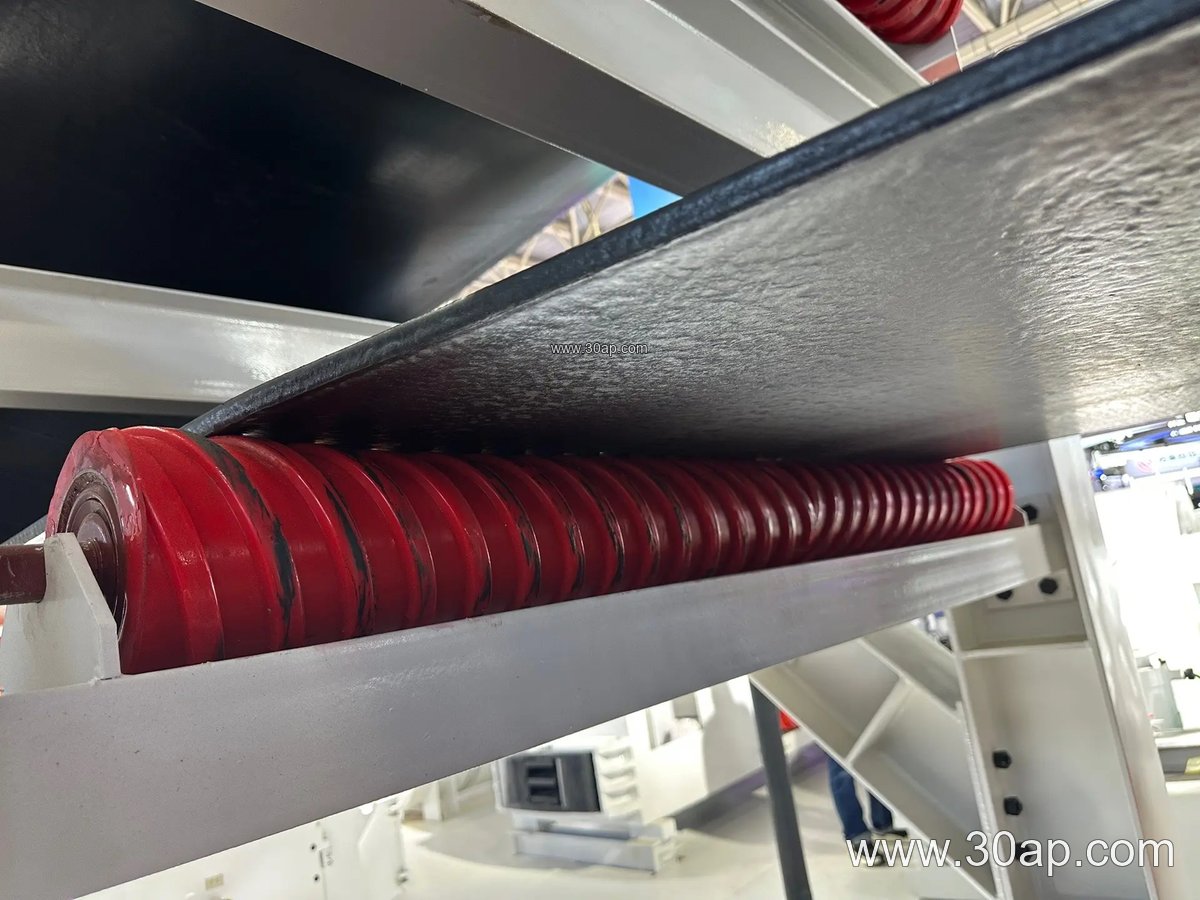
Shell materials vary by duty. Plain steel suits general bulk handling; nylon or ceramic covers help in sticky or abrasive service; rubber rings are common on impact idlers at transfer points. Bearing sizes such as 6204, 6205, 6305, 6306, 6308 and 6310 appear across the range, and the correct bearing depends on load, speed and roller diameter rather than on one fixed formula.
Common Idler Types and Where They Sit
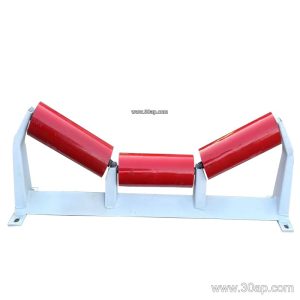
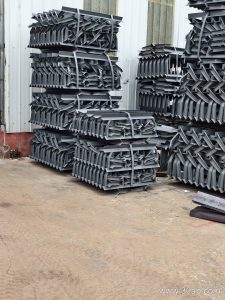
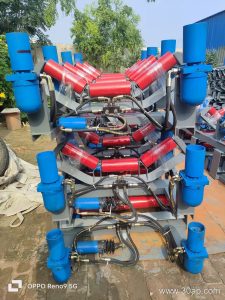
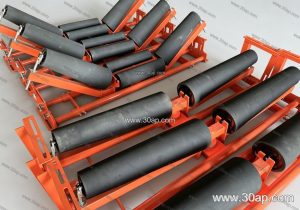
The carrying run usually uses troughing idlers arranged as single-roller, two-roller or three-roller sets. A three-roll troughing set with a 35 degree trough angle is a familiar sight on a 1000mm or 1200mm conveyor belt. Transition idlers sit near the head and tail to ease the belt from flat to troughed. On the return run, flat return idlers or V-return idlers support the belt, while impact idlers or rubber-ring impact idlers cushion the load at the loading point. Self-aligning types, including friction and tapered self-aligning idlers, help correct belt drift on long routes.
- Troughing idlers: carry the loaded belt, commonly three-roll sets.
- Impact idlers: absorb shock below chutes and crusher discharge.
- Return idlers: support the empty belt; V-type helps centering.
- Self-aligning idlers: assist belt tracking on long or misaligned runs.
- Spiral idlers: used where sticky material tends to build up on the roller.
Idlers are not the same as the conveyor pulley at the head or tail. The drive pulley, tail pulley and bend pulley transmit or redirect belt tension, while the idler only supports the belt. Confusing the two in a spare parts list leads to the wrong item arriving on site.
Roll Diameter, Belt Width and Roll Length
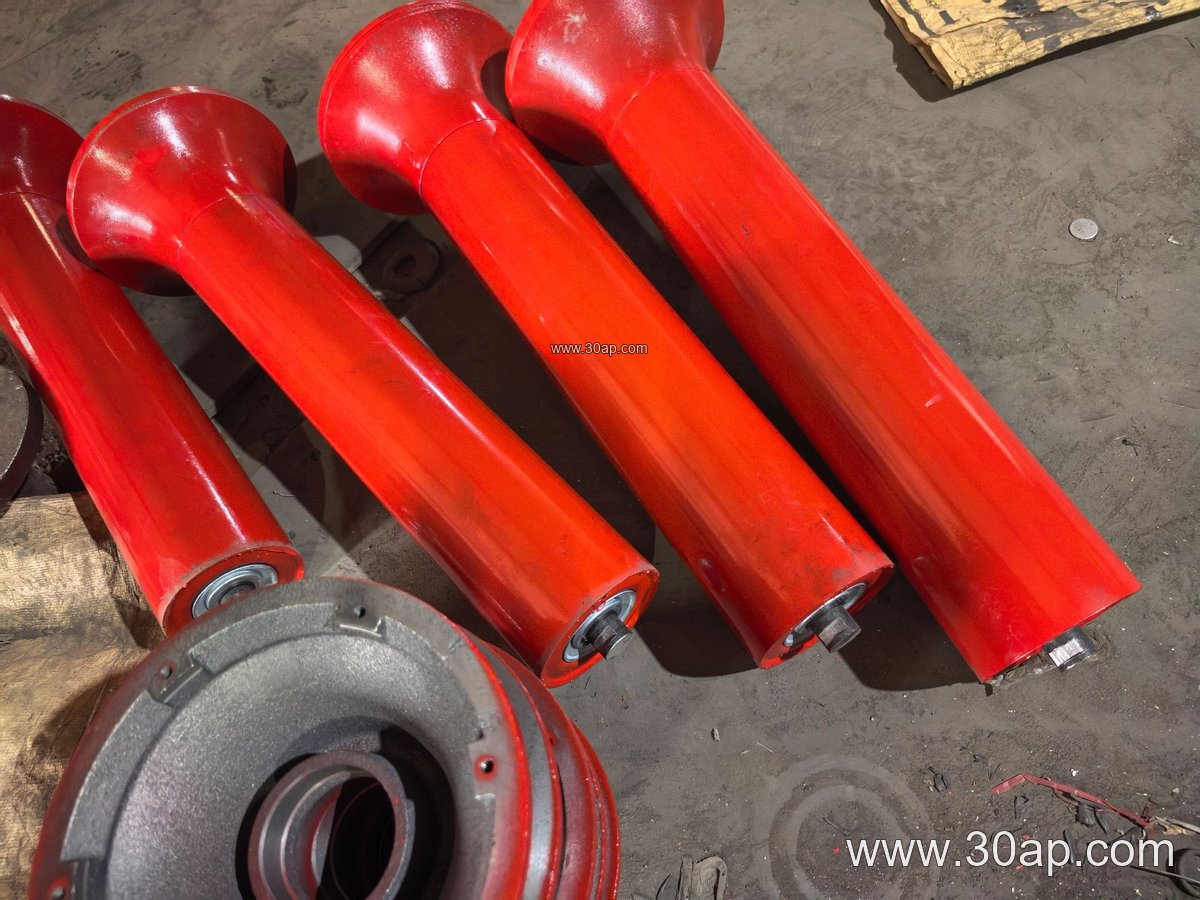
Roll diameter and belt width are linked by design, not by a fixed rule. Common roll diameters include 63, 76, 89, 102, 108, 127, 133, 159, 178, 194 and 219 mm. Belt widths range from B400 up to B2400, and wider belts normally call for larger diameter rollers and heavier frames. Roll length changes with belt width, trough angle and idler arrangement; a three-roll troughing set at B800 often uses a roll length near 315 mm, while B1400 may use around 530 mm. These are typical examples only — side rollers and center rollers can differ, and final dimensions should follow the conveyor design.
| Item | Common reference range |
|---|---|
| Roll diameter | 63, 76, 89, 102, 108, 127, 133, 159, 178, 194, 219 mm |
| Belt width | B400, B500, B650, B800, B1000, B1200, B1400, B1600, B1800, B2000, B2200, B2400 |
| Trough angle | 20, 30, 35, 45 degrees |
| Bearing examples | 6204, 6205, 6305, 6306, 6308, 6310 |
| Shell options | Steel tube, nylon, ceramic, rubber rings |
Selecting Idlers for Different Industries
In a limestone quarry or sand and aggregate line, abrasion resistance and dust sealing are usually the priority. In coal mining and underground coal mining, flame retardant and anti-static properties of the belt matter alongside idler reliability; the idlers themselves must cope with coal dust and moisture. Cement plants and power plant coal yards often prefer heavy-duty rollers with robust seals. Port and ship loading conveyors demand steady tracking at high capacity, where self-aligning idlers earn their place.
Match the idler to the belt it carries. A steel cord conveyor belt on a long overland route behaves differently from an EP conveyor belt or a multi-ply fabric core belt on a short transfer. Impact zones under a crusher suit rubber-ring impact idlers, while a return run on a pipe conveyor belt needs a different support approach altogether.
What Buyers Should Check Before Ordering
- Confirm roll diameter, roll length, shaft size and bearing model against the existing frame.
- Check the trough angle and idler arrangement so the set fits the belt width.
- Ask about seal type and shell material for dusty, wet or abrasive conditions.
- Verify that the mounting ends match the conveyor bracket in use.
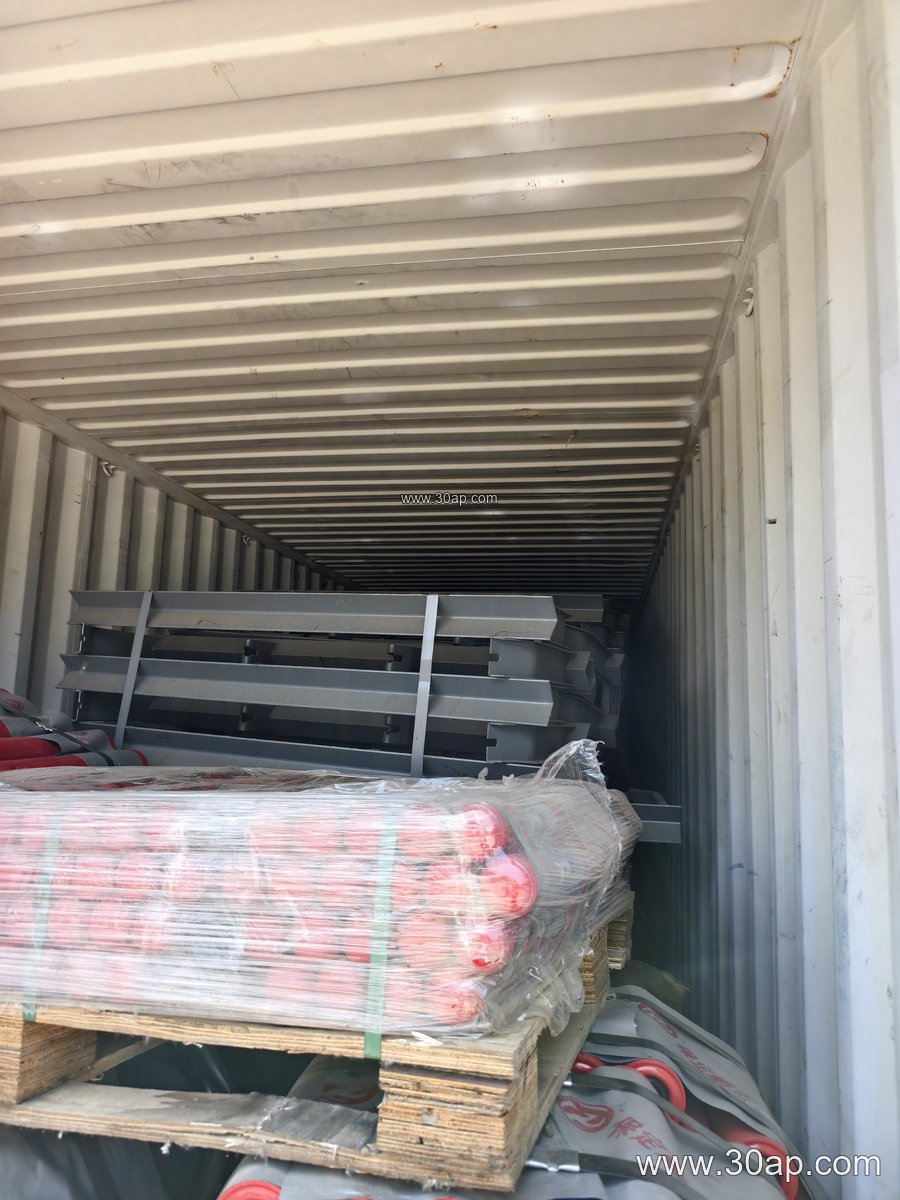
- Order spare rollers in the same specification to avoid mixed tracking behavior.
Well-chosen conveyor idlers protect the belt, reduce downtime and keep material moving from the pit to the stockpile without interruption.