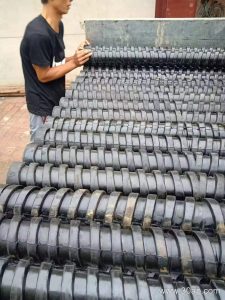
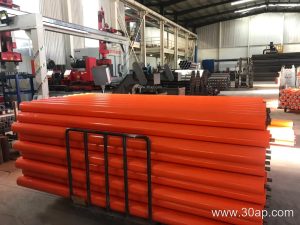
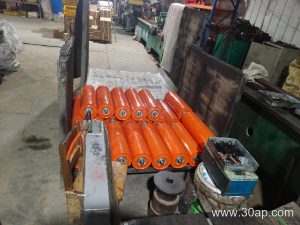
What an Oil Resistant Conveyor Belt Is
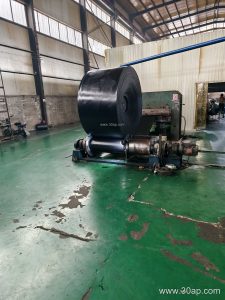
An Oil Resistant Conveyor Belt is a fabric-reinforced rubber belt whose cover compounds are formulated to resist swelling and softening when they contact mineral oils, vegetable oils, grease, or oily process residue. On a standard conveyor belt, hydrocarbon contact can penetrate the cover, weaken the bond to the carcass, and shorten service life. The oil resistant version addresses that by using a cover compound with low oil absorption, so the belt keeps its dimensions and tensile performance in workshops, recycling lines, and processing plants where lubricant drips or coated material are normal.
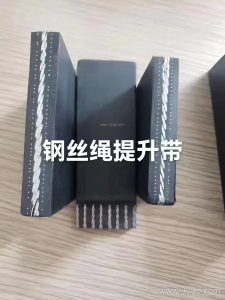
It is a product family rather than one recipe. Buyers will see it offered in EP conveyor belt constructions, NN conveyor belt constructions, and steel cord conveyor belt designs. The oil resistant property sits in the cover and, where needed, in the skim coat between plies.
How the Belt Is Built
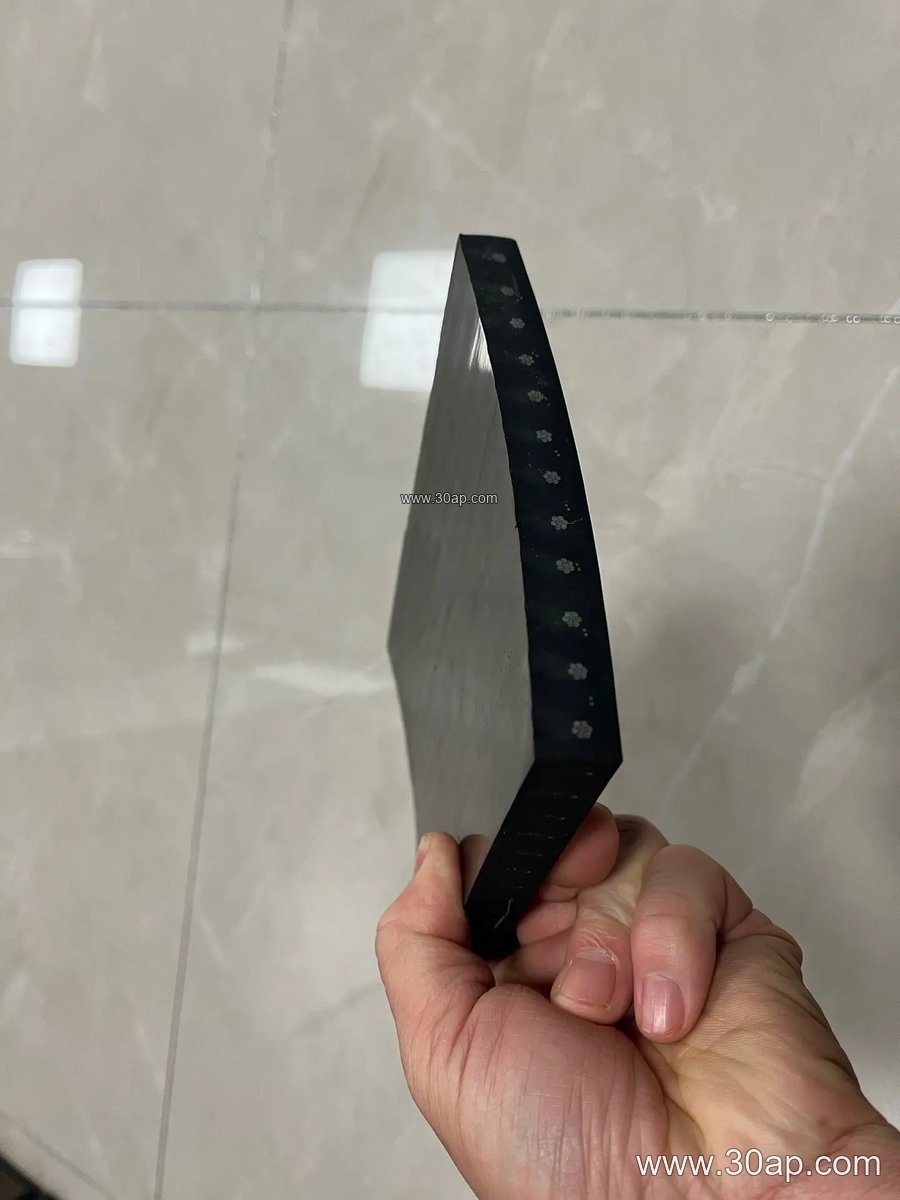
The structure follows the usual layered logic of a fabric core conveyor belt. A tension-bearing carcass sits at the center, covered by top and bottom rubber layers. In an oil resistant build, the cover compound and the bonding layers are selected to limit oil uptake, and the carcass is protected by an adequate skim coat.
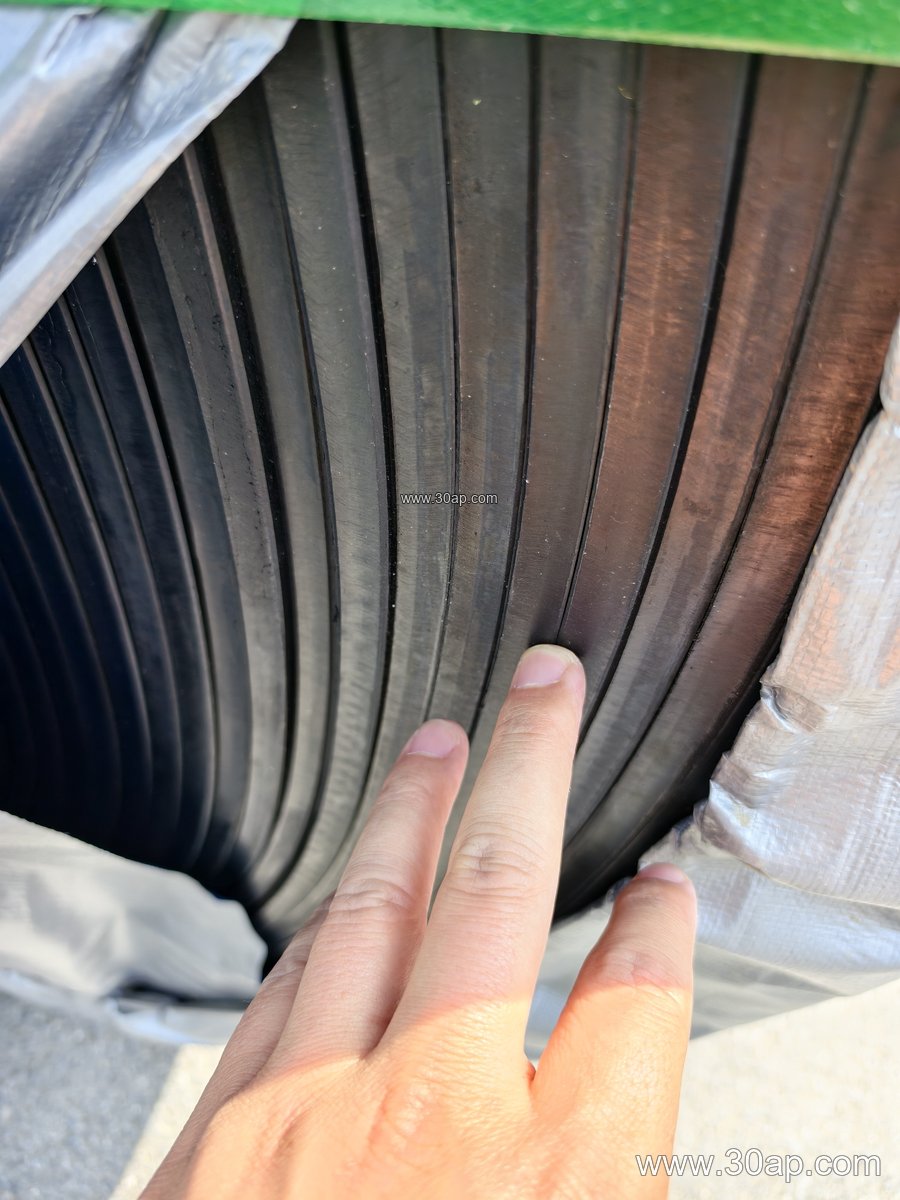
- Carcass: EP (polyester warp, nylon weft) or NN (nylon warp, nylon weft) fabric plies, usually 2 to 6 layers in common industrial grades; steel cord is used where very high tension is required.
- Cover: oil resistant rubber compound, typically specified in thickness pairs such as 4+2 mm, 5+2 mm, 6+2 mm, or 8+3 mm for heavier service.
- Edges: cut edges or moulded edges depending on the manufacturer and the duty.
- Optional forms: chevron conveyor belt patterns, corrugated sidewall conveyor belt profiles, or skirted conveyor belt edges can be combined with an oil resistant cover when the material is oily and the incline is steep.
Typical Reference Values
The figures below are common reference ranges, not universal specifications. Actual values are confirmed by design and by the manufacturer’s data sheet.
| Parameter | Common Reference |
|---|---|
| Strength grades (EP) | EP200, EP315, EP400, EP500, EP630, EP800, EP1000, EP1250 |
| Strength grades (steel cord) | ST1000, ST1250, ST1600, ST2000 |
| Belt width | B500, B650, B800, B1000, B1200, B1400, B1600, B1800 |
| Cover thickness | 3+1.5 mm, 4+2 mm, 5+2 mm, 6+2 mm, 8+3 mm |
| Number of plies | 2 to 6 plies in common fabric constructions |
Where It Is Used
Oil resistance matters wherever greasy material travels on a belt. In a cement plant, oil-soaked raw material or lubricant leakage near the drive area can attack a standard cover. In a recycling conveyor belt line, oily packaging and metal scrap carry residual lubricant. In a power plant, coal conveyor belt systems may see oil from machinery, though flame retardant and anti-static properties are usually the primary safety requirement there.
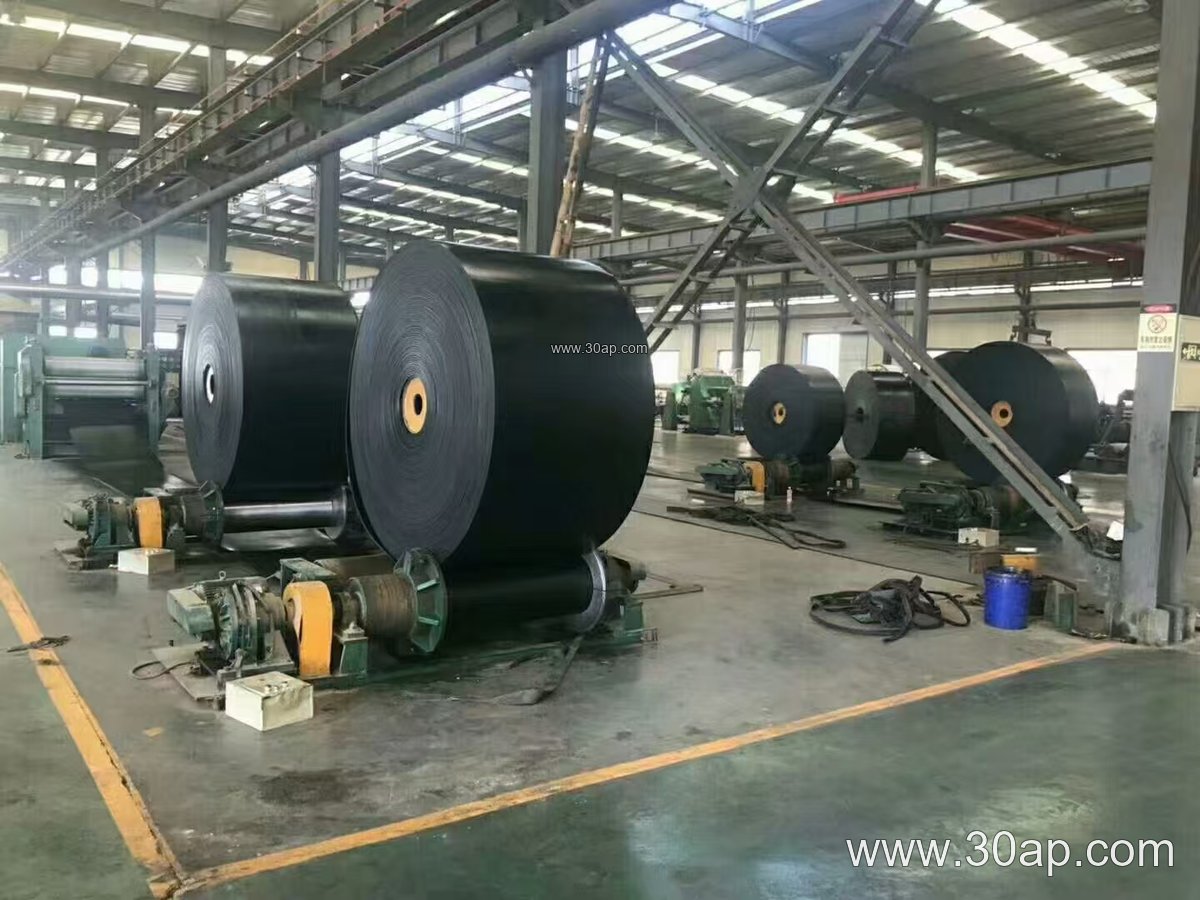
Other relevant settings include:
- Machine shops and metal forming lines handling oily stampings
- Food processing where vegetable oils are present, using a food grade conveyor belt with oil resistant cover where required
- Port conveyor belt and ship loading conveyor belt systems transferring oil-contaminated bulk material
- Quarry conveyor belt and aggregate conveyor belt circuits where equipment lubricant drips onto the carrying side
In a mine, an underground coal mining conveyor belt must generally satisfy flame retardant and anti-static requirements as well; oil resistance is then an additional cover property, not a substitute for those safety characteristics.
Selection Points for Buyers
Start with the contact type. Light oil mist, heavy grease, and hot oil are different duties, and the cover compound should match the actual fluid and its temperature. Confirm how long the oil stays in contact and whether it pools on the belt.
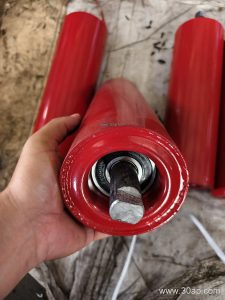
Then check the mechanical duty. A heavy-duty conveyor belt in a crusher conveyor belt line needs enough carcass strength for the load and impact; an oil resistant cover alone does not increase tension capacity. Verify the pulley diameters, take-up arrangement, and troughing idler roller spacing with the belt supplier, since a thick cover and stiff compound affect flexibility. Drive pulley, tail pulley, and bend pulley diameters should be checked against the belt’s minimum bending requirements; these are distinct components and each has its own specification.
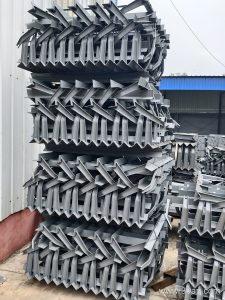
Consider the full system. Conveyor pulley lagging, conveyor bracket condition, and idler roller alignment all influence belt tracking and wear. A belt that runs misaligned will wear through an oil resistant cover faster than expected.
Maintenance Notes
- Clean spilled oil promptly; prolonged pooling stresses any cover compound.
- Inspect splice areas and edges for oil wicking into the carcass.
- Check that cleaning scrapers do not gouge a soft oil resistant cover.
- Store spare belt away from solvents and lubricants.
For an oily transfer point, the practical approach is to specify the oil resistant cover, confirm carcass grade and width for the load, and review the conveyor components around it. Details such as B800, B1000, or B1200 width, EP630 or EP800 strength, and 5+2 mm or 6+2 mm cover thickness should be matched to the actual duty rather than copied from a catalogue. For related rubber conveyor belt options and compatible conveyor components, the product data sheet remains the reference.