What an Idler Bracket Does on a Conveyor
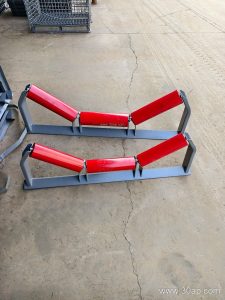
An idler bracket is the mounting component that holds a conveyor idler roller in its working position along the conveyor frame. It connects the roller shaft to the structure and fixes the roll angle, spacing and height that the belt needs to run smoothly. In a quarry, a cement plant or a power plant coal yard, a loose or misaligned bracket quickly shows up as belt wander, edge wear and spillage. The bracket is small compared with the pulley or the drive, but it decides how well the rollers support the conveyor belt.
The same part is also called a roller bracket or idler frame bracket, and these names refer to the same product. Different bracket types are not interchangeable: a troughing bracket carries the loaded side, a return bracket supports the empty side, and a transition or impact bracket has its own job.
How the Bracket Is Built
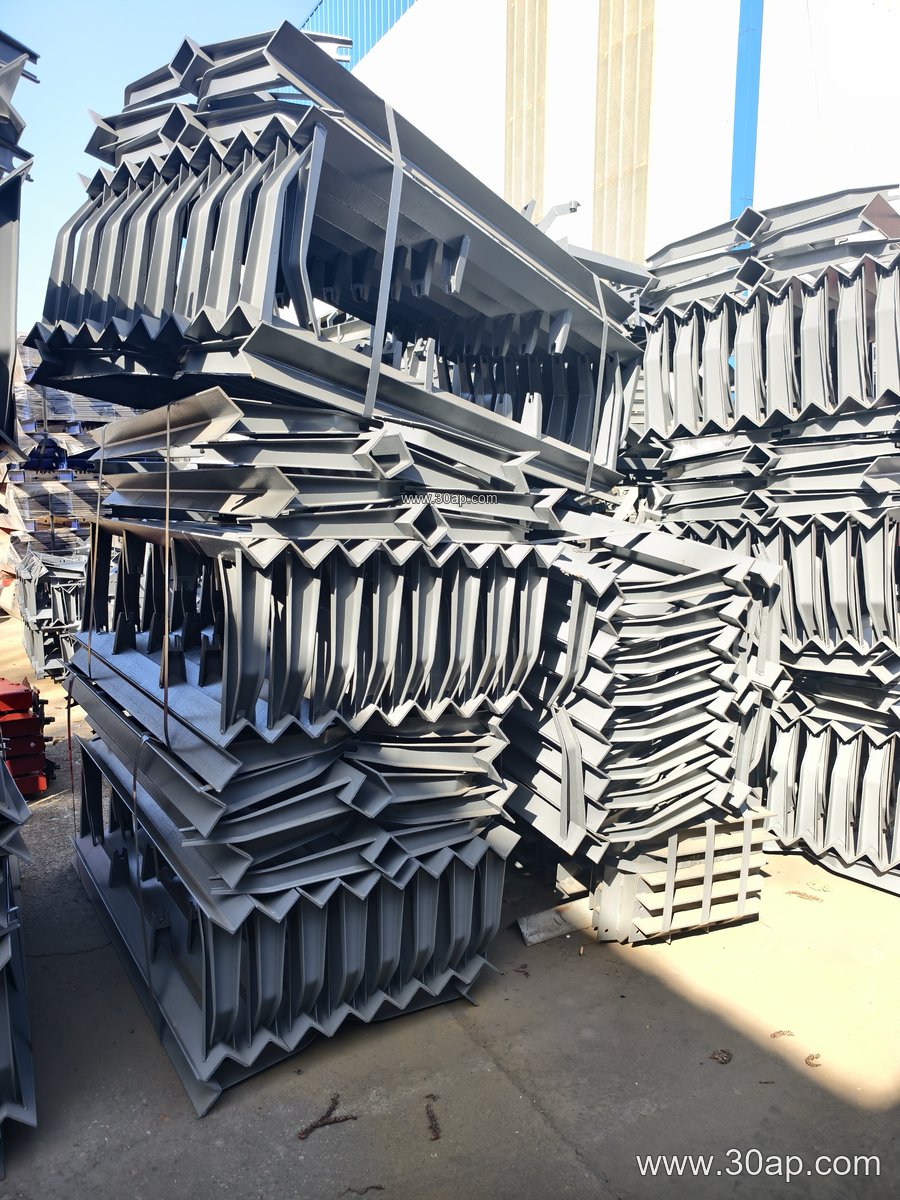
Most brackets are fabricated from angle steel, channel steel or folded steel plate. The shape follows the roller arrangement. A troughing bracket usually has two or three inclined seats that set the trough angle, while a return bracket holds a single flat or V-shaped roller set. Slots and holes are positioned so the roller shaft sits square to the belt path.
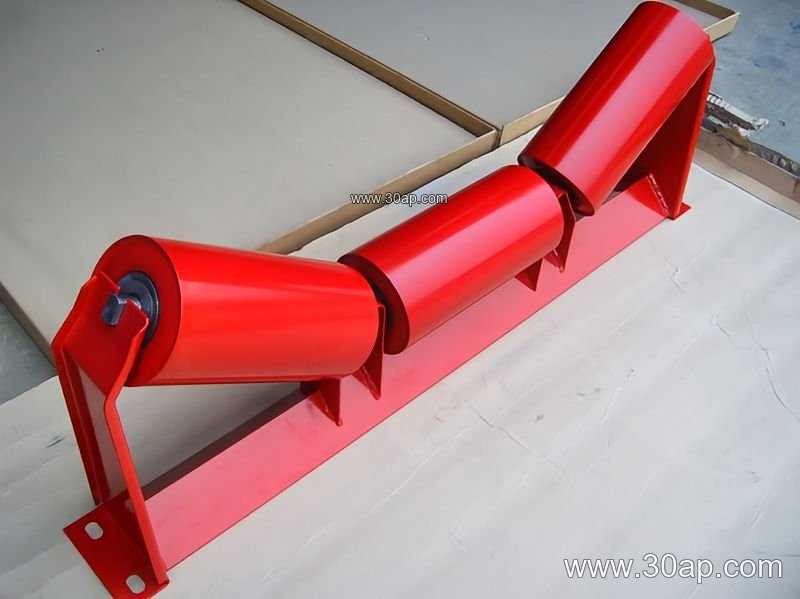
- Welded or bolted frame in angle or channel steel
- Roller seats machined or punched to match shaft ends
- Mounting holes for bolting to the conveyor stringer
- Adjustable versions with slotted seats or pivoting arms
Surface treatment matters in wet or dusty service. A cement plant or a wash plant exposes brackets to abrasive dust and moisture, so paint quality and drainage around the seat area deserve attention during inspection.
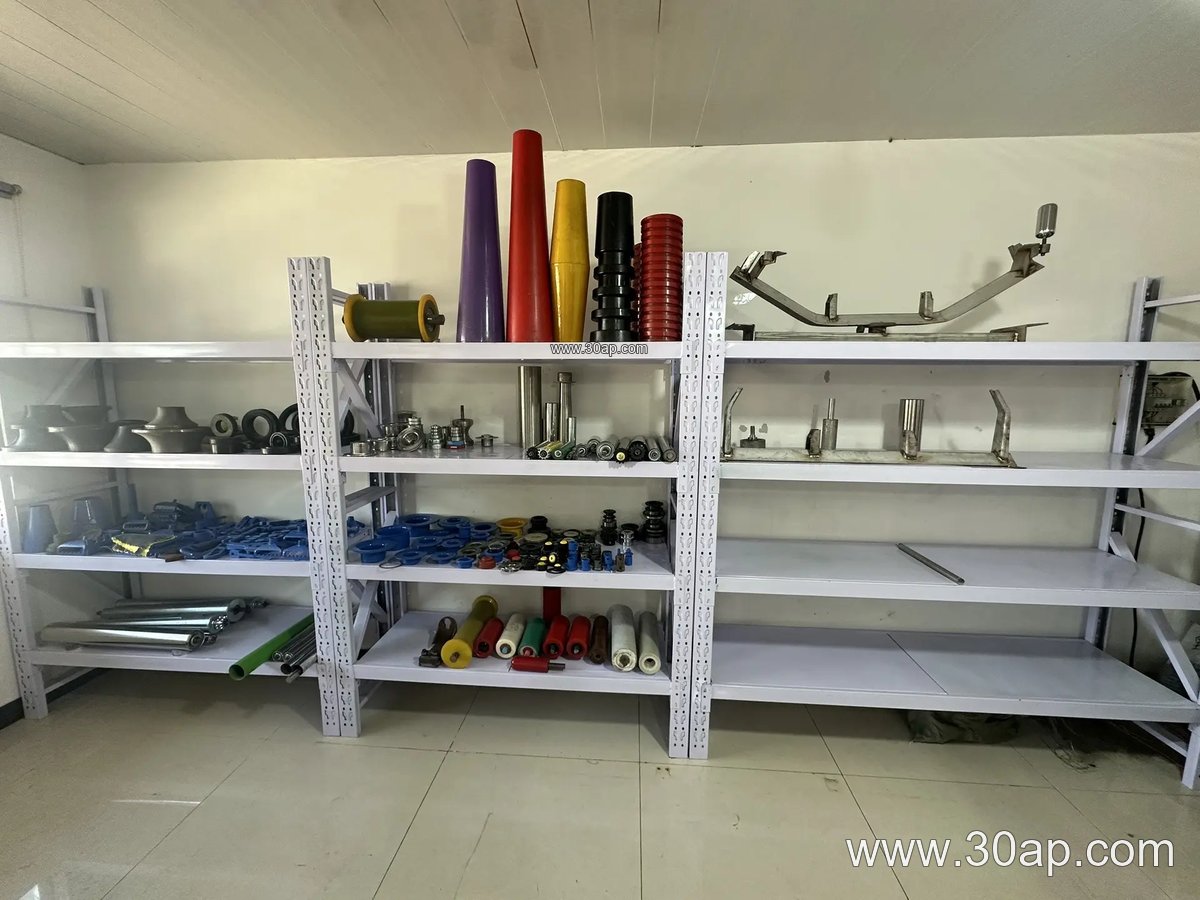
Matching Bracket, Belt Width and Roller Diameter
Bracket selection starts from belt width, trough angle and roller diameter. These three values are linked but not fixed to each other. A B800 conveyor may run a 30 degree trough with Ø108 rollers, while a B1200 line might use 45 degrees and Ø133; the final choice depends on belt speed, material and load. Common belt widths include B500, B650, B800, B1000, B1200, B1400, B1600, B1800, B2000, B2200, and trough angles are usually 20, 30, 35 or 45 degrees. Adjustable brackets allow the angle to be changed within this range, and forward-leaning brackets often sit at about 1.5 to 2 degrees to help belt tracking.
| Belt width | Typical trough angle | Roller diameter options |
|---|---|---|
| B500 / B650 | 20 to 30 degrees | Ø89, Ø108 |
| B800 / B1000 | 30 to 35 degrees | Ø108, Ø133 |
| B1200 / B1400 | 35 to 45 degrees | Ø133, Ø159 |
| B1600 / B1800 | 35 to 45 degrees | Ø159, Ø194 |
| B2000 and above | 35 to 45 degrees | Ø159, Ø194 |
These figures are reference ranges, not rules. Hole spacing and crossbeam length change with belt width and trough angle, so brackets should be ordered against the actual frame drawing. On a wide line carrying an EP conveyor belt or a steel cord conveyor belt, the bracket must also match the roller load rating and the stringer bolt pattern.
Where Brackets Appear in the Plant
In a limestone quarry, troughing brackets line the main haulage conveyor from the crusher to the stockpile, while impact brackets sit below the feed point to absorb lump impact. In a coal-fired power plant, return brackets and V-return brackets keep the empty belt steady on long inclined runs, and self-aligning brackets help counter drift on curves. Similar layouts appear in sand and gravel lines, sintering plants and port ship-loading conveyors.
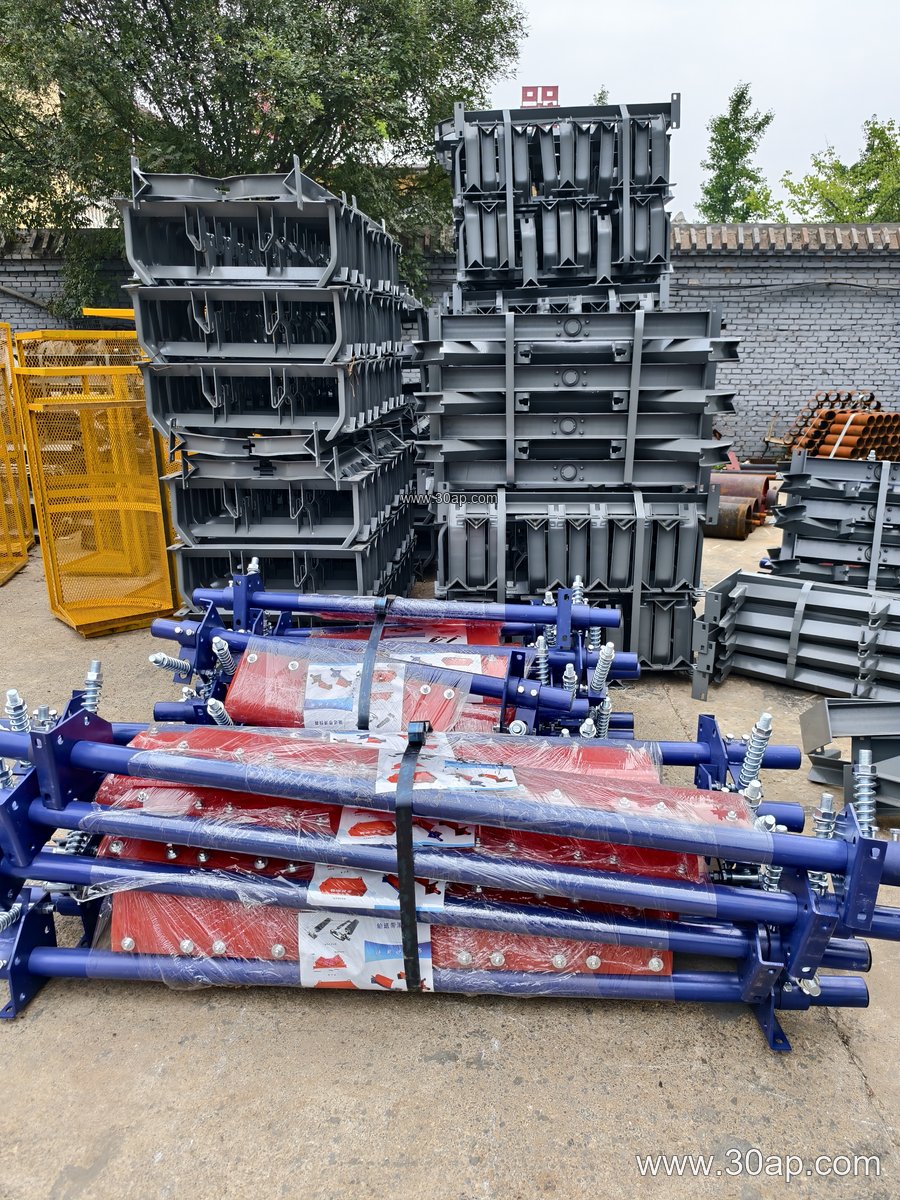
The bracket works together with the roller and the belt. A heavy-duty mining conveyor belt running at high tension needs brackets that hold the roller seats firmly, because flex in the frame shows up as vibration. On a pipe conveyor belt or a corrugated sidewall conveyor belt, the bracket geometry follows the special roller arrangement rather than a standard trough.
Buyer Checklist
- Confirm belt width, trough angle and roller diameter before ordering.
- State whether the bracket is fixed or adjustable, and for the loaded or return side.
- Check material thickness and steel grade for the duty level.
- Match mounting hole spacing to the existing stringer or supply a frame drawing.
- For hot or oily service, confirm that the bracket and roller materials suit the environment.
- Plan spare brackets for feed points where impact damage is most likely.
A correctly specified idler bracket keeps rollers aligned, extends belt life and reduces downtime. Get the width, angle and shaft fit right, and the rest of the conveyor support system falls into place. More details on conveyor brackets and related components can be found at conveyoridlerrolller.com.