What a Rubber Lagged Pulley Does
A rubber lagged pulley is a conveyor pulley whose shell is covered with a rubber layer to improve grip between the pulley and the conveyor belt. In a belt conveyor system, the pulley that transmits drive force needs friction; without it, the belt can slip under load, especially when the surface is wet, dusty, or carrying a heavy bulk material. The rubber lagging raises the friction coefficient, protects the pulley shell from wear, and helps keep the belt centered during operation. It is a practical upgrade for head or drive positions in quarry, cement, and power plant conveyor lines where starting torque and continuous load are demanding.
Construction and Surface Options
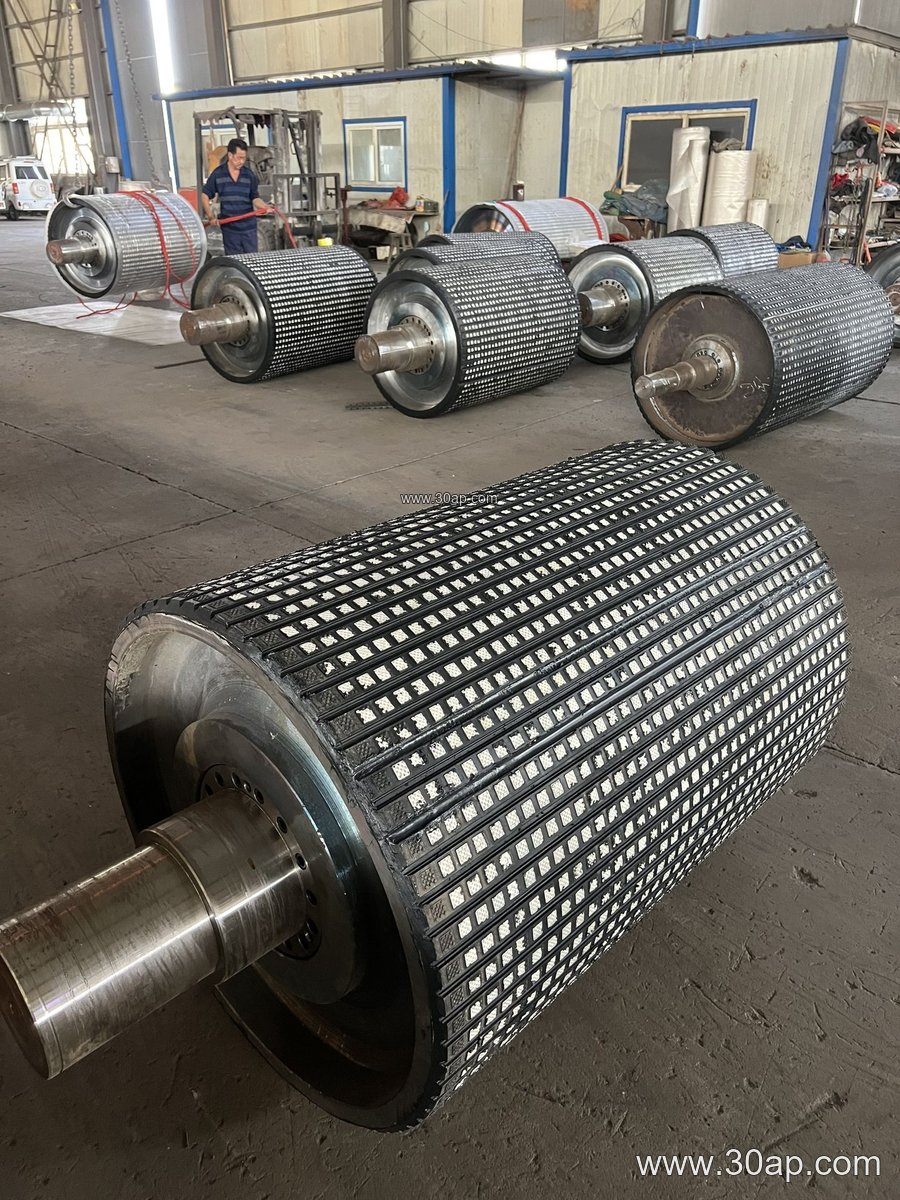
The lagging is usually bonded to a machined steel shell. Common methods include hot vulcanized rubber, cold bonded rubber, and cast rubber. Hot vulcanized lagging generally offers a strong bond and is often chosen for heavy-duty service. Surface patterns matter as much as the rubber compound. Plain or flat lagging suits general duty, diamond grooved lagging helps shed water and fines, and herringbone patterns can improve traction in one or both directions. Ceramic lagging is sometimes used where abrasion is extreme, but it is a different surface form and should be specified only when the duty calls for it.
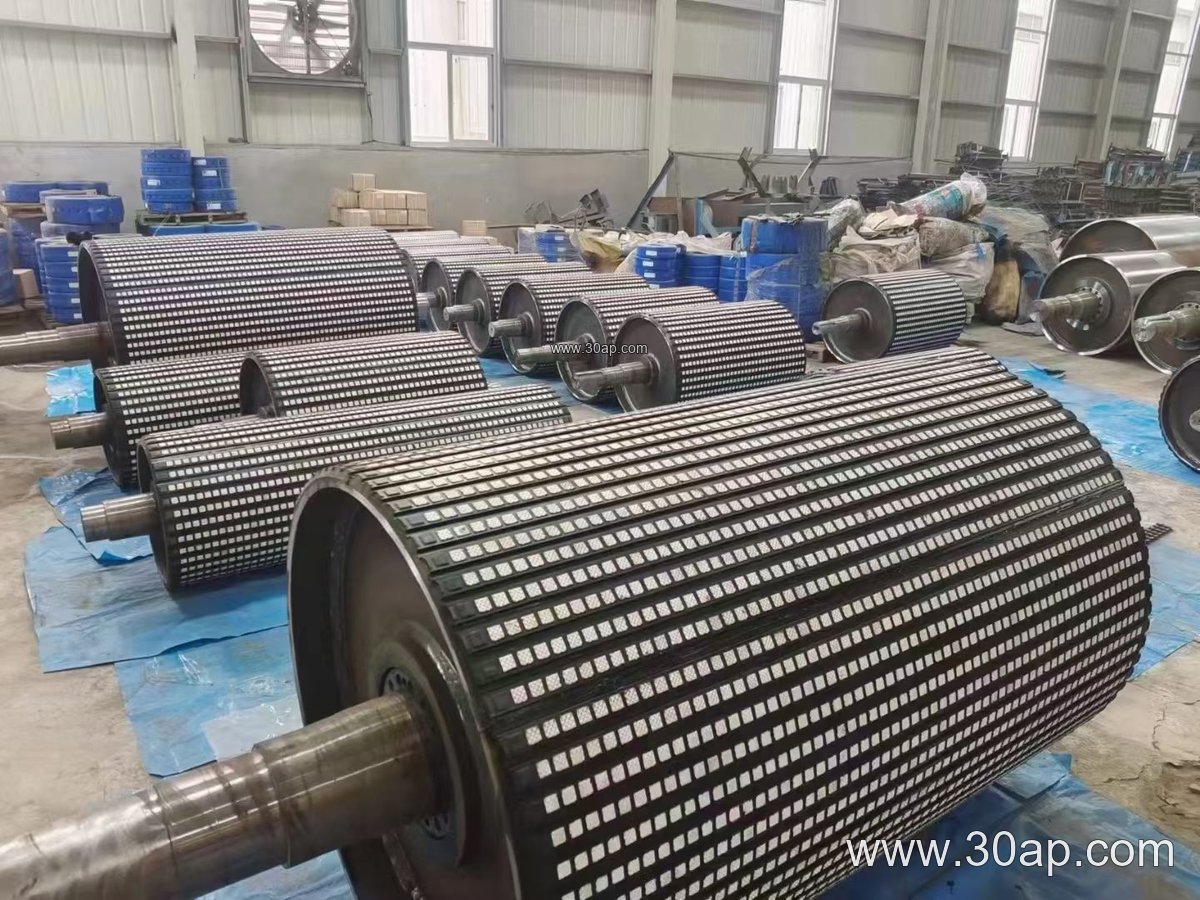
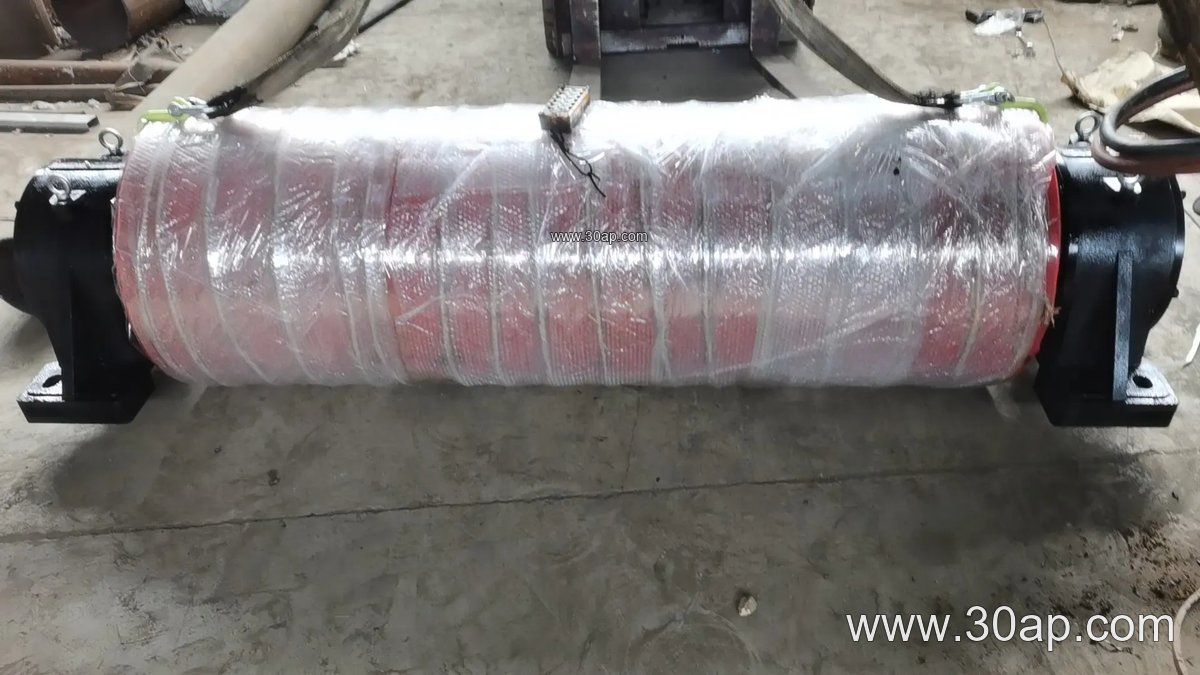
Typical lagging thicknesses are 8, 10, 12, 15, and 20 mm. Thicker rubber lasts longer under high load but adds weight and cost. The pulley face width is normally larger than the belt width; for example, a B800 belt commonly runs on a pulley face around 950 mm, and a B1200 belt on a face around 1400 mm. Diameter and shaft size are not fixed by belt width alone. A B800 × Ø500 and a B1200 × Ø1000 are common combinations, but the final diameter depends on belt tension, wrap angle, and torque. Shaft diameters such as Ø80, Ø100, Ø120, or Ø140 are selected from load calculations, not from a belt width table.
Where It Fits in the Conveyor
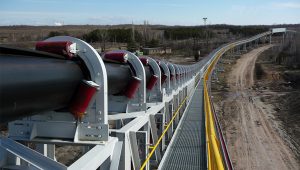
Drive pulleys and head pulleys are the usual home for rubber lagging because they transmit the most torque. A tail pulley or bend pulley may also be lagged when belt slip or wear is a concern, but these are different positions with different duties. A drive pulley is not interchangeable with a tail pulley, and a bend pulley should not be treated as a substitute for either. In a coal mining conveyor or an underground mining conveyor, flame retardant and anti-static properties of the belt and lagging may be required by the site’s safety rules. In a limestone quarry or aggregate conveyor line, abrasion resistant lagging helps resist sharp rock fines. A cement plant conveyor handling clinker benefits from a durable surface that keeps the belt tracking under constant load.
Buyer Checklist
- Confirm the pulley position: drive, head, tail, bend, or take-up. Each has a different load profile.
- Match the lagging thickness and pattern to the material and environment, not just to the belt width.
- Check belt width and pulley face width together, and verify shaft diameter against actual torque and bearing load.
- Consider the conveyor belt type in service, whether an EP conveyor belt, NN conveyor belt, steel cord conveyor belt, or a heat resistant conveyor belt, because tension and wrap angle affect traction needs.
- Ask for the rubber compound’s hardness and wear data, and confirm the bonding method.
Maintenance Notes
Inspect lagging for glazing, cuts, and separation during scheduled shutdowns. Worn grooves reduce friction and can cause belt slip, especially in wet conditions at a port conveyor or wash plant. Keep the pulley surface clean and check that the conveyor bracket and bearing housings are aligned. A lagged pulley works best with a properly tensioned belt and well-aligned idler roller sets. When replacing lagging, match the original thickness and pattern unless the duty has changed. For harsh service such as iron ore or copper ore handling, a thicker hot vulcanized lagging may extend service life, but the final choice should follow the conveyor designer’s recommendation.
For more conveyor components, including conveyor pulley, idler roller, and conveyor bracket options, match each part to the actual duty rather than copying a single size across the line.