What a Conveyor Idler Bracket Does on a Belt Conveyor
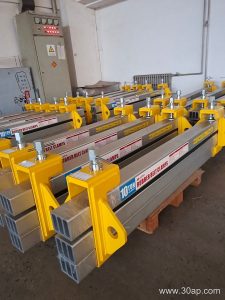
A conveyor idler bracket is the structural support that holds the idler roller in the correct position under or over the conveyor belt. It keeps the roller at the right height, sets the trough angle, and transfers the load from the belt and material into the conveyor frame. In a quarry, a coal washing plant, or a power plant coal handling line, the bracket is a small part with a large effect on belt tracking, roller life, and maintenance effort.
The same component is often called an idler frame or roller support bracket. Those names describe the same product. Drive pulleys, tail pulleys, and bend pulleys are different components and are not interchangeable with this support part.
How the Bracket Is Built
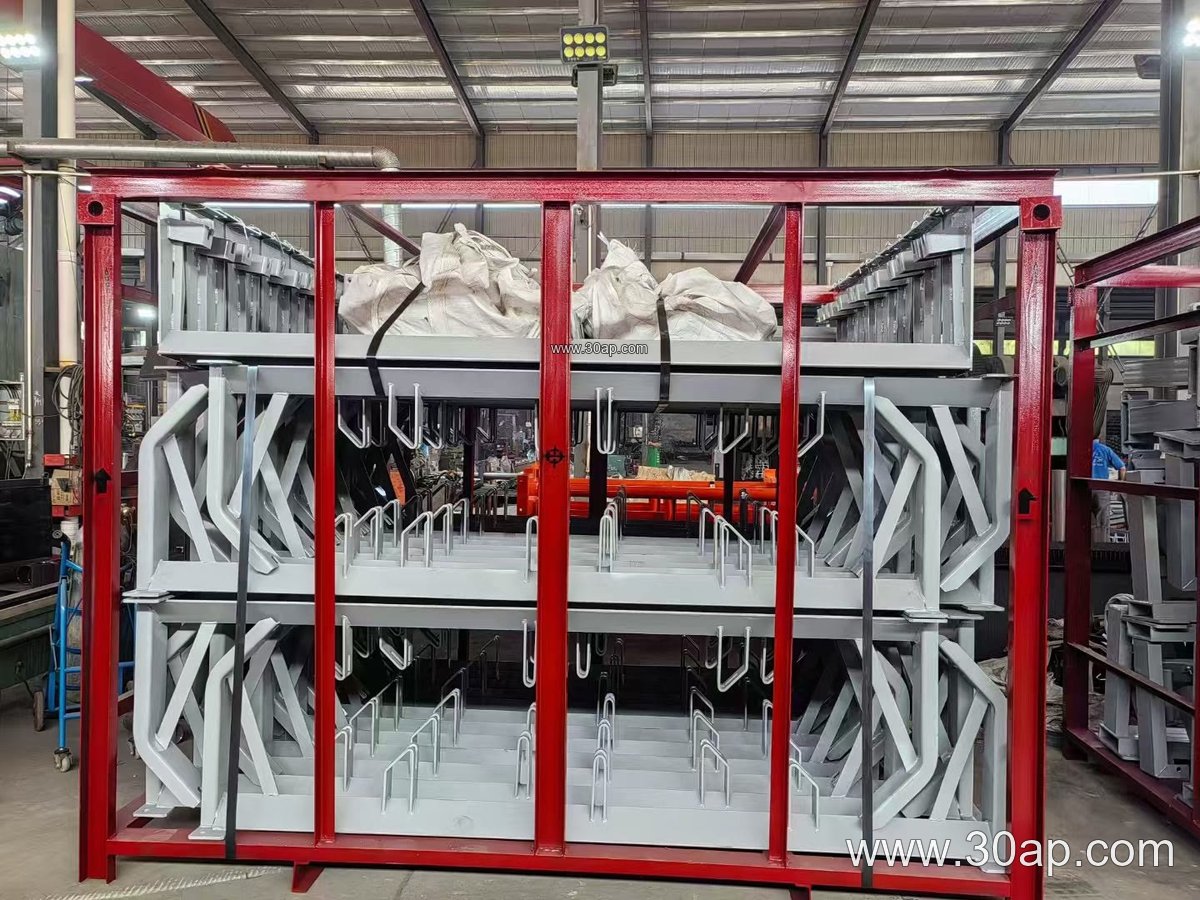
Most brackets are fabricated from angle steel, channel steel, or folded steel plate. The choice depends on load, belt width, and the environment. A typical assembly includes a crossbeam, mounting slots or holes for the idler shaft, and brackets that set the trough angle. Some designs use a single-piece folded frame for simpler alignment, while heavy-duty versions use welded channel sections.
| Item | Common Reference |
|---|---|
| Material | Angle steel, channel steel, folded plate |
| Belt width range | B500 to B2200 |
| Trough angle | 20, 30, 35, 45 degrees |
| Idler diameter | Ø89, Ø108, Ø133, Ø159, Ø194 |
| Installation hole spacing | Determined by belt width and trough angle |
These values are reference data. Actual dimensions should follow the conveyor design drawing, because hole spacing and crossbeam length change with belt width and trough angle.
Main Types and Where They Fit
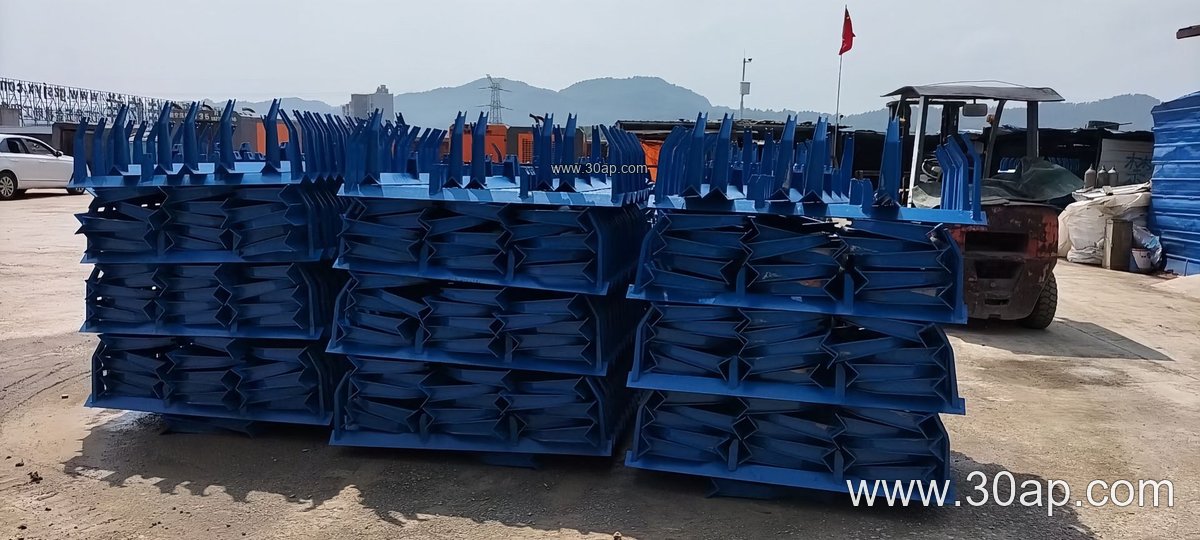
The carrying side usually uses a troughing bracket, also called an upper trough bracket, which holds three idlers at a set angle. A transition bracket is placed near the pulley to guide the belt from flat to troughed. On the return side, a lower flat bracket or a V-return bracket supports the belt. Impact brackets with cushioning are common below crusher discharge points in stone crushing and aggregate lines. Self-aligning and forward-leaning brackets help with belt tracking, while hanging and adjustable brackets suit movable or retrofit conveyors.
A belt that misaligns is often blamed on the belt itself, but the bracket and roller alignment deserve a check first. On a long overland conveyor carrying iron ore or copper ore, small angle errors add up quickly.
Matching Bracket, Roller, and Belt
A bracket should be selected together with the idler roller and the conveyor belt, not in isolation. A B800 belt at 35 degrees with Ø108 rollers is a common combination, and B1200 at 45 degrees with Ø133 rollers appears in heavy bulk handling. B650 at 30 degrees with Ø89 rollers suits lighter duties. None of these is a fixed rule. A wider belt does not automatically require a specific pulley diameter, and shaft size should come from the conveyor design, not from belt width alone.
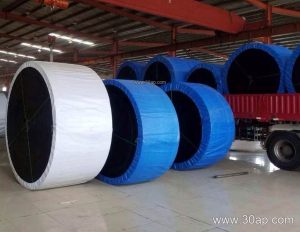
The belt type also matters. An abrasion resistant conveyor belt carrying sharp rock loads the bracket differently from a smooth EP conveyor belt in a cement plant. A steel cord conveyor belt on a high-tension main line needs a stiff, well-aligned frame. A chevron conveyor belt or a corrugated sidewall conveyor belt may need more clearance around the idlers, so check the bracket profile.
Buyer Checklist
- Confirm belt width, trough angle, and idler diameter before ordering.
- Ask for the mounting hole spacing and crossbeam length, since these vary by design.
- Match material thickness to the load and to the working environment.
- For dusty or wet sites, check that the bracket drains and does not trap material.
- Keep spare brackets for transition and impact positions, where wear is faster.
For related components, buyers often review the conveyor bracket together with the conveyor pulley and idler roller set, so the whole support line is consistent. For bulk material conveyor belt projects, matching the frame to the belt and roller pays off in longer service life and less downtime. More details on belt and roller matching are available at www.beltconveyorspare.com.