What Conveyor Pulley Lagging Does
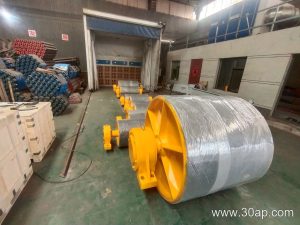
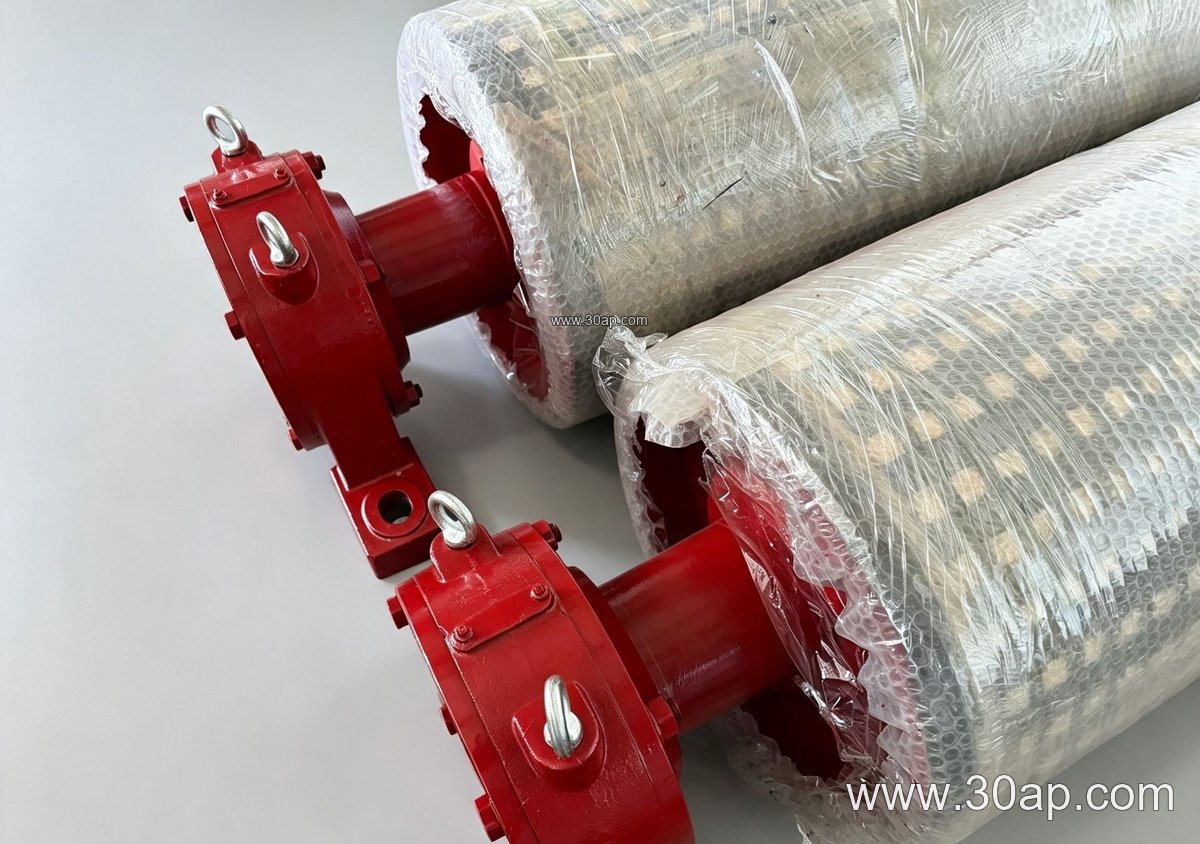
Conveyor pulley lagging is the rubber or ceramic layer bonded to the shell of a conveyor pulley to improve grip between the drum and the conveyor belt. Without it, a bare steel shell can slip when the belt is wet, dusty, or carrying a heavy load. The lagging raises friction, protects the shell from wear, and helps keep the belt centered on the pulley. In a quarry, a cement plant clinker line, or a power plant coal yard, this small component often decides whether the drive train runs smoothly or keeps stalling.
The same product is also called pulley lagging, drum lagging, or conveyor drum rubber lagging. It is not a substitute for a drive pulley, tail pulley, or bend pulley; it is a surface treatment applied to those pulleys. The pulley type still determines where the lagging sits and what it must do.
How the Lagging Is Built
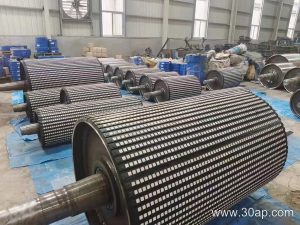
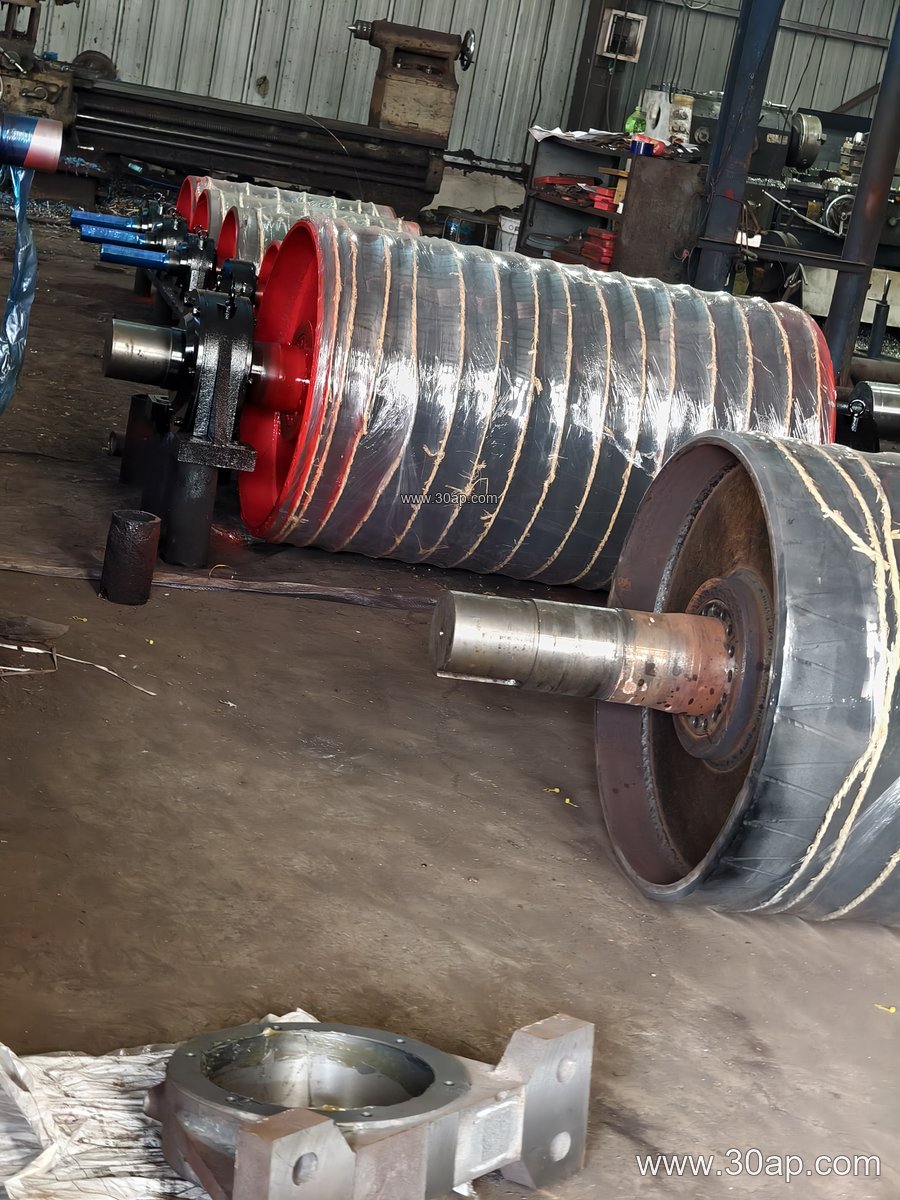
Most lagging starts as a rubber sheet, either plain or with a patterned surface, which is bonded to the pulley shell. Common surface forms include plain, diamond, herringbone, and ceramic tile. Thickness usually falls in the 8 mm to 20 mm range, with 8, 10, 12, 15, and 20 mm being familiar options. The bonding method matters as much as the rubber itself: cold-bonded lagging is applied with adhesive, while hot-vulcanized lagging is cured onto the shell for a stronger, more durable joint.
Ceramic lagging embeds hard tiles in a rubber matrix, which suits abrasive duty where rock, ore, or sinter fines chew at the surface. Diamond and herringbone patterns channel water away and improve grip in wet conditions. A plain surface is often enough for light duty or where cleaning is easy. The pulley shell width is normally a little wider than the belt, so a B800 belt usually runs on a pulley face around 950 mm, and a B1200 belt on roughly 1400 mm. Diameters vary widely, for example B800 × Ø500 or B1200 × Ø1000, but these are design examples rather than fixed pairings.
Where It Fits on the Conveyor
Lagging behaves differently depending on which pulley carries it. On a drive pulley, the goal is traction, so diamond or ceramic lagging is common in heavy-duty mining and aggregate service. On a tail pulley, lagging protects the shell from grit and helps the belt track. A bend pulley or snub pulley may use thinner lagging mainly for wear protection. Tension pulleys in a take-up system also benefit, especially where the belt is under constant load.
In a coal mining conveyor or underground coal mining conveyor, flame retardant and anti-static properties may be requested for the belt, and lagging should be selected with the same fire-safety thinking in mind. In a port ship loading conveyor or a steel plant sinter line, the lagging must cope with high tonnage and sharp material. A crusher conveyor belt and rock conveyor belt often run in dusty, abrasive conditions where ceramic lagging earns its place.
Belt and Pulley Work as a Pair
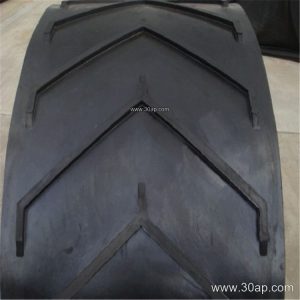
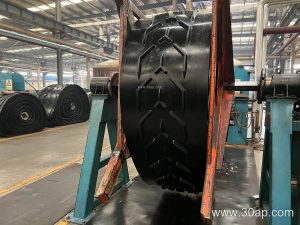
Lagging performance depends on the belt it contacts. A rubber conveyor belt with a smooth cover grips differently from a chevron conveyor belt or a corrugated sidewall conveyor belt. Heavy-duty mining conveyor belts and steel cord conveyor belts carry high tension, so the drive pulley needs enough friction to transmit power without excessive slip. In a cement plant or aggregate conveyor line, a multi-ply fabric core conveyor belt may run alongside an EP conveyor belt or NN conveyor belt on different sections, and each pulley should be matched to its duty.
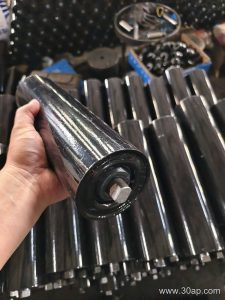
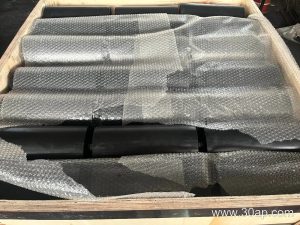
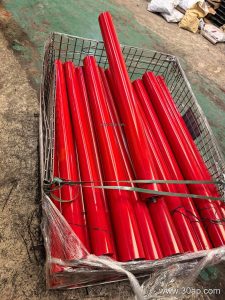
Belt width does not dictate shaft diameter. Shaft size is set by torque and load, with common ranges such as Ø80, Ø100, Ø120, Ø140, Ø160, and Ø200 determined by the drive design. A conveyor pulley, its conveyor bracket, and the surrounding idler roller frames all form one mechanical system, so lagging choice should be part of the whole layout rather than an afterthought.
What Buyers Should Check
- Confirm the pulley position: drive, tail, bend, or tension. Each has a different traction and wear profile.
- Match the surface form to the material: ceramic for abrasion, diamond or herringbone for wet grip, plain for light duty.
- Ask about bonding method, since cold-bonded and hot-vulcanized lagging behave differently in service.
- Check thickness against the duty cycle, not just the belt width.
- Verify that the lagging suits the belt cover, especially with heat resistant conveyor belt or oil resistant conveyor belt grades.
- Plan inspection intervals, because worn or loose lagging causes slip, belt tracking problems, and premature pulley wear.
For anyone sourcing conveyor components, the practical rule is simple: treat conveyor pulley lagging as a wear part with a job to do, specify it by position and material, and keep the pulley, belt, and frame design in view together.