What the Carrying Bracket Does on a Conveyor
A conveyor carrying bracket is the structural seat that holds the troughing idlers under the loaded strand of a belt conveyor. In everyday plant language it is also called a troughing idler bracket, troughing frame, or carrying idler support. It keeps the idler roller at the correct height, spacing, and trough angle so the conveyor belt forms a stable channel for bulk material. Without a properly built bracket, even a good idler roller loses alignment, the belt edge wears quickly, and spillage rises.
These brackets appear wherever bulk material moves continuously: a quarry conveyor belt line feeding a primary crusher, a coal mining conveyor belt on a surface transfer, a cement plant clinker route, or a power plant coal handling gallery. The same basic part also supports the belt in sand and gravel plants and in port ship loading systems.
How a Carrying Bracket Is Built
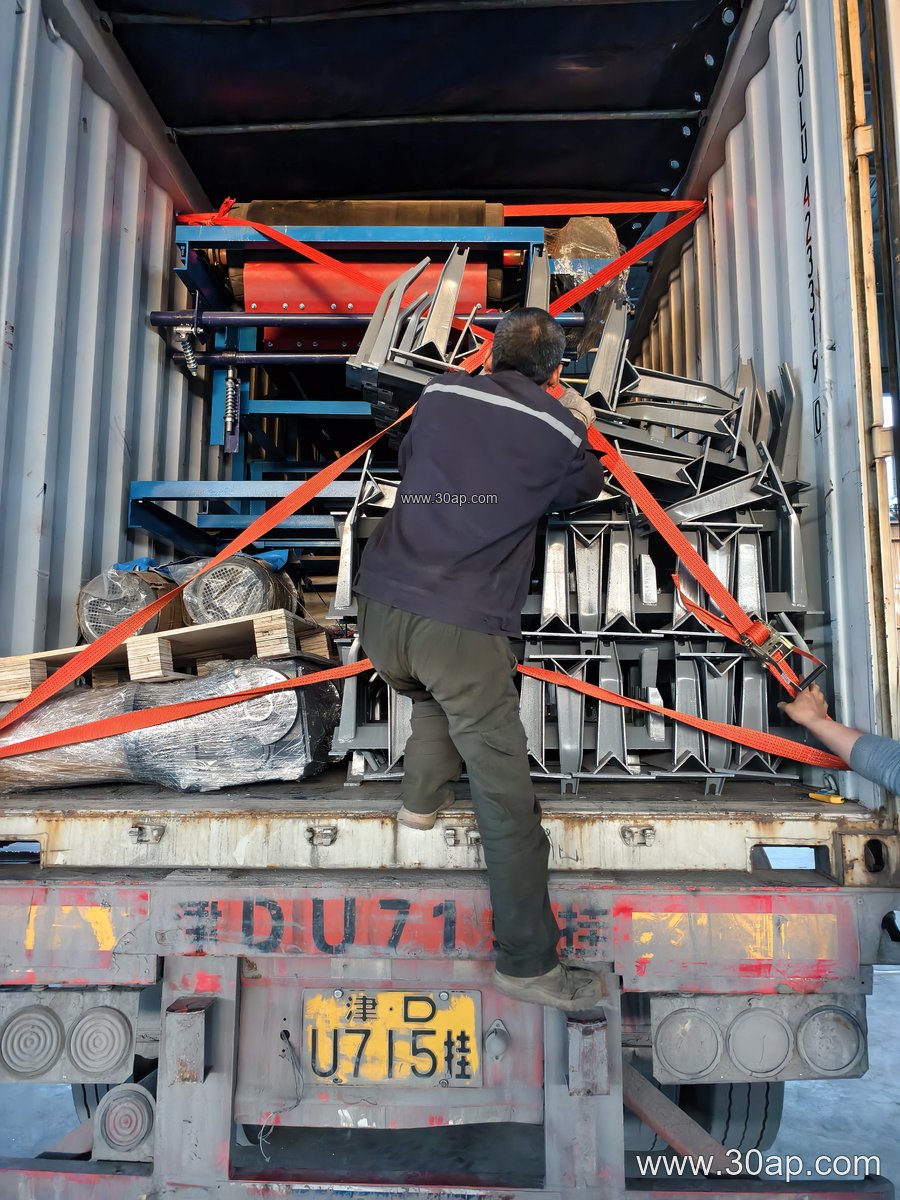
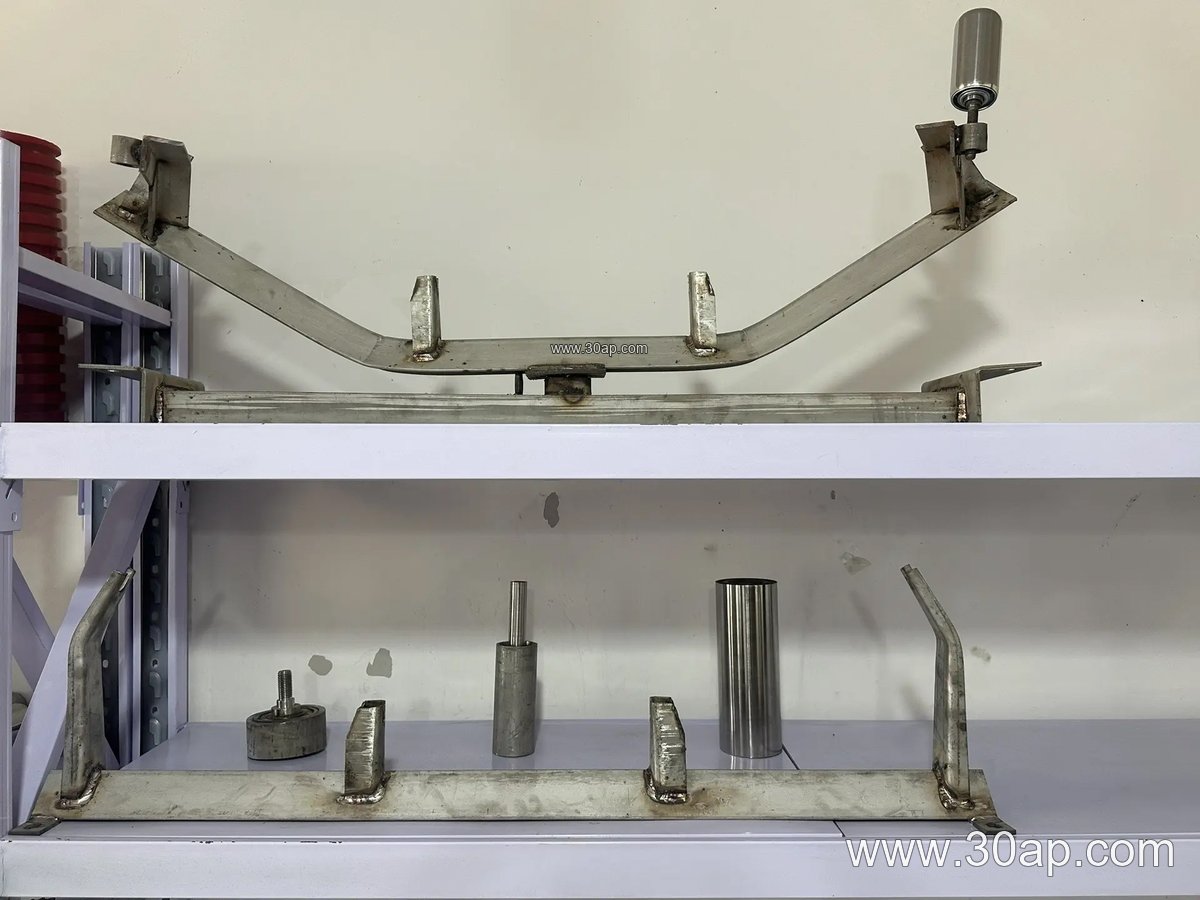
Most carrying brackets are fabricated from angle steel, channel steel, or folded steel plate. A typical unit has a cross beam, two or three idler seats set at the chosen trough angle, and mounting feet that bolt to the conveyor stringer. Welded gussets add stiffness where the idler shaft loads enter the frame. Surface treatment is usually painting or galvanizing, chosen for the site atmosphere.
- Cross beam and mounting feet carry the vertical load of belt plus material.
- Idler seats position each roller at the design trough angle.
- Gussets and stiffeners control deflection between support points.
- Slotted holes on some designs allow lateral adjustment during alignment.
Hole spacing and beam length are not universal. They follow belt width, trough angle, and the idler series selected, so a replacement bracket should be ordered against the original drawing or a measured sample.
Trough Angle and Belt Width Go Together
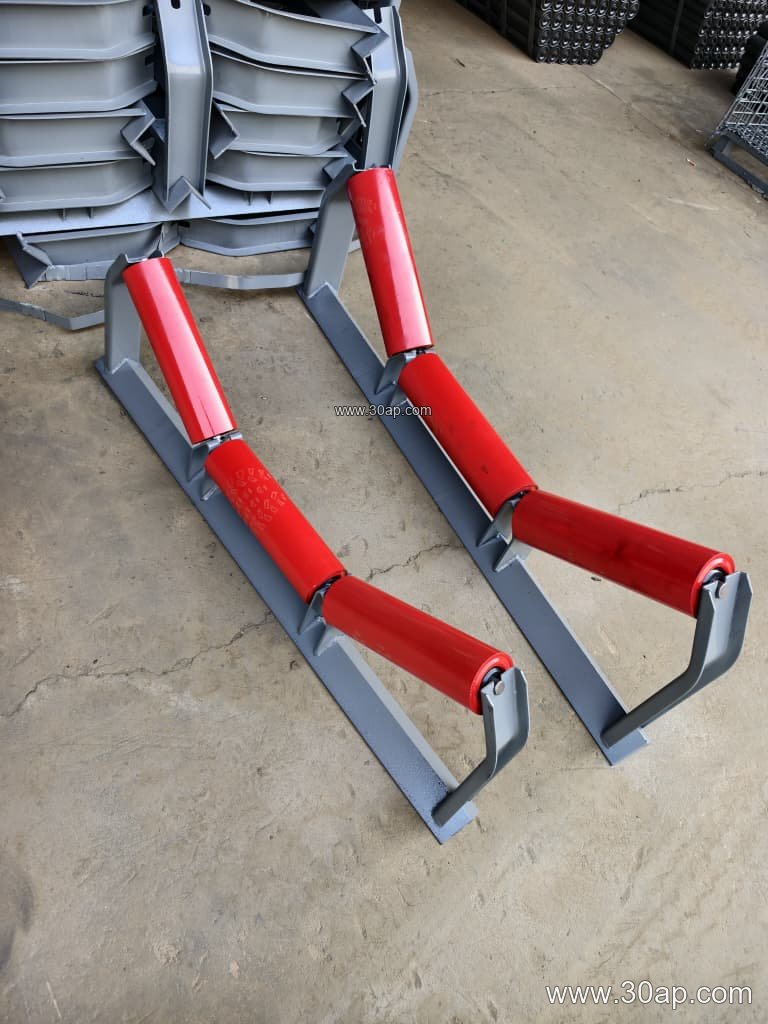
The trough angle decides how deeply the belt is cupped. Common values are 20, 30, 35, and 45 degrees. A 30 degree frame is a frequent choice for general bulk material, while 35 or 45 degrees suits higher capacity where the material is free flowing. Adjustable brackets let maintenance teams move between these angles instead of stocking several fixed versions. Forward-tilted brackets, usually around 1.5 to 2 degrees, are used to help belt training on some lines.
Belt width and roller diameter are matched by design, not by a fixed rule. A B800 frame with a 35 degree trough and Ø108 idlers is a common combination, and a B1200 line might run 45 degrees with Ø133 rollers. Wider belts such as B1600 or B1800 usually need heavier frames and larger roll diameters, but the final match depends on load, speed, and idler series. No single belt width locks a bracket to one angle or one roller size.
| Reference item | Typical range |
|---|---|
| Belt width | B500 to B2200 |
| Trough angle | 20, 30, 35, 45 degrees |
| Idler diameter | Ø89, Ø108, Ø133, Ø159, Ø194 |
| Frame material | Angle steel, channel steel, folded plate |
Fixed, Adjustable, and Special Brackets
Fixed carrying brackets are welded to one trough angle and are the simplest option for a stable, well designed line. Adjustable versions allow the idler seats to be repositioned, which helps during commissioning or when the material changes. Impact brackets with resilient idler seats are placed at the loading point, and self-aligning brackets are used where the belt tends to wander. These are different duties, not interchangeable parts. A bend pulley or tail pulley correction is a separate matter from bracket selection.
On a typical stone crushing conveyor belt, the carrying brackets sit between the loading zone and the head, while impact frames protect the belt at the transfer chute. In underground coal mining conveyor belt service, flame retardant conveyor belt and anti-static conveyor belt grades are often specified alongside the frame, because the whole system is chosen for the environment.
Buyer Checklist
- Confirm belt width, trough angle, and idler diameter from the conveyor drawing.
- Check mounting hole pitch and beam length against the stringer.
- State the material and finish needed for the site atmosphere.
- Decide between fixed and adjustable seats based on maintenance practice.
- Match the idler series, since the bracket seat must accept that shaft.
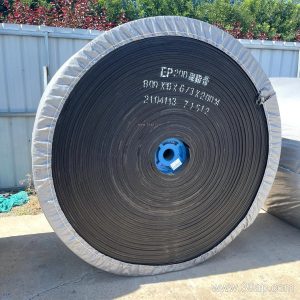
When ordering, give the full description, for example B1000, 35 degree, Ø133, fixed, painted. Buyers comparing suppliers should ask for a dimension drawing rather than relying on a generic photo, because two brackets that look alike may differ in hole spacing. For related components, the same drawing review applies to the conveyor pulley, idler roller, and the belt itself, whether that belt is an EP conveyor belt, an NN conveyor belt, or a steel cord conveyor belt. A well matched carrying bracket keeps the whole line running straight and quietly.