What a Ceramic Lagged Pulley Does on a Conveyor
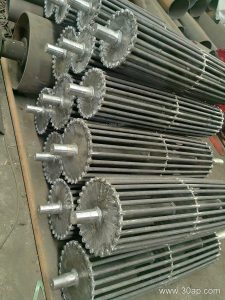
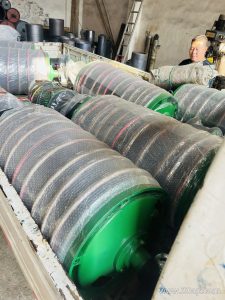
A belt conveyor ceramic lagged pulley is a conveyor pulley whose outer surface carries embedded ceramic tiles instead of plain rubber or bare steel. These tiles are set into a rubber or polymer backing and then bonded or vulcanized to the pulley shell. The result is a drive or tail pulley with a hard, granular grip that resists wear from slipping belts, abrasive dust, and wet conditions. In a quarry or a coal washing plant, that extra traction often makes the difference between a steady belt and a belt that keeps stalling under load.
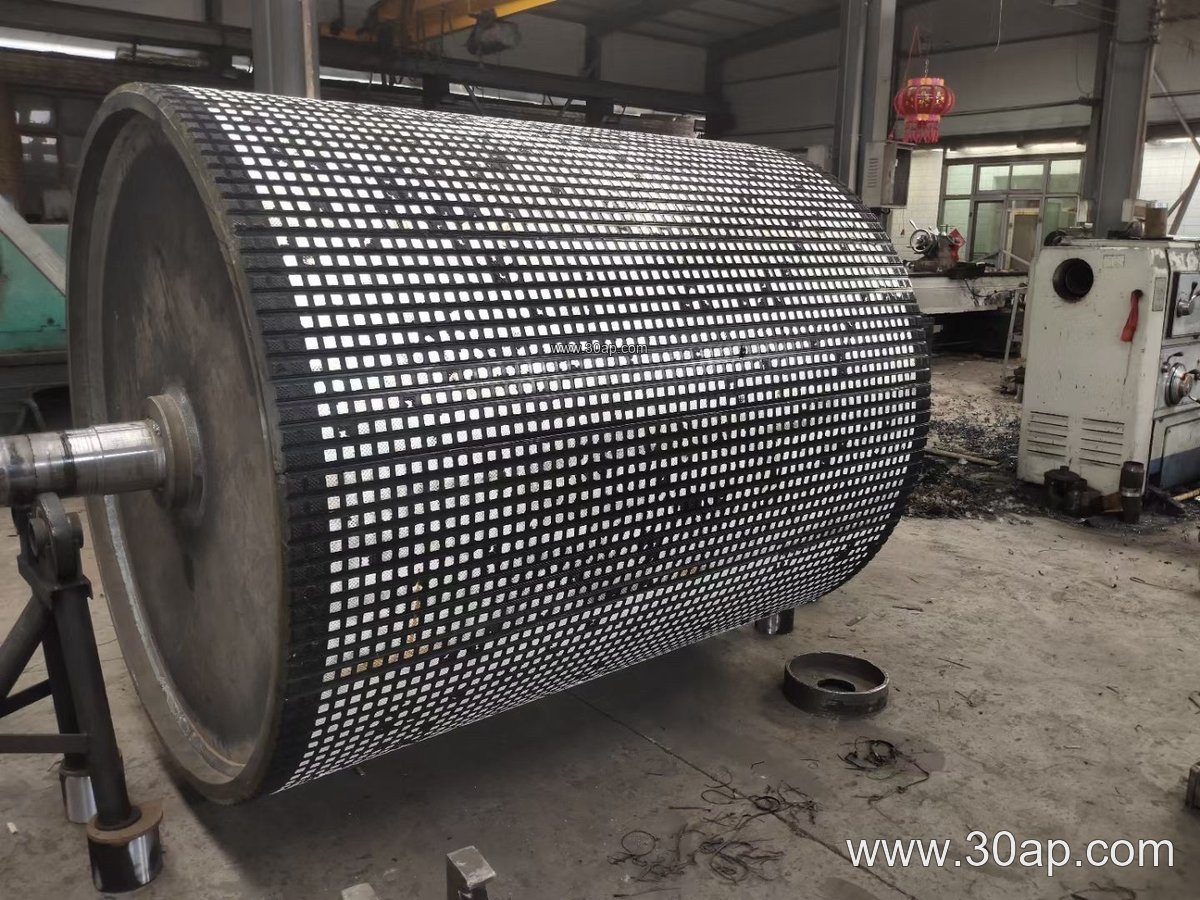
The ceramic lagging is not just a rough surface. Each tile usually contains small raised studs that press into the conveyor belt cover without cutting it. The backing absorbs shock, while the ceramic takes the abrasion. This combination works well where a standard rubber lagged pulley would polish smooth too quickly, such as on a heavy-duty mining conveyor belt that carries damp ore or aggregate.
How the Ceramic Lagging Is Built
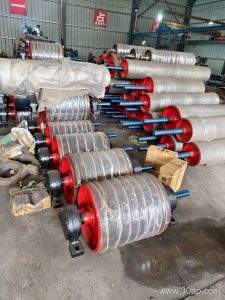
A typical belt conveyor ceramic lagged pulley starts with a steel shell, machined ends, and a shaft sized by torque rather than by belt width alone. The lagging is applied in one of two common ways: vulcanized ceramic lagging, where the rubber backing is hot-bonded to the shell, or cold-bonded ceramic lagging using a high-strength adhesive. Tiles are often rectangular or square, with a pattern of raised ceramic nubs. Thickness of the lagging may be specified as 8, 10, 12, 15, or 20 mm depending on the duty.
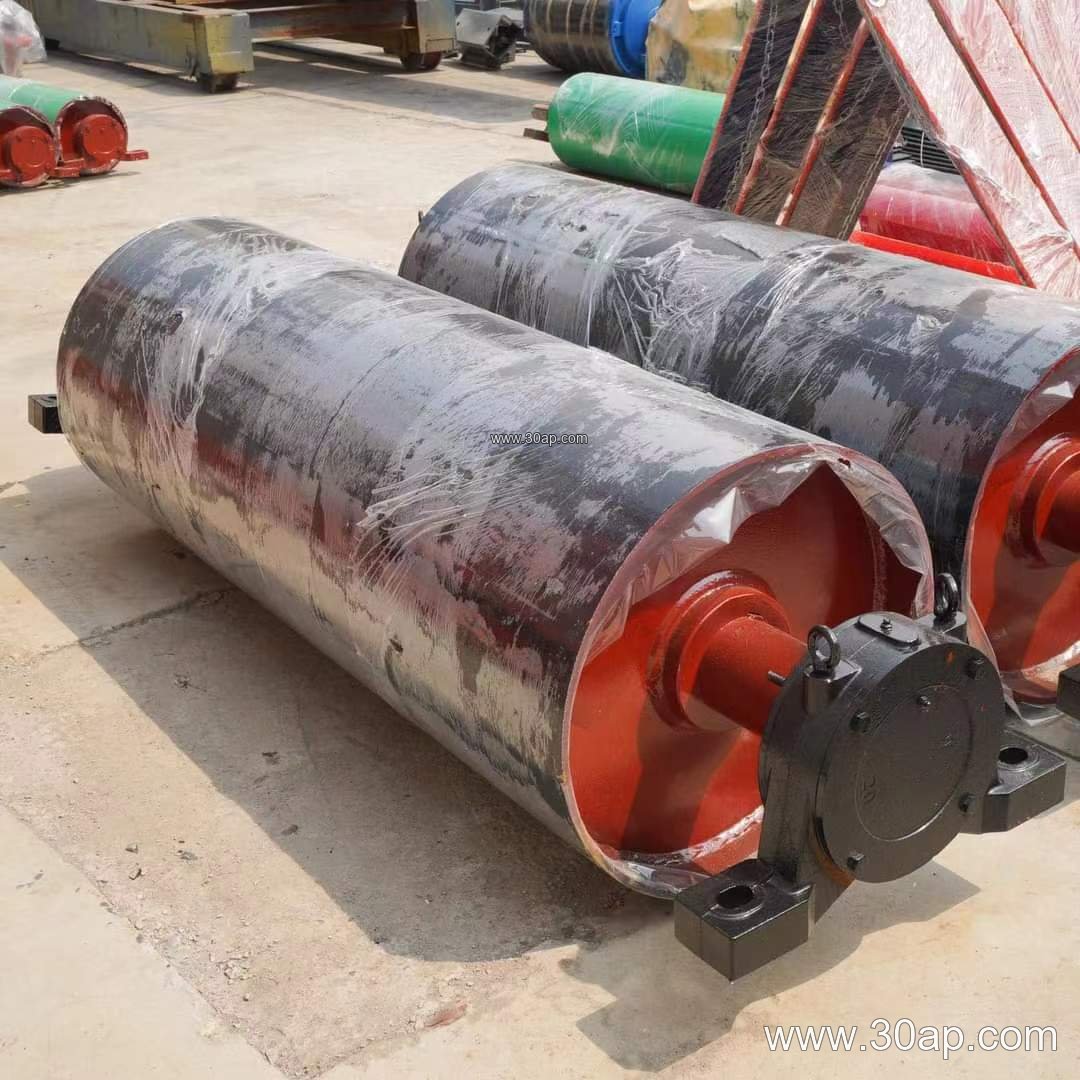
Common shell diameters for these pulleys include Ø200, Ø250, Ø315, Ø400, Ø500, Ø630, Ø800, Ø1000, Ø1250, and larger sizes up to Ø1800 in heavy mining duty. Face width is normally wider than the belt, so a B800 belt often runs on a face around 950 mm, while a B1200 belt may use a face near 1400 mm. Shaft diameters such as Ø80, Ø100, Ø120, Ø140, or Ø160 are selected by the engineer based on load and bearing arrangement; a given belt width does not lock in one shaft size.
Surface and subtype notes
Ceramic lagging is a surface form, not a pulley type. The same ceramic surface can appear on a drive pulley, a tail pulley, or a bend pulley, and each position has different demands. A drive pulley needs maximum grip to transmit torque. A tail pulley benefits from ceramic lagging when the belt is wet or when fines pack around the shell. A bend pulley usually runs with lower wrap angle, so plain or rubber lagging may be enough.
Where It Fits in the Conveyor Line
You will see this pulley in a range of bulk handling sites. In a limestone quarry or a sand and aggregate line, it often serves as the head drive pulley on a crusher conveyor belt that carries sharp, dusty stone. In a cement plant, it may appear on clinker or raw material conveyors where dust and heat are present. In a power plant coal yard, a ceramic lagged drive pulley can improve grip on a coal conveyor belt that sees seasonal rain and freezing. It is also found in iron ore and copper ore operations, where the belt load is heavy and downtime is expensive.
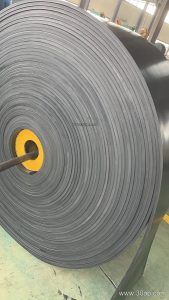
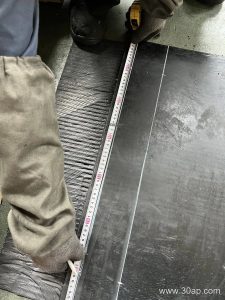
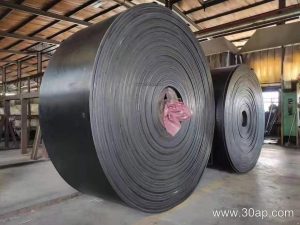
Because ceramic lagging can be harder than rubber, it is sometimes chosen for the drive pulley of a steel cord conveyor belt or a high-tension EP conveyor belt. The ceramic studs engage the belt cover without needing aggressive belt tension. That said, a ceramic lagged pulley is not a substitute for a proper take-up or a well-aligned conveyor bracket, and it should not be used to hide a misaligned idler roller set or a worn belt edge.
Matching the Pulley to the Belt and the Duty
Buyers should think about four things: belt width, belt type, pulley position, and site conditions. A B650 or B800 belt on a small aggregate conveyor may use a Ø400 or Ø500 ceramic lagged drive pulley, while a B1400 or B1600 belt in a port or mine may run on a Ø800 or Ø1000 shell. These are common pairings, not fixed rules. The belt itself matters too: a flame retardant conveyor belt used underground may need a lagging that does not create static or excessive heat, while an abrasion resistant conveyor belt with a thick cover can tolerate more ceramic stud pressure.
| Parameter | Common reference range |
|---|---|
| Belt width (B) | B400, B500, B650, B800, B1000, B1200, B1400, B1600, B1800, B2000 |
| Pulley diameter (Ø) | Ø200, Ø250, Ø315, Ø400, Ø500, Ø630, Ø800, Ø1000, Ø1250 |
| Lagging thickness | 8, 10, 12, 15, 20 mm |
| Shaft diameter | Ø50 to Ø200, determined by torque and load |
| Face width | Usually wider than belt, e.g. B800 around 950 mm, B1200 around 1400 mm |
For a B1200 × Ø1000 drive pulley, ceramic lagging is a common choice when the conveyor starts under load or runs in wet conditions. A B800 × Ø500 tail pulley may use ceramic lagging to keep the return belt centered where fines build up. A B1400 × Ø800 bend pulley might stay with rubber lagging if the wrap angle is low. None of these combinations is mandatory; they simply show how diameter, face width, and lagging type interact.
Buyer Checklist and Maintenance Notes
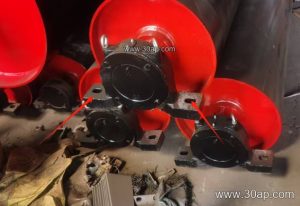
Ask for the lagging bond method, tile pattern, and lagging thickness, not just the pulley diameter. Confirm the shaft size against the calculated torque, and check that the conveyor bracket and bearing housing match the pulley journal. On site, keep the ceramic surface clean; packed material can bridge the studs and reduce grip. Inspect for missing tiles or lifted edges, especially on a drive pulley that sees frequent starts. A worn ceramic lagged pulley can often be re-lagged rather than replaced, but the shell should be checked for cracks or out-of-round condition first.
Used alongside the right conveyor belt, conveyor pulley, and idler roller set, a belt conveyor ceramic lagged pulley can deliver long service in abrasive, wet, or high-torque positions. The key is to select it for the actual duty, not simply because it sounds tougher than rubber.