What a High-Strength Pulley Actually Is
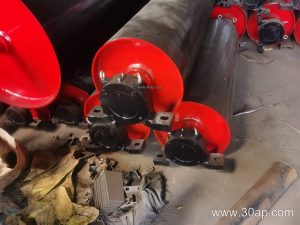
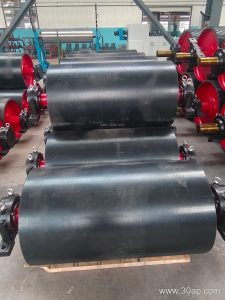
A high-strength pulley is the heavy-duty drum that carries and drives the conveyor belt at the heart of a bulk handling line. In plant language it is often simply called a heavy-duty conveyor pulley, and the two names describe the same component: a welded or cast steel shell, reinforced end discs, a through-going shaft, and bearing housings that sit in the conveyor bracket. It is not a wear part chosen by habit. It is a structural element that must survive starting torque, belt tension, and the impact of whatever the belt is carrying.
The design brief is simple to state and harder to deliver: keep the shell round under load, keep the shaft straight, and keep the lagging attached. Everything else follows from those three points.
How the Drum Is Put Together
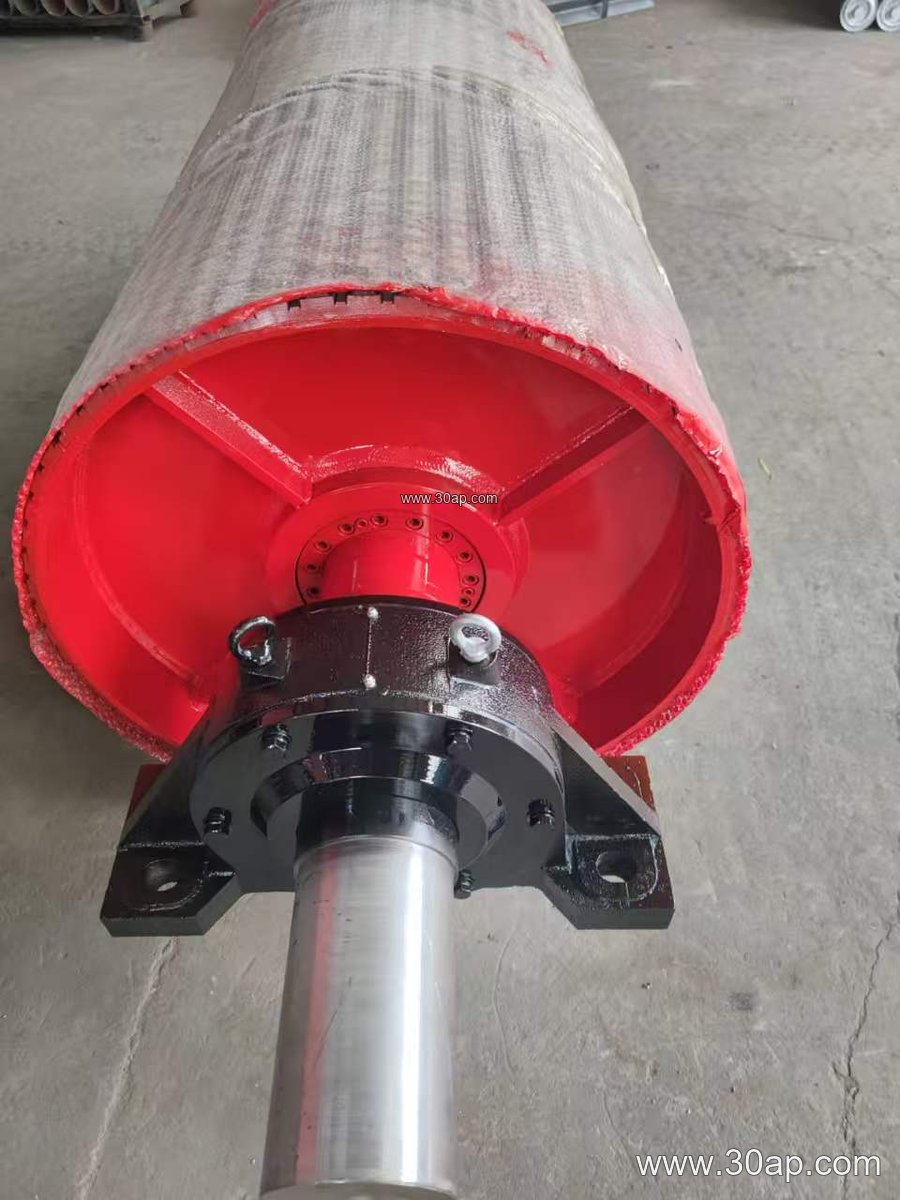
Most high-strength units use a rolled steel shell with machined end discs and a shaft that runs the full face width. The shaft is usually keyed or shrink-fitted to the discs, and the bearing seats are ground to tolerance. Surface finish matters as much as steel grade, because an out-of-round shell will make the belt track badly no matter how strong the drum is.
- Shell: rolled plate, sometimes with internal stiffening rings on wide faces.
- End discs: machined to fit the shell and shaft, welded with controlled procedures.
- Shaft: determined by torque and radial load, not by belt width alone.
- Lagging: plain, cold-bonded rubber, hot-vulcanized rubber, diamond, herringbone, or ceramic.
- Bearings and seals: selected for the duty cycle and the environment, from dusty quarry air to washdown zones.
Where It Earns Its Keep
These drums show up wherever the belt is long, the load is heavy, or the start is frequent. In a limestone quarry the head drum may run a 1200 mm belt carrying run-of-mine rock; at a copper concentrator the same style of pulley handles ore that has already passed the crusher. Power plant coal handling, cement plant clinker lines, steel plant sinter conveyors, and port shiploading systems all rely on this class of drum. Underground coal mining conveyors place a different demand: the pulley must fit a restricted frame and still resist fine abrasive dust.
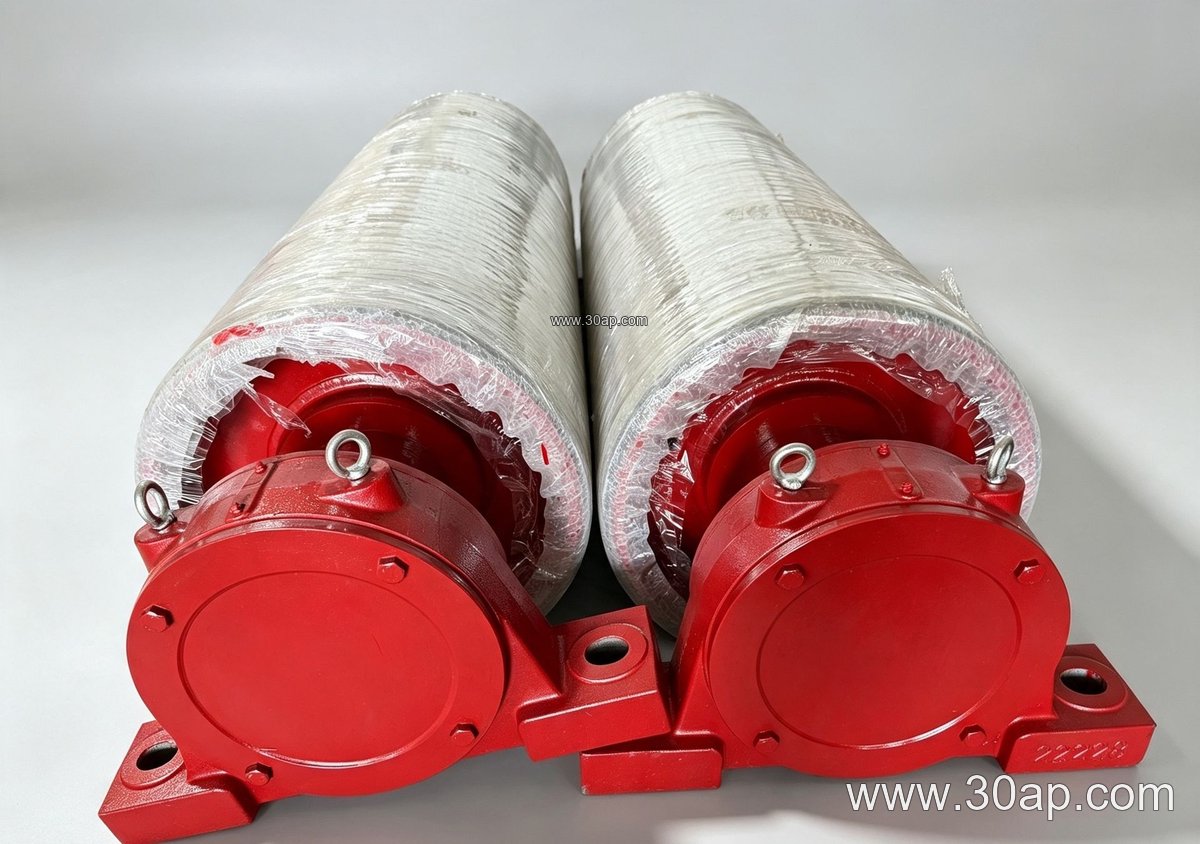
Drive, tail, and bend pulleys are not interchangeable names. A drive pulley transmits torque through lagging contact; a tail pulley turns the returning belt; a bend pulley changes direction without driving. A high-strength pulley may appear in any of these positions, but the loading case changes with the job.
Sizes and Surface Choices
Drum diameter and face width are selected together with the belt and the tension calculation. Common combinations include B800 × Ø500, B1200 × Ø1000, and B1400 × Ø800, but no single diameter is mandatory for a given belt width. Face width is normally a little wider than the belt, for example about 1150 mm for a B1000 belt or about 1600 mm for a B1400 belt.
| Parameter | Common range |
|---|---|
| Belt width | B500 to B2400 |
| Drum diameter | Ø200 to Ø1800 |
| Shaft diameter | Ø50 to Ø200 |
| Lagging thickness | 8, 10, 12, 15, 20 mm |
| Surface form | plain, cold-bonded rubber, hot-vulcanized rubber, diamond, herringbone, ceramic |
Lagging choice should follow the duty. Diamond or herringbone rubber helps shed water and fines on a drive drum; ceramic tiles suit high-torque heads where slip is expensive. Plain faces are often enough on bend and tail positions.
What a Buyer Should Check Before Ordering
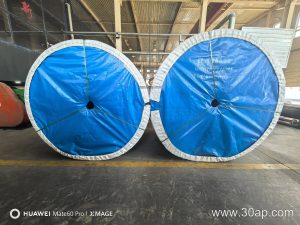
Start from the belt data. A heavy-duty conveyor belt with a steel cord carcass, an EP conveyor belt, or a multi-ply fabric core belt all impose different tension and wrap requirements. Ask for the calculated shaft load, the bearing life target, and the lagging specification in writing. Confirm the shaft diameter was derived from torque and load rather than copied from a belt width table.
Also confirm the interface: bolt pattern, bearing type, and take-up arrangement must match the conveyor bracket on site. A drum that is strong but does not fit the frame is still the wrong drum.
Keeping It in Service
Inspect lagging wear at each shutdown, check for shell cracks near the welds, and watch belt tracking as a signal of drum misalignment. Grease bearings on the schedule set by the duty, and keep the area around the drum clear of spilled material. On a high-strength pulley, small tracking faults caught early are far cheaper than a shaft replacement.
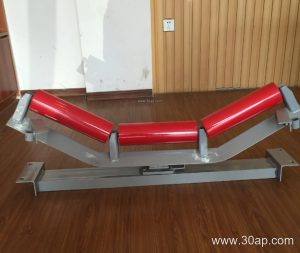
For related equipment such as the conveyor belt, idler roller, and conveyor pulley assemblies, match the drum rating to the whole line rather than to one component in isolation.