What a Conveyor Idler Frame Does on a Belt Conveyor
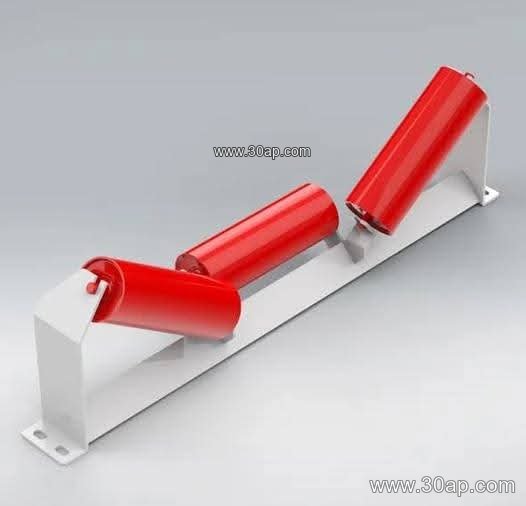
A conveyor idler frame is the structural support that holds the idler rollers in the correct position under the conveyor belt. It carries the weight of the belt, the material load, and the rollers themselves, and it fixes the trough angle and spacing that keep the belt tracking properly. In a quarry, a coal preparation plant, a cement kiln line, or a power plant coal yard, the frame is one of the most numerous steel components on the entire conveyor, so its design directly affects belt life and maintenance cost.
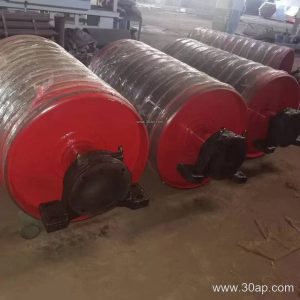
The frame is often called a conveyor idler bracket or idler support frame; these names describe the same product. It should not be confused with a conveyor pulley, since drive, tail and bend pulleys do different work at the ends of the conveyor.
How the Frame Is Built
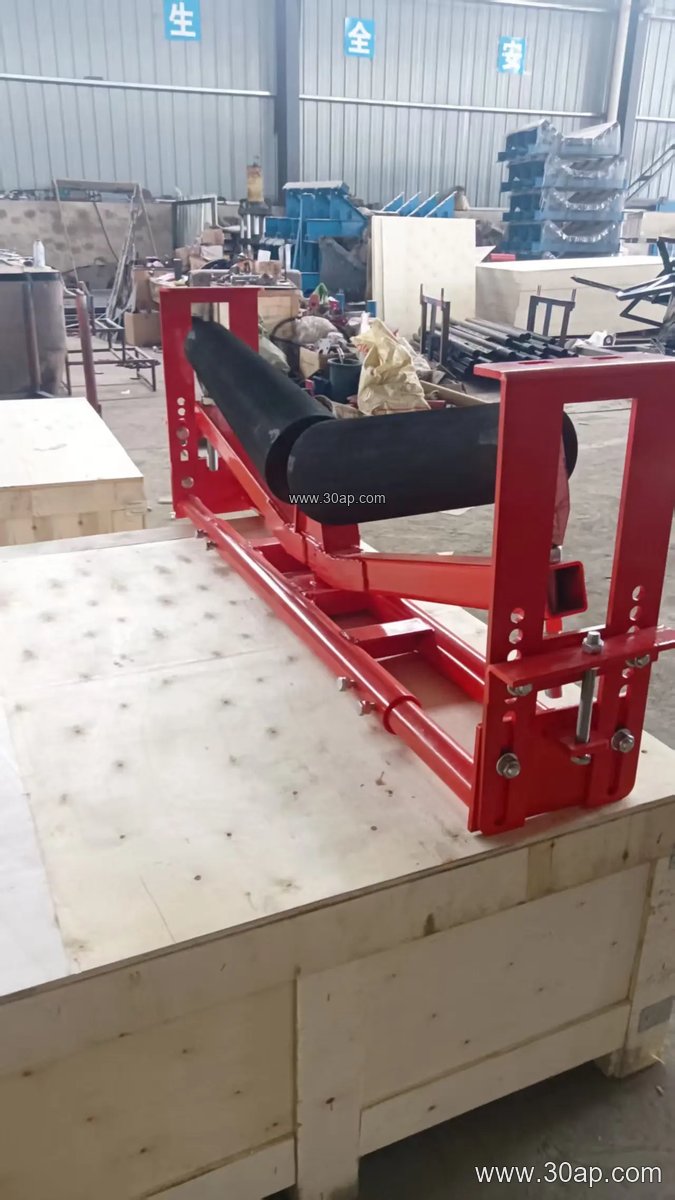
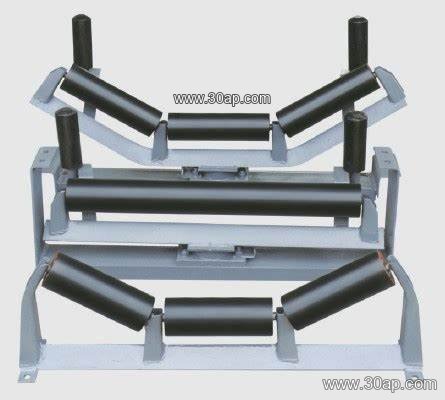
Most frames are fabricated from angle steel, channel steel, or folded steel plate. The crossbeam carries the mounting slots or holes for the idler roller shafts, and the end supports bolt to the conveyor stringer. Common forms include:
- Troughing frames that set the belt into a three-roller trough
- Transition frames used near pulleys where the belt changes shape
- Return frames, including flat and V-return designs
- Impact frames with resilient mounting for load points
- Self-aligning frames that allow slight rotation to correct belt drift
- Adjustable frames that permit changing the trough angle on site
Material thickness, weld quality, and hole alignment matter more than cosmetic finish. A frame with poorly aligned mounting holes will tilt the idler roller and cause edge wear on the conveyor belt.
Trough Angle and Roller Diameter
The trough angle is usually chosen from 20, 30, 35, or 45 degrees, depending on material flowability and belt width. Adjustable frames allow the same frame to be set at several of these angles. Inclined or forward-tilted frames are commonly set around 1.5 to 2 degrees to help the belt center itself.
Roller diameter is matched to belt width, belt speed, and load, not fixed by a single rule. Typical combinations seen in design work include B800 with 35 degrees and Ø108 rollers, or B1200 with 45 degrees and Ø133 rollers, but other pairings are normal. Mounting hole spacing and crossbeam length change with belt width and trough angle, so they are determined by design rather than treated as a universal number.
| Frame Type | Typical Belt Width Range | Common Trough Angle | Typical Roller Diameter |
|---|---|---|---|
| Troughing frame | B500 to B2000 | 20 to 45 degrees | Ø89 to Ø159 |
| Transition frame | B650 to B1800 | Variable | Ø108 to Ø159 |
| V-return frame | B500 to B1600 | Not applicable | Ø89 to Ø133 |
| Impact frame | B650 to B1800 | 30 to 45 degrees | Ø108 to Ø194 |
| Adjustable frame | B500 to B1400 | 20 to 45 degrees | Ø89 to Ø133 |
These ranges are reference examples only. Final selection should follow the conveyor design and the actual duty.
Where Frames Are Used
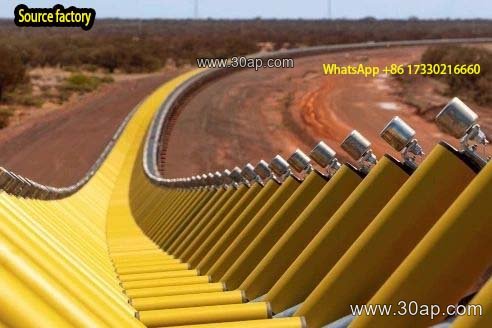
In a limestone quarry or aggregate crushing line, troughing and impact frames handle sharp, heavy rock at transfer points. In a coal washing plant or underground coal mining conveyor, flame retardant and anti-static belt grades are common, and the frames must resist dusty, damp conditions. A cement plant uses frames along clinker and raw meal belts, while a power plant coal yard relies on them on long inclined conveyors. Port bulk terminals and iron ore handling lines use wide belts where frame alignment is especially important.
The frame works together with the conveyor belt, the idler roller, and the conveyor pulley. On a typical bulk material conveyor, EP conveyor belt or steel cord conveyor belt may run over the same frame design, but load and tension differ, so frame strength is checked accordingly. A chevron conveyor belt or corrugated sidewall conveyor belt may need special clearance near the frame, which should be confirmed before ordering.
What Buyers Should Check
- Confirm belt width, trough angle, and roller diameter as a set, not separately.
- Ask for mounting hole dimensions and crossbeam length for the specific layout.
- Check steel grade and coating or galvanizing for the site environment.
- Verify that impact and transition frames are placed where the belt actually needs them.
- Keep spare frames for high-wear points such as loading zones.
For more on matching frames with rollers and belts, visit beltconveyorsystem.com and review the conveyor idler frame options alongside idler roller and conveyor pulley data. A frame that fits correctly is a small cost compared with premature belt damage.