What a Ceramic Rubber Lagged Pulley Is
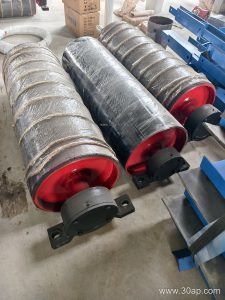
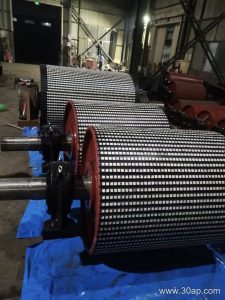
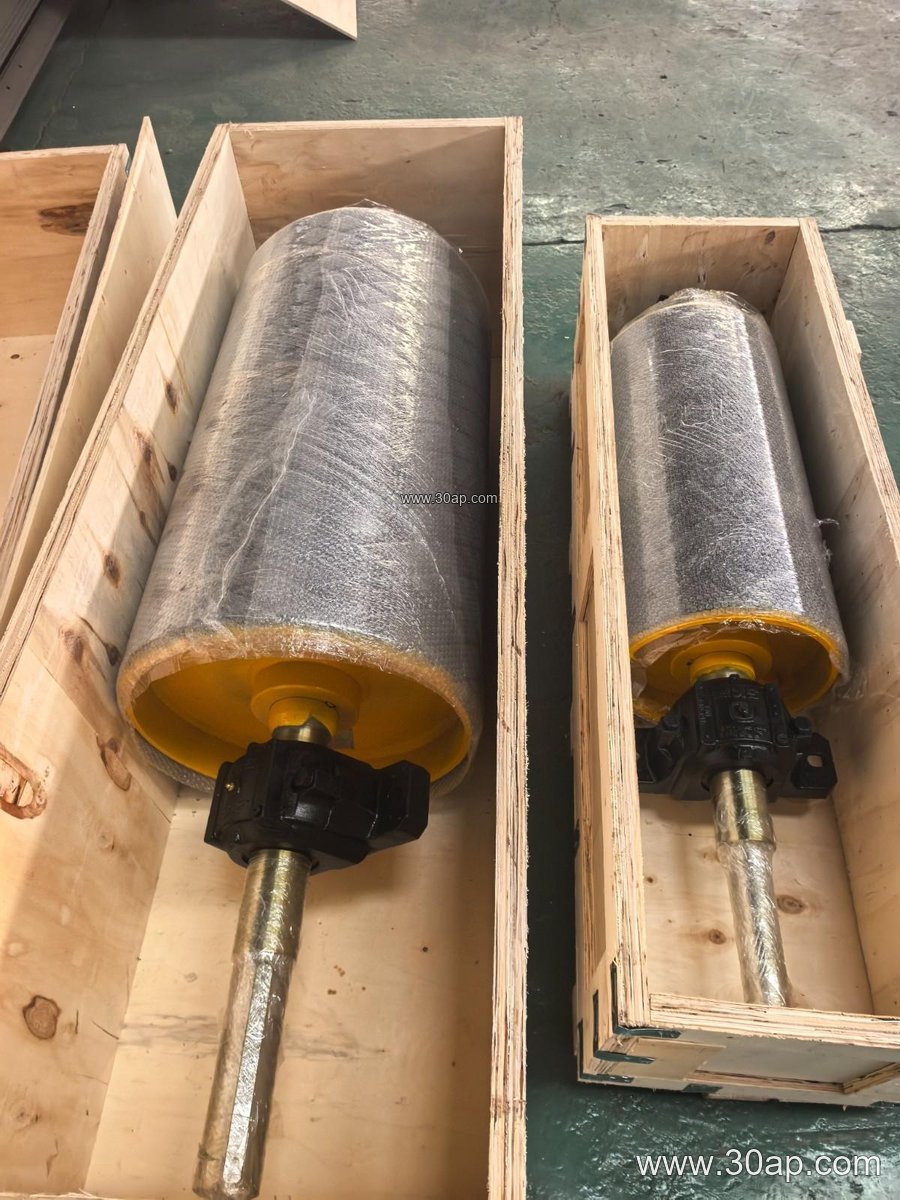
A ceramic rubber lagged pulley is a conveyor pulley whose shell is covered with a rubber lagging that has hard ceramic tiles embedded in a checkerboard pattern. The rubber body gives the belt a compliant, high-friction contact surface, while the protruding ceramic pads take the abrasion and cut loads that would otherwise chew through plain rubber. In the field, this product is also called a ceramic lagged conveyor pulley or ceramic pulley lagging, and it is most often specified for drive pulleys where slip and wear are both problems.
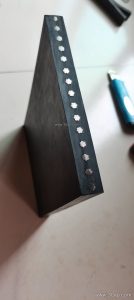
The ceramic tiles are not a coating sprayed onto the surface. They are bonded into the rubber during vulcanization, so each tile sits in a rubber cushion that absorbs impact while the tile face stays proud of the rubber by a small margin. That relief pattern is what gives the lagging its grip in wet, muddy, or dusty conditions.
How the Lagging Is Built
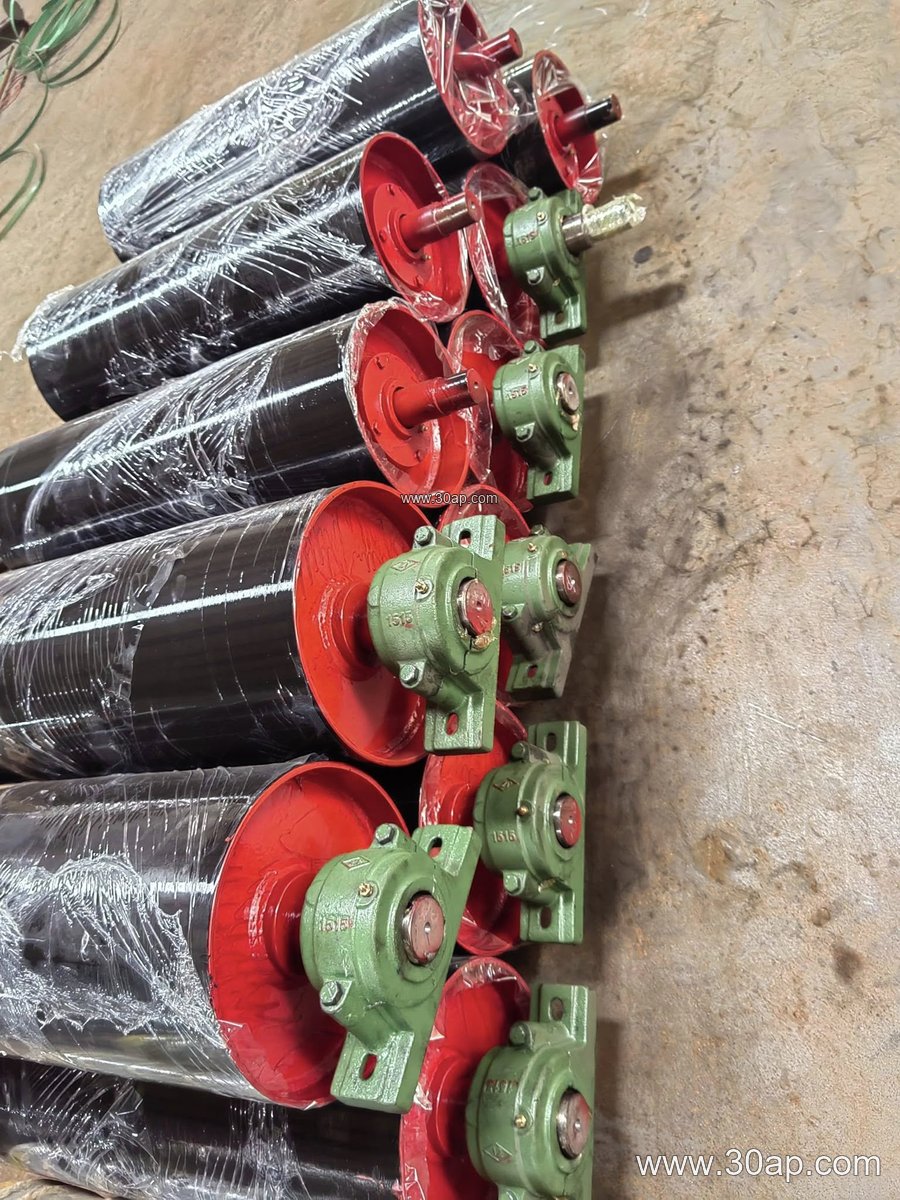
The pulley body is usually a welded steel shell with end discs and a shaft, machined at the journals and balanced before lagging. The lagging itself is applied in one of two common ways: hot vulcanized in a press for maximum bond strength, or cold-bonded with a two-part adhesive for field replacement. Ceramic tile thickness, tile size, and rubber hardness are selected according to the duty.
Typical reference values for a ceramic rubber lagged pulley are shown below. These are common ranges, not fixed rules, and the final combination is set by the conveyor design.
| Parameter | Common Reference Values |
|---|---|
| Belt width (B) | B500, B650, B800, B1000, B1200, B1400, B1600, B1800, B2000 |
| Pulley diameter | Ø250, Ø315, Ø400, Ø500, Ø630, Ø800, Ø1000, Ø1250 |
| Lagging thickness | 8, 10, 12, 15, 20 mm |
| Face width | Usually wider than belt width, e.g. B800 about 950 mm, B1200 about 1400 mm |
| Shaft diameter | Ø80, Ø100, Ø120, Ø140, Ø160, Ø180 (determined by torque and load) |
Combinations such as B800 × Ø500, B1200 × Ø1000, and B1400 × Ø800 are seen in practice, but no belt width is tied to a single diameter. Shaft size follows the drive torque and bearing load, not the belt width alone.
Where It Fits on the Conveyor
The main job of a ceramic rubber lagged pulley is at the drive station, where the wrap angle and friction coefficient together decide how much power can be transmitted before the belt slips. A ceramic surface keeps the friction coefficient high even when the belt back is damp, which matters in wash plants, tunnel spoil handling, and coastal bulk terminals.
It is also used on tension pulleys and on bend pulleys that see heavy grit. A tail pulley handling abrasive material may use ceramic lagging too, though a plain rubber or grooved lagging is often enough there. When comparing subtypes, keep the roles separate: a drive pulley transmits torque, a tail pulley sets the return point of the belt, and a bend pulley changes direction without driving. Ceramic lagging is a surface choice, not a substitute for the correct pulley position.
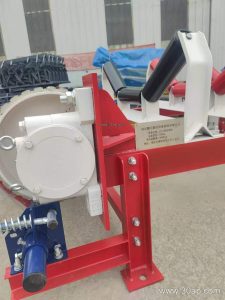
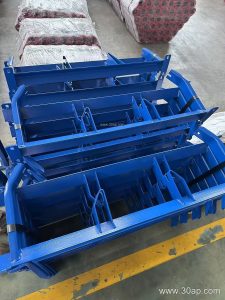
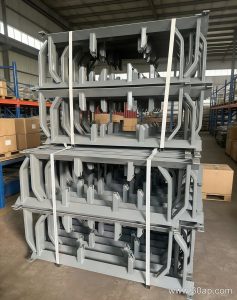
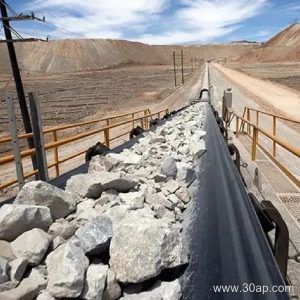
Typical industries include iron ore and copper ore plants, coal preparation, cement clinker lines, power plant coal handling, and quarry aggregate circuits. In these plants the pulley works together with the conveyor belt, the idler roller sets, and the conveyor bracket structures, so lagging wear is often a sign that belt tracking or material build-up needs attention.
Matching the Pulley to the Belt
The lagging must suit the belt it drives. A heavy-duty mining conveyor belt or a steel cord conveyor belt with a smooth back runs well on ceramic lagging. A fabric core conveyor belt, including EP conveyor belt and NN conveyor belt constructions, also pairs with it, but check that the belt back is not heavily impregnated with oil or dust that would fill the tile relief.
- For high-tension main drives, pair ceramic lagging with a steel cord conveyor belt or a heavy multi-ply fabric core conveyor belt.
- For abrasive ore and rock, an abrasion resistant conveyor belt plus ceramic lagging reduces both belt slip and shell wear.
- For coal and underground use, a flame retardant conveyor belt is normal, and the lagging should be specified as fire resistant where the site requires it.
Do not assume ceramic lagging solves tracking. If an idler roller is misaligned or a conveyor bracket is loose, the pulley will wear unevenly regardless of surface type.
Buyer Checklist
Before ordering, confirm the pulley position, the belt width and type, the required diameter, the lagging thickness, and the shaft size calculated from drive torque. Ask how the ceramic tiles are bonded, because hot vulcanized lagging and cold-bonded lagging behave differently under shock loads. Check the face width against the belt width and the available take-up travel.
Also ask about tile pattern, rubber hardness, and whether the pulley will be balanced after lagging. On site, inspect for missing tiles, cracked rubber, and material build-up in the tile gaps; replace lagging before the shell is exposed. A ceramic rubber lagged pulley is a wear part with a defined service life, and planned replacement is cheaper than an emergency stop on a main haulage conveyor.