What a Port Conveyor Belt Does
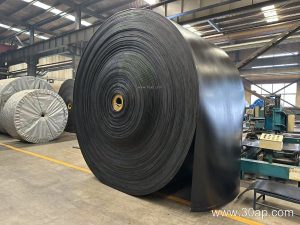
A port conveyor belt is the heavy-duty carrying element inside the continuous handling systems that move bulk cargo between ship loaders, unloaders, stockpiles, silos and rail or truck loading points. In a terminal, the belt is expected to run for long shifts, resist abrasive cargo such as iron ore, coal, cement clinker, sand and gravel, and keep a steady line speed without excessive stretch. Because the conveyor route often includes long inclined sections, transfer towers and reversing stations, the belt carcass and cover compound must be matched to the actual duty rather than chosen by habit.
The same product is also described as a bulk material conveyor belt or a ship loading conveyor belt when it serves those specific terminal functions. The name changes with the application, but the basic construction remains a carcass, a top cover, a bottom cover and, where required, special edge or surface features.
Construction of the Belt
Most terminal belts use either a fabric core or a steel cord carcass. A fabric core conveyor belt is built from multiple plies of EP (polyester-cotton) or NN (nylon) fabric, bonded with rubber and protected by top and bottom covers. Steel cord belts use parallel brass-coated wires embedded in a rubber core, which suits very long runs and high tension. Heat resistant, oil resistant, flame retardant and anti-static versions are available when the cargo or the environment demands them.
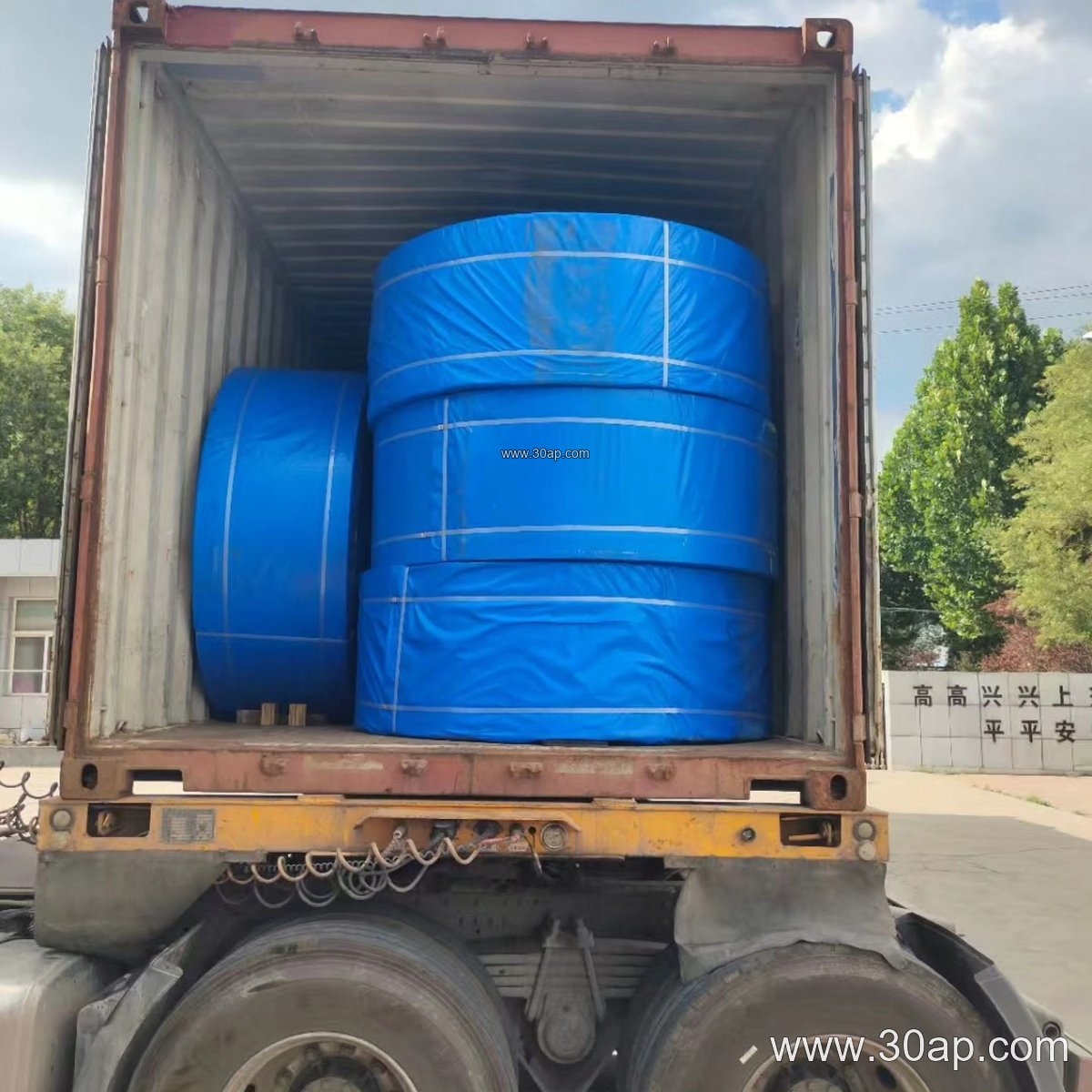
- EP conveyor belt: common in general bulk handling, with strength grades such as EP200, EP400, EP630, EP1000 and EP1600.
- NN conveyor belt: nylon fabric carcass, often chosen for flexibility and impact absorption.
- Steel cord conveyor belt: used where tension and distance are high, for example ST1250 or ST2000 constructions.
- PVC and PVG belts: solid-woven or fabric-reinforced constructions used in some underground and enclosed terminal routes.
Cover thickness is usually stated as top plus bottom, for example 4+2 mm, 5+2 mm or 6+2 mm. The carcass may have two to six plies depending on the load and the pulley spacing. These values are reference data only; the final specification should follow the conveyor design.
Widths and Pulley Coordination
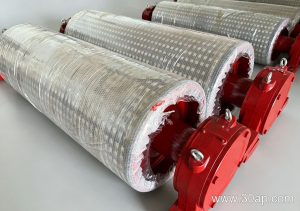
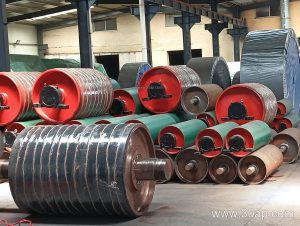
Belt width is selected from the tonnage, material lump size and the loading chute geometry. Common nominal widths include B800, B1000, B1200, B1400, B1600, B1800 and B2000. A wider belt does not automatically mean a larger drive pulley, and a single belt width can be matched with more than one pulley diameter. The drive pulley, tail pulley and bend pulley each have their own design role, and none of them should be treated as a substitute for another.
Working Conditions in Ports
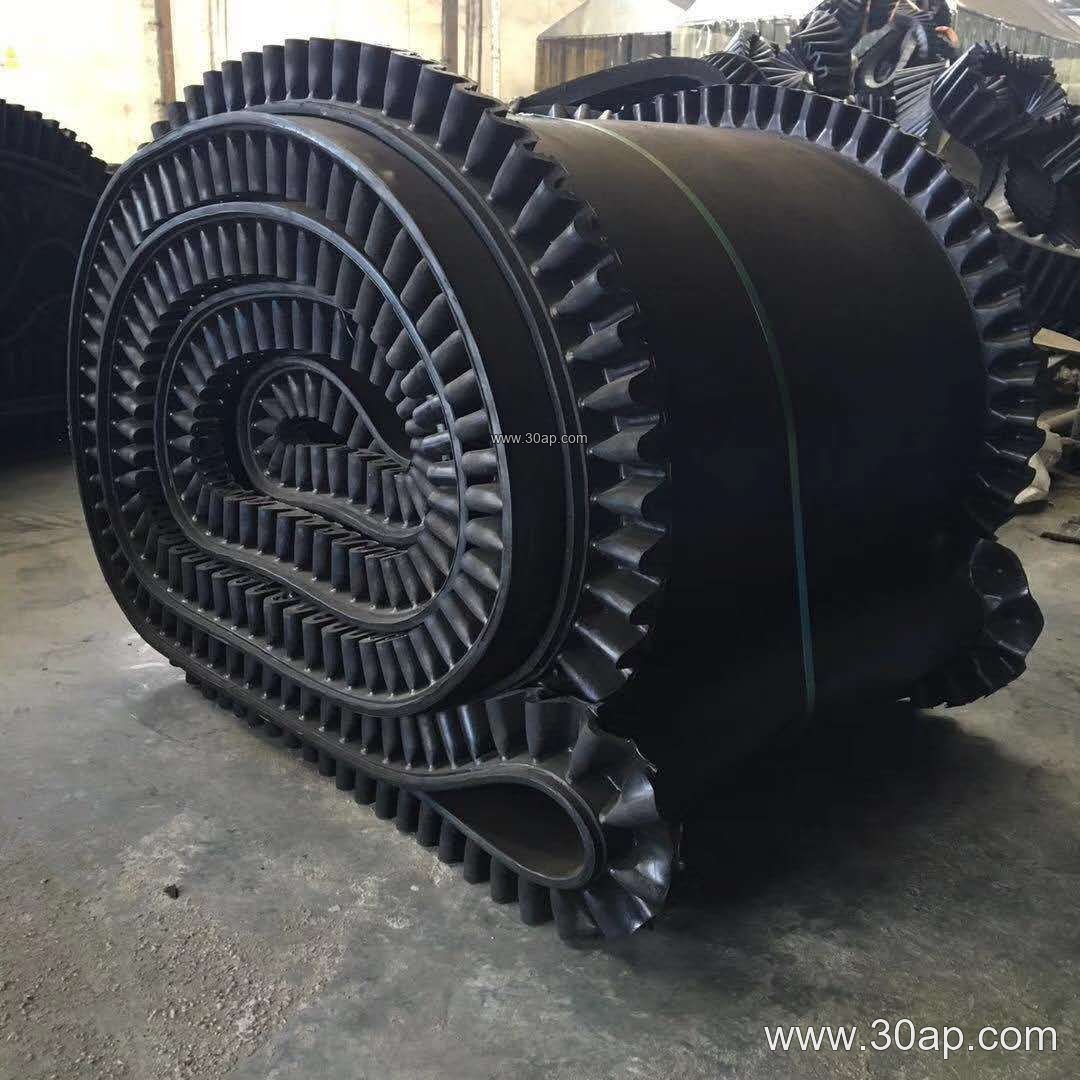
Salt air, dust, rain and temperature swings are normal at a berth. For coal and coke, a flame retardant conveyor belt and anti-static construction are often requested. For clinker and sinter, a heat resistant conveyor belt may be needed. For ore that is wet and sticky, a chevron conveyor belt or a corrugated sidewall conveyor belt can help retain the load on inclines. Where a closed route is required to control spillage and dust, a pipe conveyor belt is sometimes considered, although it is a different conveying concept and not a replacement for an open troughed belt.
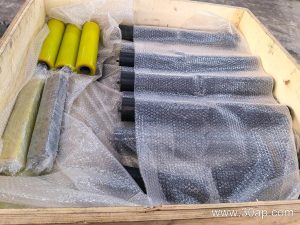
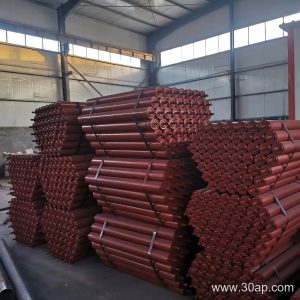
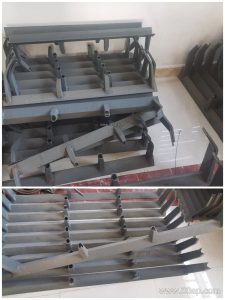
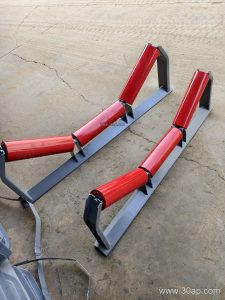
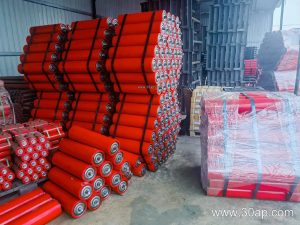
Terminal operators also pay attention to the idler roller, conveyor pulley and conveyor bracket because belt life is affected by alignment, roller rotation and frame rigidity. A well-aligned conveyor pulley and free-running idler rollers reduce edge damage and cover wear.
Buyer Checklist
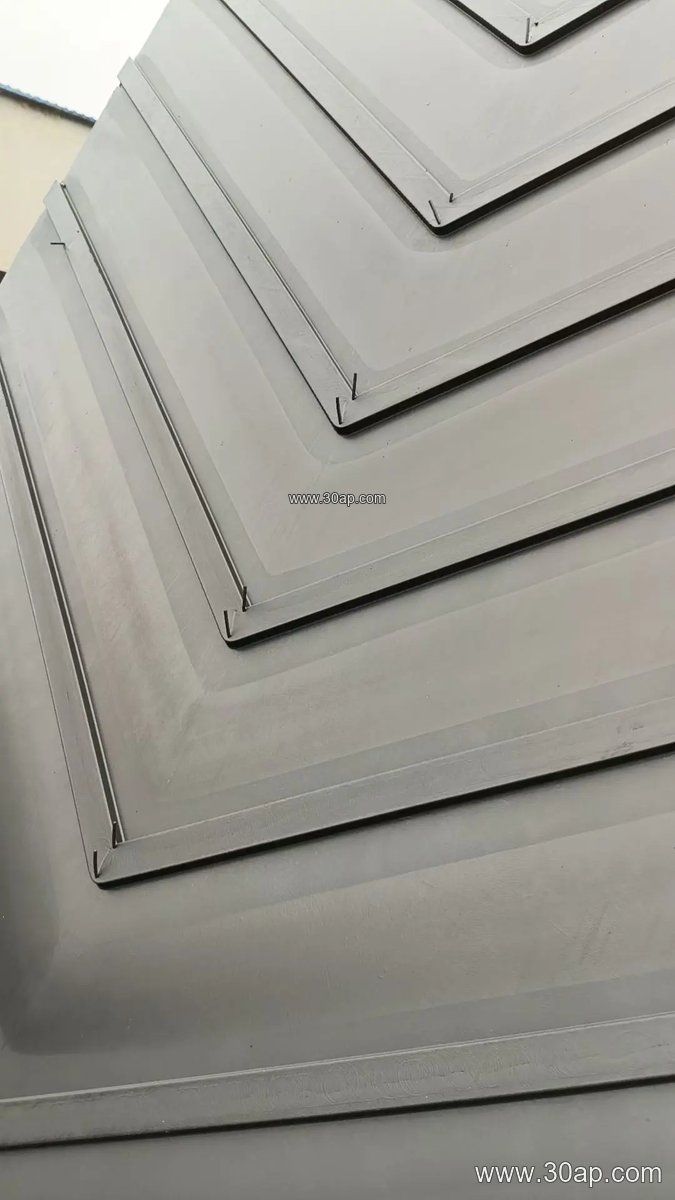
Before ordering, confirm the cargo type, lump size, belt speed, incline angle, ambient temperature and the required cover grade. Ask for the carcass type, ply count, strength grade, cover thickness and edge condition in writing. For a mining conveyor belt or quarry conveyor belt feeding a crusher, an abrasion resistant conveyor belt with a thicker top cover is often practical. For food or clean cargo, a food grade conveyor belt may be specified.
Typical reference values are shown below; actual supply should be confirmed with the manufacturer.
- Strength grades: EP200, EP315, EP500, EP800, EP1250, EP2000
- Steel cord grades: ST1000, ST1600, ST2500, ST3150
- Widths: B650, B1000, B1200, B1600, B2000
- Cover combinations: 3+1.5 mm, 4+2 mm, 6+2 mm, 8+3 mm
Finally, plan the splice method, storage conditions and spare belt length before the first shipment. A port conveyor belt that is correctly specified for tension, abrasion and climate will usually deliver more stable operation than one chosen only by width and price.