What a Conveyor Self-Aligning Idler Does
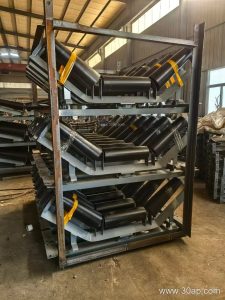
A conveyor self-aligning idler is a training idler that keeps the belt centered on the conveyor structure. When a belt drifts toward one side, the self-aligning idler senses the misalignment through its angled rollers and pivots slightly, steering the belt back toward the center line. This correction happens continuously and automatically, which reduces edge damage, spillage, and the need for manual adjustment.
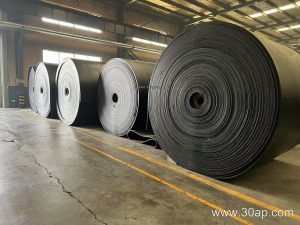
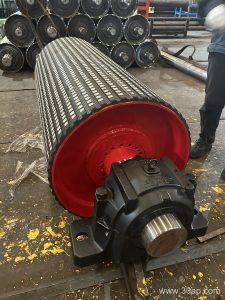
These idlers are commonly grouped with training or aligning idlers and are distinct from standard carrying idlers. They are also different from a conveyor pulley, whether a drive pulley, tail pulley, or bend pulley, since pulleys transmit power or change belt direction while self-aligning idlers only guide and support the belt. A conveyor bracket or frame holds the idler assembly in place, and the whole arrangement works with the conveyor belt to maintain a stable tracking path.
Construction and Working Principle
A typical self-aligning idler uses a set of rollers mounted on a pivoting frame. The frame is connected to a vertical shaft or pivot, allowing the roller assembly to rotate slightly when the belt contacts a roller at an angle. Friction between the belt and the idler rollers creates the corrective force. Some designs use a friction self-aligning idler, while conical or tapered roller shapes are used in conical self-aligning idlers to improve the centering effect on wider belts.
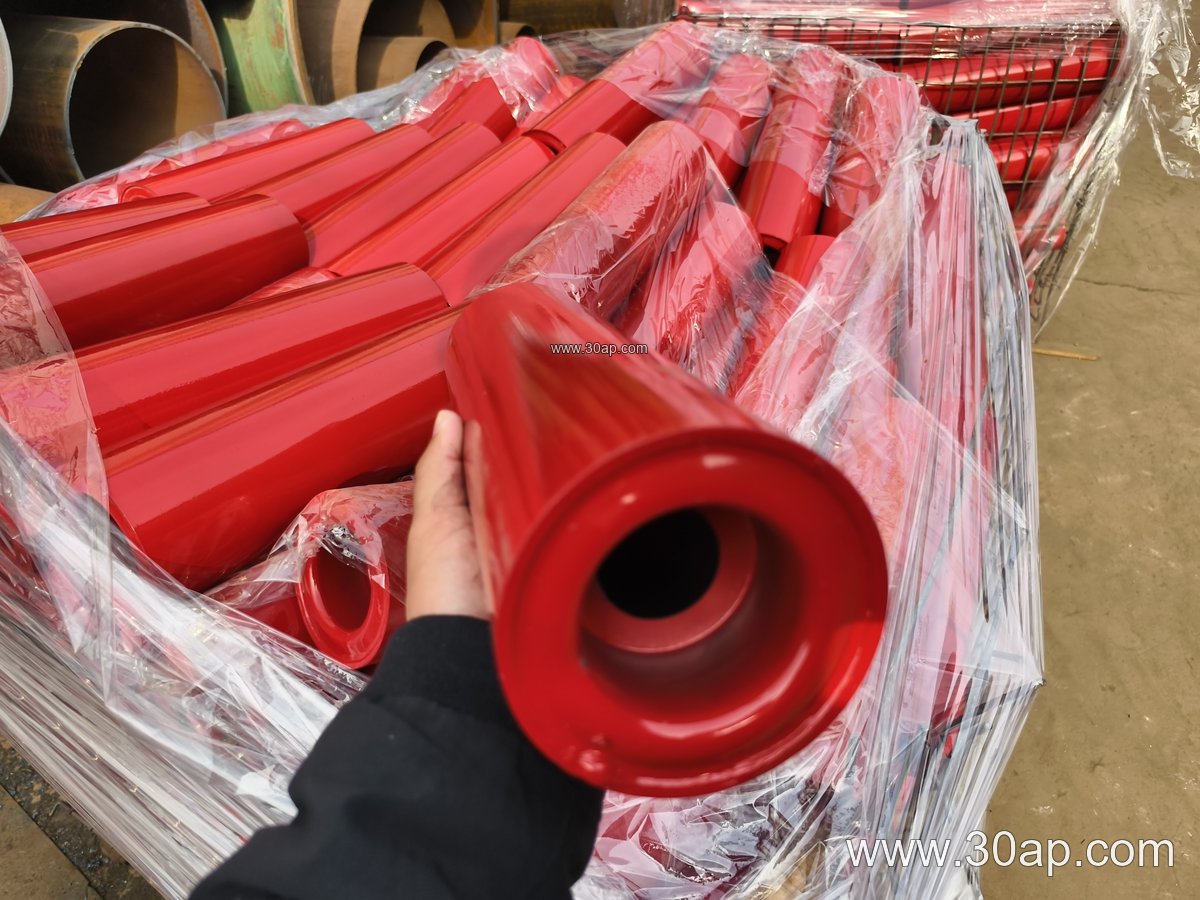
The rollers usually have a steel tube shell, and the roller surface may be plain steel, nylon, or rubber-covered depending on the application. Bearings such as 6204, 6205, 6305, 6306, 6308, or 6310 are common, but the bearing size should match the roller diameter and load, not a single fixed combination. Sealing is important in dusty conditions found in quarries, coal preparation plants, and cement works, because fine material can shorten bearing life.
Where Self-Aligning Idlers Are Used
These idlers are widely used in bulk material handling systems where belt training is critical. In a coal mining conveyor or underground mining conveyor, misalignment can cause spillage and belt edge wear, so self-aligning idlers are often placed at intervals along the carrying side. In a quarry conveyor belt or aggregate conveyor belt line, they help keep the belt centered after loading points and curves. Cement plants, power plant coal handling, and steel plant sinter lines also use them where dust and heavy loads are present.
They work alongside other components such as the idler roller, conveyor pulley, and conveyor bracket. For abrasive duties, an abrasion resistant conveyor belt or high abrasion resistant conveyor belt may be paired with well-sealed training idlers to reduce wear on both belt and rollers. In underground coal mining, a flame retardant conveyor belt or fire resistant conveyor belt is often required, and the idler selection should suit the same environment.
Common Sizes and Configuration Notes
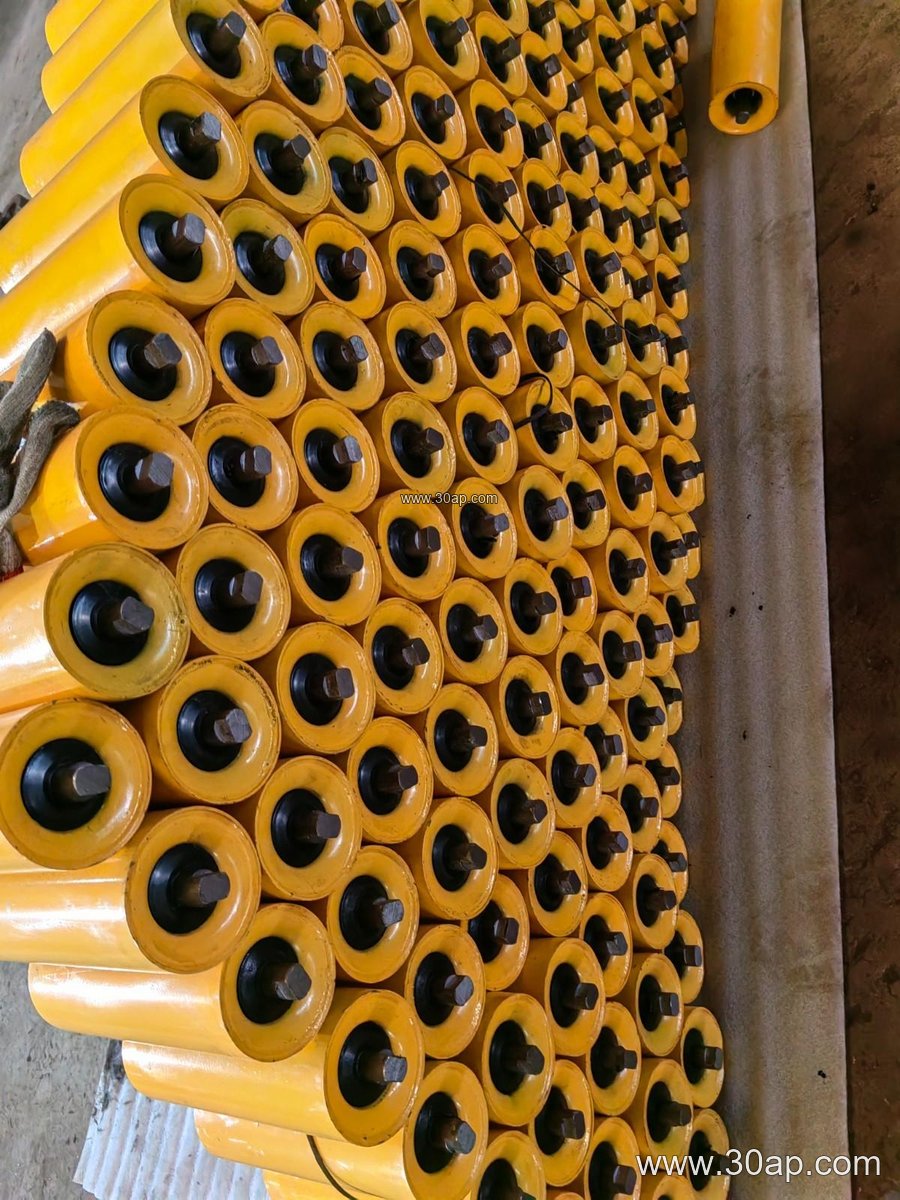
Self-aligning idlers are available in several roller diameters and belt width ranges. The table below shows common reference values; actual dimensions are determined by the conveyor design, belt width, trough angle, and load.
| Parameter | Common reference values |
|---|---|
| Roller diameter | Ø63, Ø76, Ø89, Ø102, Ø108, Ø127, Ø133, Ø159, Ø178, Ø194, Ø219 mm |
| Belt width | B400, B500, B650, B800, B1000, B1200, B1400, B1600, B1800, B2000, B2200, B2400 |
| Trough angle | 20°, 30°, 35°, 45° |
| Roller surface | Steel tube, nylon, ceramic, rubber ring |
| Bearing examples | 6204, 6205, 6305, 6306, 6308, 6310 |
Roller length varies with belt width and idler arrangement. For a three-roll troughing set, common roller lengths are roughly 200 mm for B500, 250 mm for B650, 315 mm for B800, 380 mm for B1000, 465 mm for B1200, 530 mm for B1400, 600 mm for B1600, 670 mm for B1800, and 750 mm for B2000. These are examples only, and side rollers and center rollers can differ. A belt width does not fix one pulley diameter, and shaft diameter should be confirmed from the idler design rather than assumed from belt width alone.
Buyer Checklist
- Confirm the belt width and trough angle so the self-aligning idler matches the existing conveyor bracket and frame.
- Check whether the installation point is on the carrying side or return side, and whether a friction or conical self-aligning design suits the belt speed and load.
- Match the roller diameter and bearing to the load and environment; dusty sites such as a limestone mine or crushing plant need good sealing.
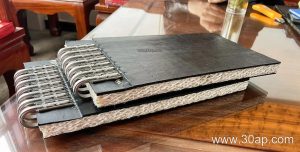
- Consider the belt type in service, for example an EP conveyor belt, steel cord conveyor belt, or heat resistant conveyor belt, since belt stiffness affects tracking behavior.
- Plan inspection intervals for pivot freedom, roller rotation, and frame alignment, because a seized pivot reduces the self-aligning effect.
For reliable tracking, the self-aligning idler should be installed on a straight, well-aligned section of the conveyor and checked together with the conveyor belt, idler roller, and conveyor bracket. Properly selected training idlers reduce downtime in coal mining, cement, power, and aggregate operations, and they help protect the belt from edge damage over a long service life.