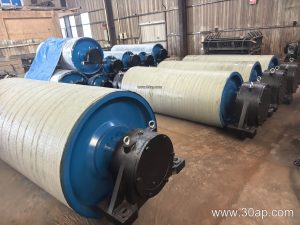
What a Conveyor Bend Pulley Does
A conveyor bend pulley is a non-driven roller that changes the direction of the belt or adjusts the wrap angle around another pulley. It is often called a bend roller or redirect pulley, and it sits at points where the belt must be guided back into the return run, around a take-up, or toward a drive. Unlike a drive pulley, it transmits no torque; unlike a tail pulley, it does not receive material. Its job is geometry and belt training, and that distinction matters when specifying one.
Because the bend pulley carries belt tension without driving, its bearing load and shaft size are set by the belt pull and wrap angle, not by motor power alone. In a quarry or a coal handling line, a poorly chosen redirect roller can cause belt wander, edge wear, and premature cover failure on the conveyor belt.
Construction and Surface Options
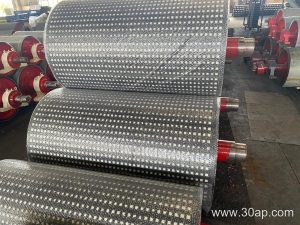
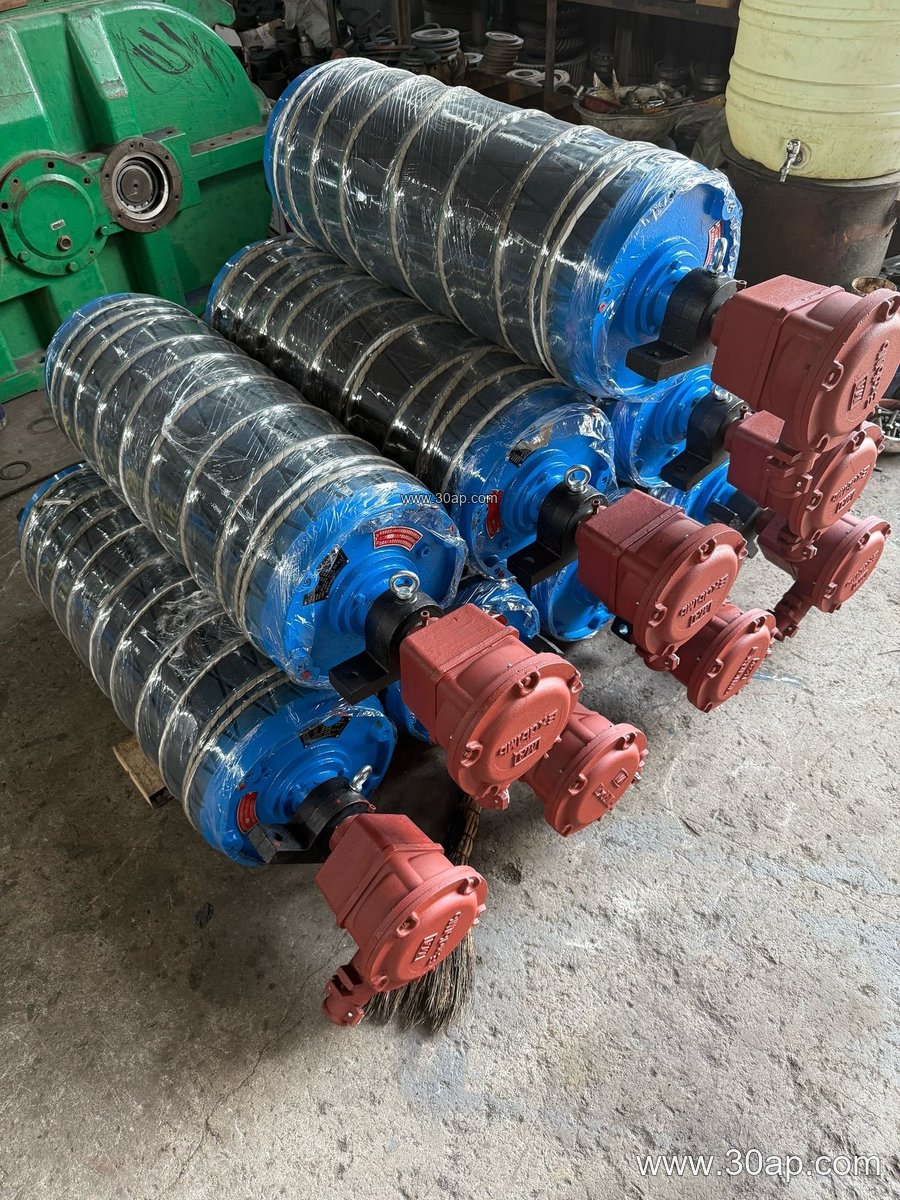
The typical unit is a steel drum with welded end discs, a through shaft, and self-aligning bearing housings mounted on a conveyor bracket. The shell is machined or rolled to keep runout low, since a wobbling face will train the belt poorly. Surface treatment depends on the duty.
- Plain face for clean, low-tension return positions
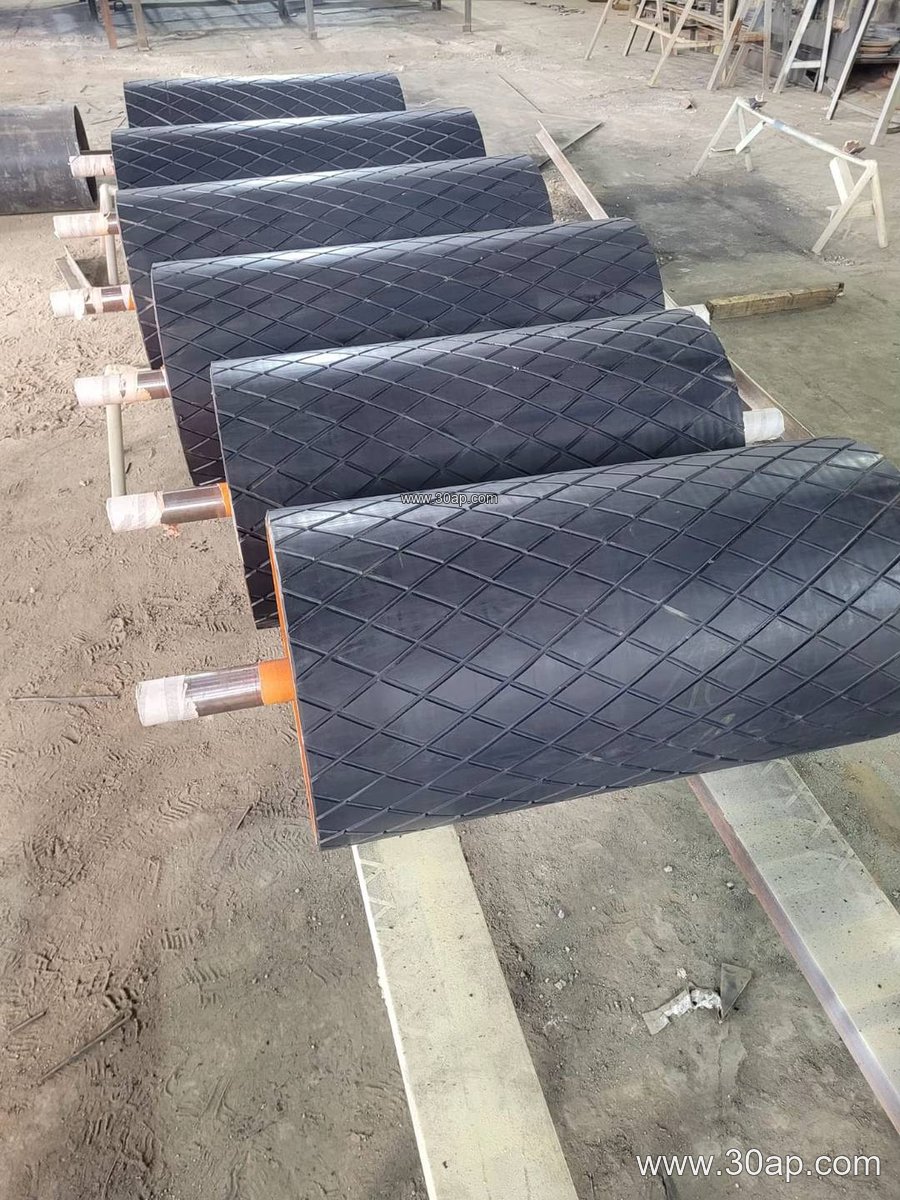
- Rubber lagging applied by cold bonding or hot vulcanizing for grip and wear protection
- Diamond or herringbone grooving to shed water and fines
- Ceramic lagging for high-abrasion service in iron ore or copper ore plants
Lagging thickness commonly ranges from 8 mm to 20 mm, with 10 mm and 12 mm being frequent choices for general bulk material duty. In dusty cement plants, grooved rubber helps prevent material buildup that would otherwise change the belt path.
Sizing Relationships Buyers Should Understand
Face width is normally slightly greater than belt width so the belt is fully supported without overhanging the shell. Diameter is selected from the belt tension, the allowable bearing pressure, and the minimum bend radius the belt construction can tolerate. A heavy-duty mining conveyor belt with a thick fabric core or steel cord carcass usually needs a larger diameter than a light EP conveyor belt in a packaging line.
| Belt width | Typical face width | Example diameter range |
|---|---|---|
| B500 | approx. 600 mm | Ø250 to Ø400 |
| B650 | approx. 750 mm | Ø315 to Ø500 |
| B800 | approx. 950 mm | Ø400 to Ø630 |
| B1000 | approx. 1150 mm | Ø500 to Ø800 |
| B1200 | approx. 1400 mm | Ø630 to Ø1000 |
| B1400 | approx. 1600 mm | Ø800 to Ø1250 |
| B1600 | approx. 1800 mm | Ø1000 to Ø1400 |
These are common ranges, not fixed pairings. A B1200 belt may run on a Ø1000 bend roller in one plant and a Ø800 unit in another, depending on tension and space. Shaft diameter is determined by torque and load analysis; common shaft sizes include Ø80, Ø100, Ø120, Ø140, and Ø160, but no belt width dictates a single shaft size. Verify the actual duty with the conveyor designer before ordering.
Where It Fits in the Conveyor Layout
In a power plant coal handling system, bend pulleys are often found near the take-up tower, guiding the return strand into the tension pulley and keeping the belt aligned before it reaches the tail. In a stone crushing and screening line, a redirect roller after the head discharge can increase the wrap angle on the drive pulley, improving traction without changing the drive location. Similar units appear in ship loading conveyors at ports, in fertilizer and grain silo systems, and in tunnel muck removal lines.
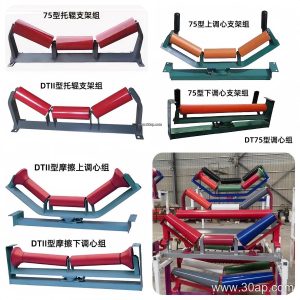
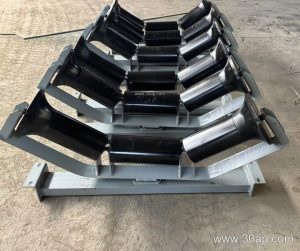
The pulley works together with the idler roller set, the conveyor bracket, and the belt itself. A worn troughing idler can throw the belt off-center, and the bend pulley then gets blamed for mistracking that actually started upstream.
Selection and Maintenance Notes
When specifying, provide the belt width, belt type, belt speed, maximum tension, wrap angle, and available space. State whether the belt is a flame retardant conveyor belt for underground coal mining, a heat resistant conveyor belt near a clinker cooler, or an abrasion resistant conveyor belt in a sand making plant, because the lagging and bearing seals should suit that environment. Ask for the dynamic balance class and the bearing type, and confirm the shaft fits the existing conveyor bracket.
During service, check lagging wear, bearing temperature, and shell runout. Replace lagging before the shell is exposed, and re-align the pulley if the belt tracks to one side. A bend pulley is a modest component, but correct sizing and surface choice keep the whole conveyor belt system running straight and quiet.