What an Adjustable Conveyor Bracket Does
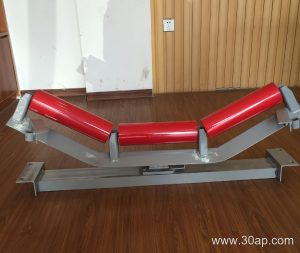
An adjustable conveyor bracket is a support frame that lets maintenance teams change the trough angle of a carrying idler without cutting or welding the conveyor structure. Instead of a fixed slot, the bracket uses slotted plates, pivoting arms or multi-hole mounting positions so the same frame can hold a conveyor idler at a shallow angle for flat or wide loads, or a deeper angle for bulk material that needs better centering.
The bracket is part of the idler set, not a pulley. Drive pulleys, tail pulleys and bend pulleys remain separate components with their own bearing housings and tensioning arrangements. An adjustable bracket only positions idler rollers and keeps them aligned with the conveyor belt.
Construction and Common Forms
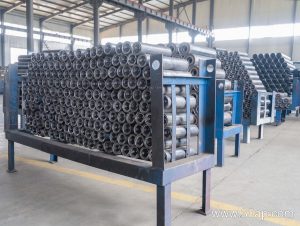
Most brackets are fabricated from angle steel, channel steel or folded steel plate, then drilled or slotted for the idler shaft. A typical carrying bracket has two side arms and a center support, and the angle between the side idlers and the center roller can be changed within a designed range.
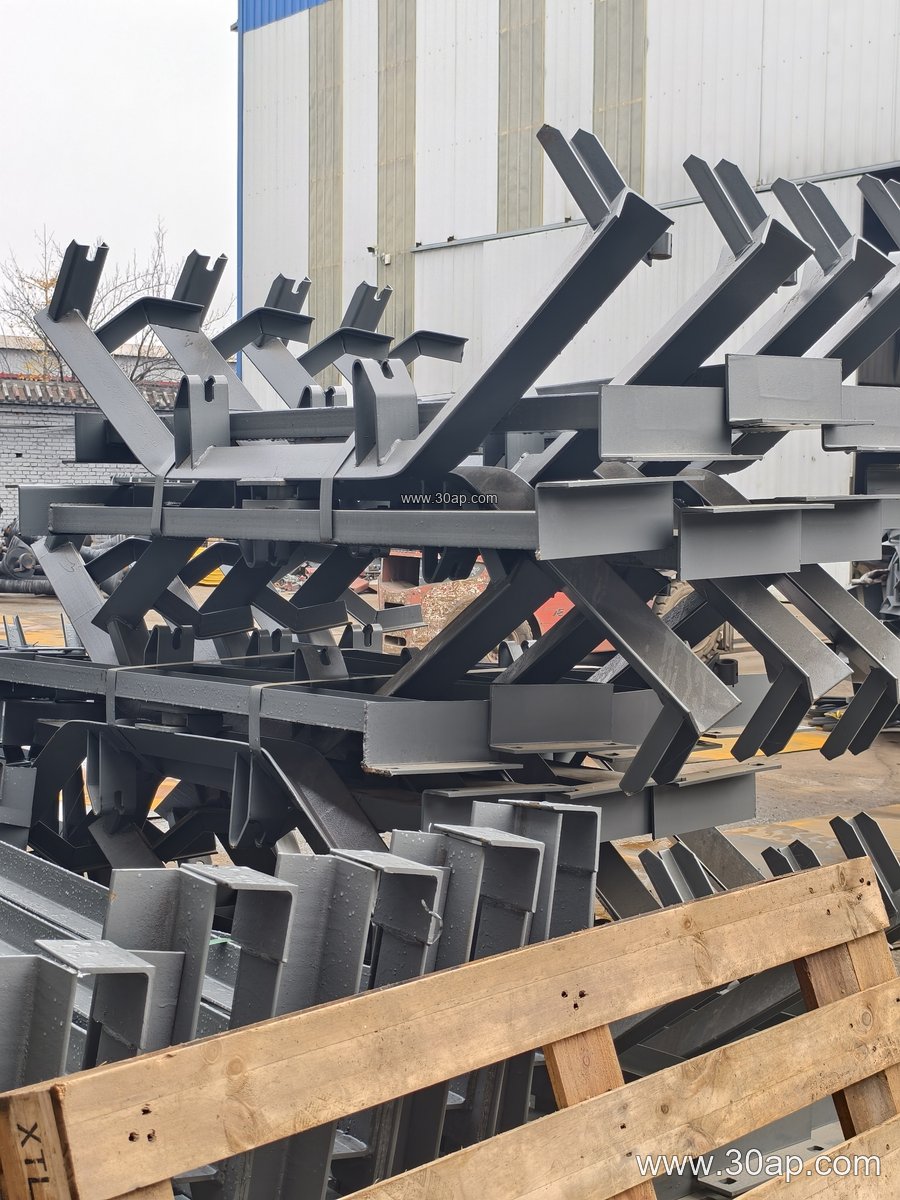
Common trough angles used in the field are 20 degrees, 30 degrees, 35 degrees and 45 degrees. A webbed adjustable frame may allow the operator to move between these angles during commissioning, which is useful when the same conveyor handles different material sizes. Forward-leaning idlers, often set at about 1.5 to 2 degrees, are sometimes combined with adjustable brackets to improve belt tracking.
Bracket families at a glance
- Carrying or upper troughing bracket with adjustable side arms
- Transition bracket placed near a pulley to ease the belt from flat to troughed
- Return bracket, including flat return and V-return designs
- Impact bracket under a loading point, usually combined with buffer rollers
- Self-aligning bracket used to correct minor belt misalignment
Where Adjustable Frames Fit in a Plant
These brackets are found wherever a conveyor line changes duty or where material conditions vary. In a quarry or a sand and gravel line, an adjustable troughing bracket lets crews tune the profile after a crusher discharge point is modified. In a coal washing plant or a power plant coal yard, the same frame type helps keep a flame retardant conveyor belt centered on long inclined runs. Cement plants use them on clinker and limestone conveyors, while port and ship loading systems use wider frames to match wide conveyor belts.
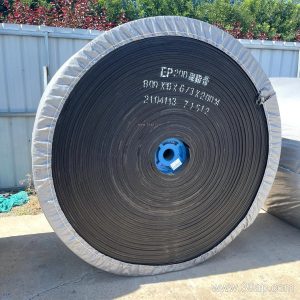
On a belt feeder or a short transfer conveyor, a transition bracket with adjustable arms can reduce edge stress as the belt opens from the flat pulley face into a full trough. This matters when the belt is a heavy-duty mining conveyor belt or a steel cord conveyor belt with limited tolerance for sharp bends.
Matching Belt Width, Trough Angle and Roller Diameter
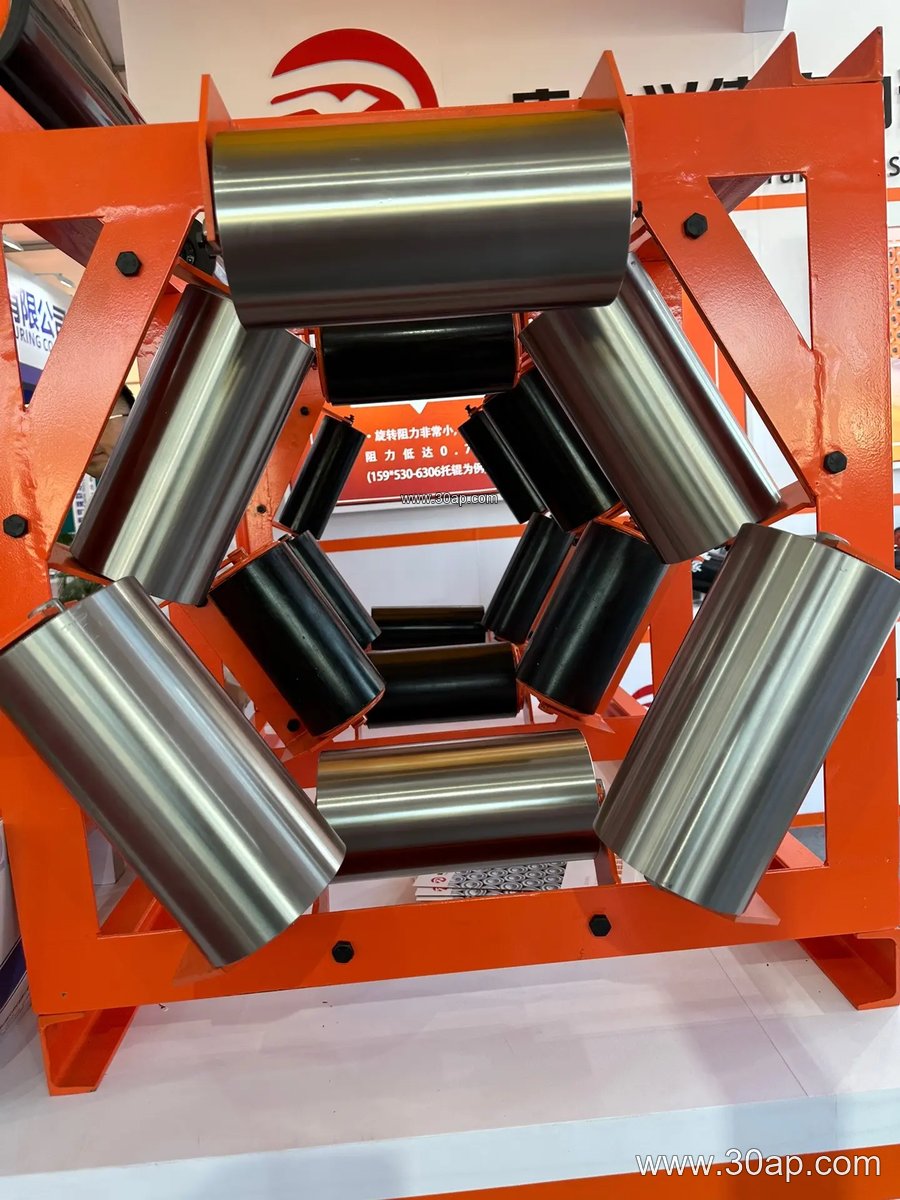
Frame length, mounting hole spacing and crossbeam dimensions follow the belt width and the chosen trough angle; they are not universal figures. A bracket that fits a B650 belt will not fit a B1800 frame, and the slot pattern must be confirmed against the actual idler shaft.
| Belt width reference | Trough angle | Typical idler diameter |
|---|---|---|
| B500 / B650 | 20 or 30 degrees | Ø89 |
| B800 / B1000 | 30 or 35 degrees | Ø108 or Ø133 |
| B1200 / B1400 | 35 or 45 degrees | Ø133 or Ø159 |
| B1600 / B1800 | 35 or 45 degrees | Ø159 or Ø194 |
| B2000 / B2200 | 35 or 45 degrees | Ø194 or larger by design |
These are reference pairings, not fixed rules. A wide belt can run at a modest trough angle, and a narrow belt can use a deep trough when material containment is the priority. Shaft diameter should be taken from the idler drawing, never guessed from belt width alone.
Buyer Checklist
- Confirm the belt width, trough angle range and idler shaft size before ordering.
- Check whether the frame is for carrying, transition, return or impact service.
- Ask for the mounting hole pattern and crossbeam length, since these vary with design.
- Match the bracket material and finish to the site, especially in wet or dusty coal handling areas.
- Review clearance around the conveyor pulley so the adjustable arms do not foul the belt path.
- For food or clean-room lines, confirm the surface treatment and roller compatibility.
An adjustable conveyor bracket is a small part of the total conveyor, but it decides how well the belt sits on its idlers. Used together with correctly chosen conveyor pulleys, well-greased idler rollers and a belt suited to the duty, it keeps a line running straight with less edge damage and fewer spillage problems.