What a Trough Idler Set Does on a Conveyor
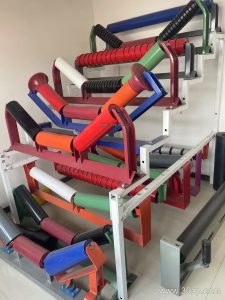
A trough idler set is the group of rollers and frame that supports the carrying run of a conveyor belt and shapes it into a trough. The angled rolls lift the belt edges so bulk material sits in a shallow channel instead of spilling off a flat surface. This assembly is often called a troughing idler set or carrying idler set, and it is one of the most repeated components on any bulk handling line. In a quarry, a cement plant, or a power plant coal yard, hundreds of these sets may run under a single belt. Choosing them well affects belt life, energy use, and how often maintenance crews have to walk the line.
How the Assembly Is Built
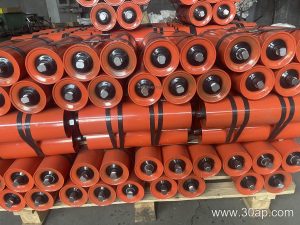
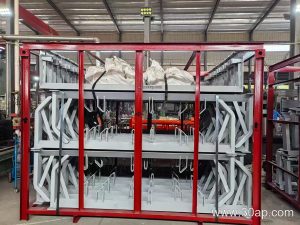
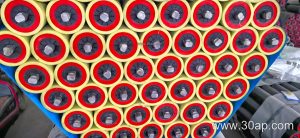
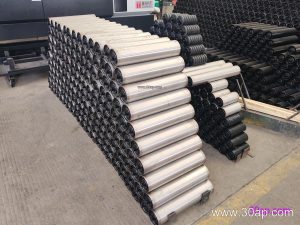
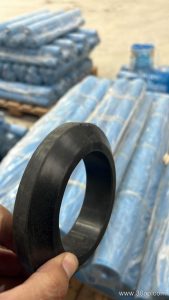
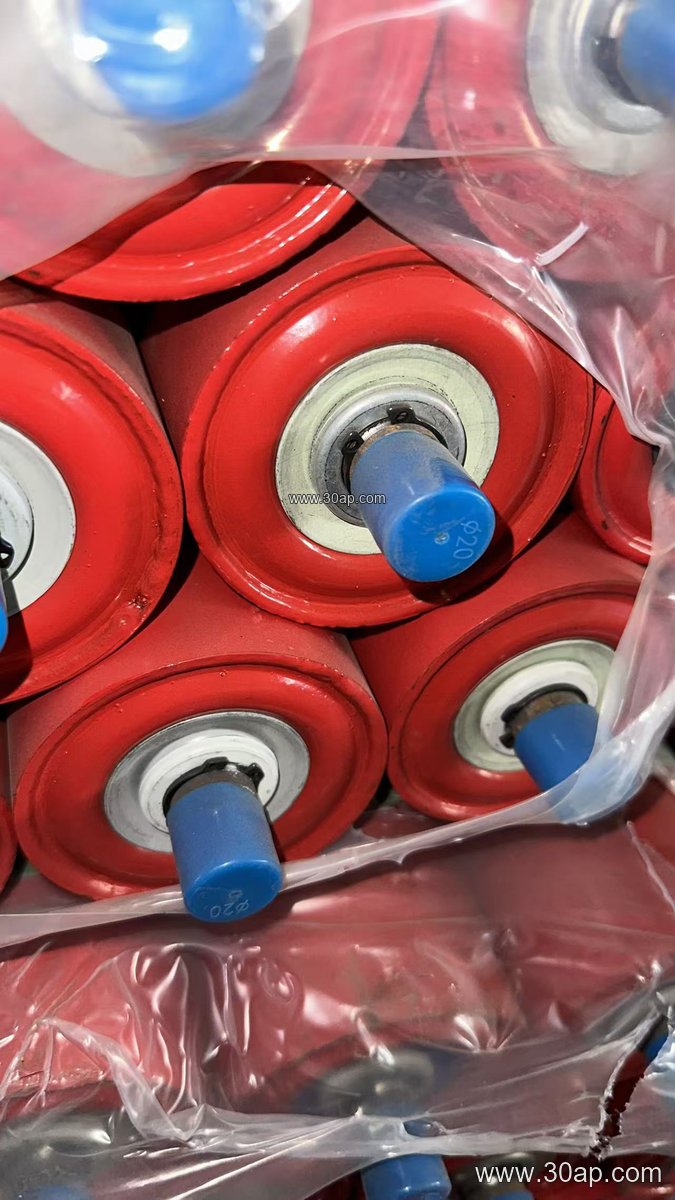
A typical set combines two or three idler rollers mounted in a steel frame, with the side rolls tilted upward. The three-roll arrangement is the most common for wider belts. Each roller has a shell, a shaft, bearing housings, and seals. Shells are usually steel tube, and the surface may be plain, nylon coated, ceramic lined, or fitted with rubber rings for impact absorption. Bearings such as 6204, 6205, 6305, 6306, 6308, or 6310 appear across the range, matched to load and speed by the manufacturer rather than fixed to one roll diameter.
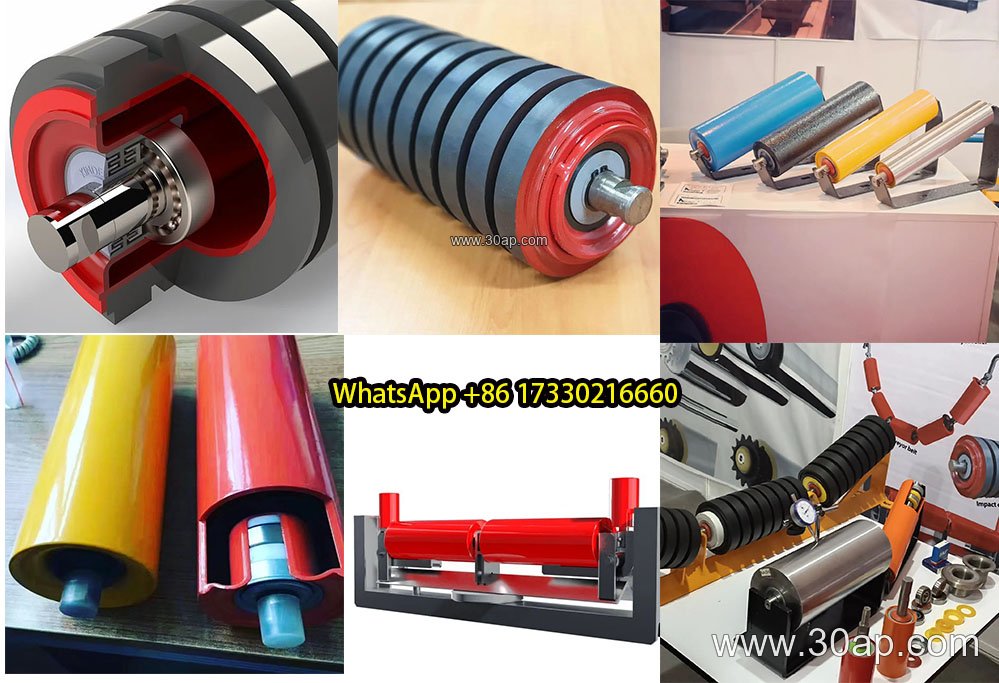
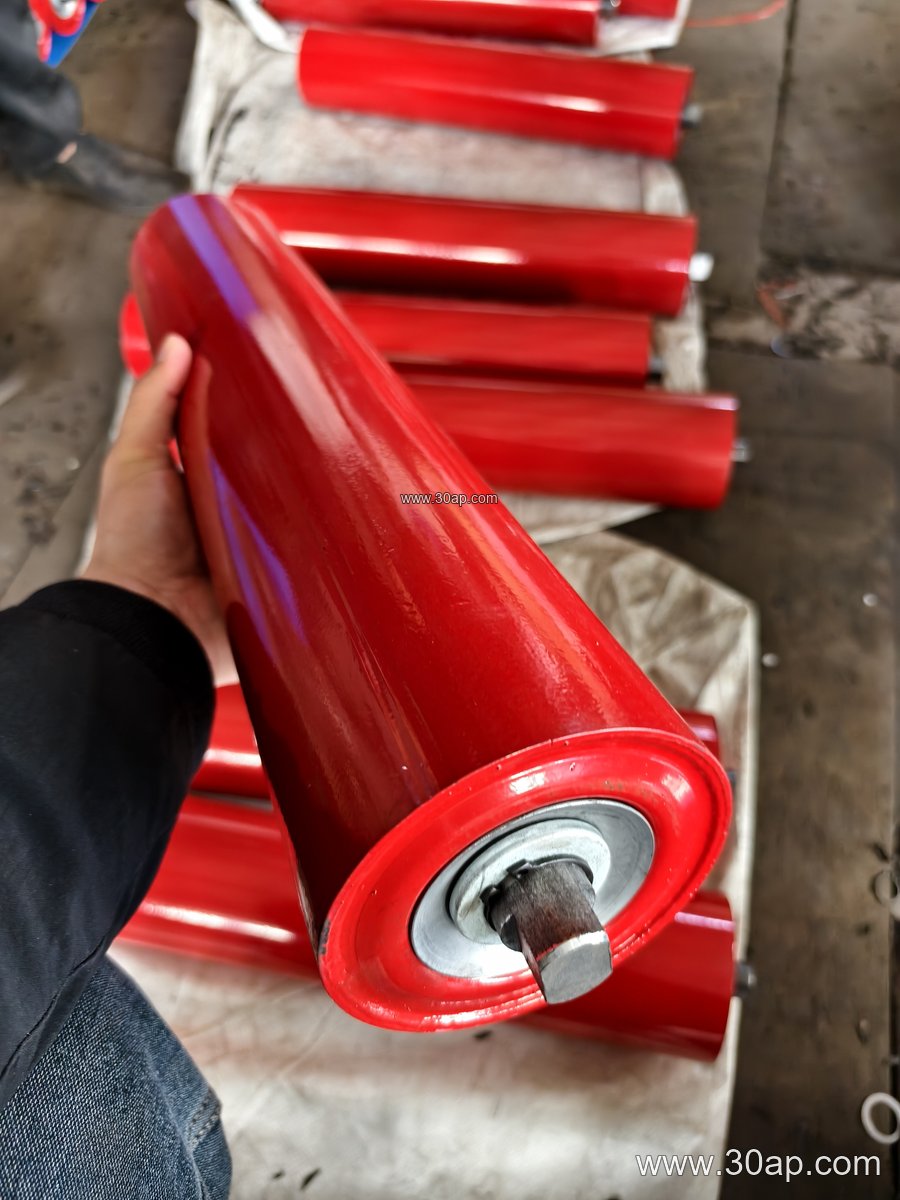
The frame connects to the conveyor bracket or stringer. Roll diameter commonly ranges from Ø63 and Ø76 on small units up to Ø159, Ø178, Ø194, or Ø219 on heavy-duty carrying positions. Roll length changes with belt width, trough angle, and the number of rolls in the set. For a three-roll trough set, common roll lengths are roughly 200 mm at B500, 250 mm at B650, 315 mm at B800, 380 mm at B1000, 465 mm at B1200, 530 mm at B1400, 600 mm at B1600, 670 mm at B1800, and 750 mm at B2000. These are examples only; side rolls and center rolls can differ, and the final length is set by design.
Trough Angle and Belt Width
The trough angle controls how deeply the belt is cupped. Common angles are 20, 30, 35, and 45 degrees. A deeper trough holds more material and helps prevent spillage on inclined sections, but it also increases belt flexing at the side rolls. A 35-degree set is a frequent choice for general aggregate and ore duty, while 45-degree sets suit high-capacity loading points where containment matters. Belt widths from B400 and B500 up to B2200 and B2400 each need a matching frame and roll layout, so the set should be selected together with the belt, not after it.
Where These Sets Are Used
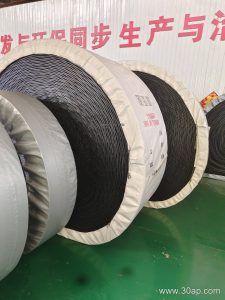
Troughing sets carry material on the top run in sand and gravel plants, limestone mines, iron ore and copper ore operations, coal washing plants, and cement kilns’ raw material lines. They also appear in tunnel muck removal and fertilizer handling. The belt itself may be a heavy-duty mining conveyor belt, an abrasion resistant conveyor belt, or a heat resistant conveyor belt near a clinker cooler. In dusty or wet conditions, sealed bearings and good housing protection matter more than a small difference in roll diameter.
Buyer Checklist
- Confirm belt width, trough angle, and whether a two-roll or three-roll set is required.
- Check roll diameter and shell thickness against the load and belt speed.
- Ask about bearing size, seal type, and lubrication approach.
- Verify frame dimensions and bolt spacing against the existing conveyor bracket.
- For impact zones, consider rubber ring or cushion rolls rather than standard carrying rolls.
- Keep spare rollers and frames compatible with the rest of the line to simplify stocking.
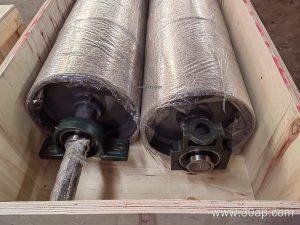
For related conveyor components, buyers often compare the trough set with the return idler roller, the conveyor pulley at the drive and tail, and the belt itself. A balanced selection across these parts keeps the whole conveyor running smoothly. More reference on trough idler sets and conveyor belt matching is available at beltconveyorpro.com/trough-idler-set.