What a Chemical Resistant Conveyor Belt Is
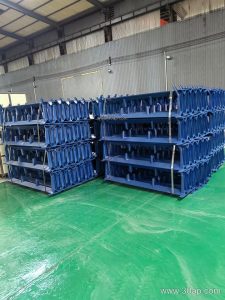
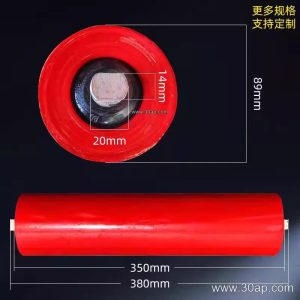
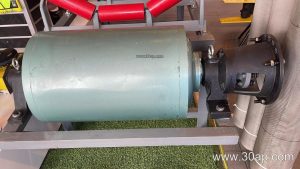
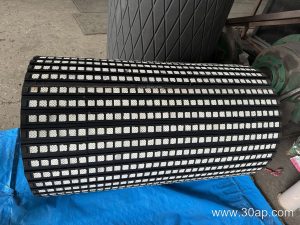
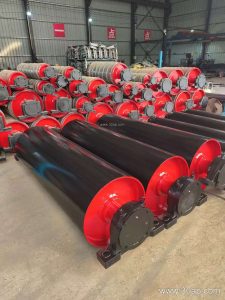
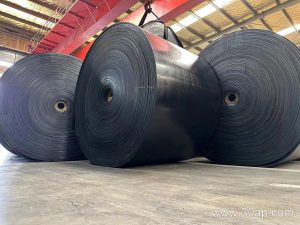
A chemical resistant conveyor belt is a rubber conveyor belt engineered so that its covers and, where needed, its carcass can withstand contact with acids, alkalis, salts, solvents and other aggressive substances. In plants where spilled slurry, acidic wash water or alkaline dust attacks ordinary belting, this belt protects the load-bearing surface and keeps the conveyor line running longer between replacements. It is still a normal belt in mechanical terms, carried on a conveyor pulley at the head and tail, supported by idler roller sets and held in line by conveyor bracket frames, but its compound is selected for chemical exposure first and mechanical duty second.
Construction and Compound Choices
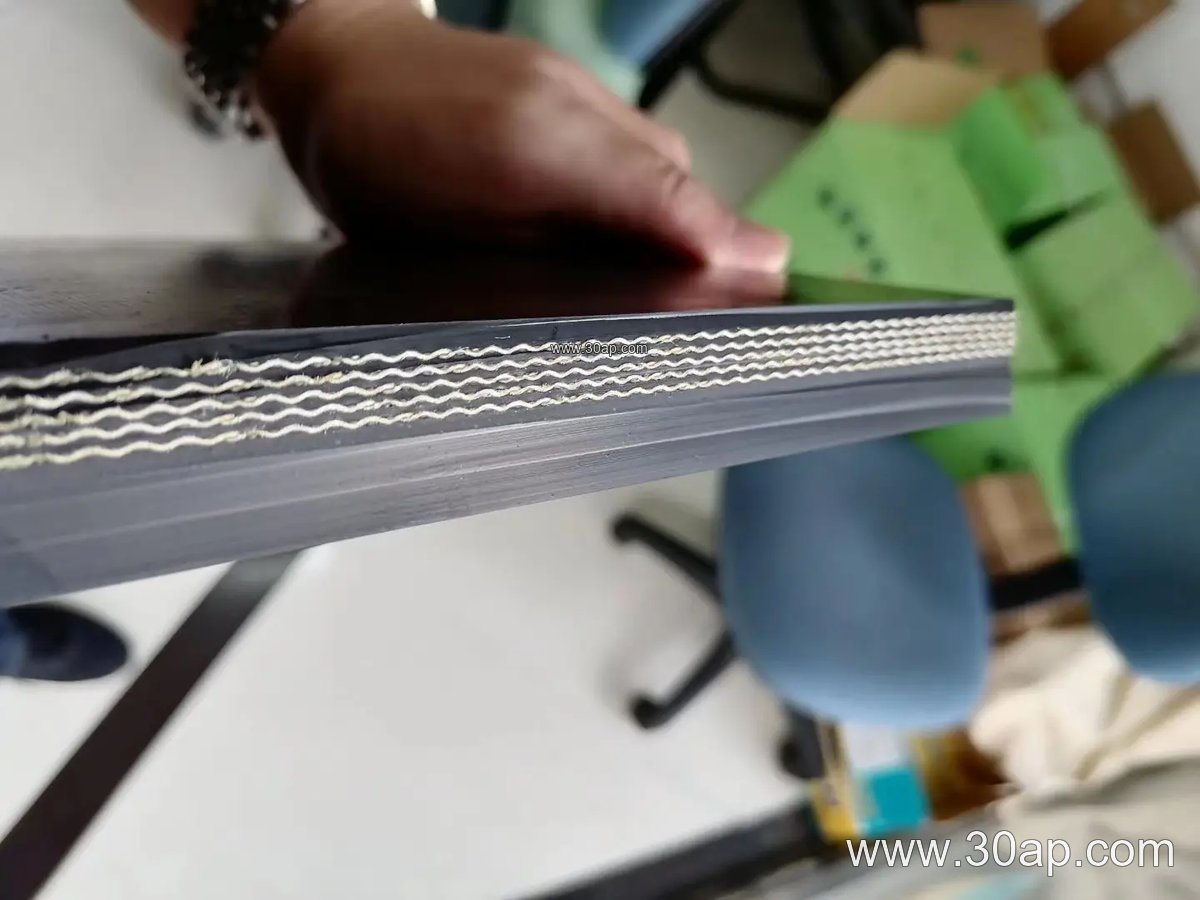
Most versions combine an acid and alkali resistant cover compound with a fabric core. The carcass is commonly an EP conveyor belt construction or an NN conveyor belt, where polyester or nylon plies carry the tension while the covers handle the chemistry. For heavier tensions, a steel cord conveyor belt carcass may be chosen, although the cover compound remains the deciding factor for chemical service. Cover thickness is usually stated as a top and bottom pair, for example 4+2 mm or 6+2 mm, and the number of plies typically runs from two to six depending on the duty.
| Parameter | Common Range |
|---|---|
| Belt type | Acid resistant conveyor belt, alkali resistant conveyor belt |
| Carcass | EP fabric, NN fabric, steel cord |
| Strength grades | EP200 to EP2000, or ST grades for steel cord |
| Belt width | B500, B650, B800, B1000, B1200, B1400 |
| Cover thickness | 3+1.5, 4+2, 5+2, 6+2, 8+3 mm |
| Ply count | 2 to 6 plies |
Cover hardness, polymer base and cure system are adjusted by the manufacturer. A buyer should ask which chemicals, at what concentration and temperature, will touch the belt, because a compound that resists dilute acid may swell badly in a concentrated solvent.
Where These Belts Are Used
Chemical plants, fertilizer works, pulp and paper mills, tanneries and wastewater treatment sites are the obvious users. The belt also appears in less obvious places: a cement plant handling alkaline kiln dust, a power plant moving limestone slurry, a sand making plant washing aggregate with acidic water, or a quarry conveyor belt exposed to wet, salt-laden ground. In mining, an ore conveyor belt carrying sulfide-bearing material may need chemical protection alongside abrasion resistance. Where the environment is also flammable, a flame retardant conveyor belt grade can be combined with chemical resistance, and where the material is oily as well as corrosive, an oil resistant conveyor belt cover may be the better compromise. Food and pharmaceutical lines sometimes use a food grade conveyor belt with chemical wash-down resistance.
Selection Points for Buyers
- List every chemical, its concentration and its temperature; ask the belt maker to confirm the cover compound against that list.
- Match the carcass to the tension and the pulley diameters. Belt width does not fix shaft size, and one width can run on different pulley sizes according to the conveyor design.
- Consider mechanical loads together with chemistry. A high abrasion resistant conveyor belt cover may resist wear but not acid, so a combined grade is often needed.
- Check cover thickness against the expected wear and the chemical attack rate. Thin covers save cost but shorten service life in aggressive splash zones.
- For underground coal mining conveyor belt service, confirm flame resistance and anti-static properties together with chemical resistance.
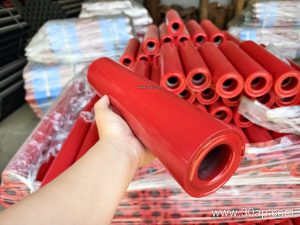
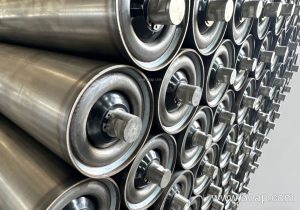
- Plan spare idler roller and conveyor pulley maintenance, because corrosive dust also attacks the conveyor hardware, not only the belt.
Installation and Care
Alignment matters more than usual on corrosive lines. A misaligned belt rubs its edges against structure, exposing fresh rubber and fabric to attack. Keep the conveyor pulley lagging and the idler roller shells clean, and wash down spillage before it concentrates. Store spare belting away from sunlight, ozone sources and pooled chemicals. When splicing, use a splice system compatible with the cover compound, and prefer an endless conveyor belt made at the factory where the joint quality matters. Inspect edges, covers and splices at fixed intervals; early detection of swelling, cracking or hardening prevents a small chemical attack from becoming a full belt failure.
For more information on chemical resistant belting and matching conveyor components, visit www.example.com/conveyor-belt and www.example.com/chemical-resistant-conveyor-belt.