What the PVG800S Conveyor Belt Is
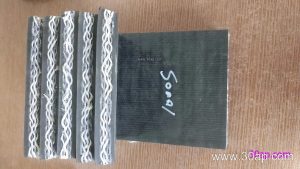
The PVG800S Conveyor Belt is a solid-woven, PVC-impregnated conveyor belt built around a whole-belt construction rather than a laminated carcass with separate cover layers. In this product family, the PVG800S designation identifies a flame-retardant belt with an 800 N/mm tensile strength class, and the S suffix denotes an anti-static variant intended for service where static charge must be controlled. It belongs to the PVG Conveyor Belt group, which is widely chosen for underground coal mining and other enclosed transport routes where a Fire Resistant Conveyor Belt and an Anti-Static Conveyor Belt are both required in one product.
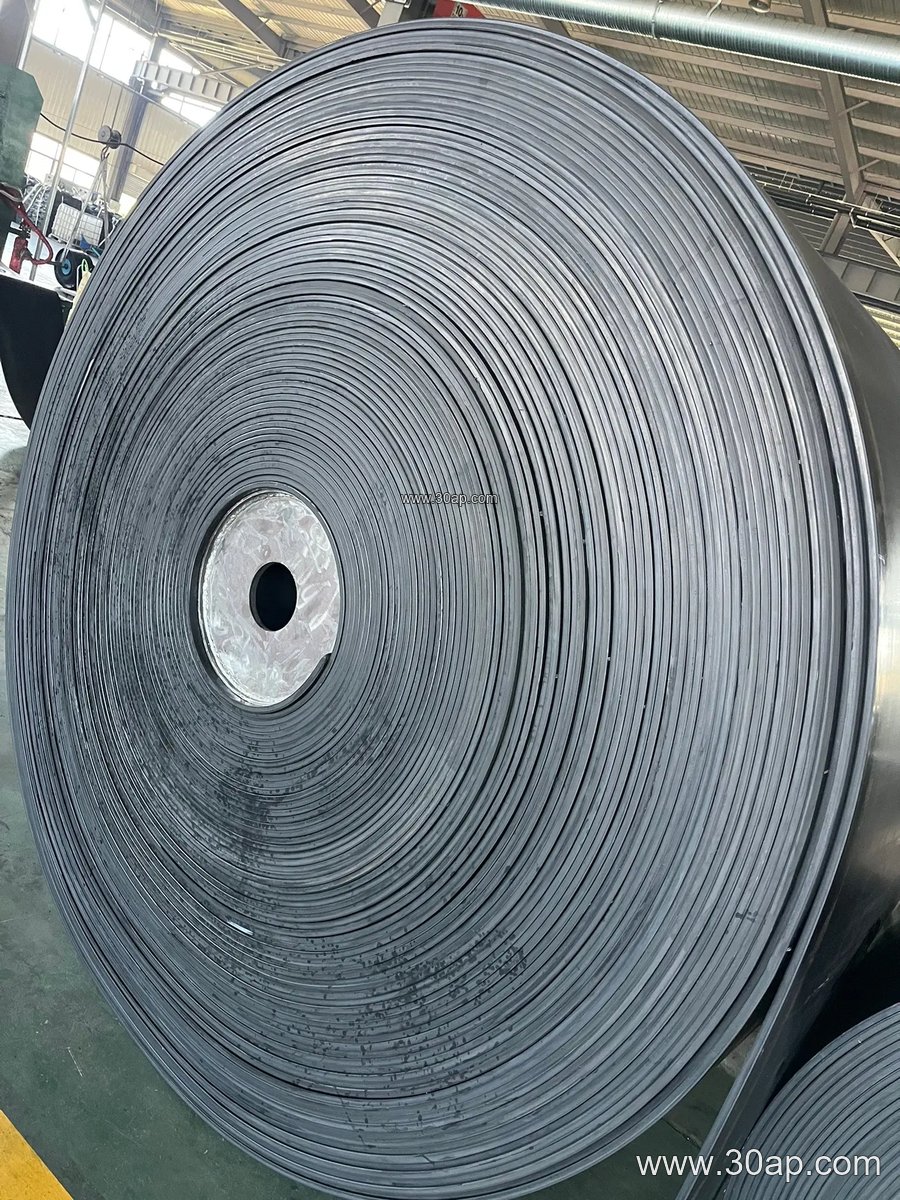
Unlike a Multi-Ply Fabric Core Conveyor Belt or a Steel Cord Conveyor Belt, the PVG800S has no distinct rubber covers bonded to a carcass. The fabric plies are impregnated and consolidated with PVC, producing a belt that resists water, resists delamination and can be spliced into an Endless Conveyor Belt on site. For buyers comparing belt families, this construction is the key difference: a Rubber Conveyor Belt relies on rubber covers over a fabric or steel carcass, while a PVG800S Conveyor Belt behaves as a single homogeneous slab.
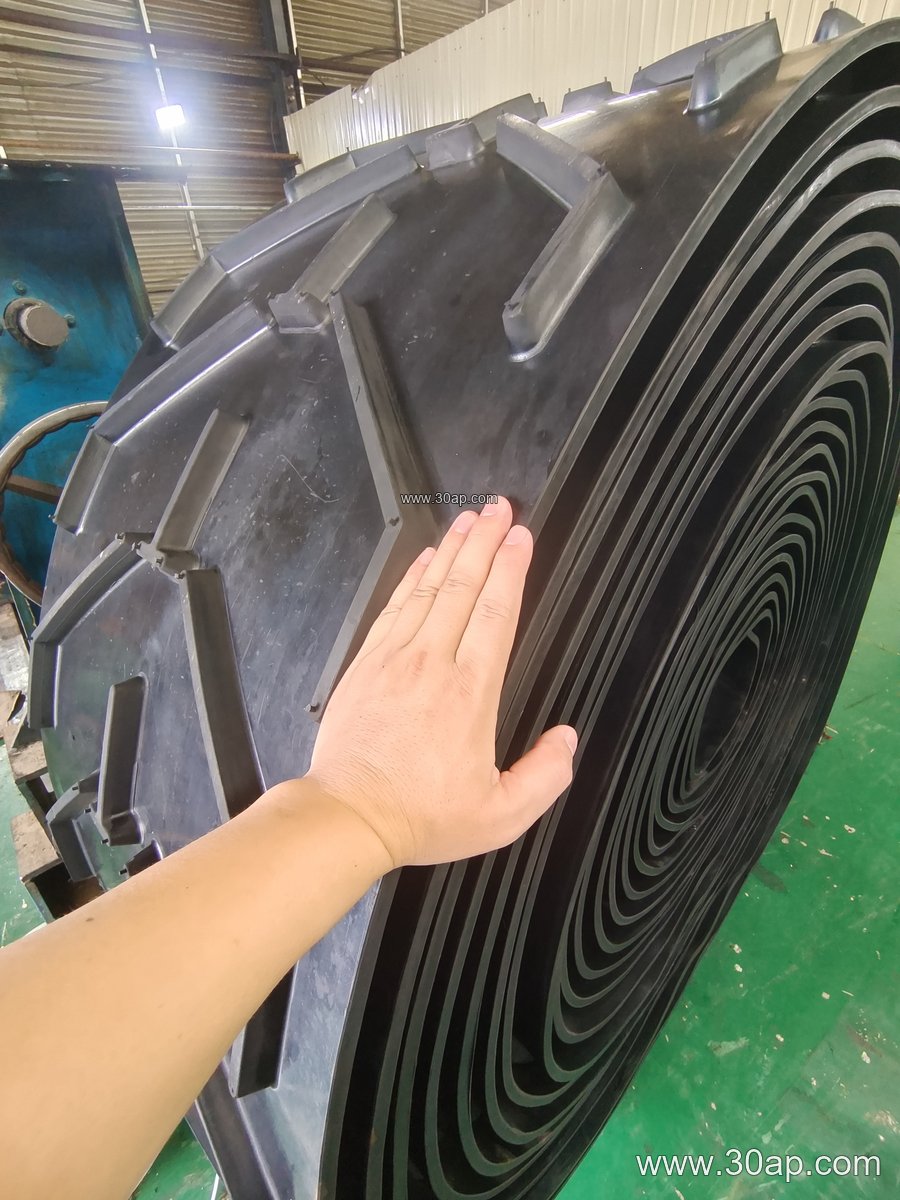
Construction and Surface Options
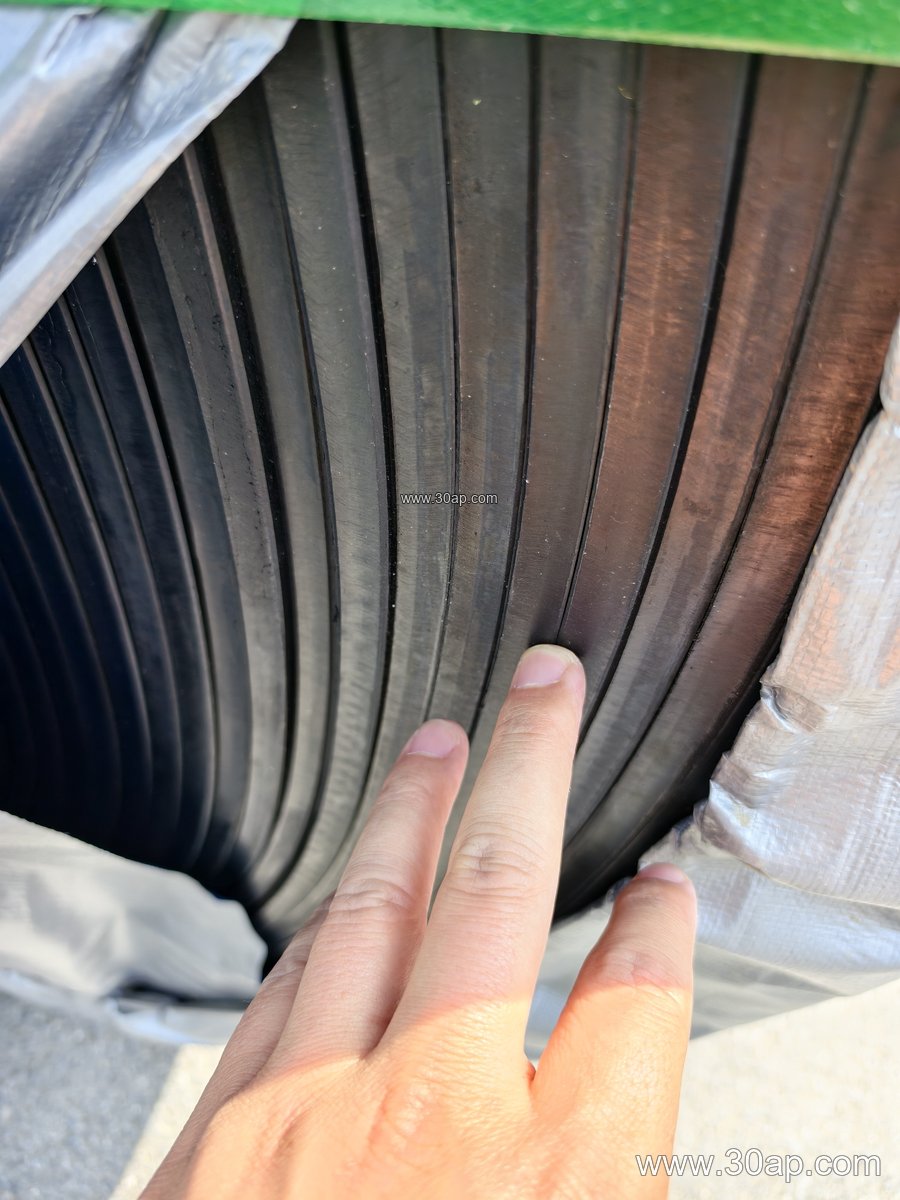
The base construction is a solid-woven fabric core fully impregnated with PVC. Typical belts in this class are supplied in thicknesses around 8 mm to 14 mm depending on strength and duty, with the 800 N/mm class commonly falling in the middle of that range. Surface form can be varied during manufacture, so the same core may be supplied as a plain belt, a Chevron Conveyor Belt for inclined haulage, or a Corrugated Sidewall Conveyor Belt where material containment is needed on steep sections.
Because the belt is homogeneous, there is no cover gauge to quote in the 3+1.5 or 6+2 mm style used for EP Conveyor Belt and NN Conveyor Belt specifications. Buyers should instead confirm overall thickness, tensile class, flame-retardant performance and anti-static properties against the actual tender documents.
| Parameter | Typical reference |
|---|---|
| Belt type | PVG solid-woven, PVC impregnated |
| Tensile class | 800 N/mm (PVG800 series) |
| Variant | S suffix, anti-static |
| Belt width | B800, B1000, B1200, B1400 and other widths by design |
| Belt thickness | Commonly about 8 mm to 14 mm |
| Surface forms | Plain, chevron, corrugated sidewall |
| Jointing | Vulcanized splice or mechanical fastener, as specified |
Where It Fits in the Plant
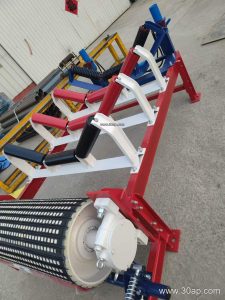
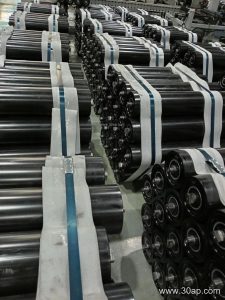
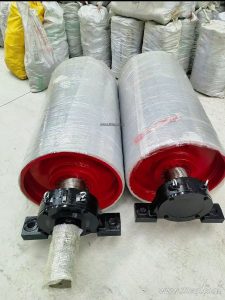
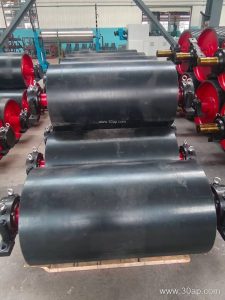
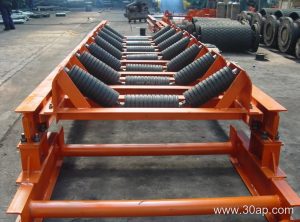
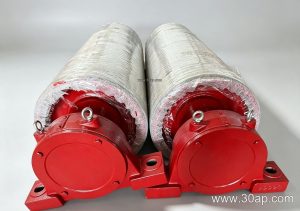
Underground coal mining is the classic application, where the belt runs on a conveyor pulley at the drive, a tail pulley at the loading end and bend pulleys along the route, supported by idler roller sets mounted on conveyor bracket frames. The flame-retardant and anti-static properties matter most in these confined galleries. The same belt also appears in cement plants, power plant coal handling, and quarry or aggregate conveying where a flame-retardant belt is specified by site policy rather than by the material itself.
Other industries use the belt where wet, abrasive or sticky loads are present. A Mining Conveyor Belt of this type handles run-of-mine coal, while a Cement Conveyor Belt installation may use it on clinker or raw meal routes that are washed down regularly. In a sand making plant or stone crushing line, an Abrasion Resistant Conveyor Belt grade is often preferred, but PVG construction still suits wet washing circuits because the PVC body does not absorb water.
Selection Points for Buyers
- Confirm the required tensile class and whether PVG800S, rather than a higher PVG class, matches the calculated belt tension.
- State the belt width, centre distance, incline angle and load lump size so the supplier can advise on surface form and thickness.
- Check that flame-retardant and anti-static performance is documented for the exact belt offered, not just for the product family.
- Decide on splice method before ordering, since an Endless Conveyor Belt splice made on site needs the correct joint material and cure equipment.
- Review the drive pulley, tail pulley and bend pulley diameters together with the belt supplier; belt width alone does not determine pulley size.
- For hot or oily loads, confirm whether a Heat Resistant Conveyor Belt or Oil Resistant Conveyor Belt grade is a better fit than standard PVG.
Maintenance is straightforward but should be scheduled. Inspect the belt surface for cuts and edge wear, check idler roller rotation, verify that the conveyor pulley lagging still grips, and keep the belt tracking centred through the bend pulleys. A belt that runs true lasts longer and keeps the splice intact.
Comparing PVG with Other Belt Types
Where a plant already runs an EP Conveyor Belt on surface routes, the PVG800S Conveyor Belt is not a drop-in replacement; the two differ in carcass, cover and splice practice. Similarly, a Steel Cord Conveyor Belt serves very long, high-tension lines that a solid-woven belt would not cover. The PVG800S Conveyor Belt earns its place in medium-tension, fire-sensitive duties, especially Underground Coal Mining Conveyor Belt systems where safety documentation and reliable wet performance matter more than raw tensile capacity.