What Conveyor Bracket Fabrication Involves
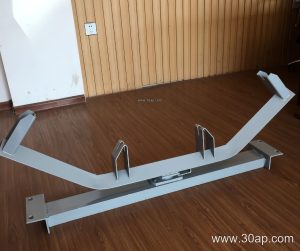
Conveyor bracket fabrication is the process of cutting, forming, welding and finishing the steel frames that hold idler rollers in position along a conveyor line. In a quarry, a coal preparation plant or a cement kiln feed line, these brackets carry the full weight of the belt and the material on it, so the quality of the fabrication directly affects tracking, noise and roller life. A well-built conveyor bracket keeps the idler roller square to the belt, spreads the load across the frame and holds its shape after years of vibration.
The work usually starts with flat drawings or a 3D model of the conveyor section. The fabricator converts the belt width, trough angle and roller diameter into a bracket geometry, then releases cutting lists to the shop floor.
Materials and Build Methods
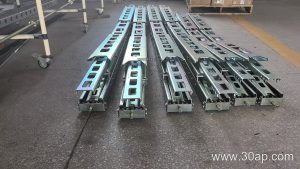
Most brackets are made from angle steel, channel steel or folded steel plate. Angle and channel sections are common for heavy-duty frames on a bulk material conveyor belt, while folded plate gives a cleaner profile and good stiffness for lighter runs. The choice depends on span, loading and the environment.
Cutting and Forming
- Shearing or laser cutting of angle, channel and plate
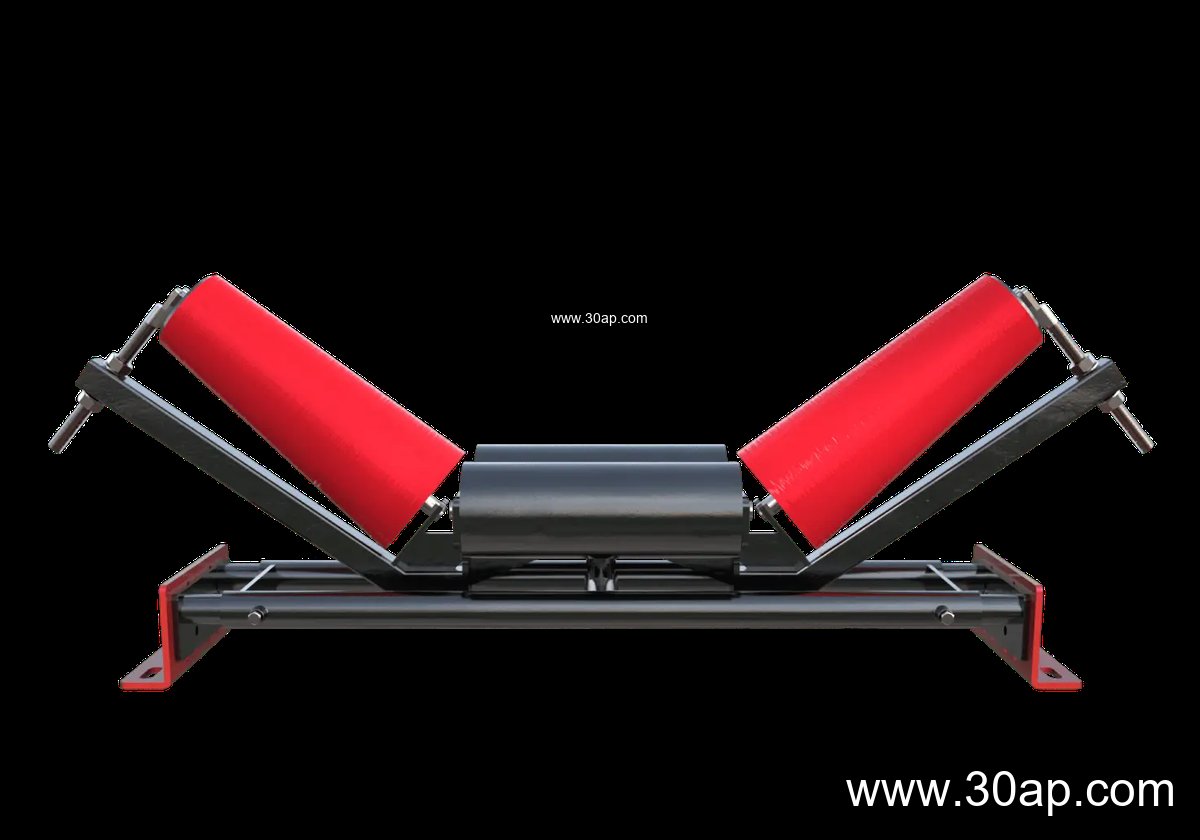
- Pressing or rolling to set the trough angle on top brackets
- Drilling or punching roller mounting holes with a jig for repeatability
Welding and Finishing
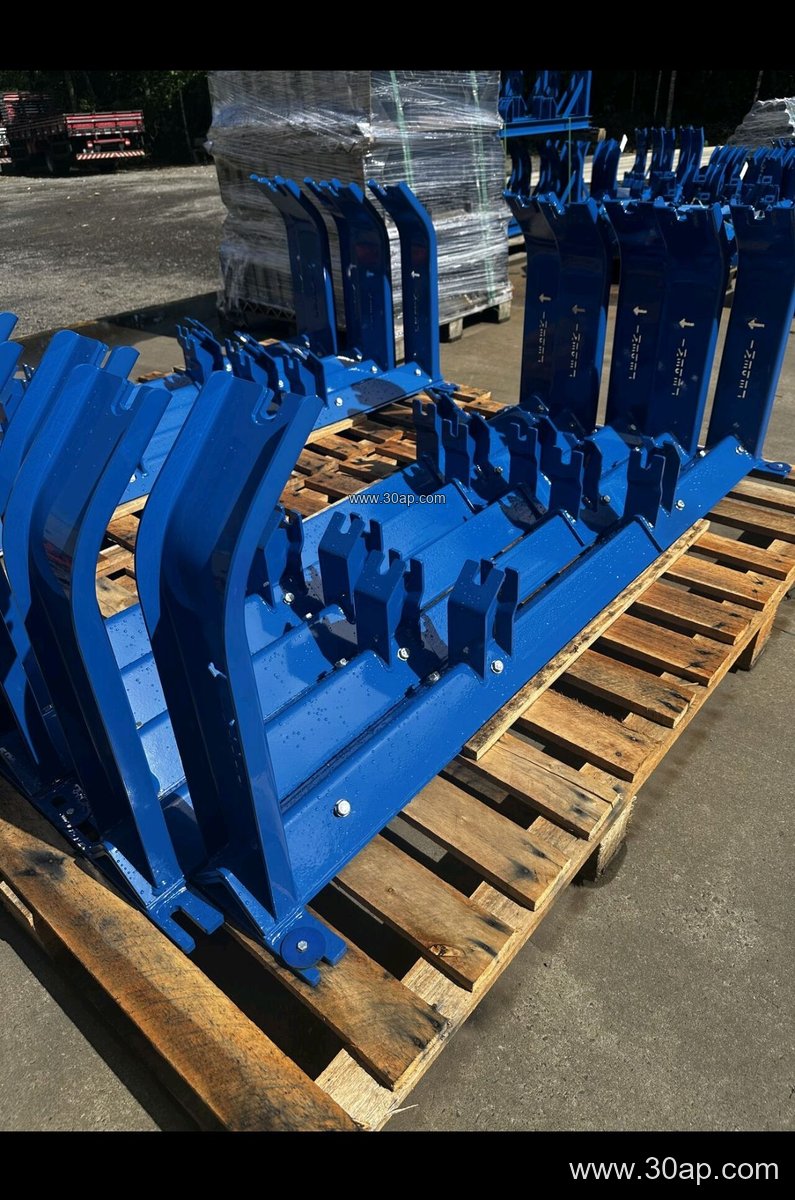
Welding is done on a fixture so that the two side arms stay symmetrical. Distortion control matters, because a twisted bracket will pull the roller out of alignment. After welding, the part is cleaned, shot-blasted if required and painted or galvanized. Bolt holes are checked against the mating frame before dispatch.
Types and Their Place on the Line
Fabrication drawings usually cover a family of parts rather than one item. Common examples include trough brackets, transition brackets, return brackets, V-return brackets, impact brackets, self-aligning brackets and adjustable brackets. Each has its own welding jig and hole pattern.
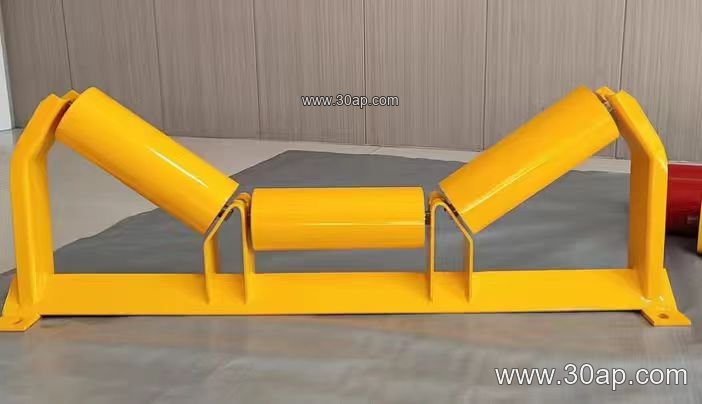
An adjustable bracket is useful where the trough angle may be changed on site, for instance between 20, 30, 35 and 45 degrees. Fixed brackets are simpler and stiffer but lock the angle at the design stage. Self-aligning brackets are a separate function and should not be confused with the standard carrying frame.
Matching Brackets to Belt and Roller
Bracket geometry follows the belt width and the roller diameter. Typical belt widths in fabrication work include B500, B650, B800, B1000, B1200, B1400, B1600 and B1800, and roller diameters commonly fall around Ø89, Ø108, Ø133, Ø159 and Ø194. A bracket can be built for B800 with a 35 degree trough and Ø108 rollers, or for B1200 with a 45 degree trough and Ø133 rollers, but the same belt width can be paired with different angles and roller sizes depending on the duty. Mounting hole spacing and crossbeam length change with belt width and trough angle, so they are set per design rather than taken as a fixed number.
| Parameter | Common Range | Note |
|---|---|---|
| Belt width | B500 to B2000 | Set by conveyor capacity |
| Trough angle | 20, 30, 35, 45 degrees | Adjustable type allows change |
| Roller diameter | Ø89 to Ø194 | Matched to load and belt speed |
| Material | Angle, channel, folded plate | Chosen by duty |
Forward-tilted brackets are sometimes specified at about 1.5 to 2 degrees to help belt centering. This is a design choice, not a universal rule.
Where These Frames Are Used
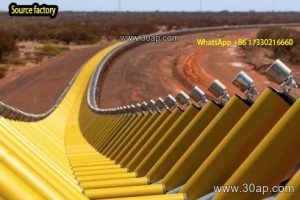
Fabricated brackets appear anywhere a belt needs support. In an iron ore or limestone quarry they sit under a heavy-duty mining conveyor belt carrying crushed rock. In a coal preparation plant, flame retardant conveyor belt runs over frames that must resist dust and moisture. A power plant coal yard uses long lines of trough brackets, while a sand and gravel plant relies on impact brackets under the crusher discharge. Food and fertilizer plants often use painted or galvanized frames for cleanliness.
Buyer Checklist
- Confirm belt width, trough angle and roller diameter before fabrication begins.
- Ask for the welding fixture and hole tolerance approach.
- Check surface treatment against the site environment.
- Confirm that brackets will mate with the planned conveyor pulley and frame dimensions.
- Request sample inspection reports rather than assuming compliance.
Good conveyor bracket fabrication is quiet, precise work. When the frames are square, the idler roller runs true, the belt tracks better and maintenance intervals stretch out. Buyers who share clear drawings and site conditions get brackets that fit the first time. Learn more at www.morningbelt.com and www.morningbelt.com/conveyor-bracket.