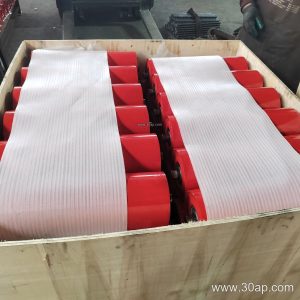
What a Take-Up Pulley Does
A take-up pulley is the drum that gives a conveyor belt its working tension. Mounted on a movable carriage or take-up frame, it is pulled away from the main conveyor structure by gravity, a screw, or a hydraulic cylinder, keeping slack out of the return run. Without that tension, the belt would slip on the drive pulley, sag between idlers, and mistrack. In a coal handling plant or a limestone quarry line, a properly set take-up pulley is often the difference between steady output and constant stoppages.
This drum is also called a tension pulley or take-up drum. It is a distinct position in the conveyor layout and should not be confused with a drive pulley, a tail pulley, or a bend pulley. Those perform different jobs at different points along the belt path, and swapping the names leads to the wrong specification.
Construction and Surface Options
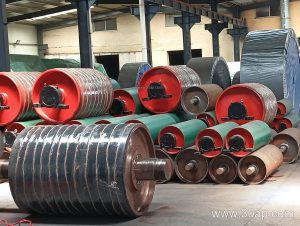
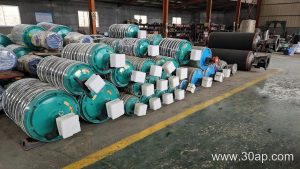
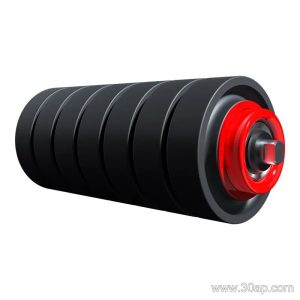
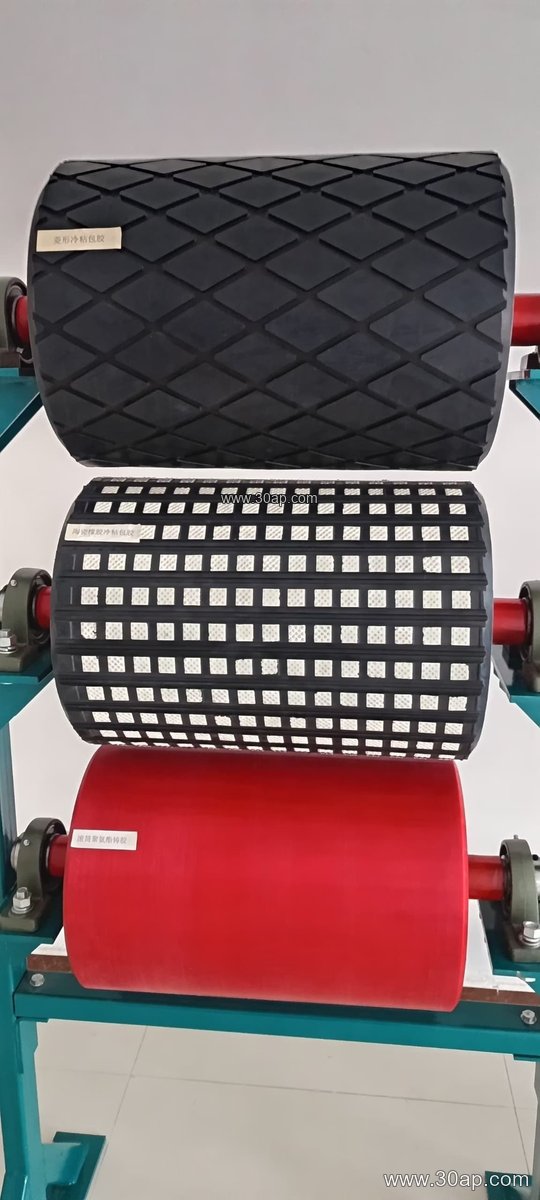
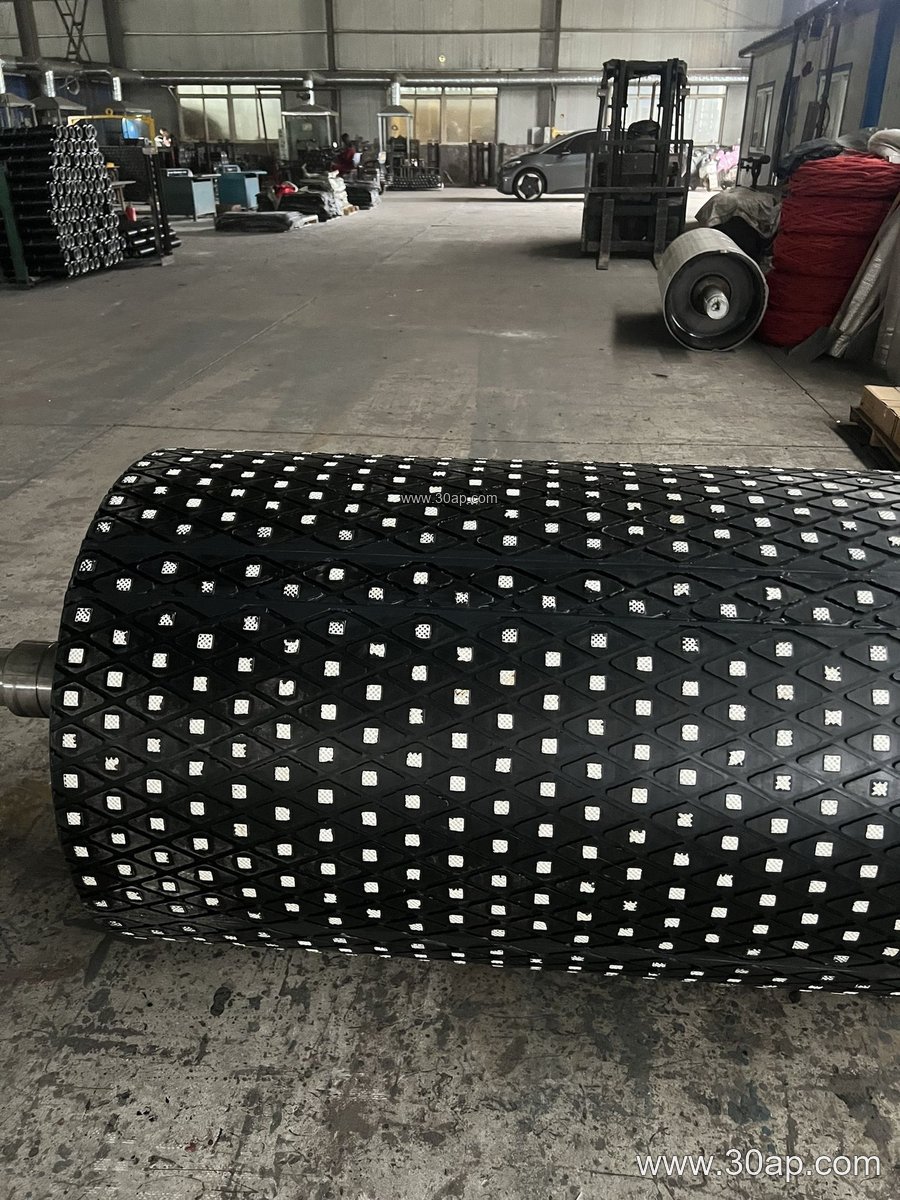
A take-up pulley is built around a welded steel shell with end discs, a shaft, and bearing housings. Because it runs in the low-tension return strand, its shell is sometimes lighter than a drive drum of the same diameter, but the shaft and bearings still have to carry the take-up force plus the belt pull. Surface treatment follows the application: plain finish, cast rubber, cold-bonded rubber, hot-vulcanized rubber, diamond pattern, herringbone, or ceramic lagging. Common lagging thicknesses are 8, 10, 12, 15, and 20 mm; the right choice depends on whether the drum must grip the belt or simply guide it.
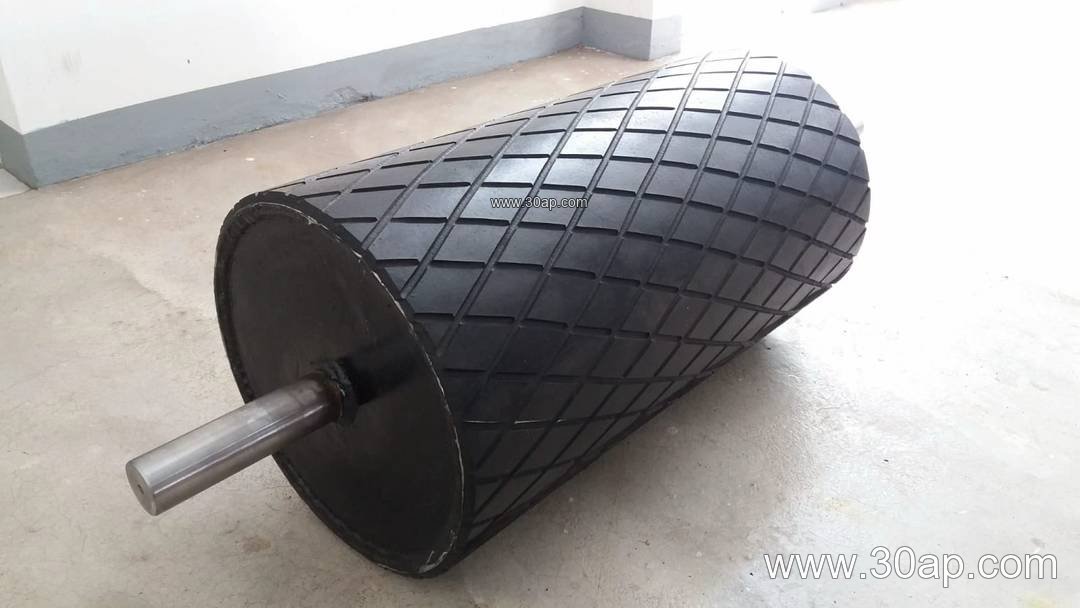
Typical shell diameters run from Ø200 to Ø1800 depending on belt width and take-up travel. A B800 conveyor may use a Ø500 drum, a B1200 unit a Ø1000, and a B1400 system a Ø800, but these are design combinations rather than fixed rules. Shaft diameters such as Ø80, Ø100, or Ø120 are determined by torque and radial load, not by belt width alone.
Where It Sits in the Conveyor
The take-up pulley usually sits near the tail end or in a dedicated take-up tower on the return strand. Some layouts place it after the drive to control slack on the outgoing side. In underground mining conveyors and tunnel mucking lines, space is tight, so compact screw take-ups are common. In port bulk terminals and power plant coal yards, gravity take-up with a weighted carriage is preferred because it responds automatically to load changes.
Whatever the arrangement, the pulley must align with the belt centerline. A skewed take-up drum will pull the belt to one side and wear the edge of the conveyor belt quickly, especially on long overland runs carrying abrasive ore or aggregate.
Matching the Drum to the Belt
Tension requirements depend on the belt itself. A heavy steel cord conveyor belt on an iron ore line needs more take-up travel and a larger drum than a lightweight fabric core belt on a packaging line. The table below shows common reference combinations; final sizing should come from the conveyor designer.
- B500 belt, shell about 600 mm wide, drum Ø250 to Ø400
- B800 belt, shell about 950 mm wide, drum Ø400 to Ø630
- B1000 belt, shell about 1150 mm wide, drum Ø500 to Ø800
- B1200 belt, shell about 1400 mm wide, drum Ø630 to Ø1000
- B1400 belt, shell about 1600 mm wide, drum Ø800 to Ø1250
On heat resistant conveyor belt installations, keep the lagging rated for the same temperature as the belt. On flame retardant conveyor belt systems in coal mining, use fire resistant lagging and avoid rubber grades that could add fuel in a fire. For a pipe conveyor belt or a corrugated sidewall belt, confirm the drum face and any guide arrangements before ordering.
Buyer Checklist
Before requesting a quotation, collect the belt width, the required take-up force, the travel distance, the shaft diameter, and the bearing type. State whether the pulley needs lagging and which pattern suits the duty. Ask how the drum will be mounted, since a carriage-mounted unit needs different bearing housings than a fixed-frame screw take-up. Also confirm that the pulley will fit the existing conveyor bracket and that the idler roller line on the return side will not interfere with the carriage travel.
During operation, inspect lagging wear, check bearing temperature, and verify that the carriage moves freely through its full stroke. A take-up pulley that has run out of travel cannot maintain tension, and the belt will start to slip long before anyone notices the drum itself.