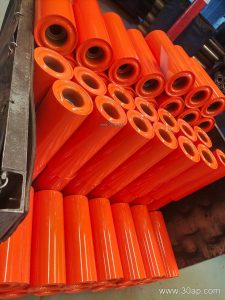
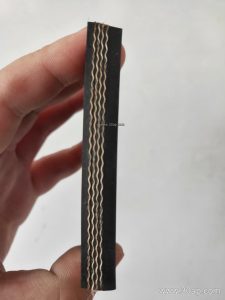
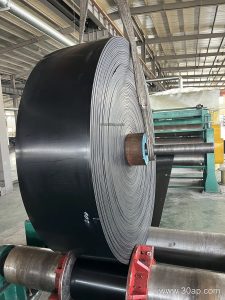
What a Conveyor Equipment Pulley Does
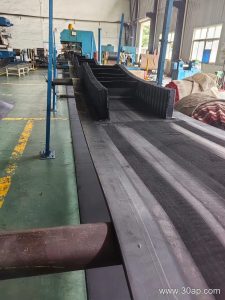
A conveyor equipment pulley is the rotating drum that turns a conveyor belt, sets its path, and keeps tension at the right level along the line. In a typical bulk handling circuit, this conveyor pulley works together with the conveyor belt, idler roller frames, and conveyor bracket assemblies to move material from one point to the next. You will see these drums in a limestone quarry feeding a crusher, in a coal preparation plant, in a cement plant clinker line, and in a power plant coal yard.
Although people often say drum or roller, the proper term is conveyor pulley, and each position on the conveyor has its own job. Drive pulleys transmit torque from the gearbox to the belt. Tail pulleys at the loading end support the return side and help control belt tracking. Bend pulleys redirect the belt around a take-up system, while snub pulleys increase wrap angle on the drive. These are separate functions, so a drive pulley, tail pulley, and bend pulley are not interchangeable.
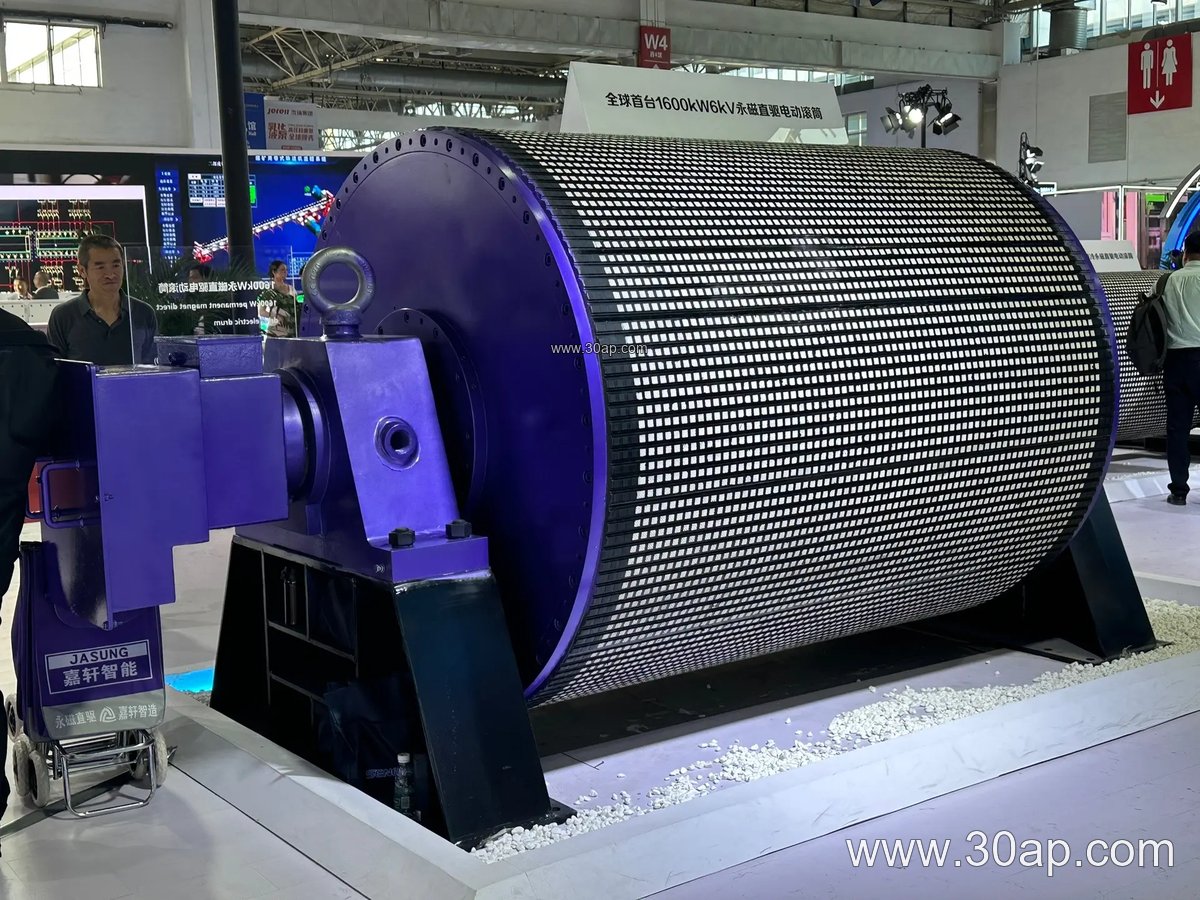
Construction and Surface Options
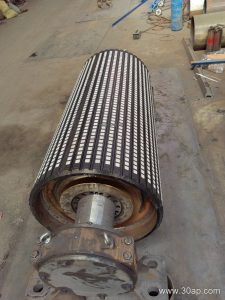
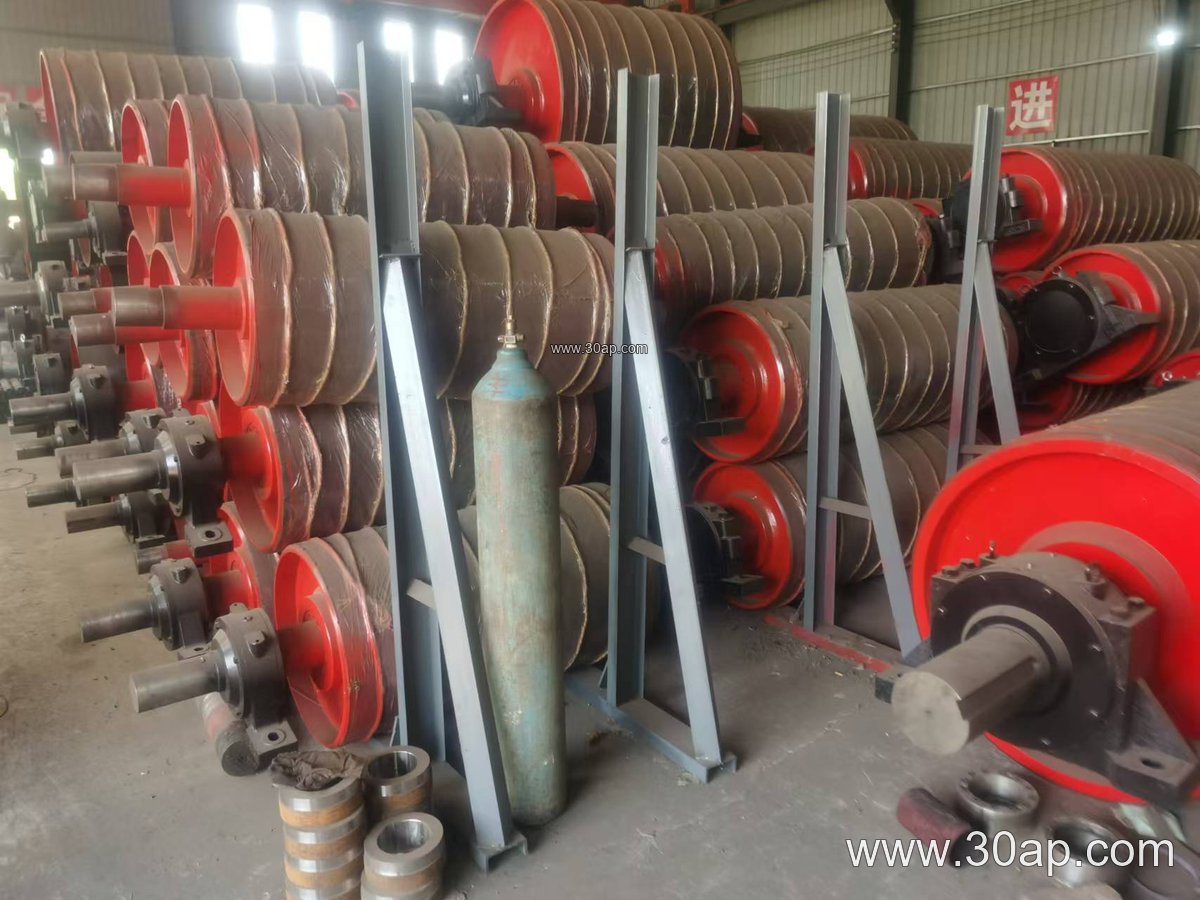
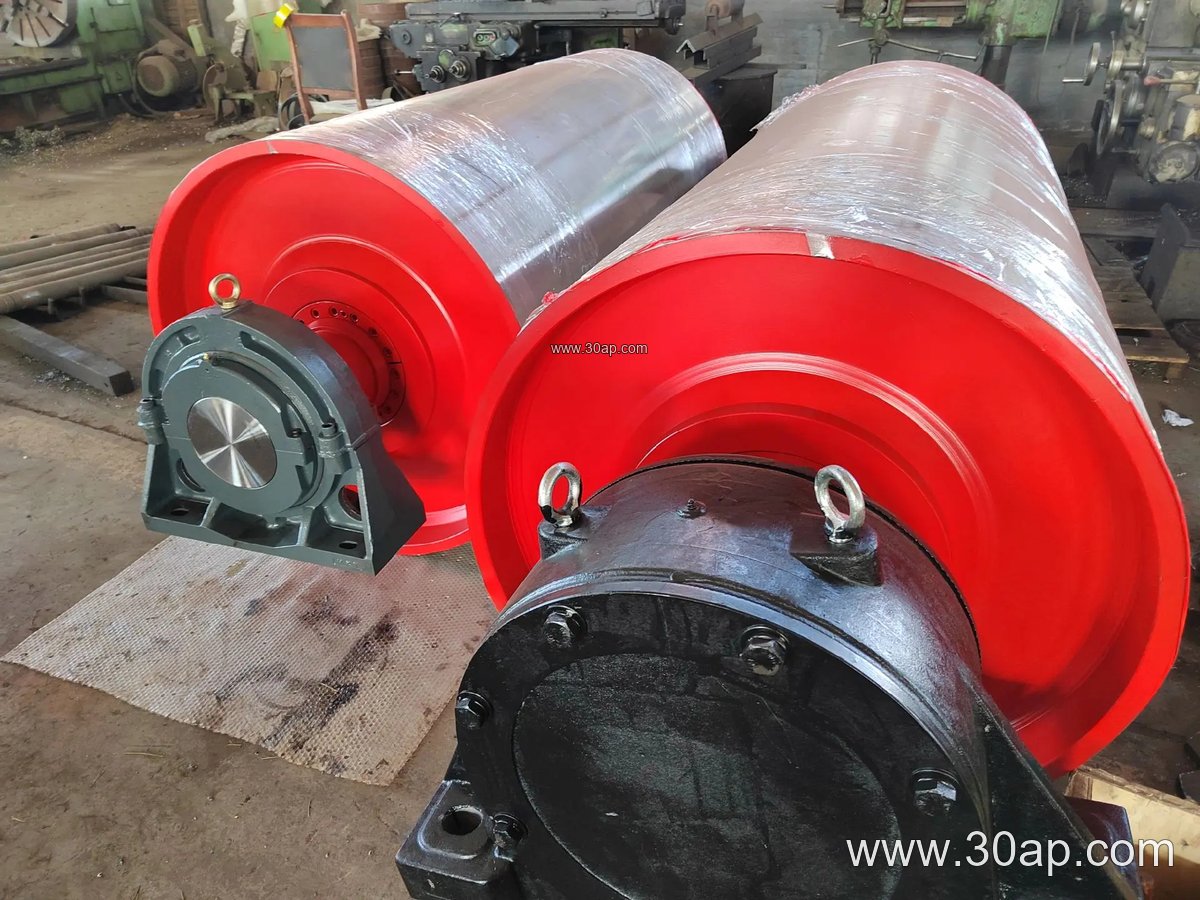
The body is usually a welded steel shell with end discs, a shaft, and bearing housings. Lagging on the shell face improves grip and protects the surface. Common options include plain finish, hot vulcanized rubber, cold bonded rubber, diamond grooving, herringbone pattern, and ceramic lagging, with lagging thickness often between 8 mm and 20 mm.
- Drive and head positions: lagged surface, often diamond or ceramic for wet or dusty conditions
- Tail and bend positions: plain or lightly lagged, depending on material build-up
- Take-up and snub positions: matched to belt wrap and tension requirements
Shell width is normally wider than the belt. As a reference, B650 belts commonly match a shell around 750 mm, B800 around 950 mm, and B1200 around 1400 mm. Diameter is selected from torque, belt tension, and shaft load, not from belt width alone. Shaft diameters such as Ø80, Ø100, Ø140, or Ø180 are determined by the drive design, so a given belt width does not fix one shaft size.
Matching the Pulley to the Belt and Duty
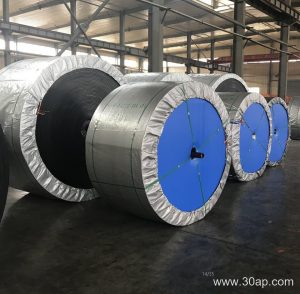
Belt type affects pulley choice more than many buyers expect. A heavy-duty mining conveyor belt carrying ore at high tension needs a larger drive pulley and a robust shaft, while a lighter fabric core belt on a short transfer may use a compact drum. In coal mining, flame retardant conveyor belt and anti-static conveyor belt are common, and the pulley lagging should be selected to avoid slip without damaging the cover. In a cement plant, heat resistant conveyor belt may run close to hot clinker, so bearing and lagging materials need to suit the ambient temperature.
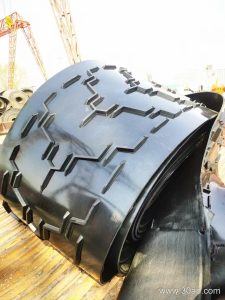
At a port or ship loading terminal, an EP conveyor belt or steel cord conveyor belt may run at high speed over long distances, and pulley balance and lagging quality become critical. In a sand and gravel line, an abrasion resistant conveyor belt handles sharp aggregate, and the tail pulley should be protected against material carryback. Where space is tight, a pipe conveyor belt or corrugated sidewall conveyor belt may need special pulley geometry, so always share the belt specification with the pulley supplier.
Sizes and Configuration Examples
Combinations are written as belt width by diameter. Common references include B800 × Ø500 for medium duty, B1200 × Ø1000 for a main drive, and B1400 × Ø800 for a bend position. Larger lines may use B1800 or B2000 belts with Ø1250 or Ø1400 drums. The table below shows reference pairings only; final selection follows the conveyor design.
| Belt Width | Typical Shell Width | Reference Diameter Range |
|---|---|---|
| B500 | about 600 mm | Ø250 to Ø400 |
| B650 | about 750 mm | Ø315 to Ø500 |
| B800 | about 950 mm | Ø400 to Ø630 |
| B1000 | about 1150 mm | Ø500 to Ø800 |
| B1200 | about 1400 mm | Ø630 to Ø1000 |
| B1400 | about 1600 mm | Ø800 to Ø1250 |
These values are common references, not fixed rules. A short conveyor with a light load may use a smaller drum than the table suggests, while a high-tension drive may need a larger one.
Buyer Checklist
- Confirm the pulley position: drive, tail, bend, take-up, or snub
- Provide belt width, belt type, and belt tension data
- State the material handled and ambient conditions
- Specify lagging type and thickness where grip matters
- Check shaft size against torque and bearing load
- Confirm shell width and mounting dimensions with the conveyor bracket
Regular inspection of lagging wear, bearing condition, and belt tracking extends service life. Keep spare idler roller and pulley parts available for critical lines, and record operating hours so replacement is planned rather than reactive.