What a Conveyor Rubber Lagged Pulley Does
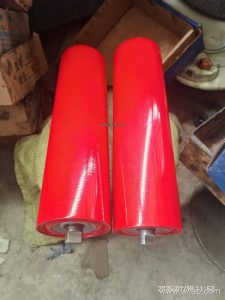
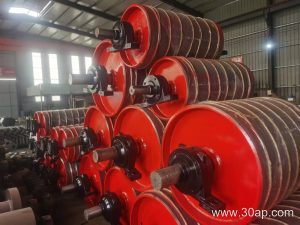
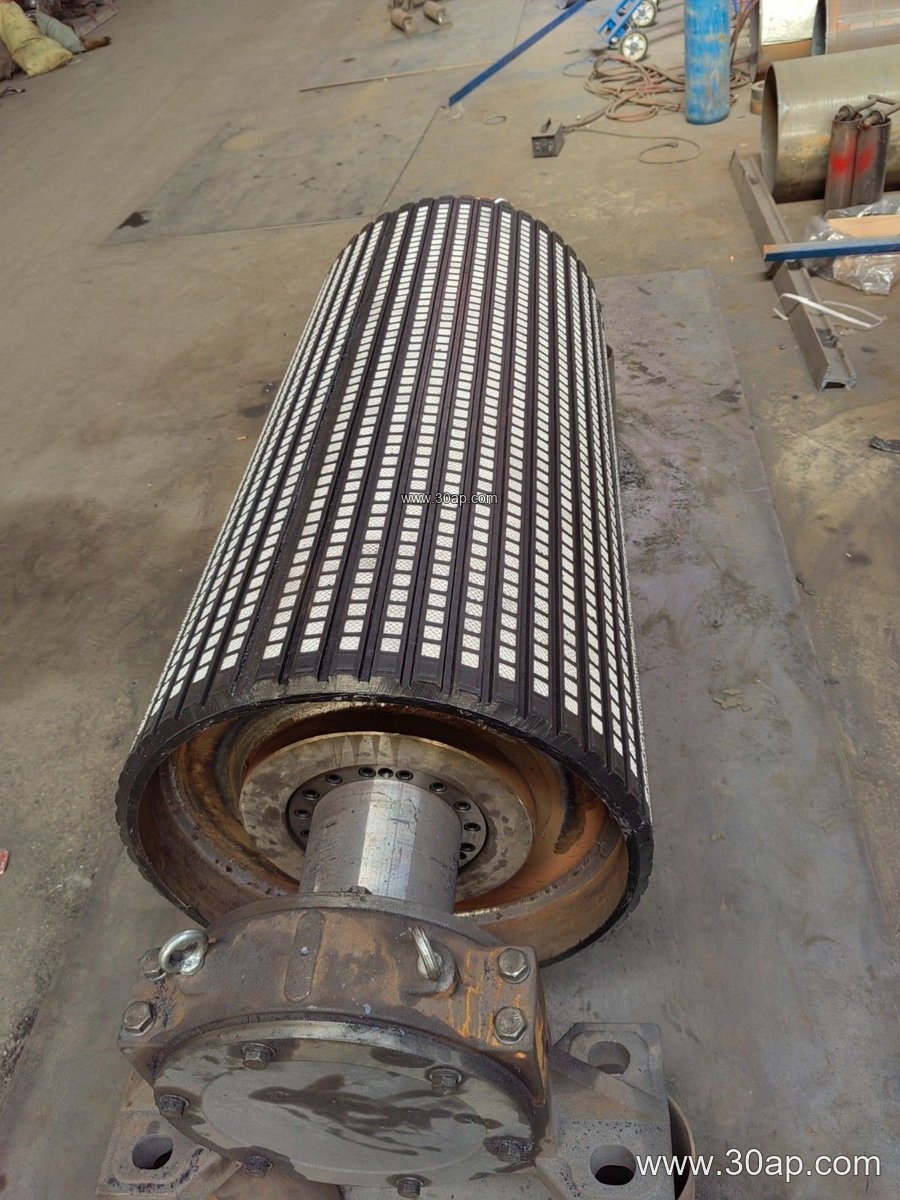
A conveyor rubber lagged pulley is a conveyor pulley whose shell is covered with a rubber layer, usually applied by hot vulcanization or cold bonding. The rubber lagging raises friction between the pulley face and the conveyor belt, protects the shell from abrasive dust and slurry, and helps keep the belt centered on the drum. In a quarry, a cement plant, or a power plant coal yard, this component often decides whether a drive point can transmit torque without slipping under load.
The same product is also called a rubber lagged conveyor pulley or a lagged drum pulley. It is not the same as a tail pulley or a bend pulley; those are positions in the conveyor layout, and any of them may or may not carry lagging depending on the duty.
How the Lagging Is Built
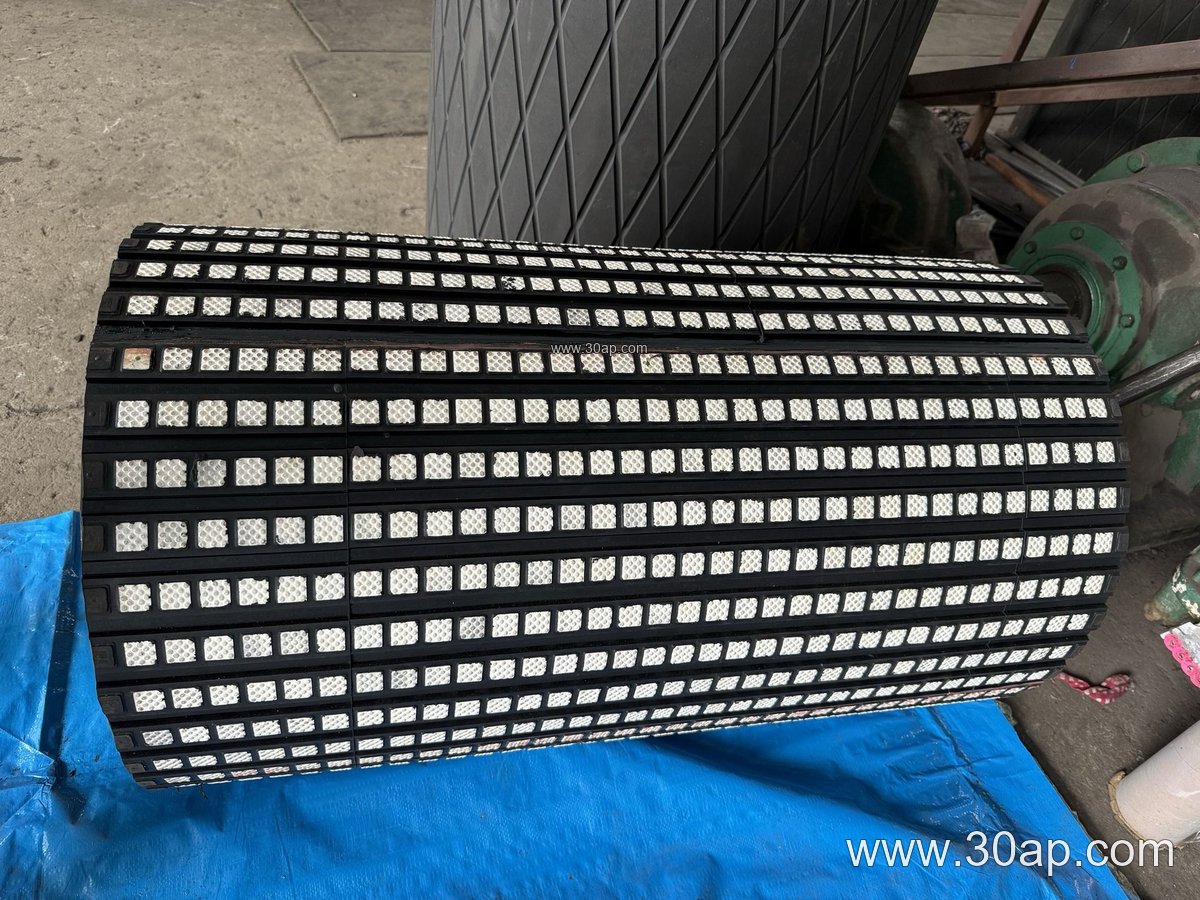
Most lagged pulleys start with a welded steel shell, a shaft, and end discs or hubs. The rubber is then bonded to the shell in a workshop. Common surface forms include plain rubber, diamond pattern, and herringbone pattern; ceramic lagging is a separate option where extra grip and wear resistance are needed. Thickness commonly ranges from 8 mm to 20 mm, with 10 mm and 12 mm often seen on medium-duty drives.
Bonding quality matters more than a thick layer alone. A poorly bonded sheet can lift at the edges, trap fines, and fail early. Buyers should ask how the rubber is attached, how the shell is prepared, and whether the pulley is balanced after lagging.
Where It Fits in a Conveying System
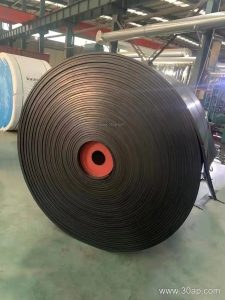
Rubber lagging appears most often on drive pulleys, where torque must pass from the drum to the belt. It is also used on snub pulleys and take-up pulleys where wrap angle or tracking needs improvement. In a copper ore or iron ore line, a lagged drive drum paired with an abrasion resistant conveyor belt can reduce slip during starts. In a limestone quarry, the same drum may run behind a fabric core conveyor belt such as an EP conveyor belt or an NN conveyor belt.
On long overland routes, a steel cord conveyor belt may call for a larger drum diameter and a carefully specified lagging pattern. In underground coal mining, a flame retardant conveyor belt is common, and the lagging compound should be chosen with fire safety and static control in mind.
Sizes, Widths, and Shaft Details
Dimensions are matched to the conveyor design, not copied from a catalog. The table below shows typical reference values; final sizes are set by the engineer.
| Item | Common reference values |
|---|---|
| Belt width B | B400, B500, B650, B800, B1000, B1200, B1400, B1600, B1800, B2000 |
| Pulley diameter | Ø200, Ø250, Ø315, Ø400, Ø500, Ø630, Ø800, Ø1000, Ø1250 |
| Shell face width | Slightly wider than belt, e.g. B800 about 950 mm, B1200 about 1400 mm |
| Lagging thickness | 8, 10, 12, 15, 20 mm |
| Shaft diameter | Ø50, Ø60, Ø70, Ø80, Ø100, Ø120, Ø140, Ø160, Ø180, Ø200 |
A B800 × Ø500 drive pulley and a B1200 × Ø1000 drive pulley are both realistic combinations, but belt width alone does not fix drum diameter or shaft size. Shaft diameter follows torque and bearing load, and drum diameter follows belt tension, belt type, and the required wrap angle.
Choosing the Surface and the Position
Plain rubber suits general grip. Diamond or herringbone patterns help shed water and fines and are often used where the belt can run wet. For a crusher conveyor belt or an aggregate conveyor belt carrying sharp rock, a thicker, harder lagging may last longer. For a food grade conveyor belt line, the rubber compound should be checked for contact suitability.
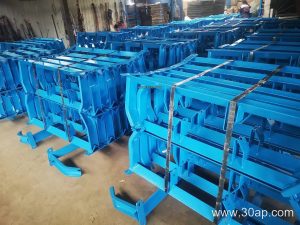
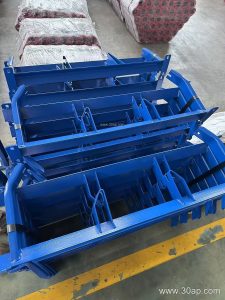
Position changes the job. A drive pulley needs grip; a tail pulley mainly needs protection and self-cleaning; a bend pulley needs a smooth, true face. Do not treat these as interchangeable. A conveyor bracket and the conveyor pulley bearing housing must also align so the lagged face runs square to the belt.
Buyer Checklist
- Confirm the pulley position and the belt it will run with, whether EP conveyor belt, steel cord conveyor belt, or chevron conveyor belt.
- State belt width, drum diameter, face width, shaft diameter, and lagging thickness separately.
- Ask for the lagging pattern and bonding method in writing.
- Check balancing, runout, and keyway dimensions before shipment.
- Plan inspection for edge lift, groove wear, and material build-up.
For more conveyor components, see the drum and roller range at rubberlaggedpulley.com and the belt matching notes at conveyorbelt.com. A well-chosen conveyor rubber lagged pulley keeps torque transfer stable and extends the working life of the belt.