What a Stainless Steel Pulley Is
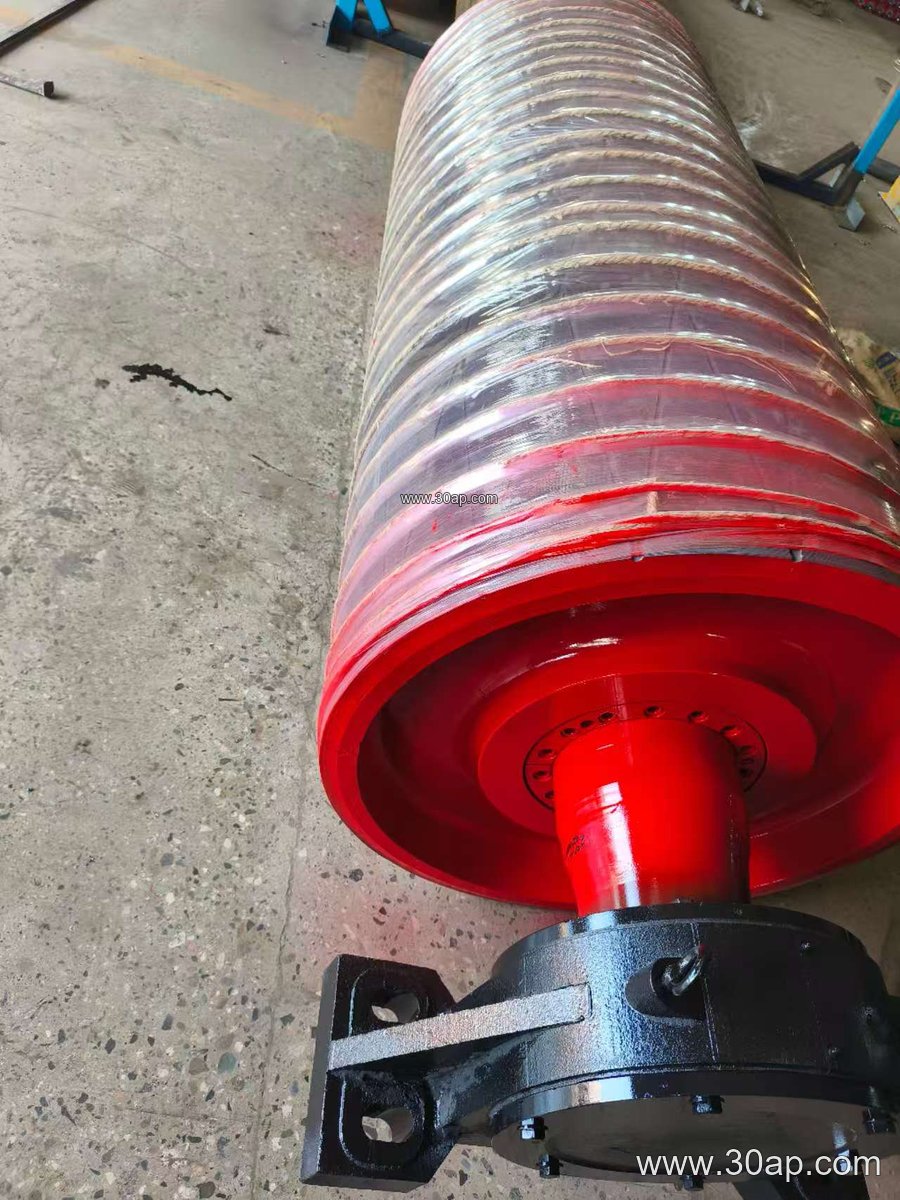
A stainless steel pulley is a conveyor pulley whose shell, end discs, and often the shaft are made from stainless steel rather than painted carbon steel. In a conveyor, the pulley is the rotating drum that drives the belt, returns it, or changes its direction. Because stainless steel resists corrosion and stands up to repeated washdowns, this type of pulley is chosen where moisture, dust, or mild chemicals would quickly attack ordinary steel. It is not a substitute for a drive pulley, tail pulley, or bend pulley — it is simply a material variant of those same functional positions.
Construction and Surface Options
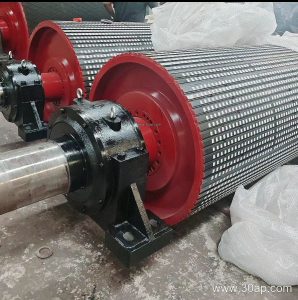
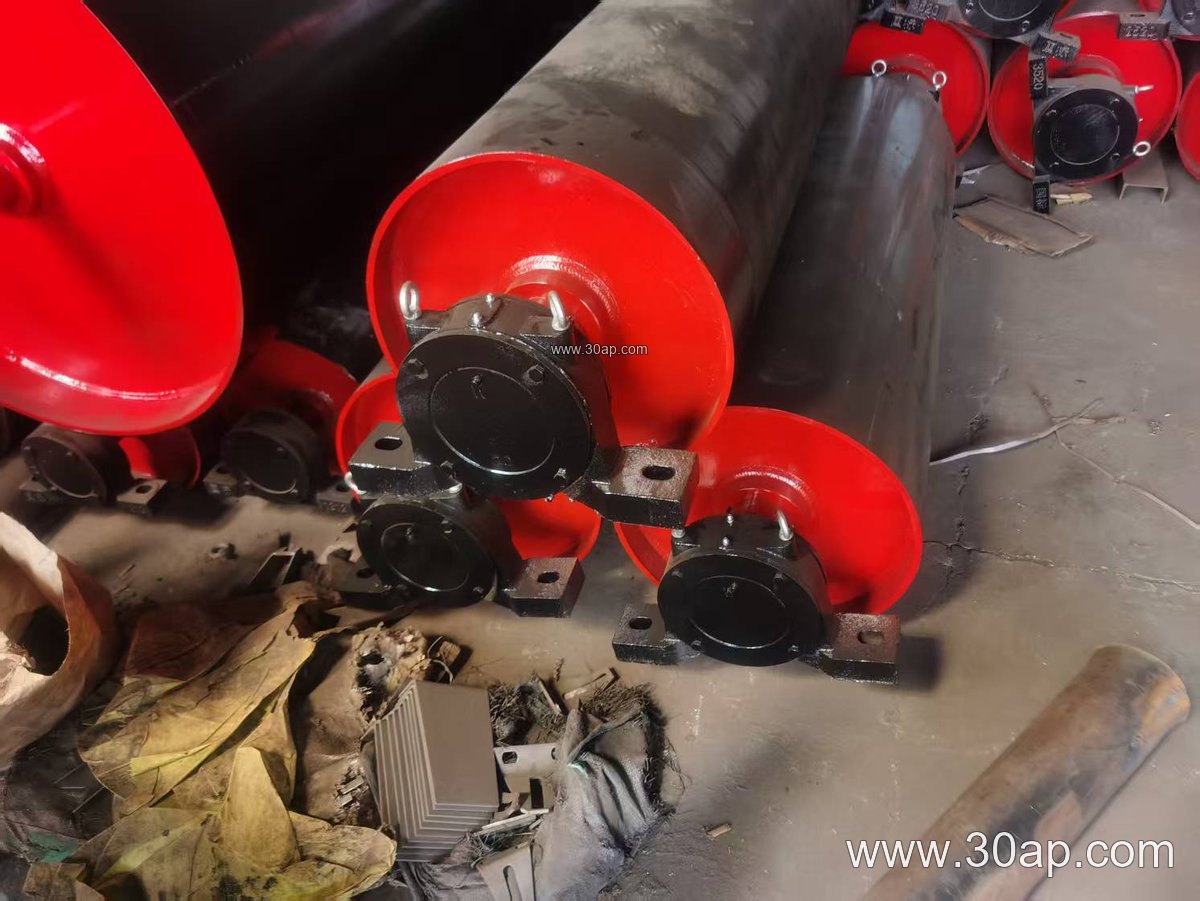
The basic build starts with a cylindrical shell, two end discs welded to the shell, a shaft through the center, and bearing housings on each side. Stainless steel grades are selected for the environment; the shell may be smooth, or it may carry lagging to improve grip. Common surface forms include plain, cast rubber, cold-bonded rubber, hot-vulcanized rubber, diamond pattern, herringbone, and ceramic lagging. Lagging thickness is usually 8, 10, 12, 15, or 20 mm depending on the duty. For a stainless steel pulley, the lagging is often specified in a rubber grade that matches the belt, such as an abrasion resistant conveyor belt or a flame retardant conveyor belt in coal handling.
Where It Fits in a Conveyor
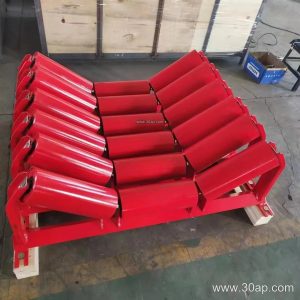
Position matters more than the material. A drive pulley at the head transfers torque to the belt; a tail pulley at the loading end returns it; a bend pulley changes direction along the route. A stainless steel pulley can serve in any of these positions, but the choice of position changes the diameter, the shaft size, and the lagging pattern. In a washdown area at a food or fertilizer plant, a stainless tail pulley may be preferred, while a bend pulley in a dusty quarry line might use a plain stainless shell without lagging to avoid material buildup. The surrounding equipment — conveyor belt, idler roller, conveyor bracket — should be reviewed together, because a pulley is only one part of the belt line.
Sizes and Selection Data
Pulleys are usually described by belt width, shell diameter, and shaft diameter. The table below gives common reference combinations; these are examples, not fixed pairings. A wider belt does not automatically dictate one specific diameter, and shaft size should be calculated from torque and load.
| Belt width | Typical shell width | Common diameter range | Example shaft range |
|---|---|---|---|
| B400 | ≈500 mm | Ø200–Ø400 | Ø50–Ø80 |
| B650 | ≈750 mm | Ø250–Ø500 | Ø60–Ø100 |
| B800 | ≈950 mm | Ø315–Ø630 | Ø70–Ø120 |
| B1000 | ≈1150 mm | Ø400–Ø800 | Ø80–Ø140 |
| B1200 | ≈1400 mm | Ø500–Ø1000 | Ø90–Ø160 |
| B1400 | ≈1600 mm | Ø630–Ø1250 | Ø100–Ø180 |
| B1600 | ≈1800 mm | Ø800–Ø1400 | Ø120–Ø200 |
When specifying, note the belt width, the required diameter for belt wrap, the lagging type, and the shaft size. A stainless steel pulley for a B1200 line might be ordered as B1200 × Ø1000 with 12 mm diamond lagging, but the final combination depends on the conveyor design and the belt tension.
Buyer Checklist
- Confirm the stainless grade suits the environment — washdown, salt air, or mild chemical splash.
- Match the pulley position: drive, tail, bend, take-up, or snub.
- Select lagging only where grip or wear resistance is needed; plain shells suit sticky or abrasive dust.
- Verify shaft diameter from torque and bearing load, not from belt width alone.
- Check that the pulley, conveyor bracket, and idler roller align with the same belt line.
For a complete belt system, the pulley should be reviewed alongside the conveyor belt specification, whether that is an EP conveyor belt, a steel cord conveyor belt, or a heat resistant conveyor belt in a cement plant. A stainless steel pulley will not correct a misaligned belt or an undersized shaft, so the mechanical design still matters most.