What the Ø63.5 Conveyor Idler Is
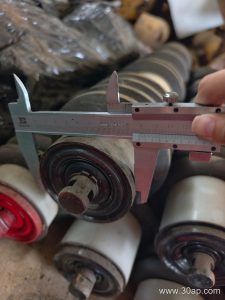
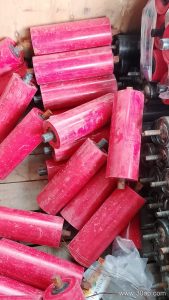
A Ø63.5 conveyor idler is a small-diameter carrying roller built around a nominal 63.5 mm shell. It sits under the belt on a belt conveyor and turns with the moving belt, supporting the load between the head and tail. Because the roller is compact and light, it suits narrow frames, short transfers and places where a larger roller would crowd the structure. In many plants the same duty is described simply as a 63.5 mm idler roller or a small-diameter troughing roller, and those names point to the same component.
The size is not a universal rule for any belt width. It is one option among several diameters, and the final choice depends on belt speed, load, roller spacing and the frame design. A 650 mm belt might run on this diameter in a light-duty line, while a heavy-duty mining conveyor would normally use a larger shell and heavier bearings.
How the Roller Is Put Together
The body is usually a steel tube with machined end caps, a through shaft, and bearing housings sealed against dust and moisture. Common bearing sizes in this class include 6204 and 6205, though the bearing is selected from load and speed calculations rather than from the shell diameter alone. The shaft diameter is set by the frame and the bearing seat, not by belt width on its own.
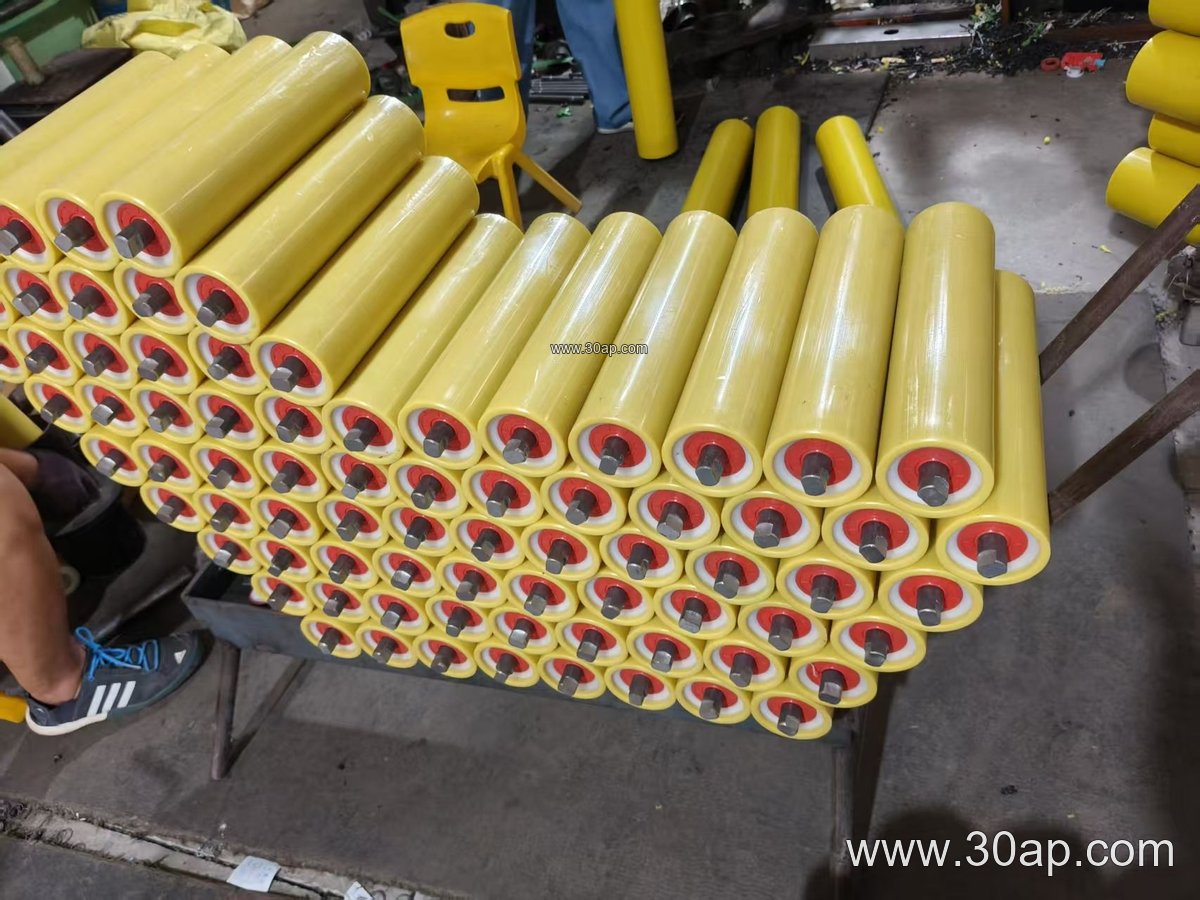
Surface options vary with the job. A plain steel shell is the standard choice for clean, abrasive-light service. Rubber rings can be fitted for impact zones, and nylon or ceramic covers appear where sticking or wear is a concern. Roller length follows the belt width, trough angle and idler arrangement. For a three-roll troughing set, common roll lengths are around 200 mm for B500, 250 mm for B650, 315 mm for B800 and 380 mm for B1000, but side rolls and centre rolls can differ, so each set should be checked against the drawing.
Common reference values for small idlers
- Nominal diameter: Ø63.5 mm
- Other diameters in the range: Ø63, Ø76, Ø89, Ø102, Ø108 mm
- Trough angles: 20, 30, 35 and 45 degrees
- Bearing options: 6204, 6205, 6305 and similar
- Roll surfaces: steel, nylon, ceramic, rubber ring
Where It Fits on the Conveyor
This small roller is often used as a carrying idler in three-roll troughing sets on narrow or medium belts, and as a return roller under the empty strand. In a quarry or sand and gravel line it may support a 500 mm or 650 mm belt on a short transfer between a crusher and a screen. In a cement plant it can appear on additive or clinker dust lines where space around the frame is limited. Coal handling and power plant fuel lines also use small rollers on auxiliary belts, though main haulage conveyors usually take larger diameters.
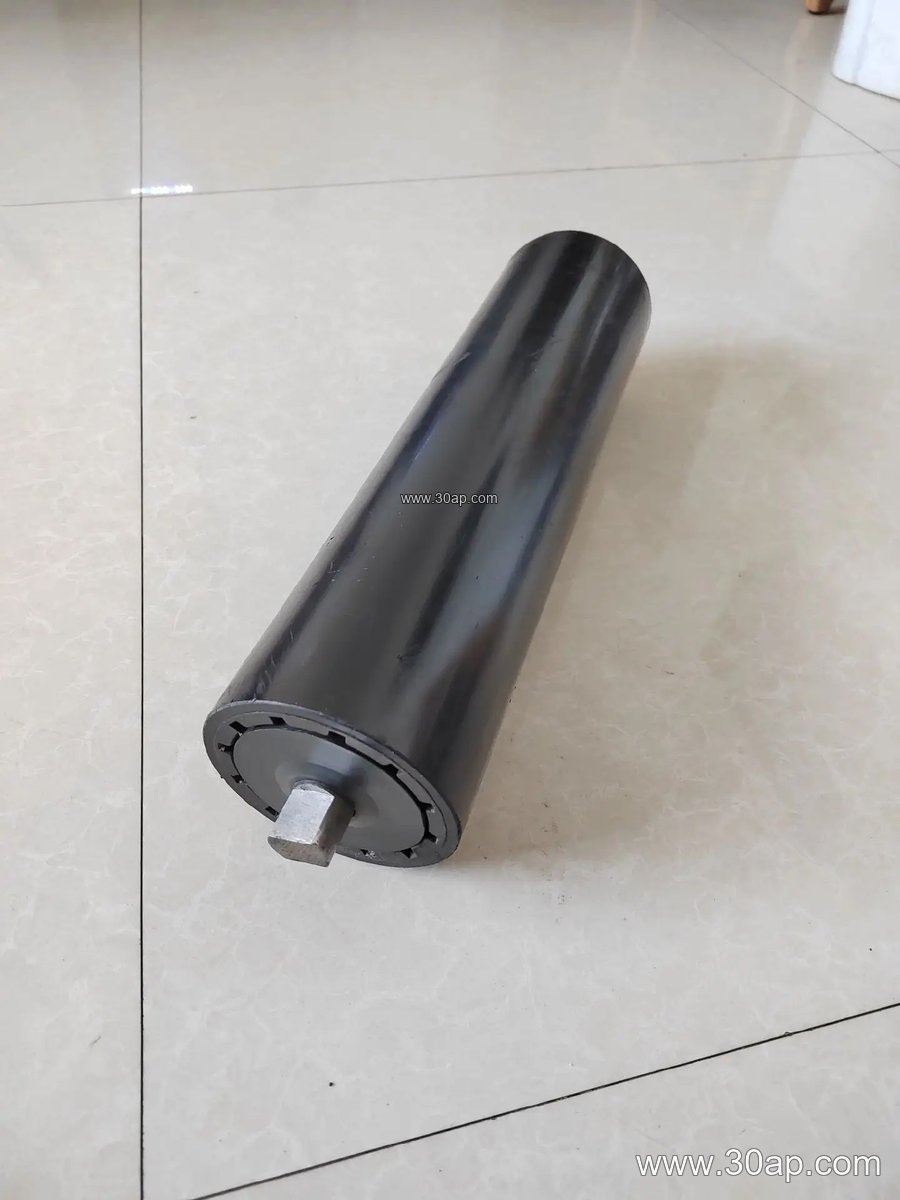
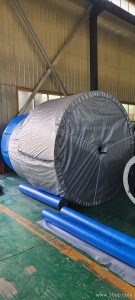
The roller works together with the conveyor belt, the conveyor pulley at each end and the conveyor bracket that holds the shaft. A matching set of brackets keeps the roll aligned and preserves the trough angle. On a fabric core belt such as an EP conveyor belt or NN conveyor belt, a well-aligned small idler helps the belt track straight and reduces edge wear. On a steel cord conveyor belt the same roller may appear only in light auxiliary positions, because the belt is stiff and the loads are higher.
Selection Points for Buyers
Buyers should confirm the shaft end type, the fixing centres and the roll length before ordering, because a 63.5 mm shell can be made in several frame fits. Ask for the bearing designation, the seal type and the shell wall thickness. Check whether the duty calls for a plain roller or a rubber-ring version in a loading zone. For dusty or wet conditions, a good labyrinth seal matters more than a small difference in shell diameter.
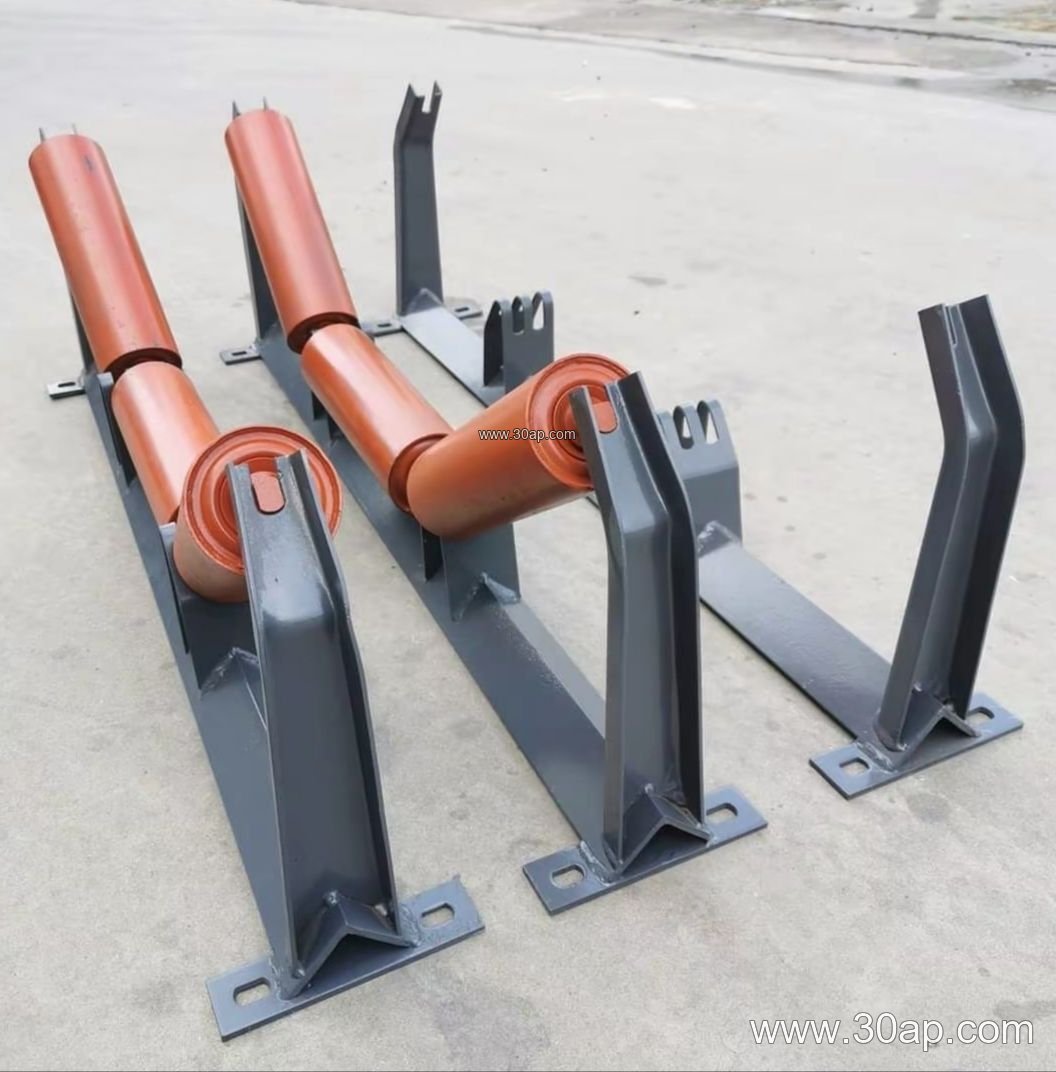
It also helps to state the belt width, belt speed and material being carried. If the line handles hot material, a heat resistant conveyor belt may be used, and the roller bearings should be rated for the ambient temperature. In a coal mine or underground coal mining conveyor, flame retardant conveyor belt and anti-static properties are part of the belt specification, while the idler must remain free-turning and well sealed.
Installation and Maintenance Notes
Mount the roller square to the belt centre line. A skewed idler can pull the belt sideways and load the edges. Check that the roller turns freely by hand before the belt is started, and listen for rumbling or squealing during the first run. Replace a seized roller promptly, because a locked shell will rub the belt and can damage the cover.
Inspect rollers on a regular walk-down. Look for worn shells, missing rubber rings, loose brackets and grease leakage. Keep spare units in stock for the sizes actually installed, and record the shaft and bearing details so that a replacement matches the frame. On a quarry conveyor belt or aggregate conveyor belt line, dust build-up around the bracket is common, so clean the area to keep the seal working.
Used with the right frame and belt, the Ø63.5 conveyor idler is a practical small-diameter roller for light and medium conveying duties. Treat the size as one design choice, match it to the load and the structure, and keep the spare parts records accurate.