What a Belt Conveyor Idler Frame Does
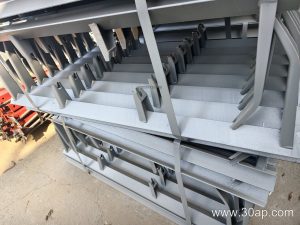
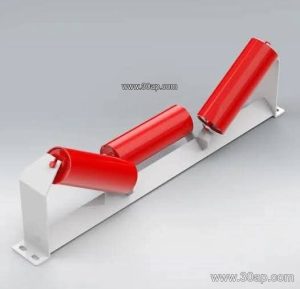
A belt conveyor idler frame is the steel structure that holds the idler rollers in the right position under and around the conveyor belt. It keeps the belt in a stable trough, supports the return strand, and transfers load from the rollers into the conveyor stringers. In a quarry, a cement plant, or a power plant coal yard, the frame is one of the quiet parts of the system, but it decides how well the belt tracks and how long the rollers last.
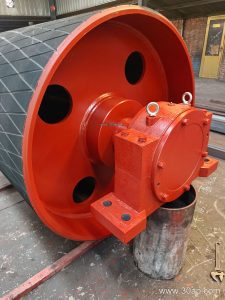
The same part is often called a conveyor idler bracket or idler support frame. These are accurate names for the same product. It is not a drive pulley, a tail pulley, or a bend pulley; those are separate components that transmit motion and change belt direction.
How the Frame Is Built
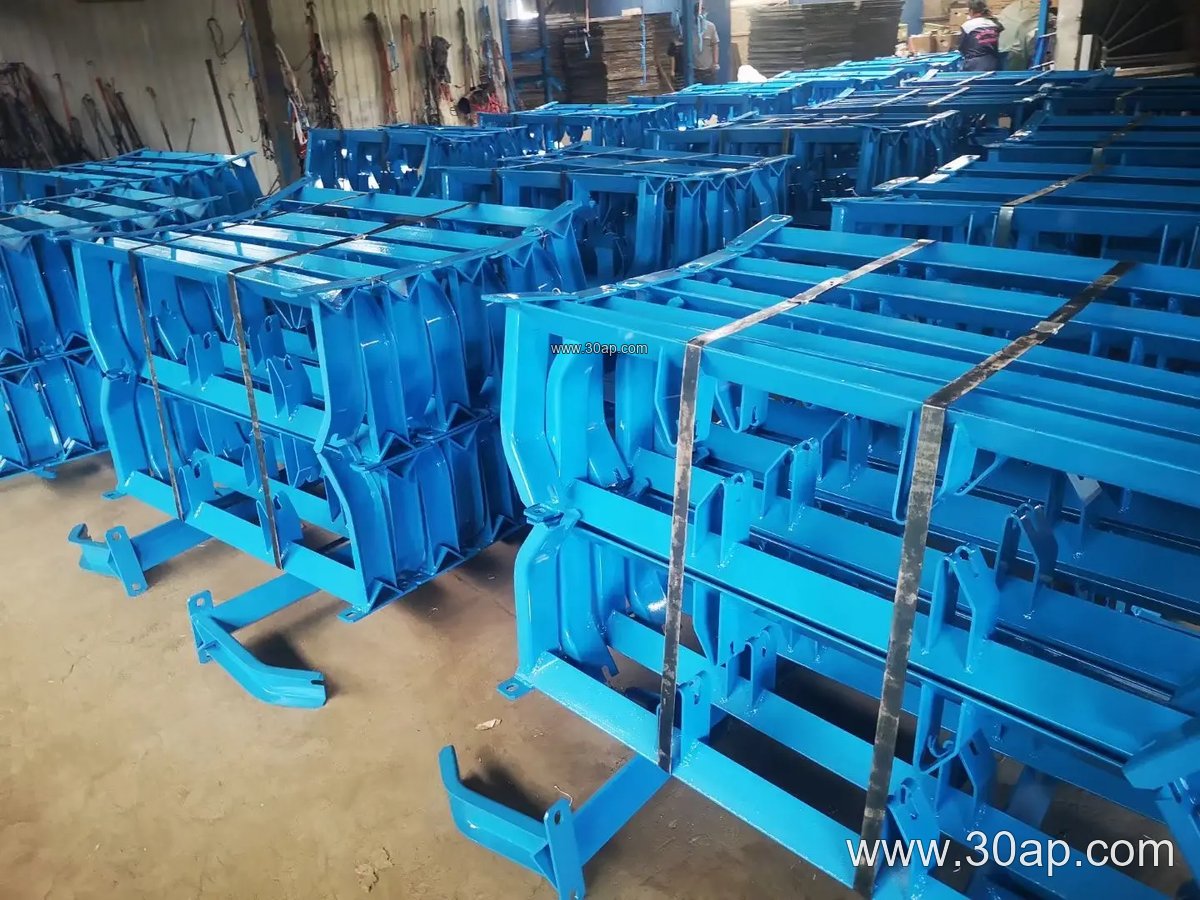
Most frames are made from angle steel, channel steel, or folded steel plate. A troughing frame carries three rollers in a fixed or adjustable trough angle. A return frame holds one flat roller or a pair of V-shaped rollers that support the empty belt. The frame ends usually have slotted or drilled mounting holes so the frame can be fixed to the conveyor stringer with bolts.
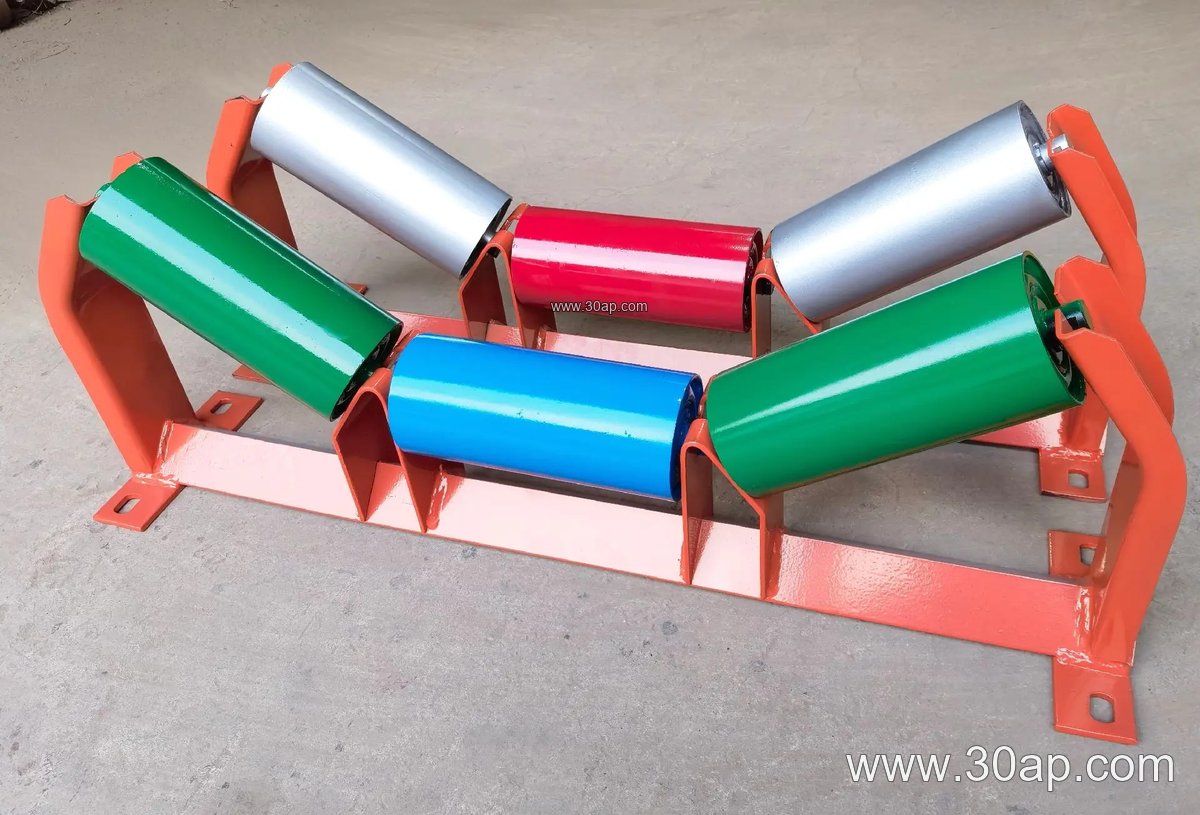
Common belt width references include B500, B650, B800, B1000, B1200, B1400, B1600, B1800, B2000, B2200. Hole spacing and crossbeam length change with belt width and trough angle, so they are confirmed at design stage rather than chosen from a fixed table.
| Frame Type | Typical Use | Common Trough Angle |
|---|---|---|
| Troughing frame | Carrying side, bulk material | 20, 30, 35, 45 degrees |
| Transition frame | Near pulleys, gradual trough change | Adjustable |
| Return frame | Empty belt return strand | Flat or V-shaped |
| Impact frame | Below loading point | Same as troughing |
| Self-aligning frame | Belt tracking correction | Usually 30 or 35 degrees |
Matching Frame, Roller, and Belt
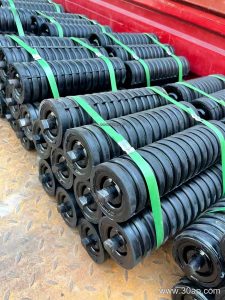
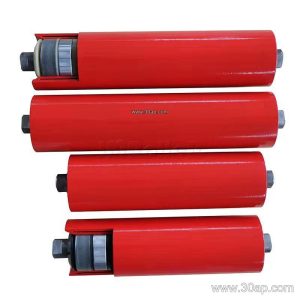
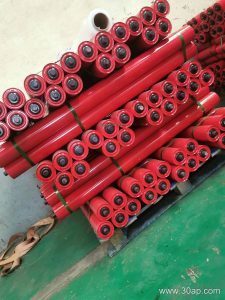
Roller diameter is chosen with belt speed, load, and belt width in mind. Common roller sizes are Ø89, Ø108, Ø133, Ø159, and Ø194. A B800 frame at 35 degrees may run Ø108 rollers, while a B1200 frame at 45 degrees may use Ø133. These are examples of common combinations, not fixed rules. A wider belt does not require one specific trough angle, and one belt width can work with more than one roller diameter.
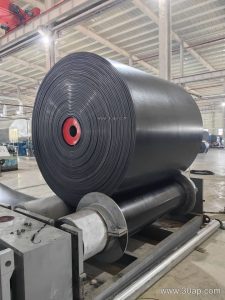
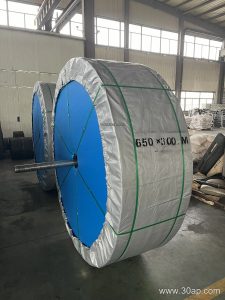
The conveyor belt itself also matters. A heavy-duty mining conveyor belt or a steel cord conveyor belt carrying iron ore needs a strong frame and well-spaced rollers. A heat resistant conveyor belt in a cement plant or a flame retardant conveyor belt in a coal mine still relies on the same frame structure, but the roller and frame materials must suit the environment. Where dusty material is loaded, an impact frame with rubber rings helps protect both the belt and the frame.
Frames work together with the idler roller, the conveyor pulley, and the conveyor bracket system. A misaligned frame will make even a good roller wear quickly, and a loose frame can cause belt wander at the tail pulley.
Where These Frames Are Used
Troughing and return frames appear in stone crushing lines, aggregate yards, and sand making plants. In a coal washing plant or a power plant coal handling system, flame retardant and anti-static belts run on frames that must be easy to inspect and clean. In a fertilizer or grain silo, a lighter frame with smooth rollers may be enough. The selection follows the duty, not the industry name.
For more on matching belts and rollers, see conveyor belt and idler roller guidance, and check conveyor pulley alignment when tracking problems appear.
What Buyers Should Check
- Belt width and required trough angle, including whether an adjustable frame is needed.
- Roller diameter and frame height so the frame fits the existing stringer.
- Mounting hole spacing and crossbeam length, confirmed against the conveyor drawing.
- Steel finish and coating for dusty, wet, or corrosive sites.
- Whether the frame is fixed, adjustable, self-aligning, or impact type.
- Spare part availability for rollers and frame ends.
A well-chosen idler frame is a simple steel part, but it keeps the belt, rollers, and pulleys working as one system. Buyers who confirm width, angle, roller size, and mounting details before ordering avoid most installation problems.