What a Head Pulley Does
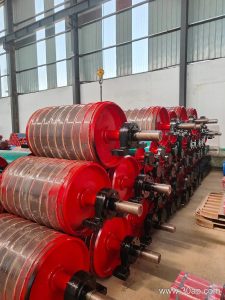
A head pulley, also called a drive pulley or discharge pulley, is the roller at the delivery end of a conveyor that turns the belt and discharges the material. It is usually the largest and most heavily loaded pulley in the system, because it transmits the drive torque into the conveyor belt and carries the full tension of the carrying run. In a quarry or a cement plant, the head pulley sits at the top of the discharge chute, throwing crushed rock or clinker onto the next stage. In a coal mining conveyor, it is the point where coal leaves the belt and enters a transfer tower.
Do not confuse the head pulley with the tail pulley at the loading end, or with bend pulleys that only redirect the belt. Those are separate components with different duties. The head pulley is the one connected to the gearbox and motor, and its condition directly affects belt tracking, belt life, and plant uptime.
How It Is Built
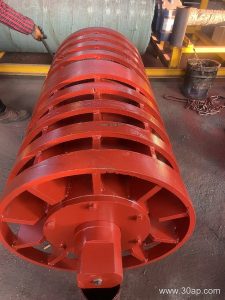
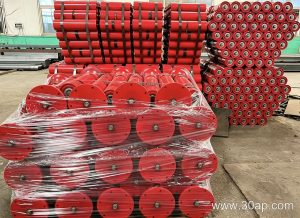
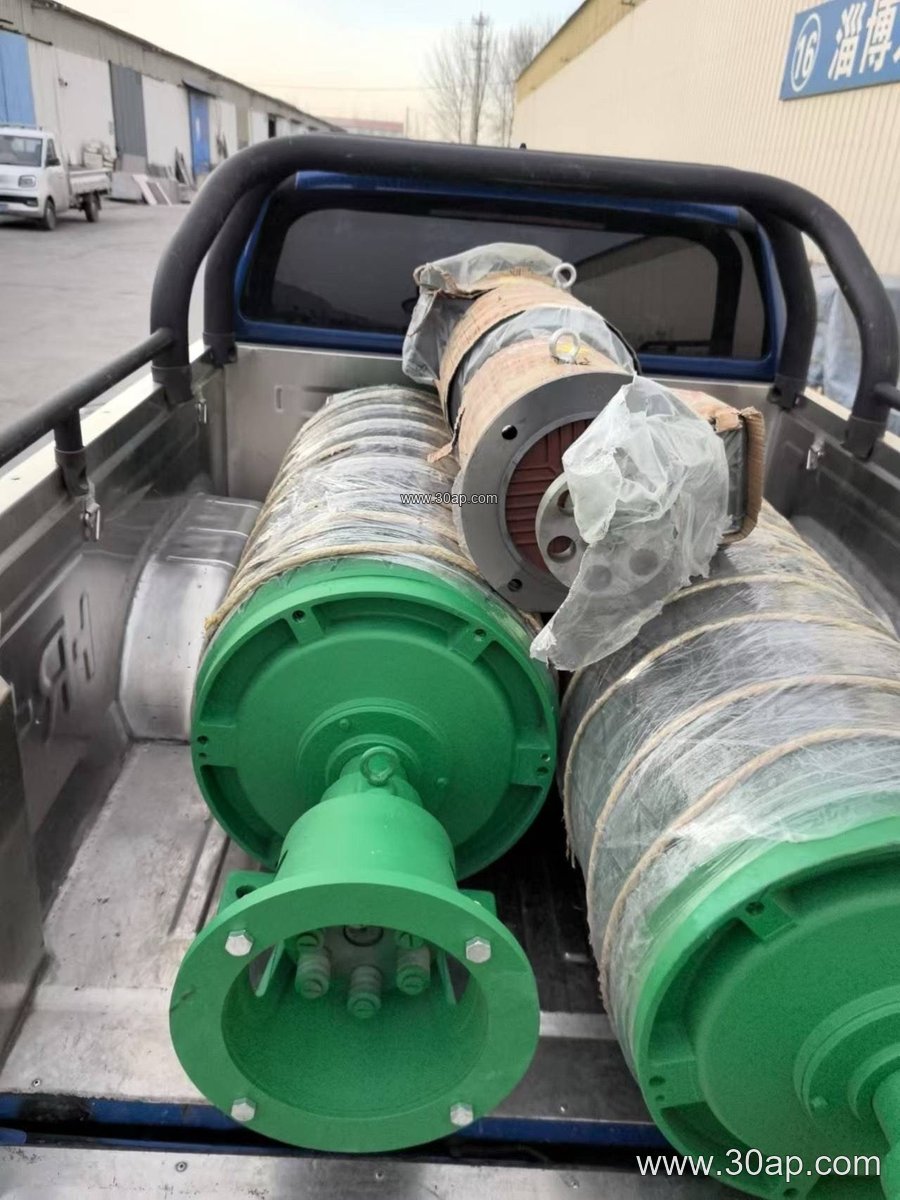
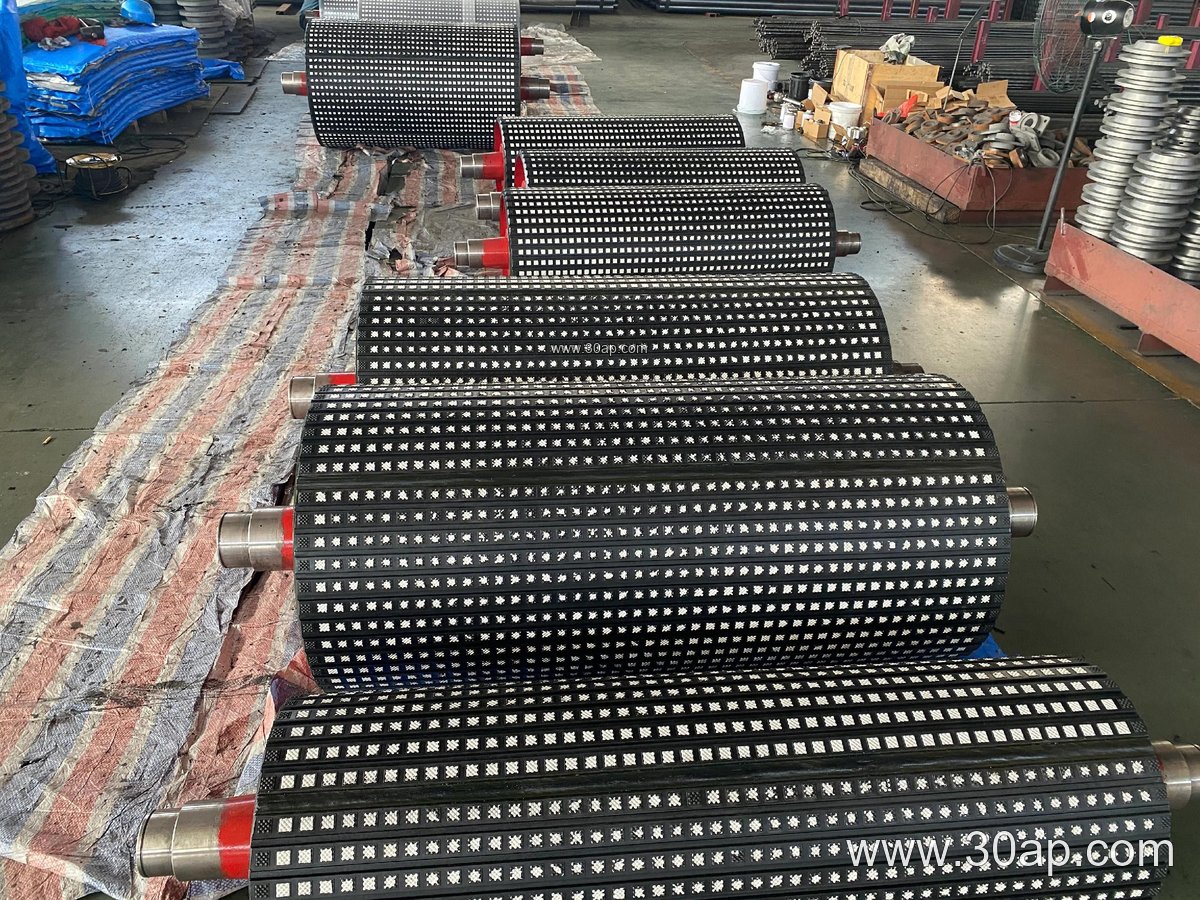
A typical head pulley is a welded steel drum with a shaft running through the centre, supported by bearing housings on both sides. The shell is often machined and then covered with a rubber or ceramic lagging to improve grip. The shaft is sized by torque and radial load, not by belt width alone, so a B800 conveyor may use a shaft anywhere from Ø80 to Ø120 depending on the drive arrangement. Common shaft diameters include Ø100, Ø120, Ø140, and Ø160 for medium-duty units, with larger sizes for heavy-duty mining conveyors.
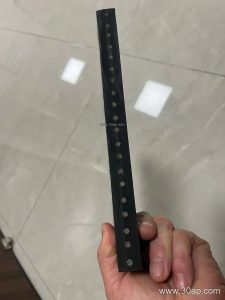
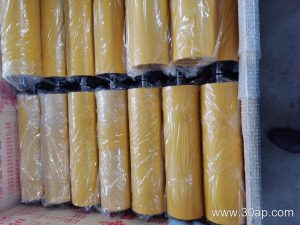
Lagging options include plain rubber, diamond grooved rubber, herringbone rubber, and ceramic tiles. Thickness usually ranges from 8 mm to 20 mm, with 10 mm and 12 mm being common for general bulk handling. In wet or dusty conditions, grooved lagging helps water and fines escape from the nip point, which improves grip and reduces slip.
Typical Sizes and Combinations
Head pulley dimensions are usually written as belt width × diameter. Some practical examples are B800 × Ø500, B1200 × Ø1000, and B1400 × Ø800. These are reference combinations, not fixed rules; a wider belt can use a smaller diameter if the wrap angle and belt stiffness allow it. The pulley face width is normally slightly wider than the belt, for example around 950 mm face for a B800 belt and around 1400 mm for a B1200 belt.
| Belt Width | Approx. Pulley Face Width | Common Diameter Range |
|---|---|---|
| B500 | 600 mm | Ø250 to Ø400 |
| B650 | 750 mm | Ø315 to Ø500 |
| B800 | 950 mm | Ø400 to Ø630 |
| B1000 | 1150 mm | Ø500 to Ø800 |
| B1200 | 1400 mm | Ø630 to Ø1000 |
| B1400 | 1600 mm | Ø800 to Ø1000 |
These figures are typical references only. Final selection depends on belt tension, wrap angle, and the load profile of the conveyor.
Matching the Pulley to the Belt
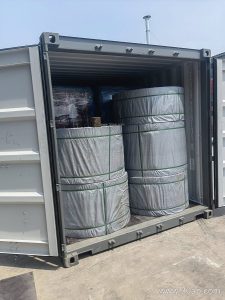
The head pulley and the conveyor belt work as a pair. A high-tension steel cord conveyor belt needs a larger diameter to limit bending stress in the cord, while a multi-ply fabric core belt can often run over a smaller drum. In a coal mining conveyor using flame retardant conveyor belt, the lagging should also be fire resistant and anti-static to match the belt’s safety class. For a quarry conveyor belt carrying sharp aggregate, abrasion resistant lagging and a robust shell protect the pulley from wear.
Belt speed, trough angle, and the number of idler roller sets on the carrying side all influence the tension at the head pulley. A conveyor pulley that is undersized for the duty will slip, overheat the lagging, and eventually damage the belt cover. For heavy-duty mining conveyor belt installations, the head pulley is often paired with a ceramic lagging and a larger shaft to handle shock loads from crusher discharge.
Where It Is Used
Head pulleys appear across bulk material handling: a limestone mine feeding a crusher, a power plant coal yard, a fertiliser granulation line, a port ship loader, and a concrete batching plant. In each case, the pulley is mounted on a conveyor bracket or frame at the discharge end, with the drive unit on one side. Access for lagging replacement and bearing greasing should be planned at the design stage, because a seized head pulley can stop an entire production line.
Buyer Checklist
- Confirm belt width, belt type, and maximum working tension before choosing the pulley diameter.
- Specify lagging type and thickness for the material and environment, such as oil resistant or heat resistant rubber where needed.
- State the shaft diameter and bearing type required by the drive design, not just the belt width.
- Check that the pulley face width suits the belt and that the bracket mounting dimensions match the conveyor frame.
- Ask for dynamic balancing and inspection records if the pulley will run at high speed.
For more conveyor components, visit www.beltconveyorparts.com head pulley and matching conveyor belt pages before finalising a specification.