What a Trough Idler Bracket Set Does
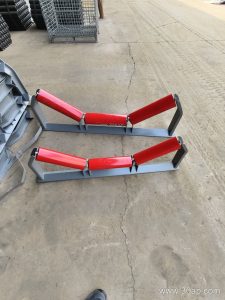
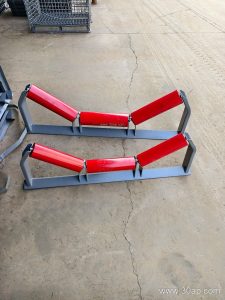
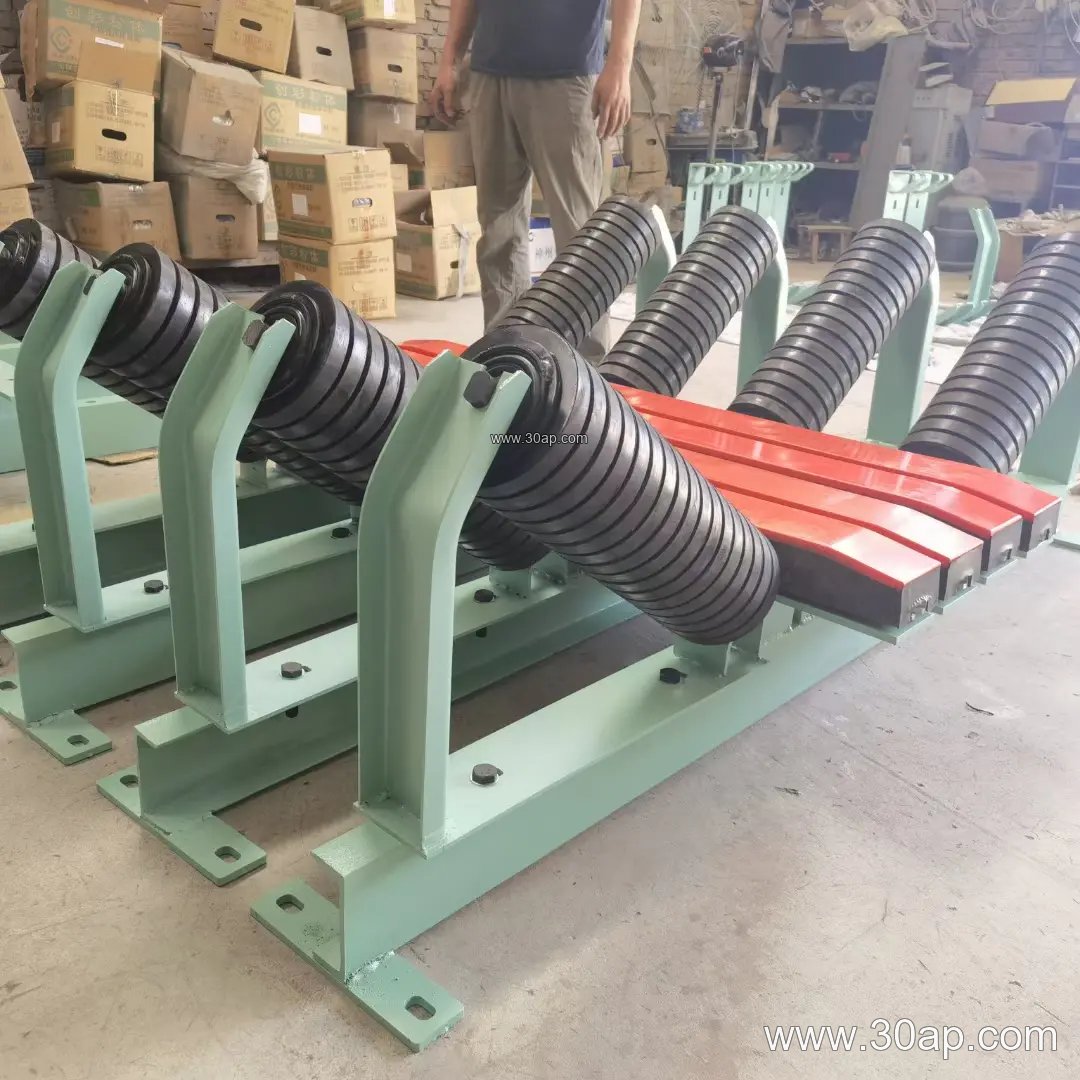
A trough idler bracket set is the structural frame that holds the carrying idlers in a troughed profile along the load-carrying side of a belt conveyor. It is also called a troughing idler bracket set or troughing frame set. The set typically includes the bracket arms or crossbeam that support the idler rollers and set the trough angle. In a quarry, cement plant, or coal handling system, these brackets keep the conveyor belt in a stable trough so bulk material stays centered during transport. Without a properly aligned bracket set, the belt can drift, spill material, or wear unevenly.
Construction and Materials
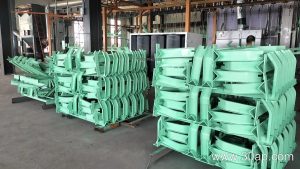
Most trough idler bracket sets are fabricated from angle steel, channel steel, or folded steel plate. The choice depends on load and environment. Heavier bulk material and wider belts usually call for channel or folded plate construction, while lighter duty may use angle steel. The bracket set is designed to hold three idlers in a trough formation, typically at 20, 30, 35, or 45 degrees. Adjustable versions allow the trough angle to be changed within a range, which helps when a conveyor handles different material loads or when fine-tuning belt contact. Fixed brackets are simpler and are set at one angle at manufacture.
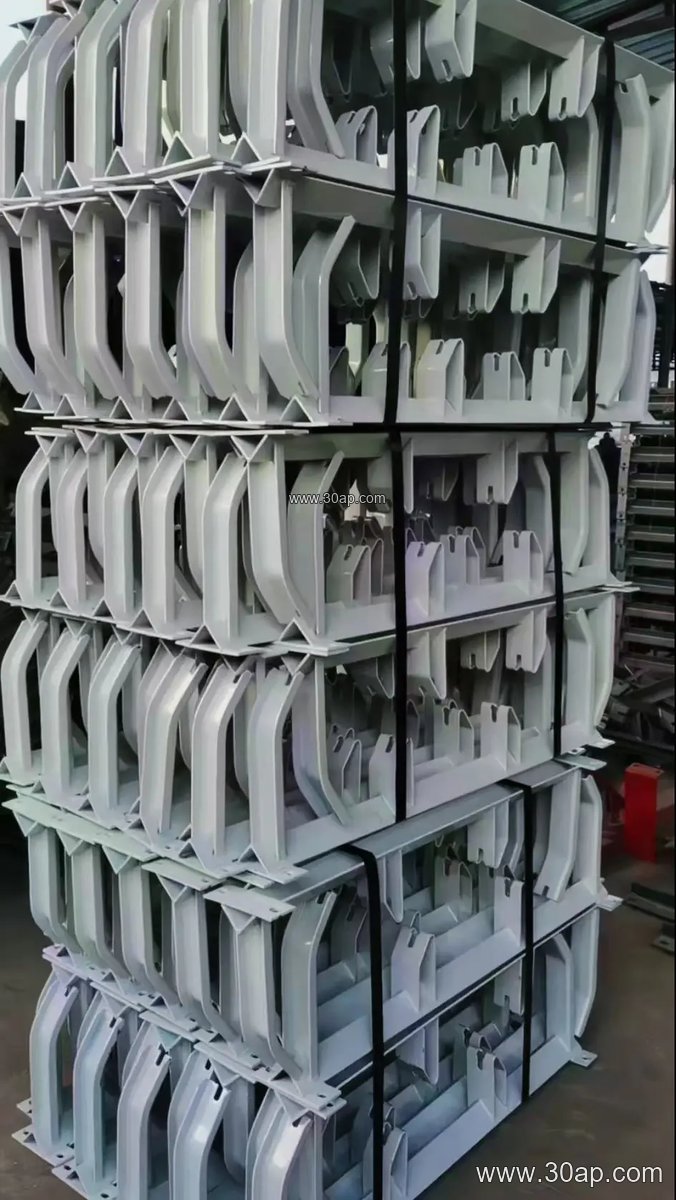
Mounting hole spacing and crossbeam length are not universal. They vary with belt width, trough angle, and idler diameter. A buyer should confirm these dimensions against the conveyor frame before ordering.
Common Configurations and Parameters
The table below shows typical reference combinations. These are examples, not fixed rules, and actual selection depends on the conveyor design.
| Belt Width (B) | Trough Angle | Idler Diameter | Typical Bracket Material |
|---|---|---|---|
| B500 | 20° to 30° | Ø89 | Angle steel |
| B650 | 30° | Ø89 | Angle steel / channel |
| B800 | 35° | Ø108 | Channel steel |
| B1000 | 35° to 45° | Ø133 | Channel / folded plate |
| B1200 | 45° | Ø133 | Channel / folded plate |
| B1400 | 35° to 45° | Ø159 | Folded steel plate |
| B1600 | 35° to 45° | Ø159 | Folded steel plate |
| B1800 | 35° to 45° | Ø194 | Heavy channel / folded plate |
For transition zones near the tail pulley, transition brackets are sometimes used to gradually change the belt from flat to troughed. Impact brackets with cushioning are common under crusher discharge points. Return-side brackets, such as V-return or flat return brackets, are separate items and not part of the trough carrying bracket set.
Where Trough Idler Bracket Sets Are Used
These bracket sets appear in many bulk handling operations. In a sand and gravel line, they support the belt that carries crushed stone from the crusher to the screen. In a coal-fired power plant, they hold the idlers under a flame retardant conveyor belt on the coal feed line. In a cement plant, they are used on clinker and raw meal conveyors. Other common sites include iron ore terminals, fertilizer plants, and tunnel muck removal systems. The bracket set works together with the idler rollers and the conveyor belt to maintain a stable trough profile. A well-matched bracket set also helps reduce belt edge wear and keeps material from spilling at transfer points.
For high-abrasion service, such as handling iron ore or coke, a heavy-duty bracket with reinforced crossbeam may be preferred. For corrosive environments, surface treatment or galvanized options can be discussed with the supplier. For underground mining, flame retardant and anti-static conveyor belts are often used, and the bracket set should be compatible with the idler mounting used in that application.
Buyer Checklist
- Confirm belt width, such as B800 or B1200, and the required trough angle (20°, 30°, 35°, or 45°).
- Check the idler diameter, for example Ø108 or Ø133, and the mounting hole pattern on the existing conveyor frame.
- Decide between fixed and adjustable brackets. Adjustable brackets allow angle changes but may cost more.
- Specify material and finish: angle steel, channel steel, or folded plate; painted or galvanized.
- Ask for dimensional drawings showing crossbeam length, hole spacing, and arm height.
- Consider the environment: coal dust, cement powder, or wet conditions may affect material choice and surface protection.
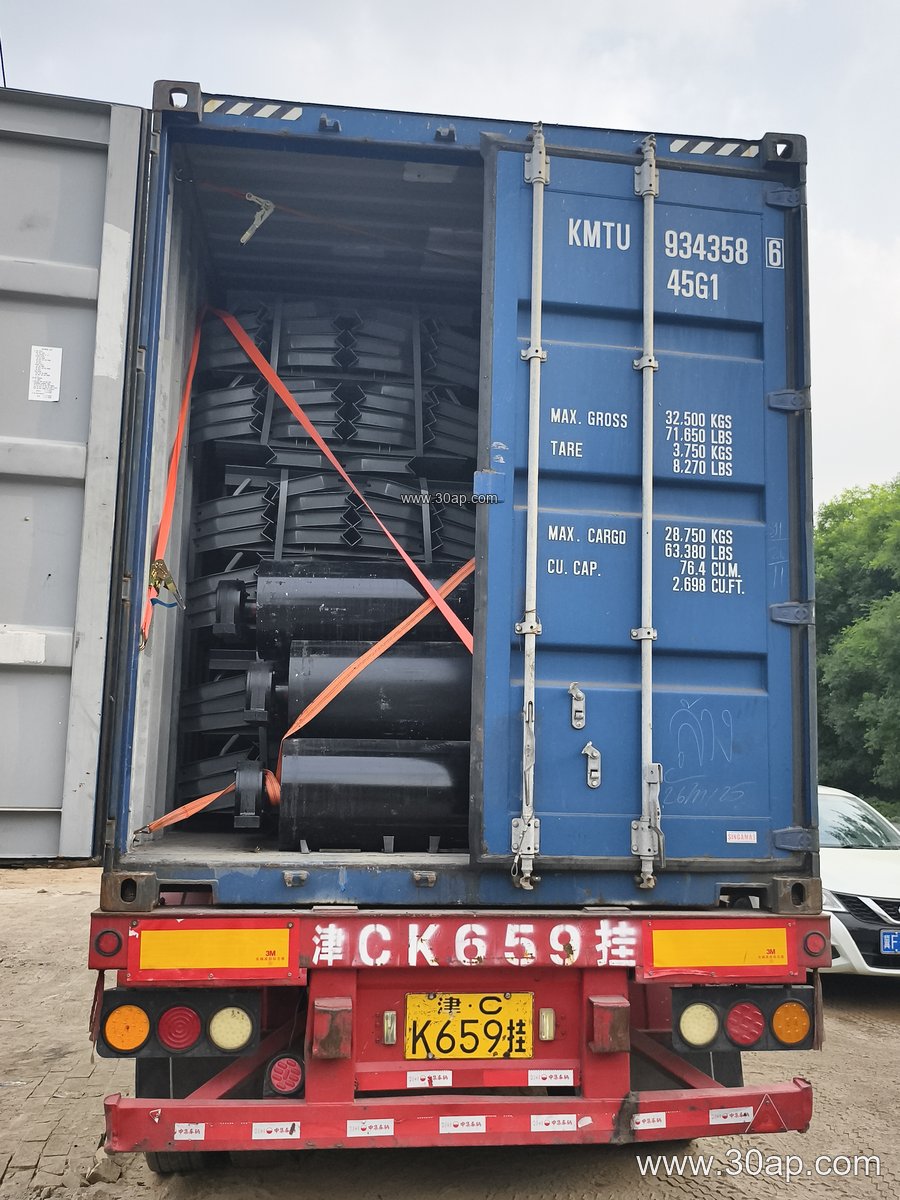
When ordering, match the bracket set to the actual conveyor frame rather than relying on belt width alone. The same belt width may use different bracket dimensions depending on the conveyor manufacturer and idler type. A clear drawing and sample approval help avoid installation problems.