What a Conveyor Support Bracket Does on a Belt Conveyor
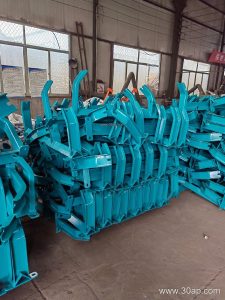
A conveyor support bracket is the structural link between a conveyor frame and the rollers that carry or return the belt. It is not a decorative fitting: the bracket carries the weight of the belt, the material load and the roller set, and it also fixes the trough angle and roller spacing. On a typical troughing idler assembly, the conveyor bracket holds three idler rollers in a fixed or adjustable arrangement so that the belt forms a stable trough. When the bracket is weak, misaligned or poorly matched to the frame, the result usually shows up as belt wander, roller wear and spillage rather than as an obvious bracket failure.
Construction and Common Materials
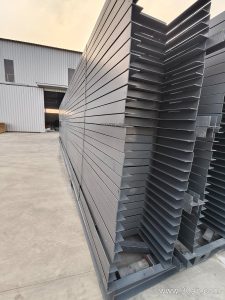
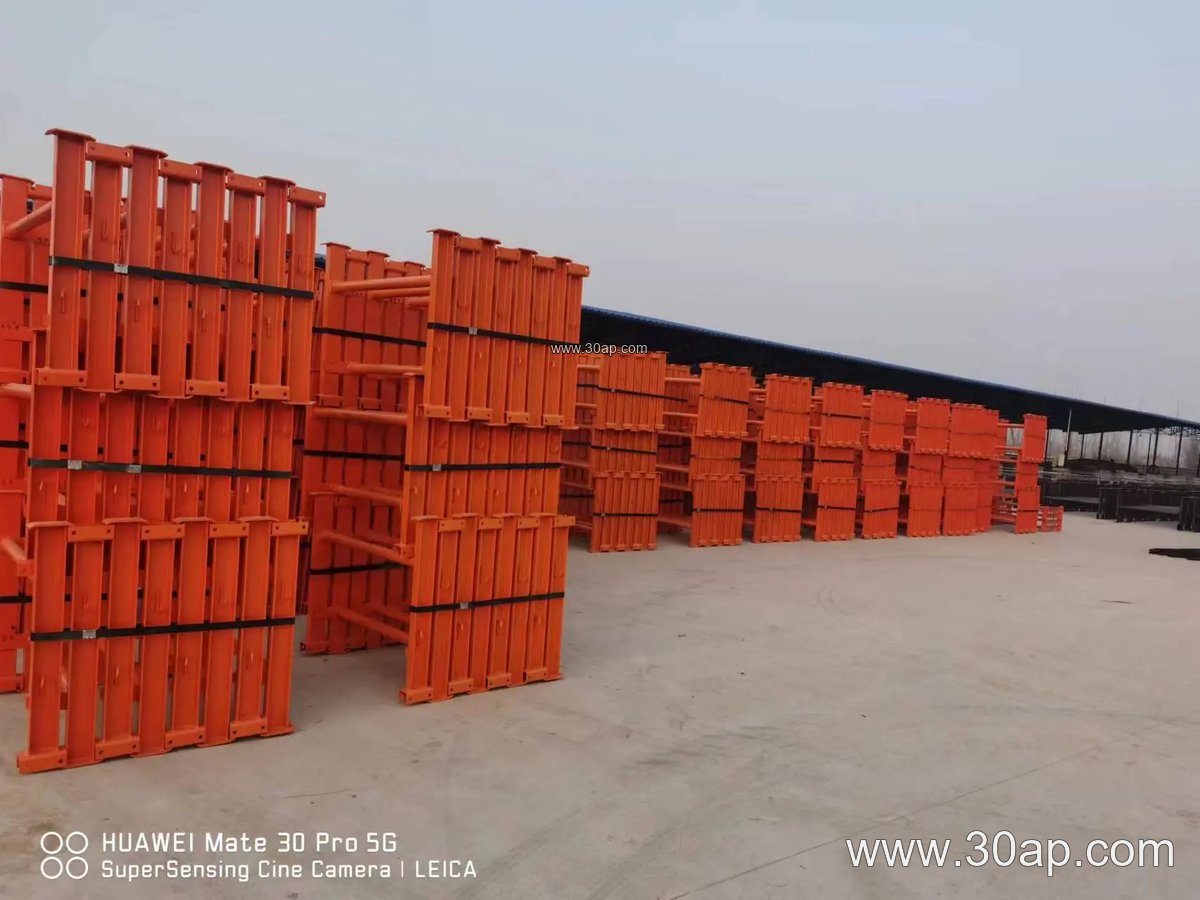
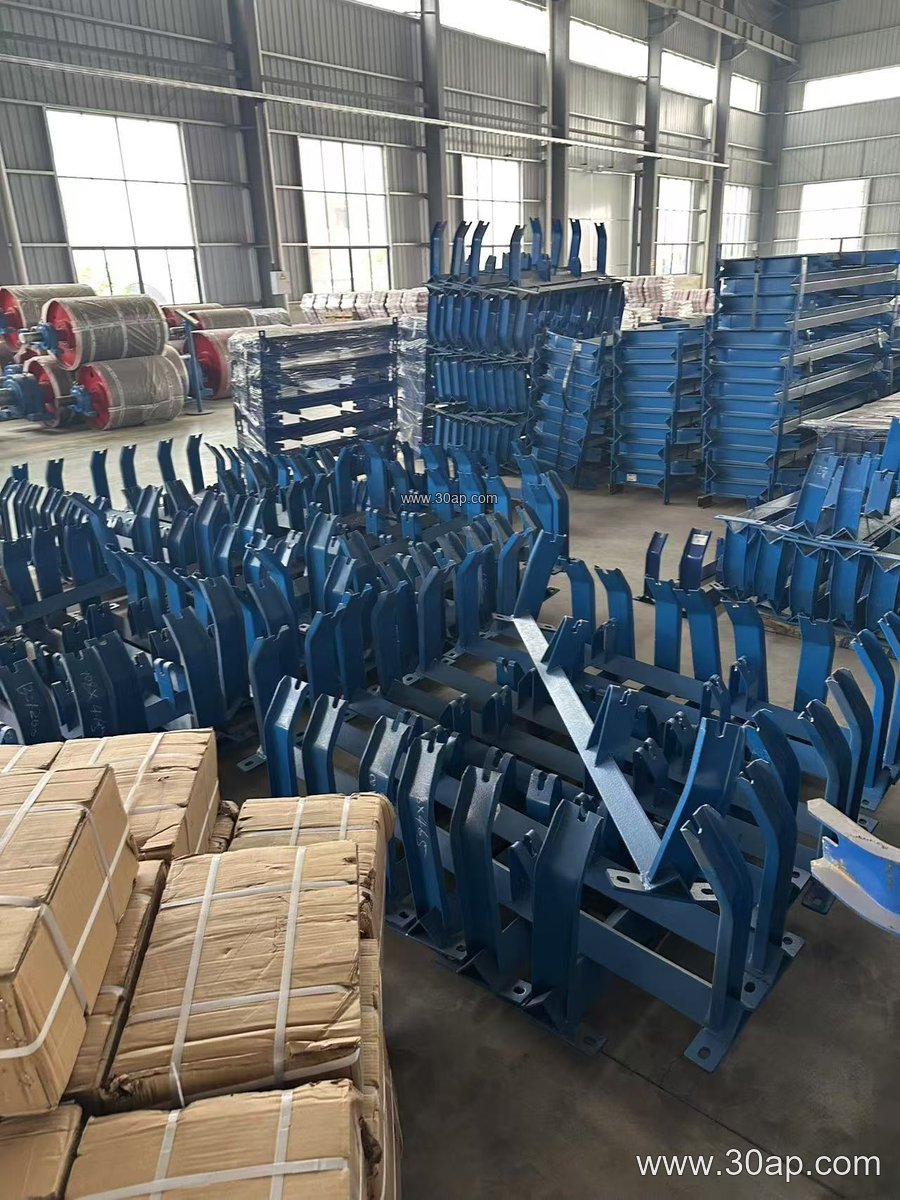
Most brackets are fabricated from structural steel. Common forms include angle steel, channel steel and folded steel plate. Fabricated brackets usually have punched or drilled mounting holes, a cross beam or base plate, and roller support slots or seats. Heavier designs may use reinforced gussets at the corners. Surface treatment is normally painted or galvanized, though the exact finish depends on the supplier and the environment.
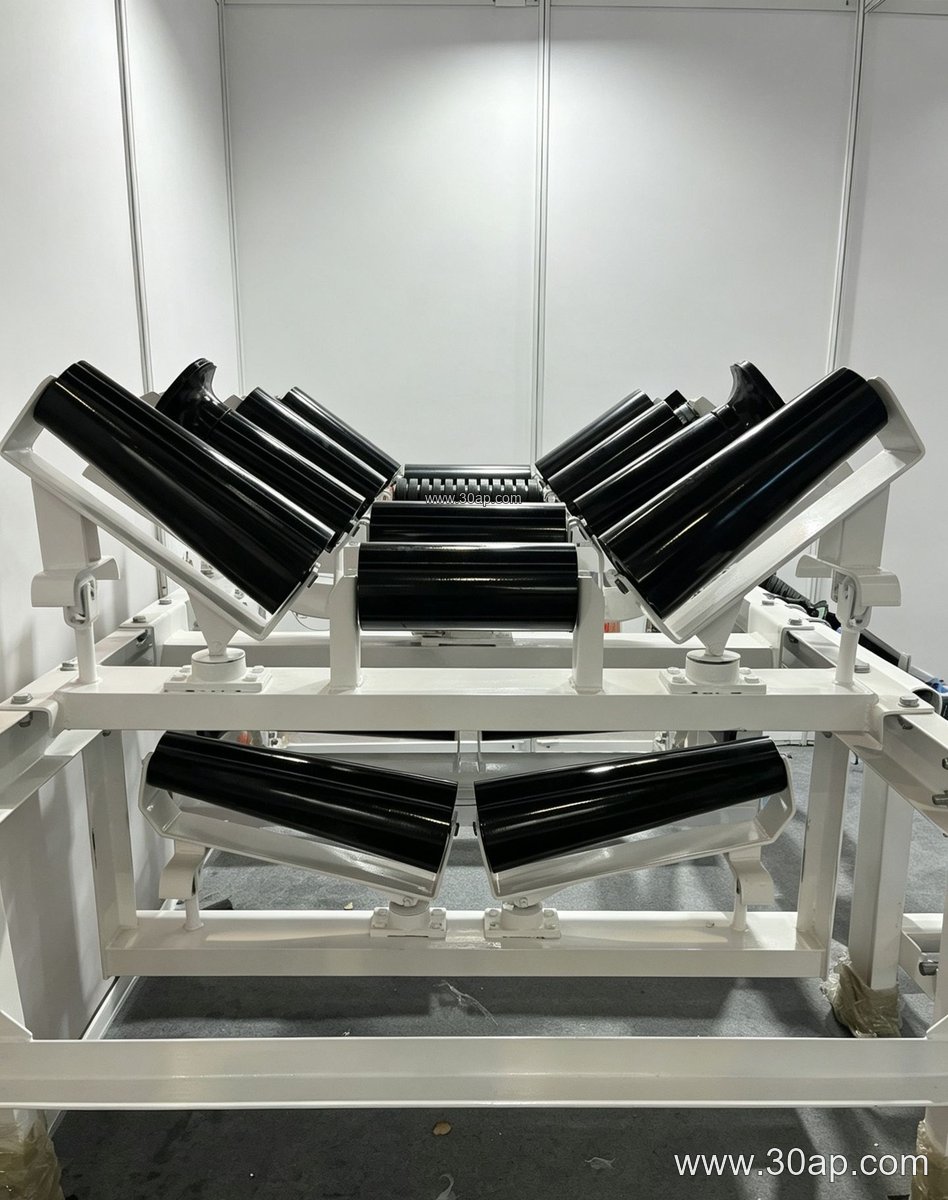
A buyer should check three things before ordering: hole spacing and cross beam length, the roller seat style, and the material thickness. Mounting dimensions change with belt width and trough angle, so they should be confirmed against the frame drawing rather than assumed. Do not treat one dimension as universal for every conveyor.
Types and Where They Fit
- Troughing bracket for the carrying side, usually with 20, 30, 35 or 45 degree trough angles.
- Transition bracket at the point where the belt changes from flat to troughed.
- Return bracket or flat return bracket under the belt.
- V-return bracket used with two rollers in a V arrangement.
- Impact bracket with cushion rollers under a loading point.
- Self-aligning and forward-leaning brackets used where belt training is needed.
- Adjustable brackets that allow the trough angle to be changed within a range.
Forward-leaning designs are commonly set at about 1.5 to 2 degrees to help keep the belt centered. These are different functions and should not be treated as interchangeable. A troughing bracket, for example, is not a substitute for a return bracket, just as a drive pulley is not a tail pulley or a bend pulley.
Sizes, Angles and Roller Diameters
Bracket sizes are usually described together with the belt width, trough angle and roller diameter. The following examples are reference combinations, not fixed rules. A given belt width can be used with more than one trough angle and more than one roller diameter, depending on belt speed, load and frame design.
| Belt width | Typical trough angle | Common roller diameter |
|---|---|---|
| B500 | 20 to 30 degrees | Ø89 |
| B650 | 30 degrees | Ø89 |
| B800 | 35 degrees | Ø108 |
| B1000 | 35 to 45 degrees | Ø108 or Ø133 |
| B1200 | 35 to 45 degrees | Ø133 |
| B1400 | 35 to 45 degrees | Ø133 or Ø159 |
| B1600 | 35 to 45 degrees | Ø159 |
| B1800 | 35 to 45 degrees | Ø159 or Ø194 |
| B2000 and above | 35 to 45 degrees | Ø194 |
For a heavy-duty frame, a B1200 conveyor at 45 degrees with Ø133 rollers is a common arrangement, while a B800 line at 35 degrees with Ø108 rollers suits many medium-duty installations. On long overland or high-tonnage systems, the bracket must match a steel cord conveyor belt or a high strength conveyor belt that runs at higher tension, so the frame and bracket stiffness deserve more attention. In coal mining and underground mining, flame retardant conveyor belt and anti-static conveyor belt are often specified, and the brackets should be selected with the same care for dust and moisture exposure. Quarries and aggregate plants handling abrasive rock usually pair abrasion resistant conveyor belt with robust troughing brackets and impact brackets at transfer points.
Installation and Maintenance Notes
Align brackets to the frame centerline before tightening. Check that all roller seats sit at the same height so the belt does not sit on one high point. Grease or free up adjustable mechanisms periodically, and replace bent brackets rather than forcing a roller into a distorted seat. If the belt starts to wander, inspect bracket alignment and roller condition before adjusting the pulleys. A loose or worn conveyor bracket can also cause uneven loading on the idler roller and shorten bearing life.
Buyer Checklist
- Confirm belt width, trough angle and roller diameter together.
- Ask for the mounting hole spacing and cross beam length.
- Specify material and finish for the site conditions.
- State whether fixed or adjustable trough angle is required.
- Match the bracket type to its position on the conveyor.
For more information on related components, see our pages on conveyor idler roller, conveyor pulley and conveyor bracket at gdconveyorbelt.com.