What a Conveyor Pulley Does on the Belt Line
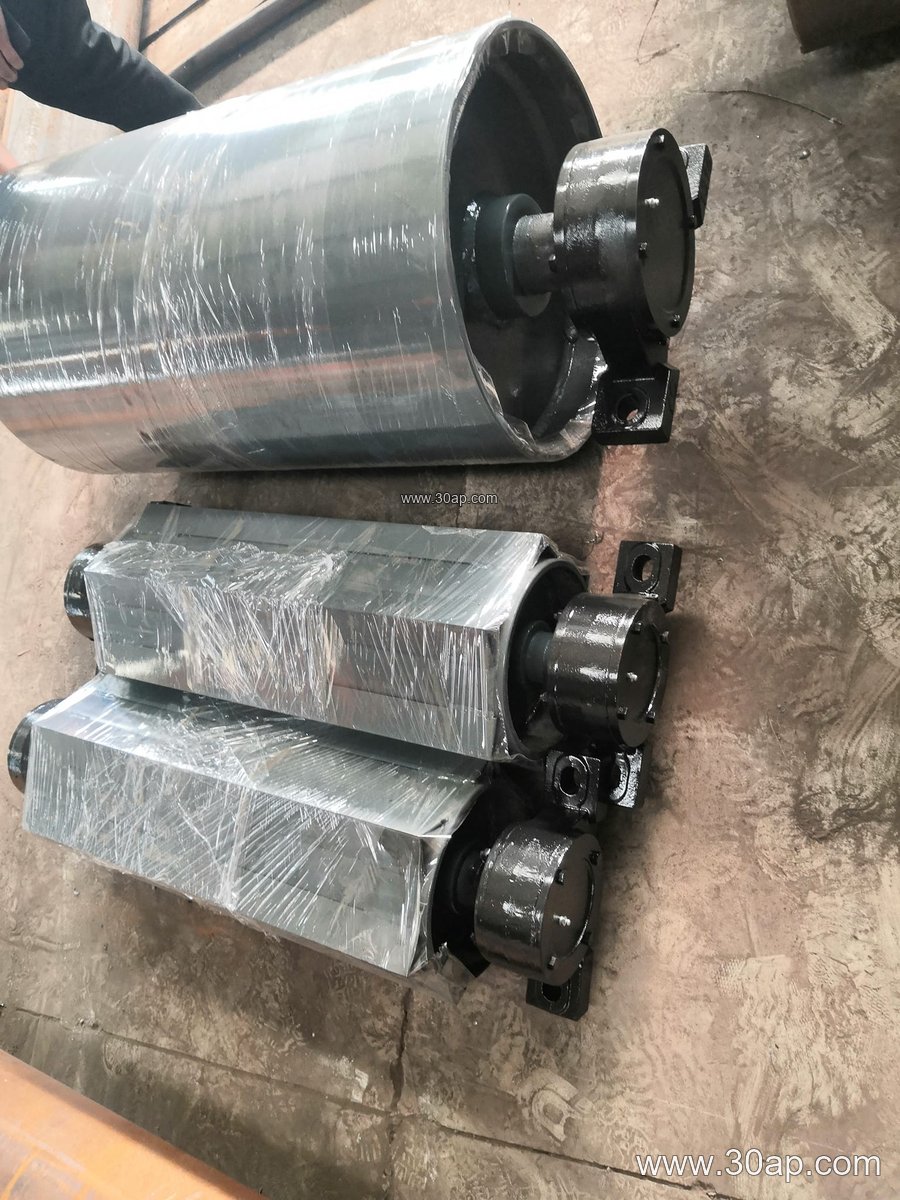
A conveyor pulley is the cylindrical assembly that drives, tensions, or redirects a conveyor belt. Unlike an idler roller that merely supports the belt, the pulley transmits power or controls belt path and tension. In a typical bulk handling circuit, the drive pulley at the head end pulls the belt, while the tail pulley at the loading point rotates freely and the bend pulley changes belt direction. These roles are not interchangeable, and each position places different demands on the pulley’s shell, shaft, bearings, and lagging.
Construction Details That Affect Performance
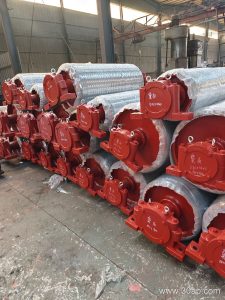
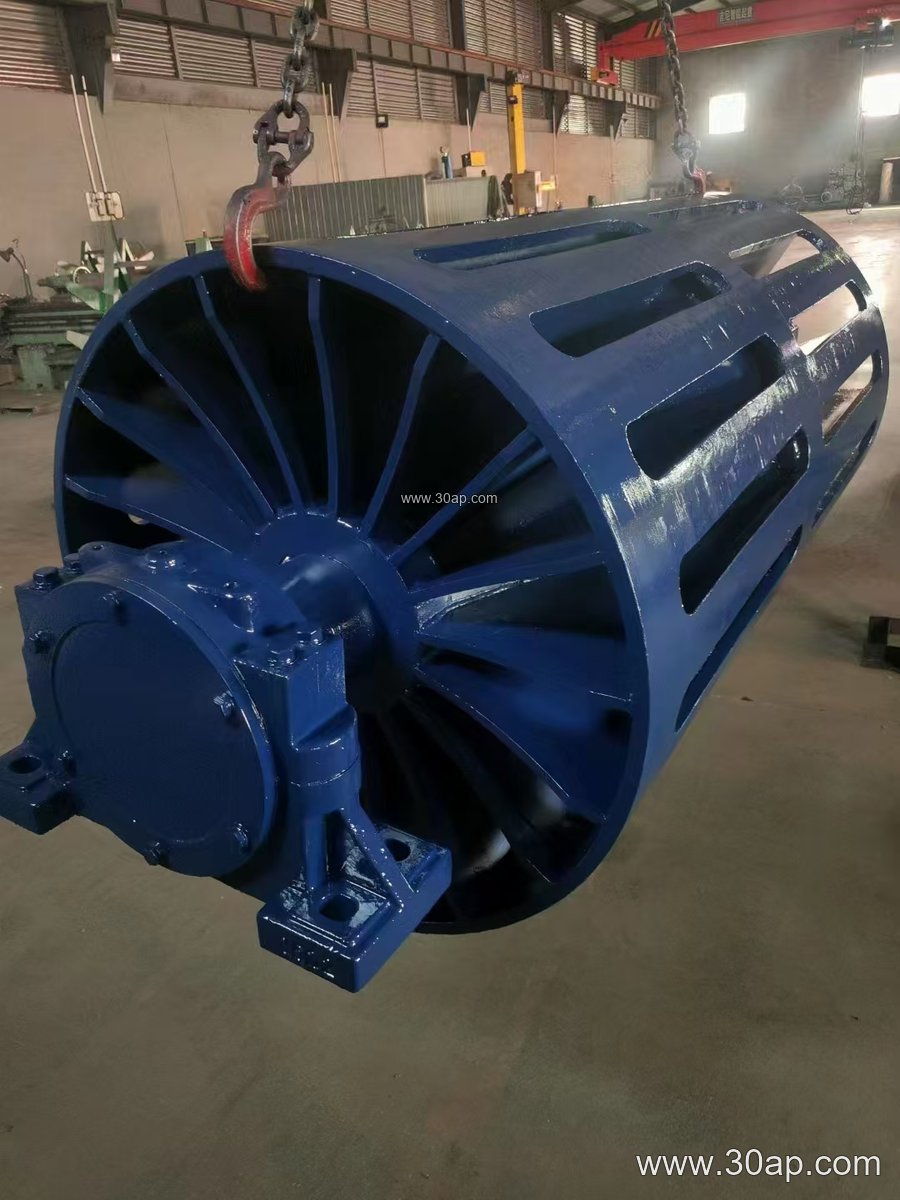
Most industrial pulleys start with a steel shell and end discs welded to a hub and shaft. The shaft diameter is sized by torque and load, not by belt width alone. Common shaft sizes include Ø50, Ø60, Ø80, Ø100, Ø120, Ø160, and Ø200 mm, but final selection follows the conveyor design. The pulley face width is usually slightly wider than the belt. For example, a B800 belt often runs on a pulley face around 950 mm, and a B1200 belt on a face of about 1400 mm. These are reference relationships, not fixed pairings—a B1200 belt can work with different pulley diameters depending on tension and space.
Lagging is a key wear component. Plain steel, cast rubber, cold-bonded rubber, hot-vulcanized rubber, diamond pattern, herringbone, and ceramic lagging are common surface forms. Lagging thickness often falls between 8 mm and 20 mm. Diamond or herringbone lagging improves grip in wet or dusty conditions, while ceramic lagging suits high-abrasion service. The right choice depends on whether the pulley is a drive pulley, tail pulley, or bend pulley.
Matching the Pulley to the Conveyor Duty
Drive pulleys need enough friction to transmit power without slip. That makes lagging selection and pulley diameter important, especially on long inclines. Tail pulleys often use a smaller diameter and may have a self-cleaning or wing design to shed sticky material. Bend pulleys and take-up pulleys guide the belt and maintain tension, so bearing selection and alignment matter more than traction. Electric pulleys integrate the motor inside the shell and save space in compact transfer points, but they are not a direct substitute for a conventional drive pulley in every duty.
Belt width and pulley diameter should be checked together with belt type. A heavy-duty mining conveyor belt or a steel cord conveyor belt may require larger pulley diameters to limit bending stress. Fabric-core belts such as EP conveyor belt or NN conveyor belt grades (EP100, EP200, EP400, NN200, NN300) have their own minimum pulley recommendations from the belt maker. The pulley supplier and belt supplier should confirm compatibility rather than relying on a single rule of thumb.
Where These Pulleys Are Used
In a limestone quarry, the head pulley on the primary discharge conveyor often runs with diamond lagging to handle dust and moisture. In a coal washing plant, flame retardant conveyor belt and anti-static conveyor belt are common, and the tail pulley may need a wing-type shell to avoid material buildup. Cement plants use pulleys on clinker and raw meal conveyors, where heat resistant conveyor belt may be present and bearing lubrication intervals deserve attention. Power plant coal handling and port bulk terminals also rely on well-lagged drive pulleys to keep long belts tracking under load.
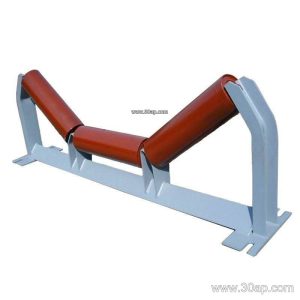
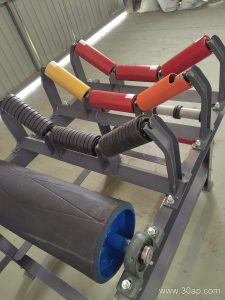
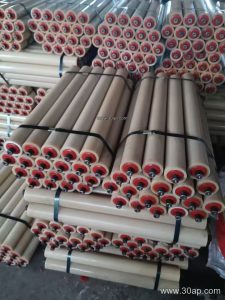
Other related equipment includes the conveyor bracket that supports pulley assemblies and the conveyor idler roller that carries the belt between pulleys. A pulley that is misaligned with nearby idlers can cause edge wear, even if the pulley itself is well built.
Buyer Checklist Before Ordering
- Confirm the pulley position: drive, tail, bend, take-up, or snub. Each has different design priorities.
- Provide belt width, belt type, and maximum belt tension. Belt width alone does not determine shaft diameter.
- Specify lagging type and thickness if traction or wear resistance is critical.
- Check pulley diameter against the belt manufacturer’s minimum bending radius.
- Confirm bearing type, sealing, and lubrication method for the site conditions.
- Ask for dimensional drawings showing face width, shaft extension, keyway, and bolt pattern.
At sites such as an iron ore terminal or a sand and gravel line, a pulley that matches the conveyor’s actual duty will last longer and keep the belt centered. Use the conveyor pulley as part of a system review, not as an isolated purchase. For related belt and roller selection, visit conveyor pulley and conveyor belt resources to compare options.