What a Mining Impact Idler Does at the Load Point
A mining impact idler is a specialized roller assembly installed at the loading zone of a conveyor, where bulk material drops onto the belt with significant force. Unlike standard carrying idlers that primarily support the belt and material weight, this impact roller is built to absorb shock, protect the conveyor belt from punctures and gouges, and keep the belt tracking smoothly under violent loading conditions. In quarry, iron ore, and coal handling circuits, the impact idler often serves as the first line of defense for the entire belt line.
Construction Features That Matter
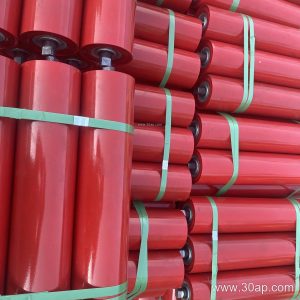
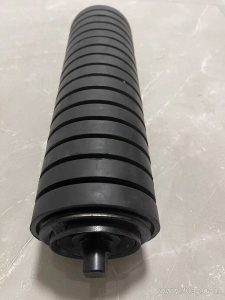
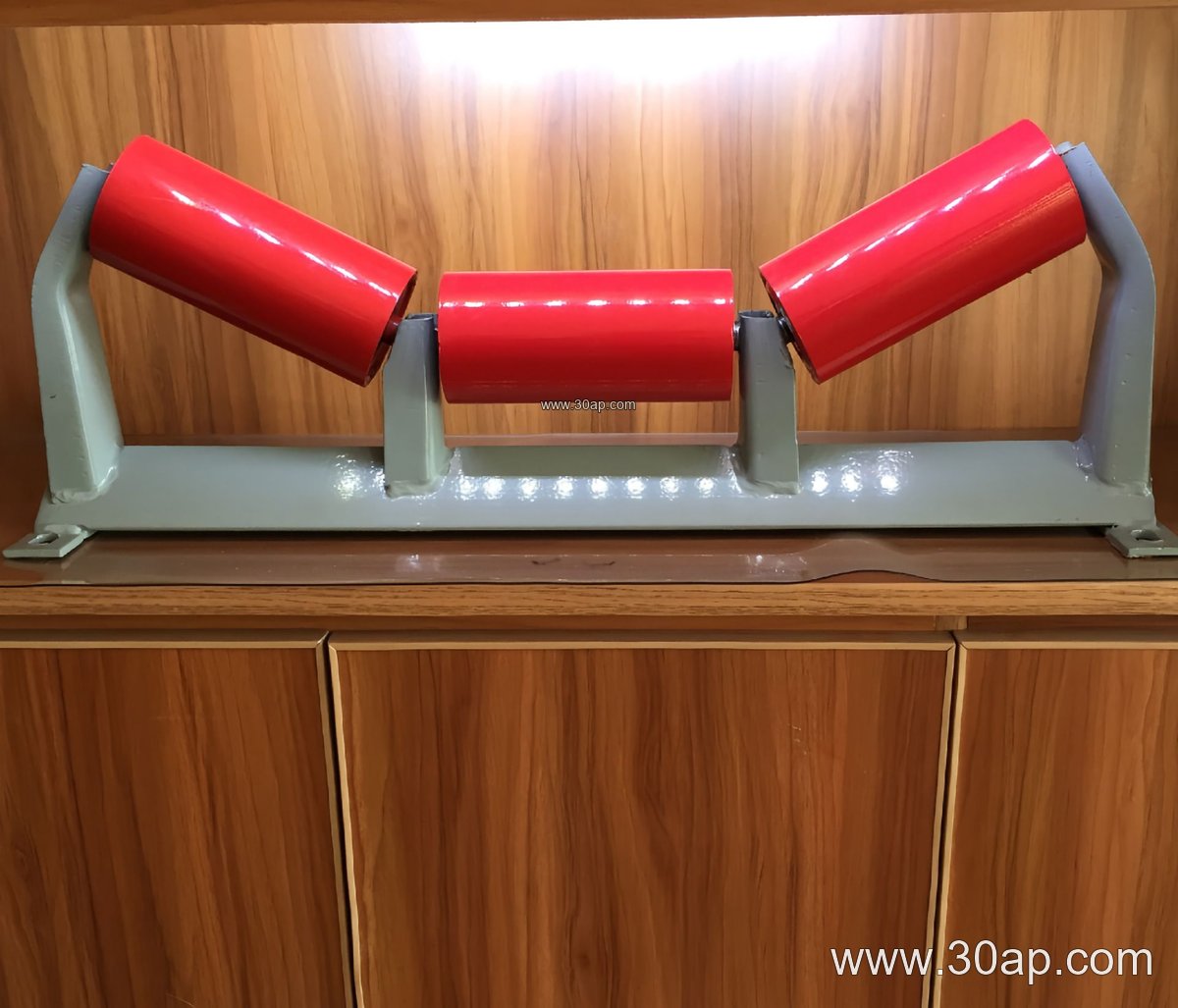
The typical mining impact idler uses a heavy-gauge steel tube or a rubber-disc surface to cushion falling rock. Rubber rings or discs are mounted on the roller shell, and the assembly is supported by robust bearings—common sizes include 6205, 6305, and 6308—housed in sealed, dust-resistant enclosures. The roller diameter may range from Ø89 to Ø159 or larger, depending on belt width and load severity. For a 1200mm wide conveyor belt, for example, a three-roll impact idler set might use roller lengths around 465 mm, but final dimensions are always determined by the conveyor design, not by a fixed rule.
Where Impact Idlers Are Used
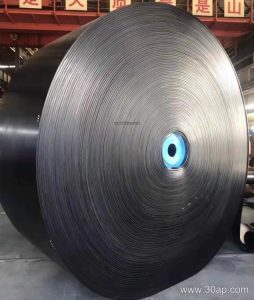
These idlers appear at transfer points in limestone mines, copper ore concentrators, coal preparation plants, and aggregate crushing lines. They are also found in power plant coal yards and port ship-loading facilities where the drop height from chutes or crushers is substantial. In such environments, a heavy-duty mining conveyor belt—often an EP conveyor belt or steel cord conveyor belt—works together with the impact idler to maintain continuous flow. The impact-resistant conveyor belt and the cushioning roller form a system; neither is a substitute for the other.
Impact Idler vs. Standard Carrying Idler
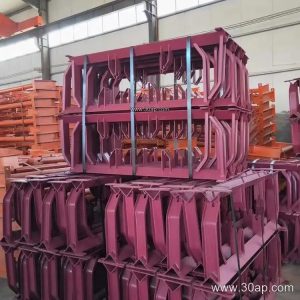
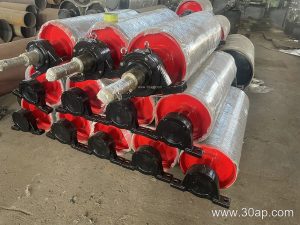
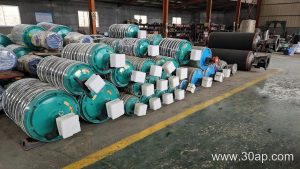
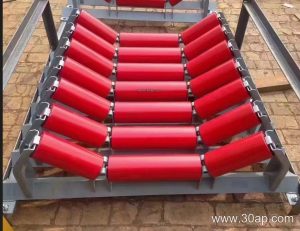
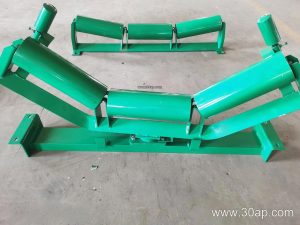
A standard troughing idler supports the belt between loading and discharge, while the impact idler is positioned exactly under the chute. The impact version may use a three-roll trough set with rubber-covered rolls, and its frame is usually reinforced. It is not a replacement for a bend pulley or a drive pulley—those are different components entirely. The impact idler works with the conveyor bracket and the belt to reduce point loading. In some designs, a spiral idler or a training idler may be used nearby for belt alignment, but the impact idler remains the shock-absorbing element at the load zone.
Key Specifications and Selection Notes
Buyers should match the impact idler to belt width, material lump size, drop height, and throughput. Common belt widths include B800, B1000, B1200, and B1400, with corresponding idler lengths that vary by trough angle and roll configuration. Trough angles of 20, 30, 35, and 45 degrees are available; a 35-degree three-roll set is frequently seen in mining duty. Roller diameters such as Ø108, Ø127, Ø133, and Ø159 are common, and bearing selection should follow the load calculation, not a fixed pairing with roller diameter. The table below gives reference examples only—actual supply depends on the conveyor designer’s specification.
| Reference Item | Common Example | Note |
|---|---|---|
| Belt width | B800, B1000, B1200, B1400 | Match idler set to belt width |
| Roller diameter | Ø89, Ø108, Ø127, Ø133, Ø159 | Selected by load and drop height |
| Bearing | 6205, 6305, 6308, 6310 | Sealed for dusty conditions |
| Trough angle | 30°, 35°, 45° | Higher angle for better material containment |
| Roll surface | Rubber rings, steel tube | Rubber for impact absorption |
For a 1000mm wide belt, a three-roll impact set might use roll lengths around 380 mm, but side rolls and center rolls can differ. Never assume that one belt width locks in a single pulley diameter or shaft size; those values come from the conveyor’s engineering data. If the belt is an abrasion resistant conveyor belt or a flame retardant conveyor belt, the impact idler should still be chosen for mechanical shock absorption, not for belt property substitution.
Buyer Checklist and Maintenance Pointers
- Confirm the drop height and lump size at the transfer point; these drive the need for rubber-disc impact rolls.
- Check that the idler frame fits the existing conveyor bracket and that the roll length matches the belt width and trough angle.
- Verify bearing seals and housing protection against dust and water; washdown or high-humidity areas need extra attention.
- Inspect rubber rings for wear, cracking, or flattening; replace worn rolls before they damage the belt.
- Keep spare impact idlers on hand for critical load points in coal mining conveyor belt systems and ore handling lines.
Whether the plant handles gold mining conveyor belt duty, cement plant raw material, or a quarry conveyor belt transfer, the mining impact idler is a small but vital component. Pair it with the right conveyor pulley, idler roller, and conveyor bracket, and it will help extend belt life and reduce unplanned stops. For specific dimensions and roller configurations, consult the conveyor design data and the idler manufacturer’s reference tables.