What a Guide Idler Bracket Does on a Conveyor
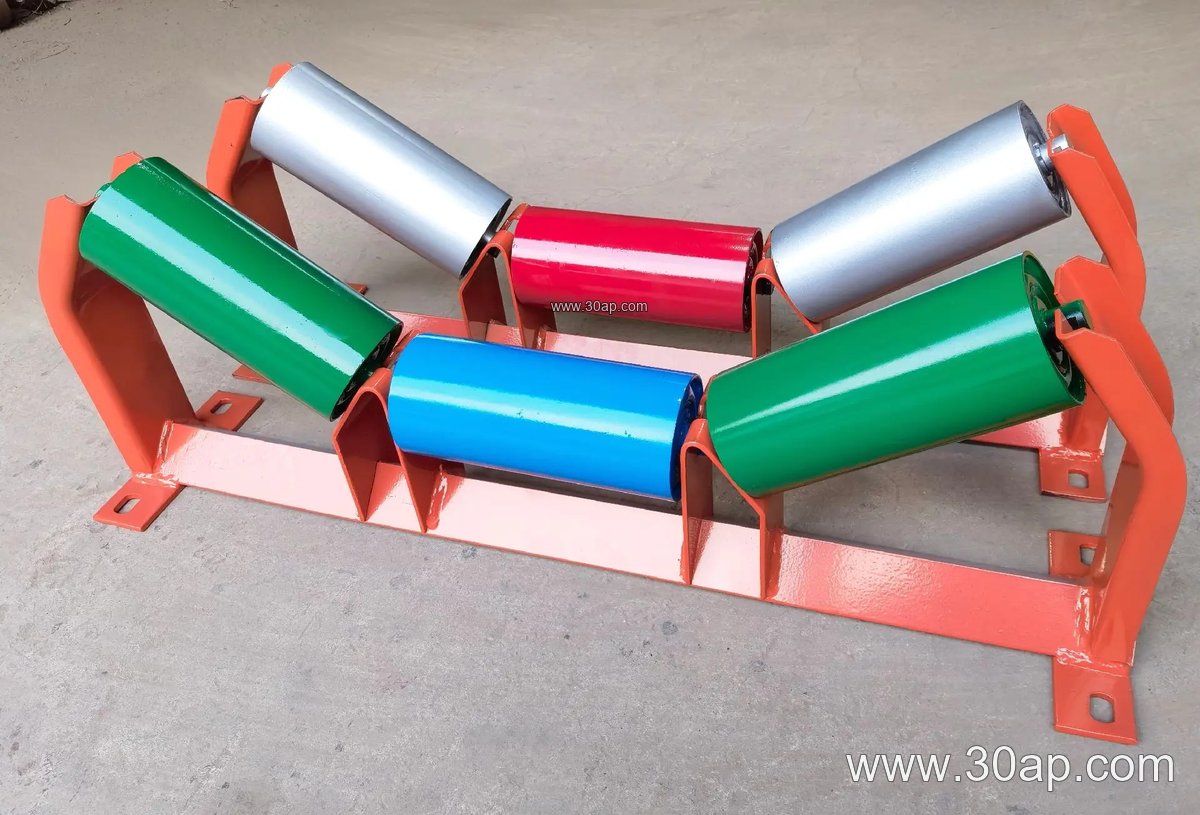
A guide idler bracket is the mounting component that holds a guide idler in the correct position relative to the conveyor belt, usually on the carrying side near a transition point, a loading zone, or a section where the belt tends to wander. In everyday plant language it is also called a guide roller bracket or a belt guide bracket, and the name refers to the same assembly: a bracket that positions a small-diameter guide idler so it contacts the belt edge or belt surface and gently corrects mistracking.
The part is easy to overlook until a belt starts rubbing the structure. In a quarry, a cement plant, or a power plant coal yard, a belt that drifts a few centimetres can damage the edge, spill material, and force unplanned stops. A properly mounted guide bracket keeps that correction local and mechanical, without touching the main conveyor pulley arrangement.
Construction and Mounting Position
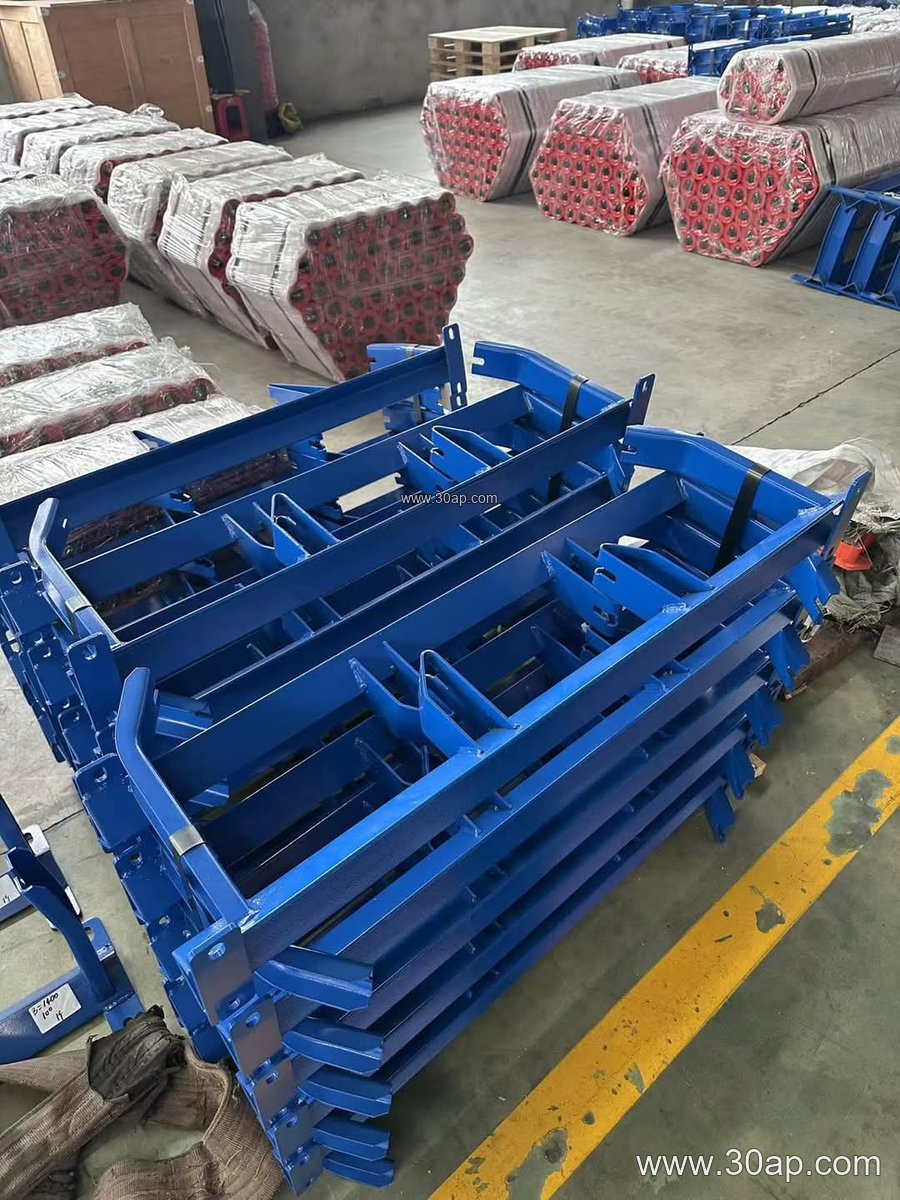
Most guide idler brackets are fabricated from angle steel, channel steel, or folded steel plate. The bracket typically includes a base plate with slotted or drilled mounting holes, a vertical or inclined arm, and a shaft seat that accepts the guide idler. Slotted holes allow the maintenance team to fine-tune the idler position after installation. On wider belts, the bracket may be bolted to the conveyor stringer or to a cross beam rather than directly to the frame.
Mounting position matters more than the bracket’s wall thickness. Guide brackets are commonly placed on both sides of the belt, slightly ahead of the point where mistracking begins, and angled so the idler nudges the belt back toward the centre line. They are not a substitute for a bend pulley or a tail pulley; those components change belt direction, while the guide bracket only influences tracking.
Where Guide Brackets Fit in Bulk Handling
These brackets appear in limestone mines, iron ore plants, aggregate crushing and screening lines, cement kilns and clinker conveyors, and port ship-loading systems. They are also used in tunnel spoil removal and in fertilizer or grain silo handling where belt alignment affects dust control and spillage. In these plants the bracket usually works alongside conveyor idler rollers, a conveyor pulley at the drive end, and a conveyor bracket that supports the main idler sets.
Because the guide bracket sits close to the belt edge, it is often specified together with the belt type. A heavy-duty mining conveyor belt or an abrasion resistant conveyor belt used in a crusher conveyor line may need a stiffer bracket and a larger guide idler than a lighter food grade conveyor belt on a short packaging line. The bracket itself is a steel structure; the belt and the idler do the real work.
Common Reference Dimensions
The table below shows typical reference values used when matching a guide idler bracket to a belt width and idler size. These are common ranges for planning, not fixed combinations, and the final hole spacing and beam length are determined by the conveyor design.
| Belt width | Typical guide idler diameter | Bracket material | Typical trough angle reference |
|---|---|---|---|
| B500 | Ø89 | Angle steel | 20° to 30° |
| B650 | Ø89 or Ø108 | Angle or channel steel | 30° |
| B800 | Ø108 | Channel steel | 30° to 35° |
| B1000 | Ø108 or Ø133 | Folded steel plate | 35° |
| B1200 | Ø133 | Channel steel | 35° to 45° |
| B1400 | Ø133 or Ø159 | Folded steel plate | 35° to 45° |
| B1600 | Ø159 | Channel or folded plate | 35° to 45° |
| B1800 to B2000 | Ø159 or Ø194 | Heavy channel steel | 35° to 45° |
A B800 belt running at 35° with Ø108 idlers is a common reference point, but a B1200 line at 45° with Ø133 idlers is equally normal. Belt width alone does not fix the idler diameter, and no single trough angle is mandatory for every conveyor.
Buyer Checklist Before Ordering
- Confirm the belt width and the actual guide idler diameter, since the bracket shaft seat must match the idler shaft.
- Check whether the bracket is fixed or adjustable. Adjustable types allow small position changes after commissioning, which helps on long overland or underground mining conveyor belt routes.
- Match the steel section to the load: a short aggregate conveyor belt line may accept angle steel, while a heavy-duty mining conveyor belt duty may call for channel steel or folded plate.
- Ask for the mounting hole spacing and beam length as designed values, not assumed numbers.
- Consider the environment. A wash-down plant, a dusty coal yard, and an acid-resistant installation each put different demands on coating and drainage.
For belt selection around the same project, buyers often review EP conveyor belt, NN conveyor belt, and steel cord conveyor belt options at conveyor belt suppliers, and compare idler and bracket data at idler roller and conveyor pulley pages. A flame retardant conveyor belt for an underground coal mining conveyor and a heat resistant conveyor belt for a cement plant cooler discharge are different purchases, yet both may use the same style of guide bracket.
Installation and Maintenance Notes
Set the guide idler so it touches the belt lightly. Over-tightening the bracket arm creates edge wear and can shorten belt life. After the first week of operation, recheck bolt torque and slot position, because belts settle and frames move. Keep the guide idler clean; a seized idler in a guide bracket can act like a fixed scraper and damage the belt cover.
On a coal mining conveyor belt or an ore conveyor belt handling abrasive material, inspect the bracket for build-up and corrosion during routine idler checks. A small repair now is cheaper than replacing a section of belt edge later.