What the Lower Self-Aligning Idler Does
A lower self-aligning idler is the return-side tracking component of a belt conveyor. It sits beneath the carrying run, pressing against the underside of the conveyor belt, and corrects lateral drift before it becomes a serious problem. In a quarry, a coal washing plant or a cement kiln feed line, a belt that wanders off-center will soon damage its edges, spill material and overload the frame. This idler is one of the simplest and most economical answers to that problem.
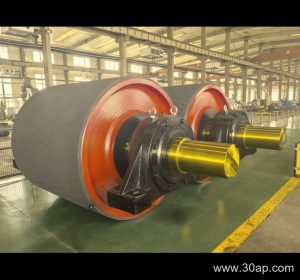
The product is also described as a self-aligning return idler or a training idler for the lower run. It is not the same as a drive pulley, tail pulley or bend pulley, and it should never be specified as a substitute for any of those components. Those pulleys transmit power and change belt direction; the lower self-aligning idler only steers.
Construction and Working Principle
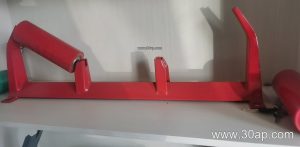
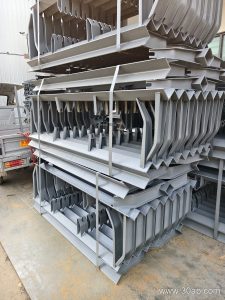
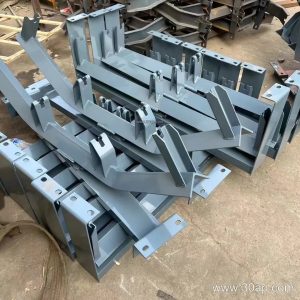
A typical unit consists of two or three idler rollers mounted on a pivoting frame. The frame is carried on a vertical pivot or a linkage that lets the whole assembly swing slightly when the belt contacts it off-center. When the belt drifts to one side, it presses against the roller on that side; the resulting friction turns the frame, which in turn nudges the belt back toward the centerline. Some designs add a small forward tilt of about 1.5 to 2 degrees to strengthen the corrective force.
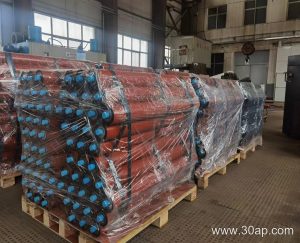
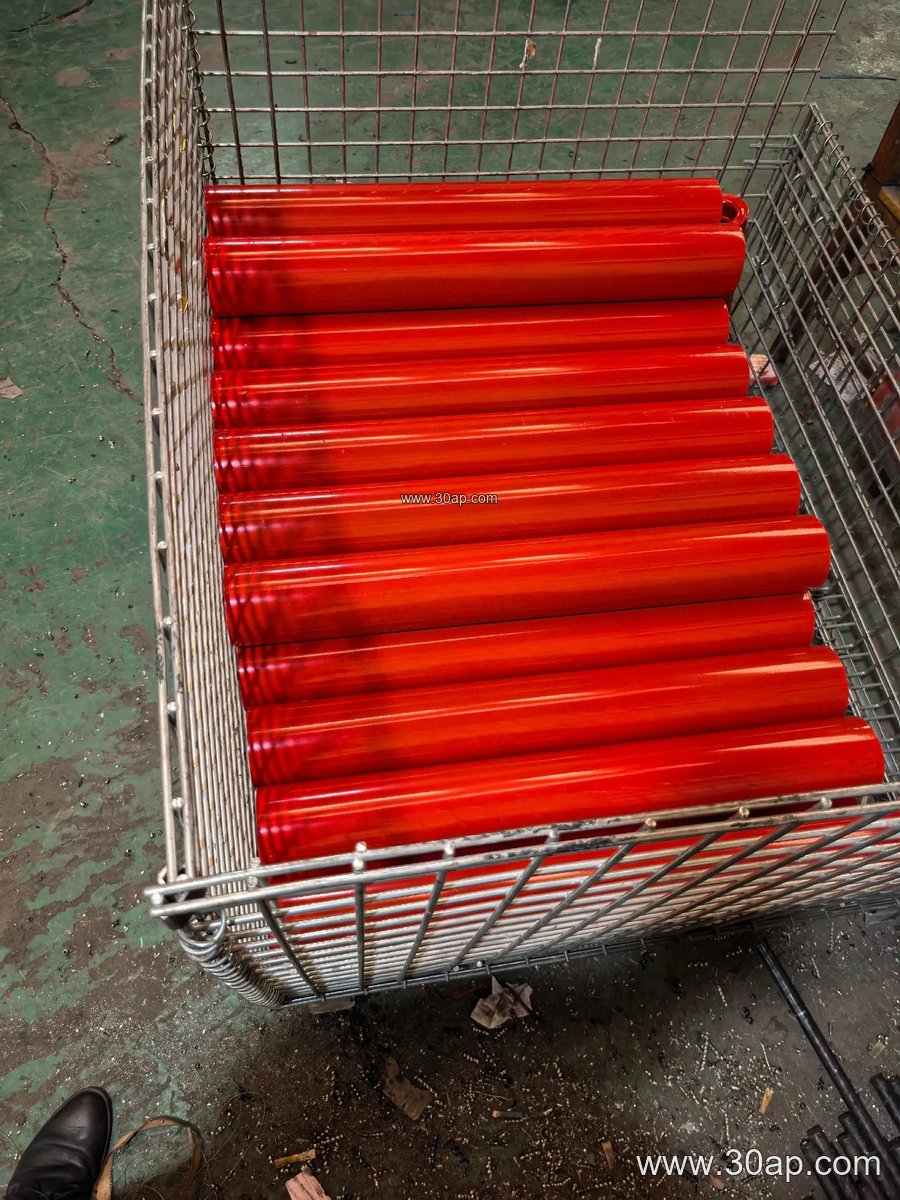
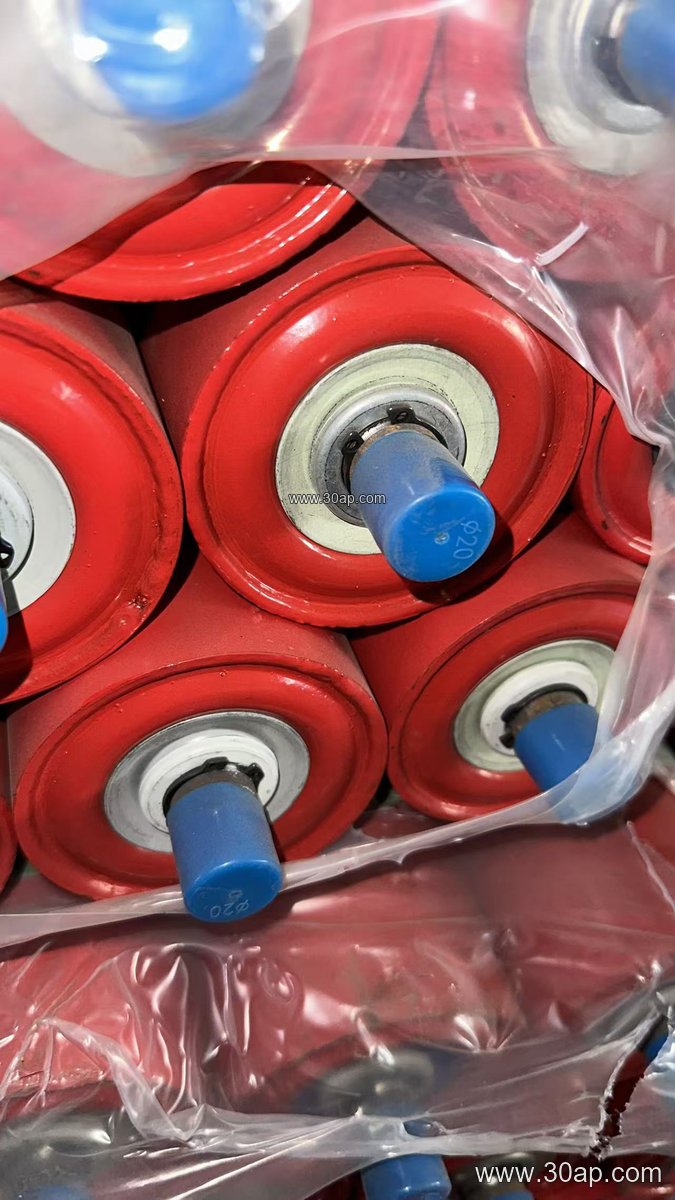
Rollers usually have steel tubes with sealed bearings. Bearing numbers such as 6204, 6205, 6305, 6306, 6308 and 6310 are common in conveyor idler practice, and the exact match depends on shaft and load design rather than on belt width alone. Roller surfaces may be plain steel, nylon, ceramic or rubber-covered. Rubber rings are useful where impact and abrasion are heavy, for example under a crusher discharge or a transfer point handling rock.
- Pivoting frame with a central vertical axis
- Two or three rollers, often in a V or offset arrangement
- Sealed bearing housings with grease or lifetime lubrication
- Mounting feet that fit standard conveyor bracket spacing
Where It Fits on the Conveyor
The lower self-aligning idler belongs to the return strand, usually installed at intervals after the tail pulley and before the take-up. It works together with flat return rollers and V-return idlers, which support the belt but do not actively steer it. On a long overland conveyor carrying iron ore or aggregate, a few training idlers placed at known trouble spots are often enough to keep the belt stable. In an underground coal mining conveyor, they help counter the misalignment caused by uneven floor and shifting loads.
Selection should consider the conveyor belt type and the material being carried. A heavy-duty mining conveyor belt running at high tension needs a robust frame and well-sealed bearings; a pipe conveyor belt or a corrugated sidewall belt may need a different support arrangement and should be checked with the conveyor designer. The idler itself does not change with the belt compound, but the environment does: a heat resistant conveyor belt in a sinter plant or a flame retardant conveyor belt in a coal mine will demand attention to bearing temperature and grease choice.
Common Sizes and Configuration Reference
The table below lists typical reference values. These are examples, not fixed combinations, and final dimensions follow the conveyor design.
| Item | Common reference values |
|---|---|
| Roller diameter | Ø63, Ø76, Ø89, Ø102, Ø108, Ø127, Ø133, Ø159, Ø178 mm |
| Belt width | B500, B650, B800, B1000, B1200, B1400, B1600, B1800, B2000 mm |
| Roller length, three-roll trough example | about 250 mm at B650, 315 mm at B800, 380 mm at B1000, 465 mm at B1200, 530 mm at B1400, 600 mm at B1600 mm |
| Bearing | 6204, 6205, 6305, 6306, 6308, 6310 |
| Roller surface | steel tube, nylon, ceramic, rubber ring |
Side rollers and the center roller can differ in length, so the values above are only a starting point for a quotation. A 1200mm wide conveyor belt and a 1800mm wide conveyor belt will not use the same frame, and the shaft diameter is set by load calculation, not by belt width alone.
Buyer Checklist
Before ordering, confirm the belt width, the return strand height, the bracket hole spacing and the expected loading. Ask for the roller diameter, bearing designation, sealing method and surface finish. For dusty or wet conditions, specify effective labyrinth seals and a grease that suits the ambient temperature. In a power plant coal yard or a port ship loading system, salt and moisture may call for extra corrosion protection. Spare rollers and pivot bushings should be available, because a seized training idler can wear the belt edge quickly.
Finally, remember that the lower self-aligning idler is a tracking aid, not a cure for poor belt splicing, off-center loading or a misaligned conveyor pulley. Correct installation of the belt, the conveyor bracket and the pulleys remains the foundation of good tracking. Used properly, this idler extends belt life and reduces spillage in mines, cement plants, quarries and bulk handling terminals.