What an EP Fabric Core Conveyor Belt Is
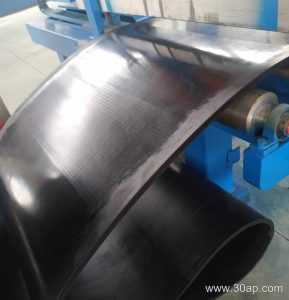
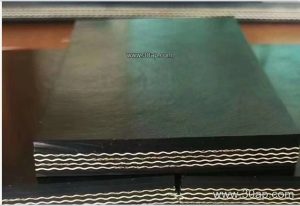
An EP Fabric Core Conveyor Belt is a rubber conveyor belt built around a carcass of polyester warp yarns and polyamide weft yarns. The abbreviation EP stands for polyester-polyamide, and the fabric core is the load-bearing skeleton that carries tension while the rubber covers protect it from wear, moisture and impact. This belt sits between light cotton or nylon constructions and heavy steel cord designs, which makes it a practical workhorse for many bulk material handling lines.
Because the polyester warp has low elongation and the polyamide weft absorbs shock well, an EP rubber conveyor belt is often chosen where the conveyor profile is long, the load is abrasive, or the belt must resist impact at transfer points. The same product is also described as a Fabric Core Conveyor Belt or a Multi-Ply Fabric Core Conveyor Belt when several fabric layers are bonded together. These are accurate names for the same family and can appear together when specifying a replacement.
Construction and Cover Options
The carcass usually consists of two to six fabric plies, bonded with skim rubber and protected by top and bottom covers. Cover thickness is commonly stated as a pair of figures, for example 3+1.5 mm, 4+2 mm, 5+2 mm, 6+2 mm or 8+3 mm. The first figure is the carrying-side cover and the second is the pulley-side cover. Heavier covers suit primary crushing and high-abrasion service; lighter covers reduce weight and cost on cleaner duties.
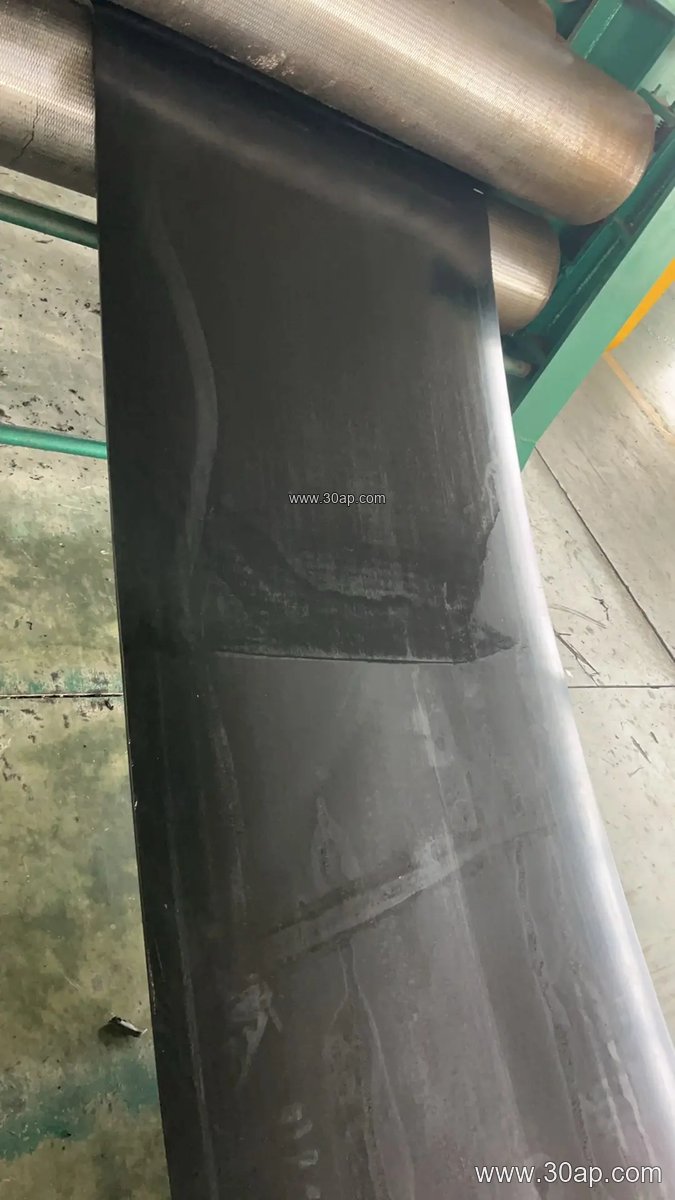
Rubber grades can be matched to the environment. A Heat Resistant Conveyor Belt may be needed near cement kilns or sinter plants, while an Oil Resistant Conveyor Belt helps where lubricants or oily scrap are present. In coal preparation and underground work, a Flame Retardant Conveyor Belt and an Anti-Static Conveyor Belt are frequently requested. Abrasion Resistant Conveyor Belt covers are common in quarry and aggregate duty, and Cold Resistant Conveyor Belt compounds are useful in freezing climates. Each of these grades still uses the EP fabric carcass unless the design calls for a different core.
Common Strength and Width References
Tensile grades are normally written as EP100, EP200, EP315, EP400, EP500, EP630, EP800, EP1000, EP1250, EP1600 or EP2000. These values describe the nominal breaking strength of the carcass and should be confirmed against the conveyor design, not assumed from belt width alone. Widths are usually expressed in millimetres or as B values.
| Reference item | Typical designations | Notes |
|---|---|---|
| Strength grade | EP200, EP400, EP630, EP800, EP1000, EP1250 | Select by calculated belt tension and safety factor |
| Belt width | B500, B650, B800, B1000, B1200, B1400, B1600, B1800, B2000 | Width follows material size, tonnage and troughing arrangement |
| Cover thickness | 3+1.5, 4+2, 5+2, 6+2, 8+3 mm | First figure is top cover, second is bottom cover |
| Ply count | 2 to 6 plies | Depends on strength grade and manufacturer build |
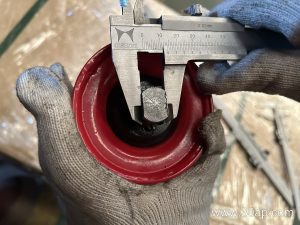
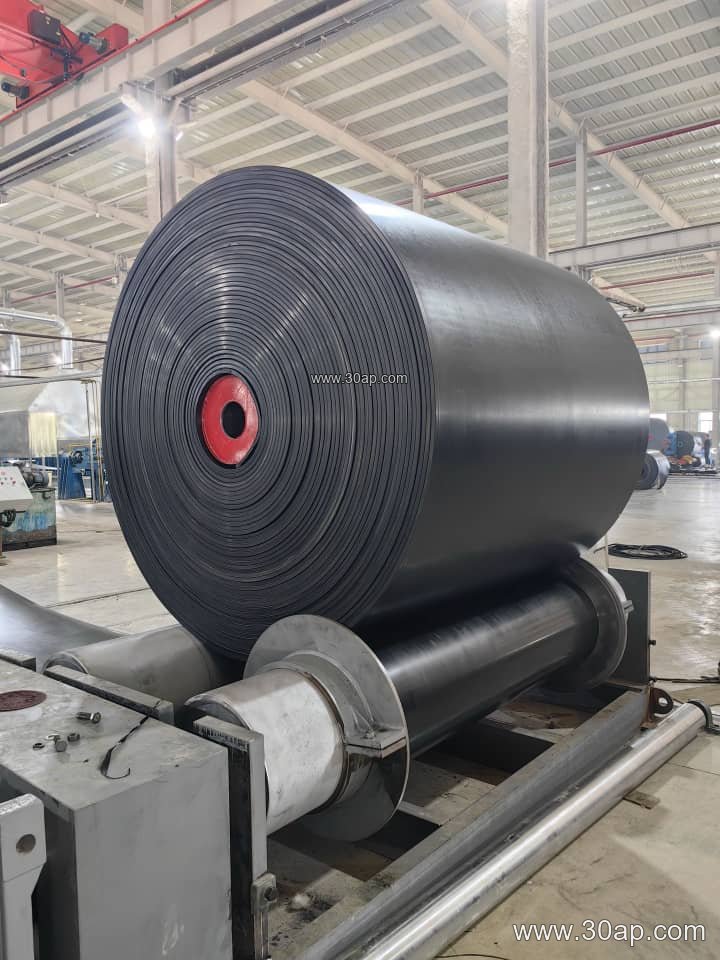
These figures are common reference data rather than fixed supply promises. Different manufacturers build to different ply counts, rubber compounds and edge constructions for the same nominal grade. A 1200mm wide belt, for instance, can be paired with several pulley sizes and shaft designs depending on the conveyor layout, so the drive, tail and bend pulleys should be checked as separate components. Belt width does not by itself determine pulley diameter or shaft size.
Where It Fits in the Plant
EP fabric core belts appear in mines, coal preparation plants, cement works, power stations, steel plants, ports and sand and gravel yards. They handle crushed rock, ore, clinker, limestone, coal, aggregate and similar bulk materials. In a crushing circuit, the belt may run behind a crusher conveyor belt discharge and feed a screening tower; in a stockyard it may work alongside a quarry conveyor belt or aggregate conveyor belt. On long overland routes the same carcass can serve as a bulk material conveyor belt where a steel cord belt is not justified by tension demand.
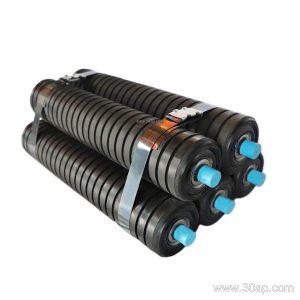
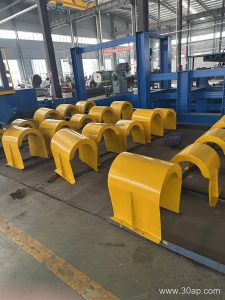
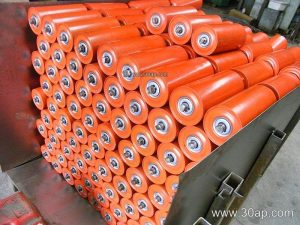
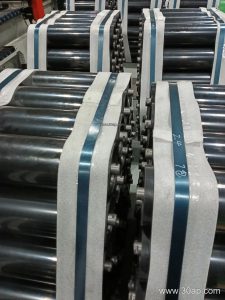
Related hardware matters as much as the belt. Troughed idler rollers support the loaded strand, while the head and tail conveyor pulleys transfer motion and tension. Conveyor brackets hold the rollers and pulleys in alignment. Misaligned frames, worn rollers or an undersized pulley can shorten belt life even when the EP carcass is correctly rated.
Selection and Maintenance Points
- Calculate the working tension, take-up travel and starting load before choosing the strength grade; do not copy a grade from a neighbouring conveyor.
- Match the cover compound to heat, oil, flame risk, cold or abrasion exposure, and confirm the grade with the belt supplier.
- Check pulley diameters, shaft sizes and lagging against the belt manufacturer’s recommendations for the chosen carcass and ply count.
- Keep idler rollers turning freely and inspect the tail pulley for material build-up, which can cause edge damage.
- Track splices and edge wear regularly; a small repair on an EP conveyor belt is usually cheaper than a full replacement.
- When a higher tension or a very long single flight is required, compare the EP option with a Steel Cord Conveyor Belt or an NN Conveyor Belt before finalising the design.
At www.txconveyorbelt.com the focus is on matching belt construction, cover grade and conveyor components to the actual duty. A clear specification of strength, width, cover thickness and rubber grade helps avoid over- or under-design, whether the line serves a coal yard, a cement plant or a port loading system.