What a Trough Idler Does on the Carry Side
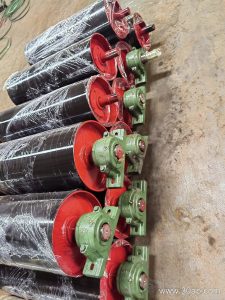
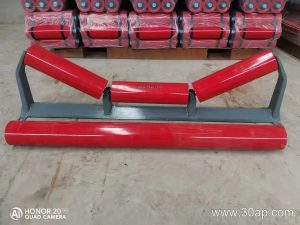
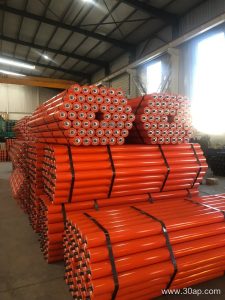
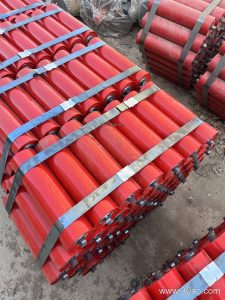
A trough idler is the carrying-side roller set that shapes a flat conveyor belt into a trough, so bulk material sits in a stable pocket instead of spilling off the edges. In a typical three-roll arrangement, the center roll stays nearly horizontal while the two side rolls tilt upward. Together they support the loaded belt between the tail pulley and the drive pulley, and the assembly is held by a conveyor bracket fixed to the stringer. Anyone specifying a full conveyor will deal with the trough idler, the return idler roller, and the conveyor pulley as separate items, because each has its own duty.
The trough angle is the defining feature. Common values are 20, 30, 35, and 45 degrees. A deeper trough holds more material and reduces spillage on inclined runs, but it also increases belt flexing at the side rolls. For a given belt width, the roll length changes with the trough angle and the number of rolls, so the geometry should be confirmed against the actual conveyor design rather than copied from another line.
Construction and Roll Face Options
Most units are built around a steel tube shell fitted with sealed bearings in stamped or cast housings, and a shaft that locks into the bracket. Roll diameters commonly seen include Ø63, Ø76, Ø89, Ø102, Ø108, Ø127, Ø133, Ø159, Ø178, Ø194, and Ø219 mm. Bearing sizes such as 6204, 6205, 6305, 6306, 6308, and 6310 appear across the range, but no single bearing is tied to one roll diameter. The seal design matters as much as the bearing, especially in dusty service where fines work into the housing.
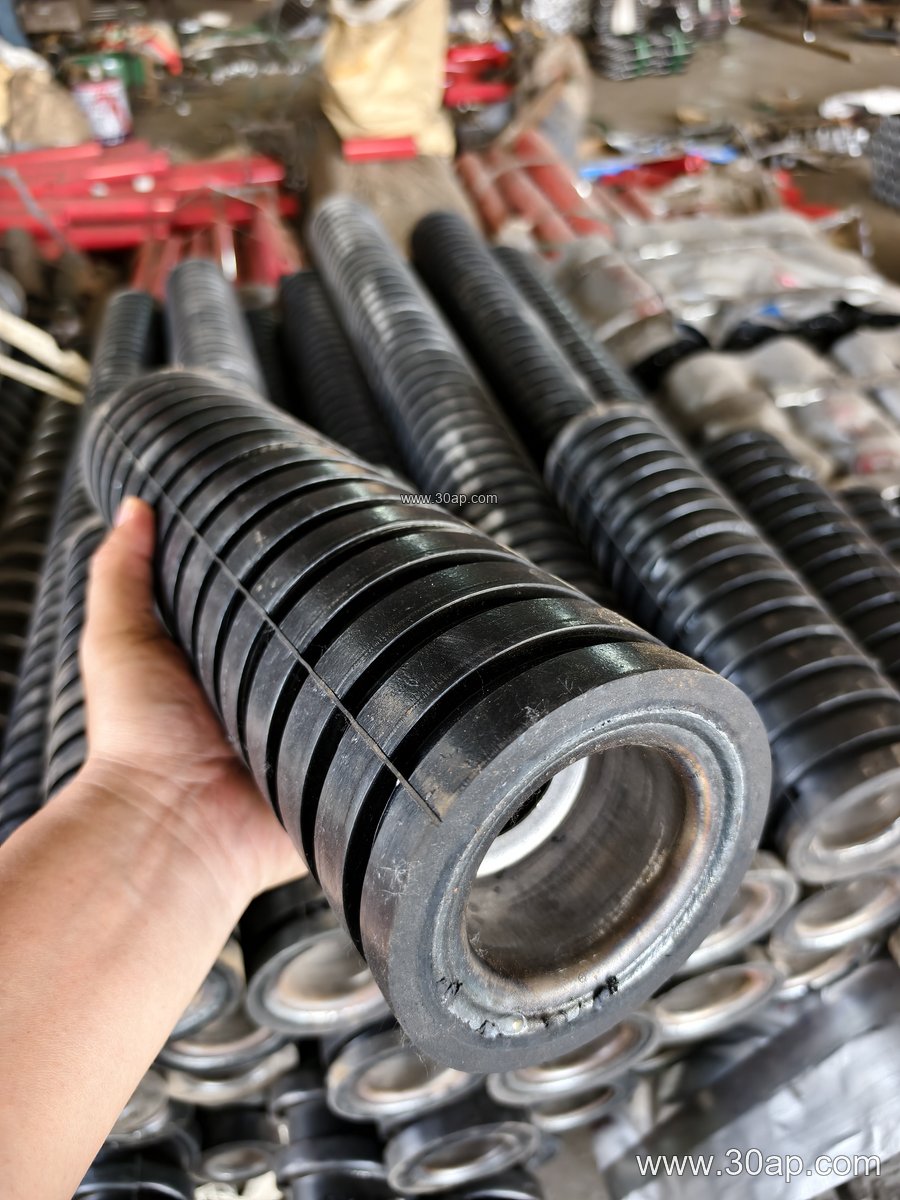
Roll faces vary with the job. Plain steel suits general bulk handling. Nylon or ceramic covers help where sticky material builds up on the shell. Rubber rings are used on impact idlers at transfer points, where lump size and drop height punish the belt. A trough idler in a crusher discharge area may need a heavier shell and better sealing than one on a clean, level run.
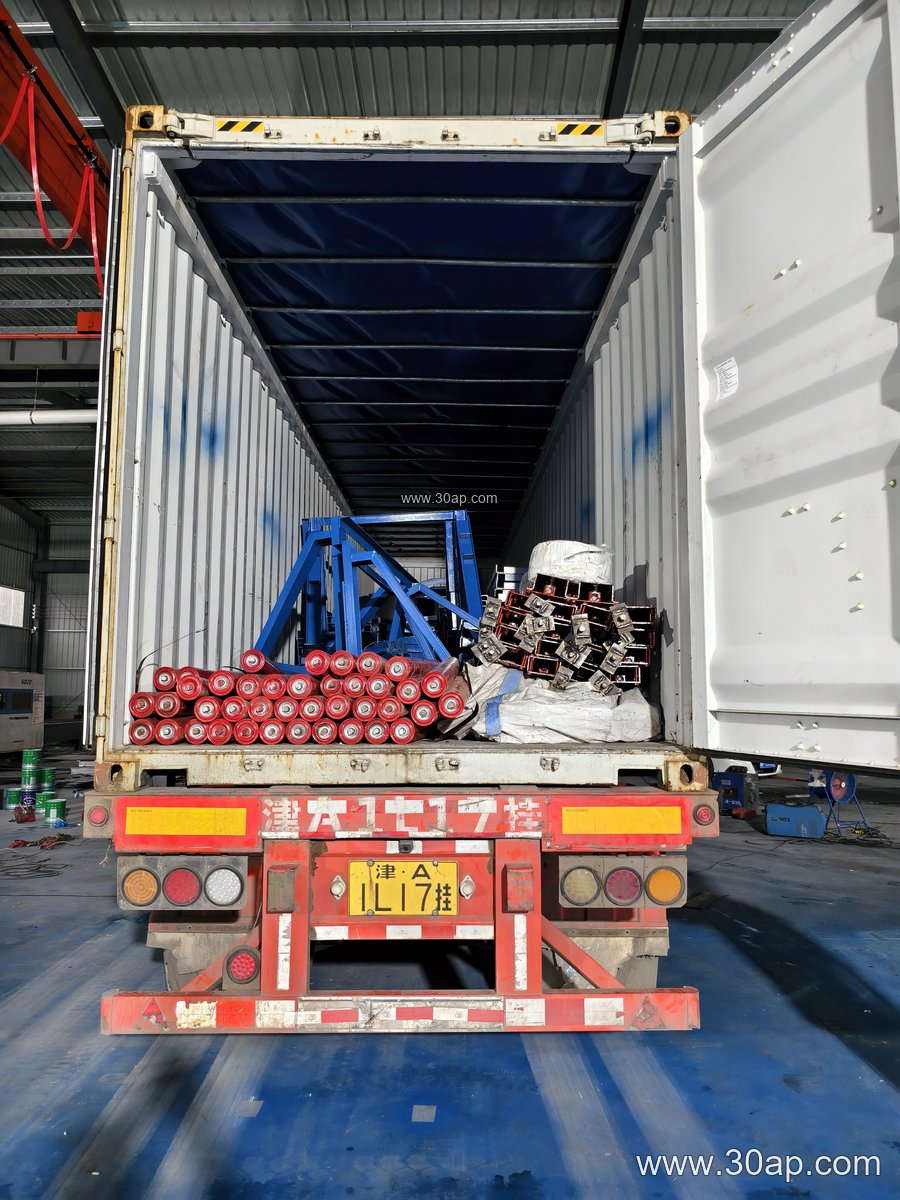
Where Trough Idlers Are Used
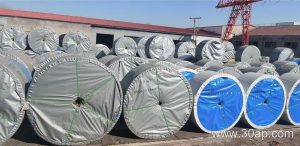
These assemblies appear wherever a conveyor belt carries loose material. In a quarry or stone crushing line, they support rock and aggregate on the way to screening. In a coal mining conveyor or a power plant coal yard, they carry fuel under dusty, often wet conditions. Cement plants use them on clinker and raw meal routes, and port terminals rely on them for ship loading and stockyard conveyors. The belt itself may be an EP conveyor belt, an NN conveyor belt, or a steel cord conveyor belt, and the idler spacing and roll diameter are normally set by belt tension, load, and sag limits.
Rough duty calls for more than a standard roller. A mining conveyor belt moving ore, or a heavy-duty mining conveyor belt on an incline, will usually need larger roll diameters and closer spacing. Heat resistant conveyor belt service near a kiln or sinter line may call for heat-tolerant lubricant and careful bearing selection. Flame retardant conveyor belt and fire resistant conveyor belt installations in underground mining conveyors add requirements for material choice and grounding, and anti-static conveyor belt systems need a continuous discharge path through the frame.
Common Sizes and How They Relate
The table below gives typical reference values, not fixed pairings. Roll length varies with belt width, trough angle, and roll set form, and side rolls can differ from the center roll.
| Belt width | Typical center roll length, three-roll trough | Typical roll diameter range |
|---|---|---|
| B500 | about 200 mm | Ø63 to Ø89 mm |
| B650 | about 250 mm | Ø76 to Ø108 mm |
| B800 | about 315 mm | Ø89 to Ø127 mm |
| B1000 | about 380 mm | Ø102 to Ø133 mm |
| B1200 | about 465 mm | Ø108 to Ø159 mm |
| B1400 | about 530 mm | Ø127 to Ø178 mm |
| B1600 | about 600 mm | Ø133 to Ø194 mm |
| B1800 | about 670 mm | Ø159 to Ø219 mm |
| B2000 | about 750 mm | Ø178 to Ø219 mm |
These figures are examples only. A wide belt does not force one pulley diameter, and a belt width does not dictate a shaft size on its own. Shaft and bearing choice follow the calculated load, the idler spacing, and the belt speed.
Buying and Maintenance Notes
When ordering, give the belt width, trough angle, roll diameter, roll length, bearing size, and mounting style. State the material being carried and whether dust, water, heat, or oil is present, since that affects the seal and lubricant. Ask for the roll wall thickness and the shaft end detail so the new units fit the existing conveyor bracket without field modification.
In service, check for seized rolls, worn shells, and material buildup. A stuck trough idler drags on the belt and can damage the cover, so rotation should be checked during routine inspections. Alignment of the idler frame relative to the belt centerline also affects belt tracking, and a badly worn set is often the first sign that the belt is mistracking. Replacing rollers in sets keeps the belt supported evenly and avoids uneven wear on the conveyor belt.