What a Self-Aligning Idler Does on a Conveyor
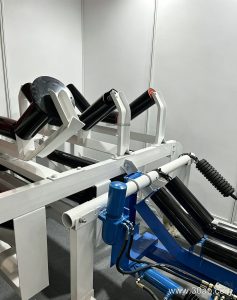
A belt conveyor self-aligning idler is a training idler installed on the carrying or return side of a conveyor to keep the conveyor belt centered on its path. Instead of letting a drifting belt rub against the frame, the self-aligning idler reacts to misalignment and steers the belt back toward the center line. In quarries, coal preparation plants and cement lines, a small tracking error can grow into edge damage, spillage and downtime, so this idler is a practical correction device rather than a simple support roller.
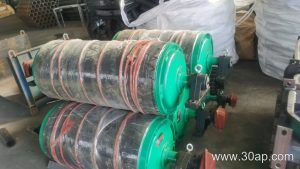
The same product is also called a self-training idler or self-centering idler. It is a distinct idler subtype and should not be confused with a conveyor pulley. Drive pulleys, tail pulleys and bend pulleys each have their own role, and none of them substitutes for a training idler in the belt tracking function.
How the Self-Aligning Idler Is Built
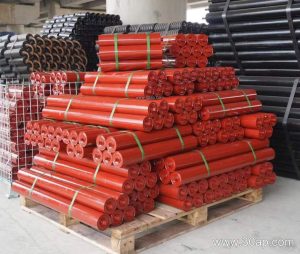
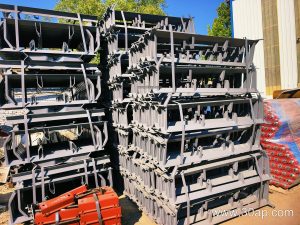
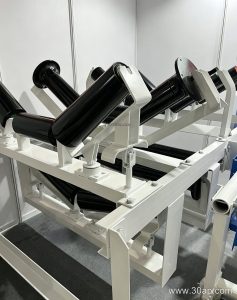
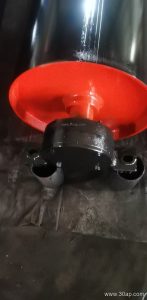
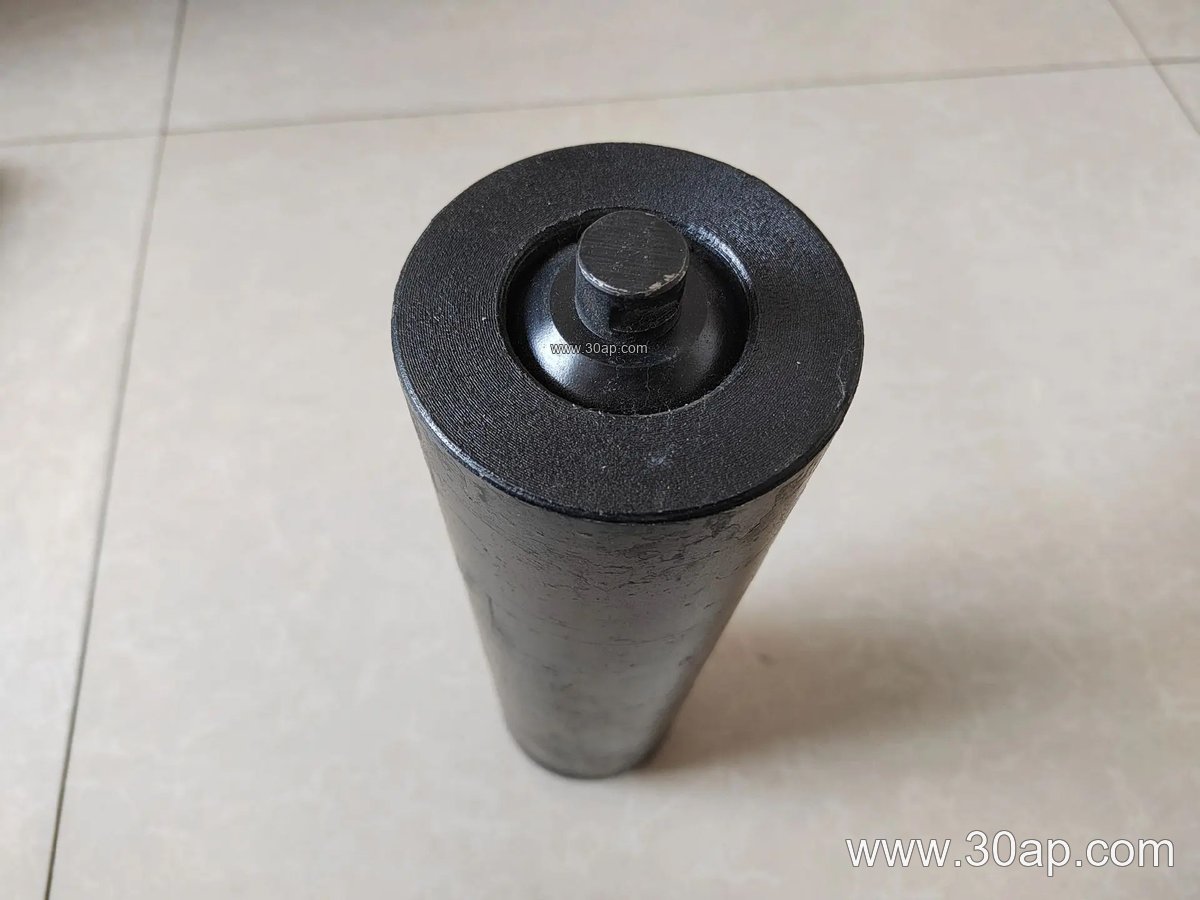
The assembly usually combines two or three idler rollers mounted on a pivoting frame. The frame turns on a central pivot, and the rollers are set at an angle so that contact with a drifting belt produces a correcting force. A friction self-aligning idler uses the belt contact to trigger the swing action; a conical self-aligning idler uses tapered roller ends to create a differential effect that guides the belt. Roller shells are commonly steel tube, and nylon or rubber rings may be fitted where extra grip or protection is needed.
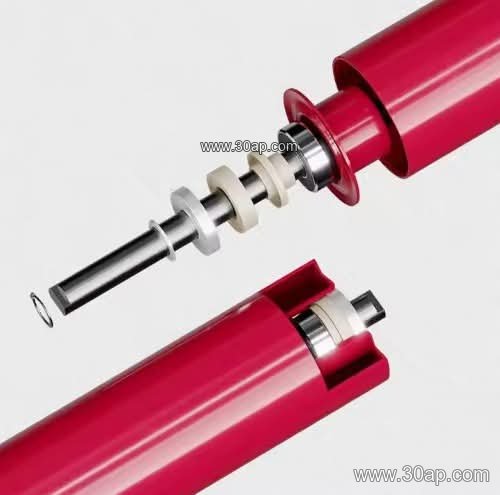
Bearings are selected to suit the load and speed of the conveyor. Common bearing sizes include 6204, 6205, 6305, 6306 and 6308, but a given roller diameter is not tied to one bearing number. The roller diameter and bearing choice should follow the conveyor design, not a guess based on belt width alone.
Where It Is Used
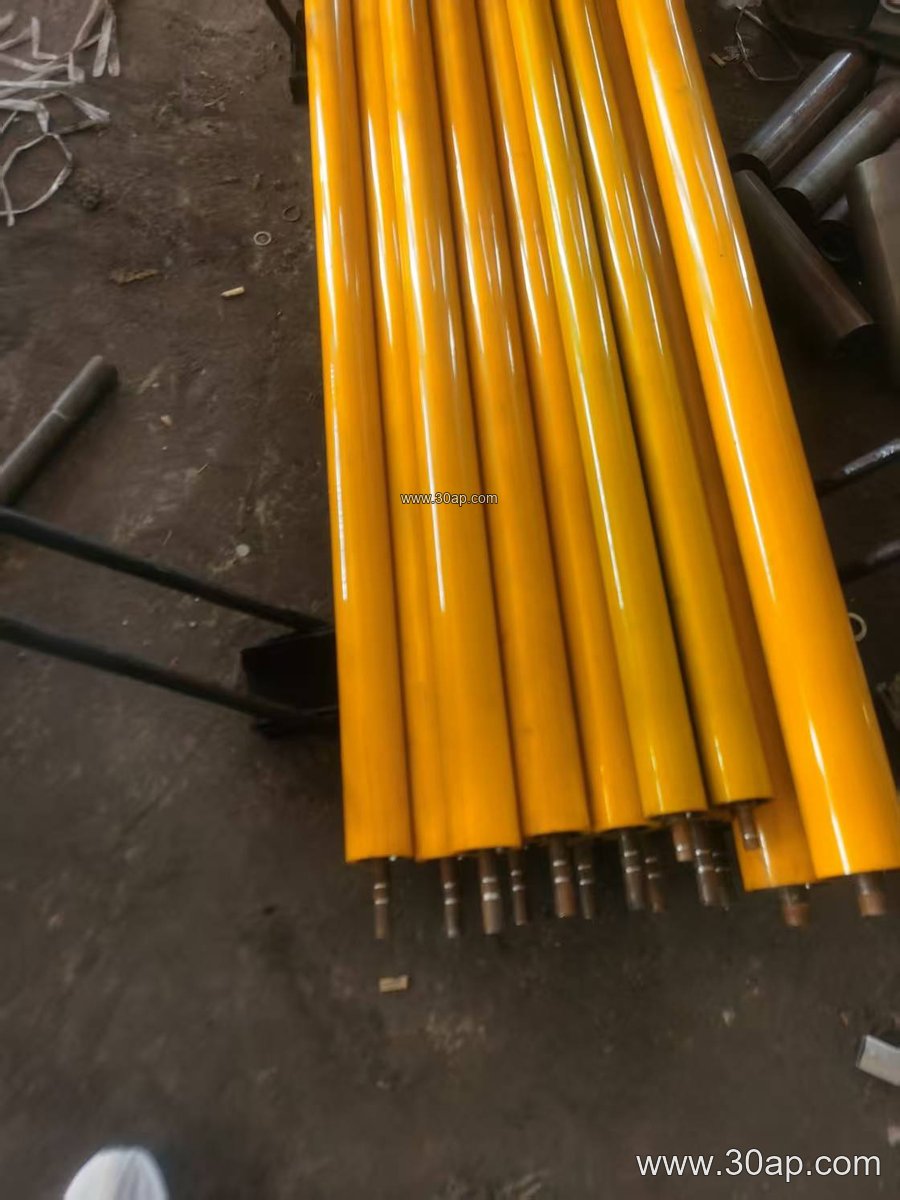
Self-aligning idlers are common in bulk material handling where long conveyors and variable loading make belt drift likely. Typical sites include aggregate plants, limestone quarries, iron ore and copper ore operations, coal washing plants, cement plants, power station coal yards and port loading systems. They are also useful on conveyors carrying abrasive or heavy material, where edge wear from misalignment is expensive to repair.
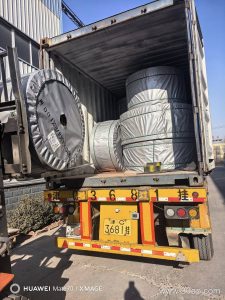
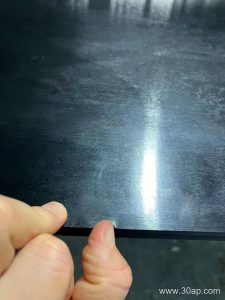
The belt itself matters too. A heavy-duty mining conveyor belt, an abrasion resistant conveyor belt or a flame retardant conveyor belt used underground all benefit from stable tracking. On a coal mining conveyor belt, a wandering belt can damage the edge and create a safety concern, so training idlers are often placed at intervals along the run and near transfer points.
Common Sizes and Configuration Reference
The table below lists reference values that are often seen in catalogues and design drawings. They are examples, not universal matches, and the final selection should be confirmed against the conveyor layout.
| Item | Common reference values |
|---|---|
| Roller diameter | Ø63, Ø76, Ø89, Ø102, Ø108, Ø127, Ø133, Ø159, Ø178 mm |
| Belt width | B500, B650, B800, B1000, B1200, B1400, B1600, B1800 mm |
| Trough angle | 20°, 30°, 35°, 45° |
| Roller surface | Steel tube, nylon, ceramic, rubber ring |
| Bearing examples | 6204, 6205, 6305, 6306, 6308, 6310 |
For a three-roll troughing set, roller length changes with belt width and trough angle. Typical examples are about 200 mm for B500, 250 mm for B650, 315 mm for B800, 380 mm for B1000, 465 mm for B1200, 530 mm for B1400 and 600 mm for B1600. Side rollers and center rollers can differ, and these figures should not be treated as fixed pairings.
What a Buyer Should Check
- Confirm whether the idler is for the carrying side or the return side, and whether a two-roll or three-roll arrangement fits the frame.
- Match the roller diameter and bearing to the actual load, belt speed and conveyor bracket dimensions.
- Check the pivot and friction mechanism for smooth movement; a stiff training idler cannot correct belt drift.
- Consider the material: abrasive ore, wet coal or hot clinker may call for a different roller surface or seal arrangement.
- Review the belt specification as a system, including whether an EP conveyor belt, steel cord conveyor belt or multi-ply fabric core conveyor belt is in use.
Good tracking also depends on correct pulley alignment and belt tension. A self-aligning idler supports that work, but it does not replace proper installation of the conveyor pulley, conveyor bracket and conveyor belt. Buyers should ask for the assembly drawing, confirm the mounting dimensions and keep spare rollers available for critical lines such as a crusher conveyor belt or ship loading conveyor belt.
For more information on idlers, rollers and conveyor components, visit www.beltconveyoridler.com and review the self-aligning idler range against your conveyor duty.