What a Belt Conveyor Bracket Does
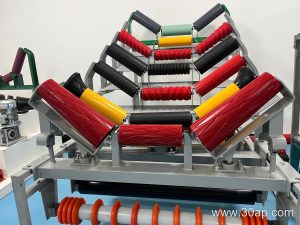
A belt conveyor bracket is the structural support that holds the idler roller assemblies in place along a conveyor frame. It sets the trough angle of the carrying side, keeps the return side aligned, and transfers the load of the belt and material into the main stringers. In a quarry, a coal handling plant, or a cement kiln line, these brackets are the quiet workhorses that determine whether a conveyor belt tracks cleanly or wanders off center.
Because the bracket controls idler position, it directly affects belt training, material spillage, and the service life of both the belt and the rollers. A poorly matched bracket can wear a heavy-duty mining conveyor belt prematurely, while a well-chosen one keeps the same belt running smoothly for years.
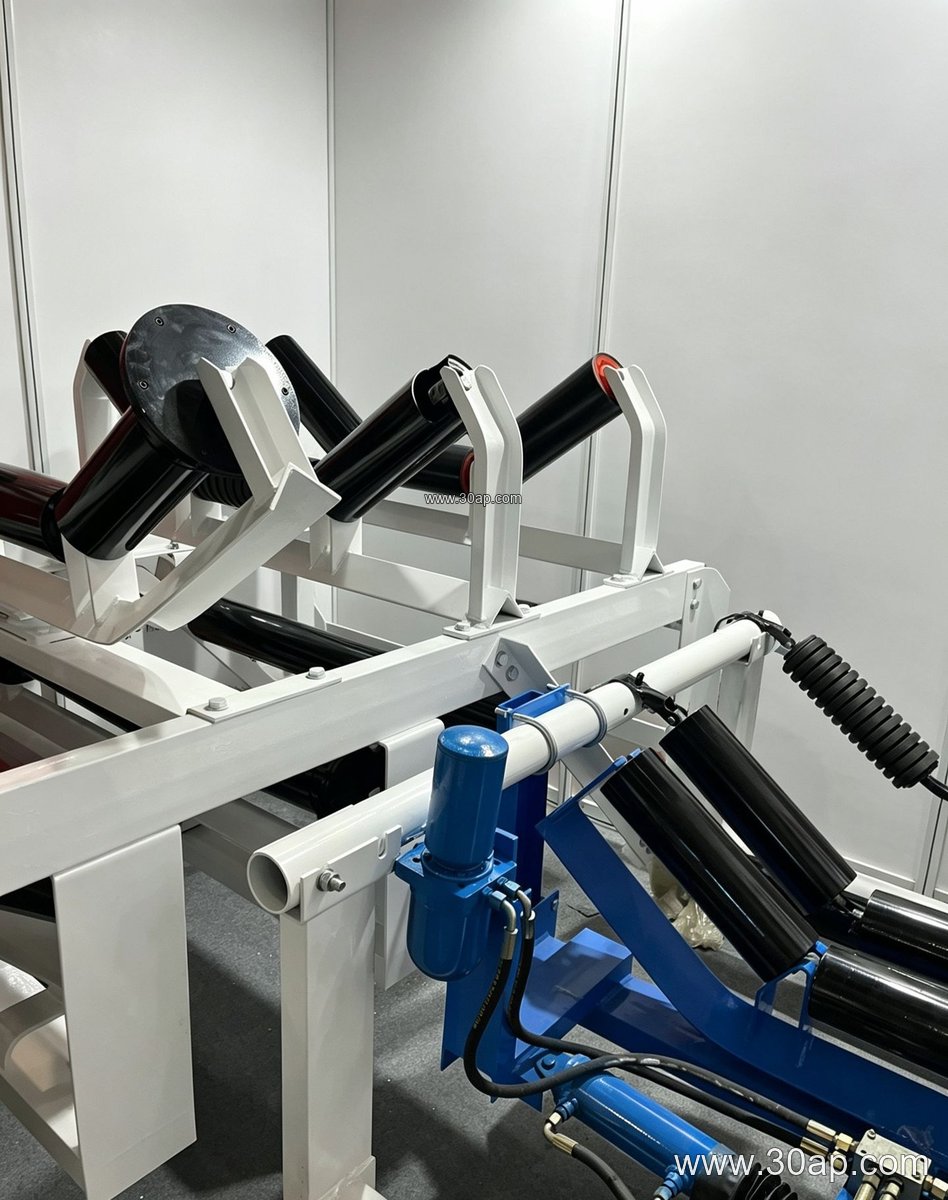
How the Bracket Is Built
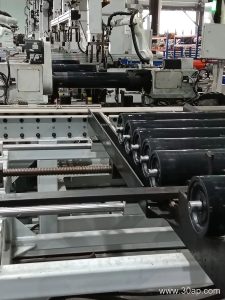
Most brackets are fabricated from angle steel, channel steel, or bent steel plate. The frame is welded or bolted, then drilled or slotted so the idler shafts sit at the intended angle and spacing.
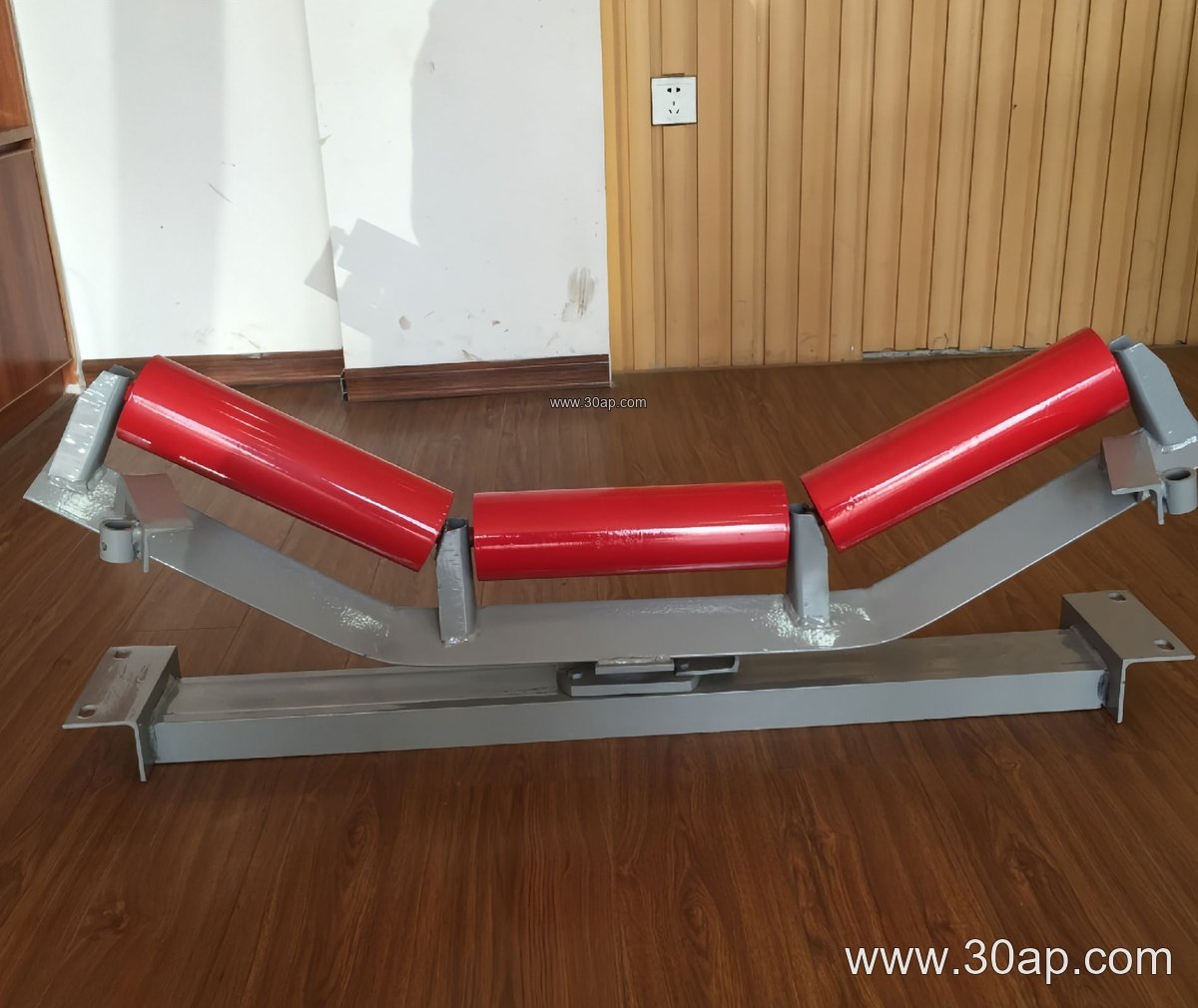
- Materials: angle steel, channel steel, bent steel plate
- Common types: troughing bracket, upper trough bracket, transition bracket, return bracket, flat return bracket, V-return bracket, impact bracket, self-aligning bracket, forward-leaning bracket, spiral roller bracket, suspended bracket, adjustable bracket
- Belt widths served: B500, B650, B800, B1000, B1200, B1400, B1600, B1800, B2000, B2200
- Trough angles: 20, 30, 35, and 45 degrees; adjustable brackets can be set between these angles
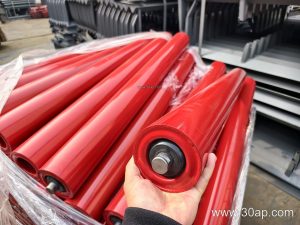
- Idler diameters: Ø89, Ø108, Ø133, Ø159, Ø194
Installation hole spacing and crossbeam length are usually determined by belt width and trough angle, so they should be confirmed against the conveyor drawing rather than assumed.
Typical Reference Combinations
| Belt Width | Trough Angle | Idler Diameter | Bracket Type |
|---|---|---|---|
| B650 | 30 degrees | Ø89 | Troughing bracket |
| B800 | 35 degrees | Ø108 | Troughing bracket |
| B1000 | 35 degrees | Ø133 | Transition bracket |
| B1200 | 45 degrees | Ø133 | Adjustable troughing bracket |
| B1400 | 35 degrees | Ø159 | Impact bracket |
| B1600 | 45 degrees | Ø159 | Return bracket |
These are reference figures only; a belt width does not lock the design into one angle or one roller diameter. Final values come from the conveyor layout and load conditions.
Where It Fits on the Conveyor
On the carrying side, troughing brackets sit between the stringers at regular intervals and shape the belt into a trough so bulk material stays centered. Near the tail pulley, transition brackets ease the belt from flat to troughed without stressing the edges. On the return side, flat or V-return brackets support the empty belt and help remove carryback.
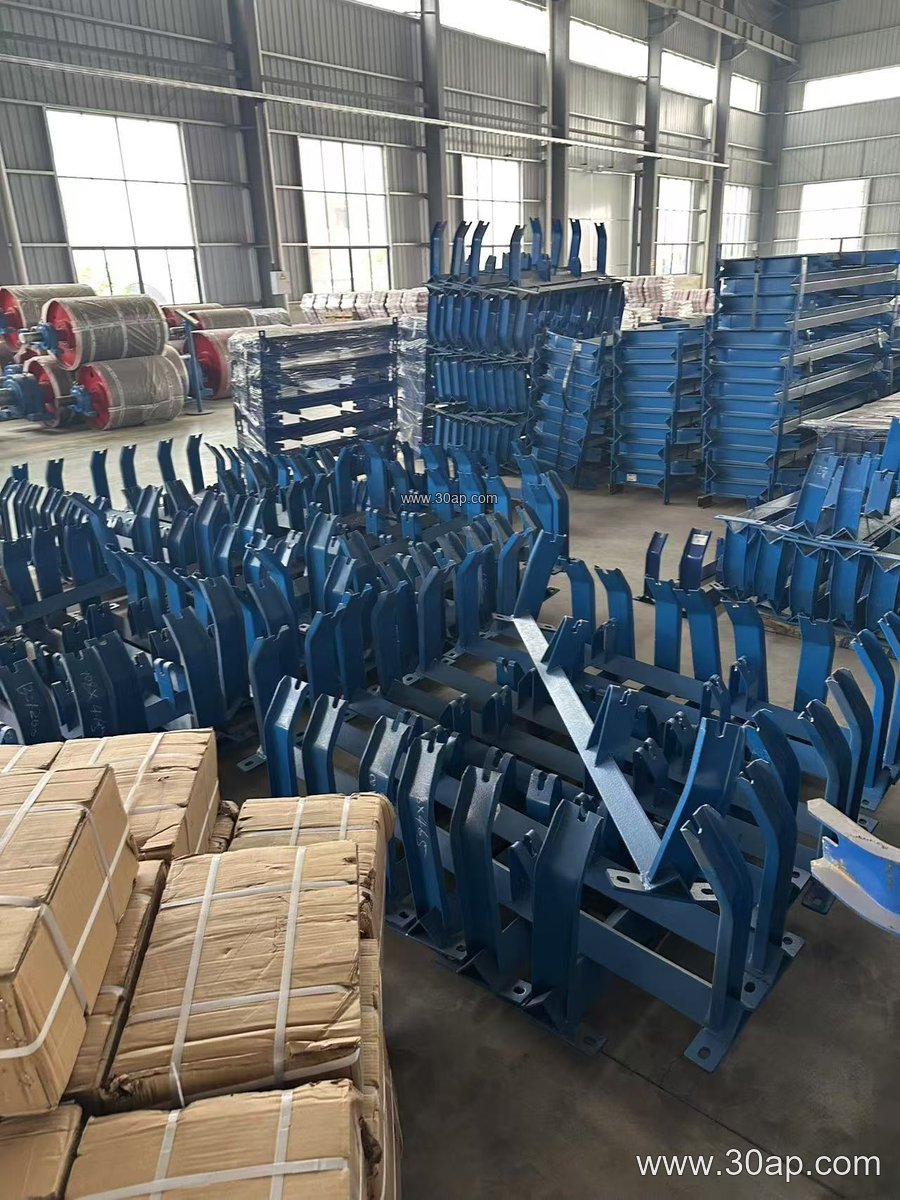
Impact brackets are common under crusher discharge points in a stone crushing line, where falling rock would otherwise damage a standard bracket and the belt beneath it. Self-aligning brackets are used on long runs in port loading or power plant coal handling, where tracking corrections are needed constantly. In underground coal mining, flame retardant conveyor belt grades are paired with robust brackets that resist dust and moisture.
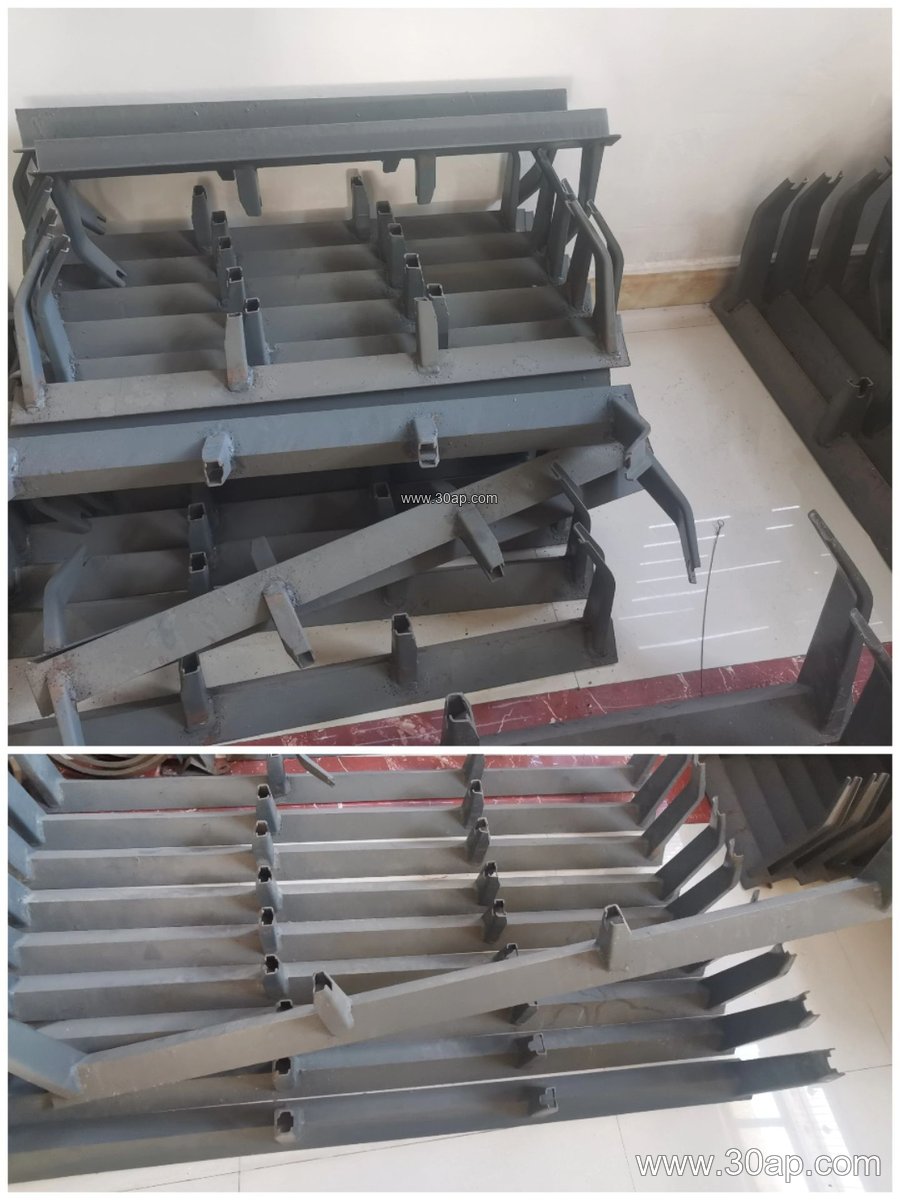
Adjustable Versus Fixed Brackets
A fixed bracket is simple, rigid, and cost-effective where the trough angle is known and will not change. An adjustable bracket lets maintenance crews fine-tune the trough angle between common settings such as 20, 30, 35, and 45 degrees to suit different material loads. Forward-leaning brackets, usually set around 1.5 to 2 degrees, add a slight lead that helps keep the belt centered on the troughing idlers.
Choosing between them depends on whether the conveyor handles a single product or a mix of materials. A cement plant moving clinker and additives may benefit from adjustability, while a fixed quarry conveyor running one aggregate grade usually does not need it.
What Buyers Should Check
- Match the bracket to the idler: confirm shaft diameter and mounting slot spacing before ordering.
- Confirm the belt width and trough angle: B800 with 35 degrees and Ø108 is a common pairing, but it is not the only valid one.
- Review the duty: impact zones, high abrasion cargo, and heat resistant conveyor belt applications may require heavier fabrication.
- Coordinate with the pulley and roller supplier: a conveyor pulley, idler roller, and bracket that are dimensioned together install faster and track better.
- Check the environment: wash-down areas, corrosive fertilizer dust, and cold climates all affect coating and material choice.
For more on matching brackets with rubber conveyor belt, EP conveyor belt, and steel cord conveyor belt systems, review the full conveyor assembly drawing before finalizing any order. A bracket that fits the frame and the roller will always outperform one chosen by belt width alone.