What a Conveyor Support Leg Does
A conveyor support leg is the vertical structural member that carries the weight of the belt, the conveyed material, and the idler frames down to the floor or foundation. In a typical troughing station, the leg rises from a base plate to a cross beam, and the cross beam in turn holds the idler roller or the frames that locate it. Without a sound leg, the whole station sags, the belt misaligns, and spillage increases. Think of it as the backbone of the line: unglamorous, but everything above it depends on it.
The same component is often called a conveyor support stand or conveyor leg assembly. These are accurate equivalent names for the same product, and they appear interchangeably in drawings and site instructions. The leg is not a pulley and not a roller; it is the structure that positions them.
Construction and Material Options
Most legs are fabricated from angle steel, channel steel, or folded steel plate. The choice depends on load, span, and the environment. In a quarry or a stone crushing line, dust and shock loads push buyers toward heavier channel sections and bolted base plates. In a cement plant or a power plant coal yard, corrosion protection matters as much as stiffness.
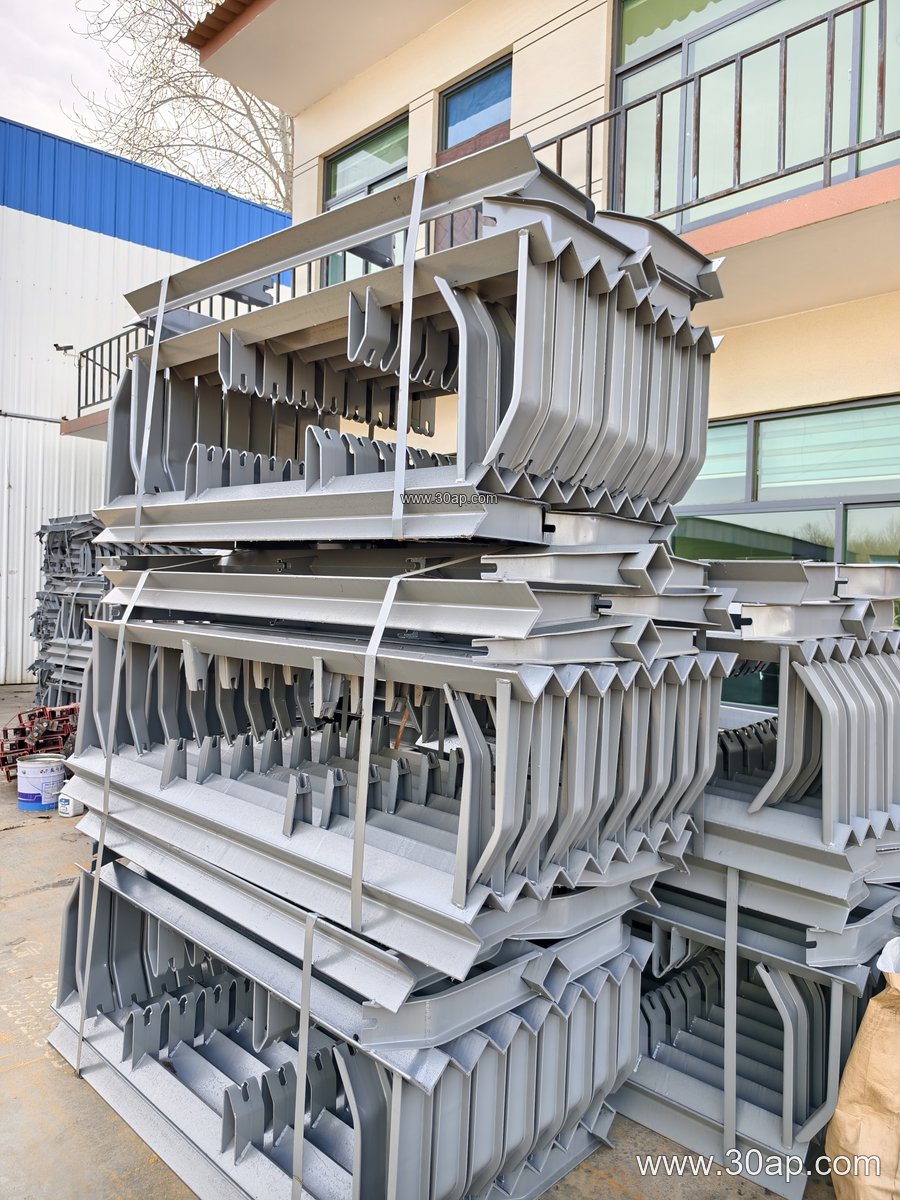
Typical build details include:
- Base plate with anchor holes for floor or foundation mounting
- Vertical post sized to the required belt height
- Top connection to the cross beam, either welded or bolted
- Bracing or gussets where lateral stability is needed
- Slotted or multi-hole adjustment for height and trough angle
Mounting hole spacing and beam length change with belt width and trough angle, so these dimensions are confirmed per design rather than taken from a single fixed number.
Where Support Legs Are Used
These legs appear wherever a belt conveyor needs intermediate support. In an iron ore or limestone mine, they stand in long rows under heavy-duty stations. In a coal washing plant, compact legs fit between chutes and walkways. In a port ship loading line, taller legs raise the belt to transfer points. In a fertilizer or grain silo facility, lighter folded-plate legs are common where loads are moderate.
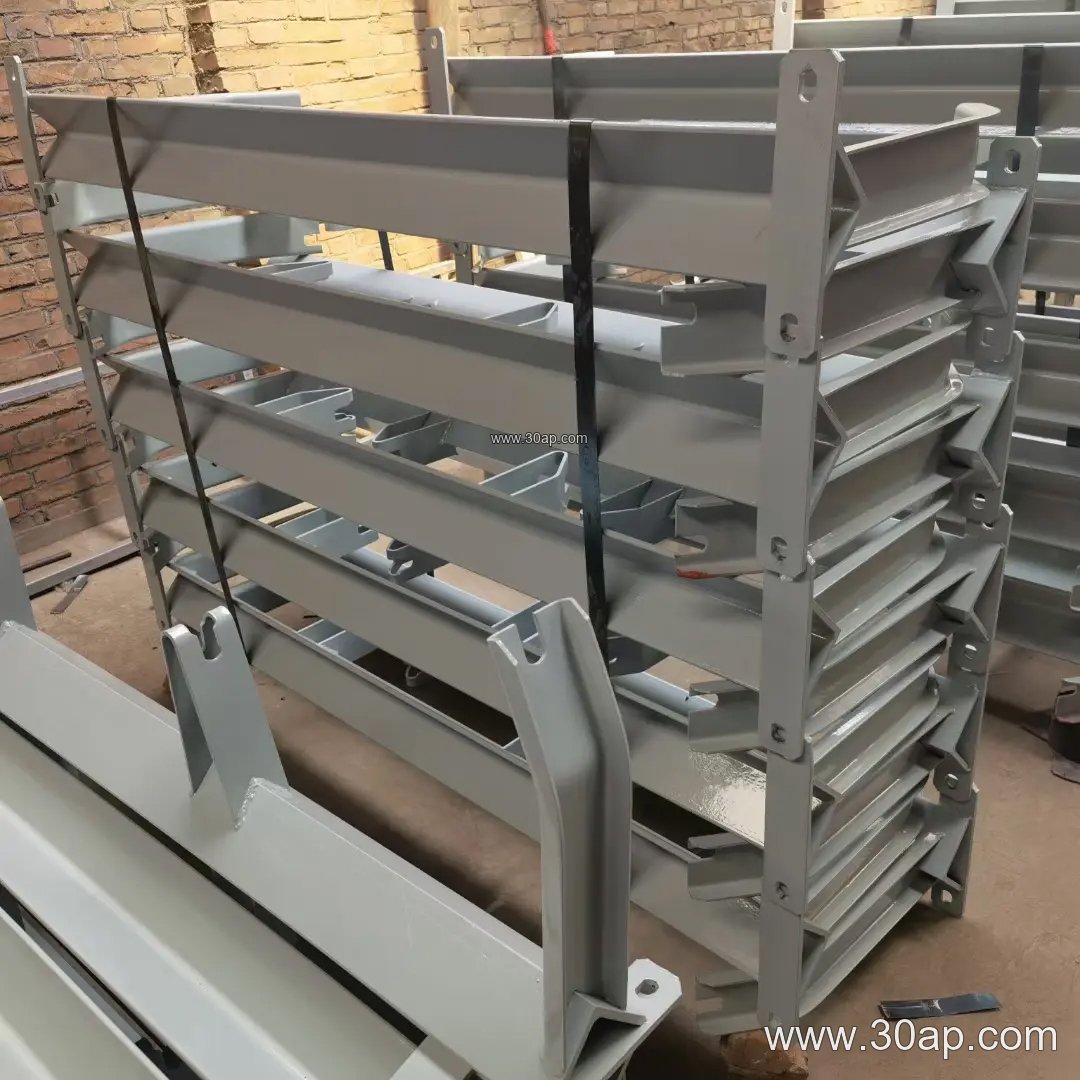
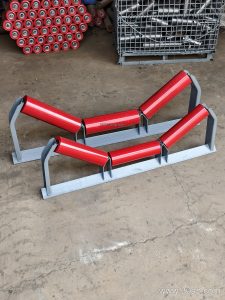
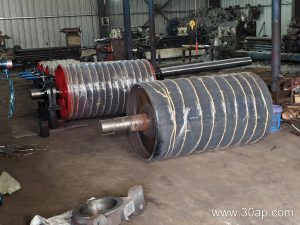
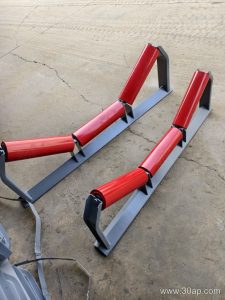
A support leg also works together with a conveyor bracket that ties the idler frame to the beam, and with a conveyor pulley at the head or tail that sets belt tension. Selection should consider the whole station, not the leg alone. For example, a heat resistant conveyor belt in a sinter plant may run at elevated temperature, so the leg and frame should allow for thermal expansion and easy roller replacement.
Matching Legs to Belt Width, Trough Angle, and Roller Diameter
There is no single rule that ties one belt width to one trough angle or one roller diameter. Common combinations are chosen by the conveyor designer. The table below shows reference combinations that appear in general practice; they are examples, not mandatory specifications.
| Belt width | Trough angle (common) | Idler diameter (common) | Typical support leg note |
|---|---|---|---|
| B500 | 20 to 30 degrees | Ø89 | Light folded-plate or angle leg |
| B650 | 30 degrees | Ø89 to Ø108 | Adjustable height option |
| B800 | 30 to 35 degrees | Ø108 | Channel leg for aggregate lines |
| B1000 | 35 degrees | Ø108 to Ø133 | Brazed or bolted beam connection |
| B1200 | 35 to 45 degrees | Ø133 | Heavy channel leg, base plate anchored |
| B1400 | 35 to 45 degrees | Ø133 to Ø159 | Reinforced leg for mining service |
| B1600 | 45 degrees | Ø159 | Wide base and cross bracing |
| B1800 to B2200 | 35 to 45 degrees | Ø159 to Ø194 | Engineered leg, checked per station |
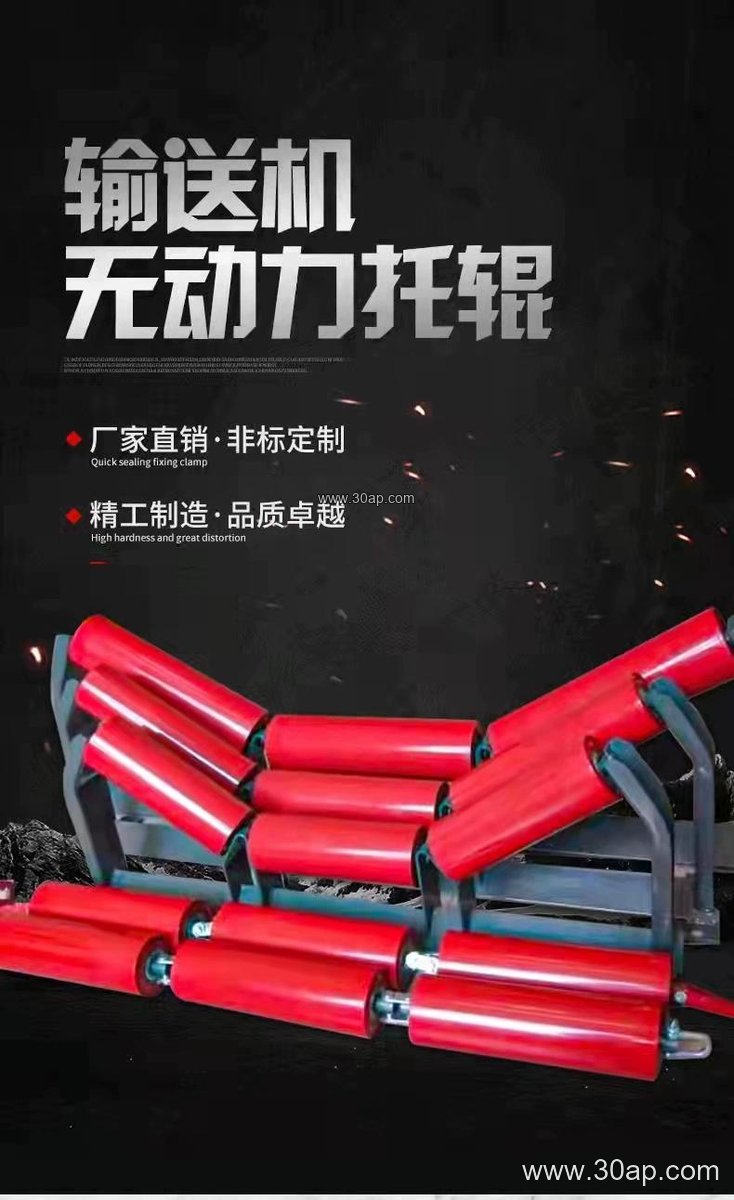
For transition zones, a transition support leg is often placed where the belt changes from flat to troughed. Return-side legs may carry a V-return frame or a flat return frame. Self-aligning and forward-leaning frames have their own leg requirements, and the forward lean is usually about 1.5 to 2 degrees, set by the frame rather than the leg alone.
What Buyers Should Check Before Ordering
Start with the belt width and the trough angle, then confirm the roller diameter and the frame type. Ask for the leg height from base plate to beam centerline, the base hole pattern, and the connection detail to the cross beam. Confirm whether the leg is fixed or adjustable, and whether height adjustment is by slotted holes or a telescopic section.
Material and finish should suit the site. A coal mining conveyor belt line may require flame retardant conveyor belt and fire resistant conveyor belt, and the steelwork should be specified for the same environment. In a cold climate, a cold resistant conveyor belt may be used, and the leg steel should be suitable for low temperature. In a food or fertilizer plant, washdown and chemical exposure may call for a suitable coating.
Finally, plan maintenance. Legs that allow quick removal of an idler roller reduce downtime. Check that anchor bolts are accessible and that bracing does not block walkways. For more on matching belts and rollers to conveyor structure, visit www.beltconveyorsystem.com for related reference pages on conveyor belt and idler roller selection.
Installation and Maintenance Notes
Set out leg positions from the conveyor centerline, and check that the cross beam is level before final tightening. Use shims under base plates rather than forcing the leg. After the first weeks of operation, recheck anchor bolts and beam connections, because vibration and load settling can loosen them. Inspect for corrosion at the base, where water collects, and repaint or replace as needed. A leg that stays straight and tight keeps the belt tracking well and protects the conveyor pulley and bearings from unnecessary side loads.