What Conveyor Bracket Fabrication Covers
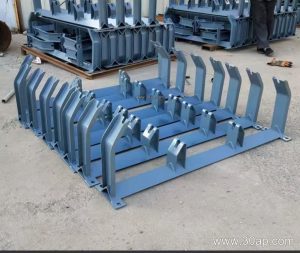
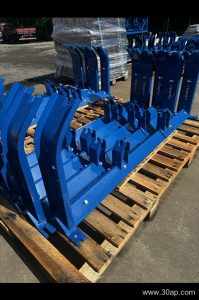
Conveyor bracket fabrication is the process of cutting, bending, drilling and welding steel into the frames that hold idler rollers and carry the belt along a conveyor line. The finished assembly is often called a conveyor bracket, and in many plants it is simply the idler frame or roller support. It is a structural part, not a moving one, yet the accuracy of every hole and angle decides how well the belt tracks, how long the rollers last and how quickly a maintenance team can replace a worn part. Whether the line runs in a quarry, a cement plant or a power station coal yard, the bracket is the quiet link between the structure and the belt.
How a Bracket Is Built
Fabrication usually starts with angle steel, channel steel or folded steel plate. The material is cut to length, punched or drilled for mounting bolts and roller shafts, then formed to the required trough angle. Welded brackets need straight, square joints; bolted designs need matching hole patterns so that a replacement frame fits without re-drilling. After welding, the frame is cleaned and normally painted or galvanized to resist dust and moisture.
Several bracket families come out of the same workshop:
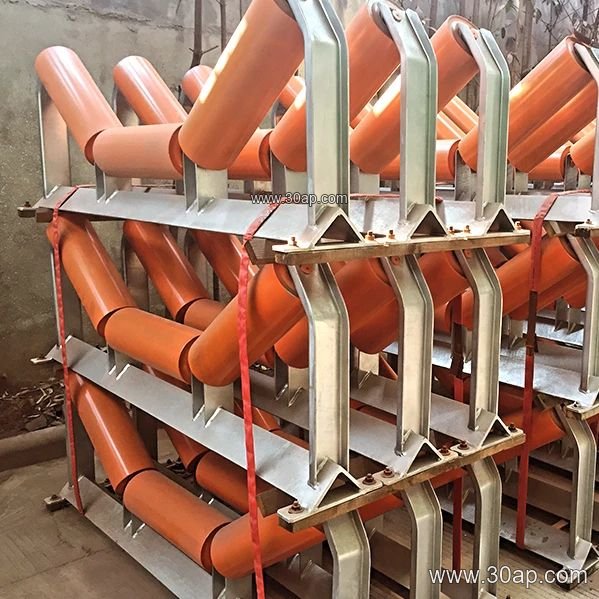
- Troughing and upper trough brackets that set the belt into a trough shape
- Transition brackets placed near pulleys to open the belt gradually
- Return and V-return brackets that support the empty belt
- Impact brackets under loading points, often carrying buffer rollers
- Self-aligning and forward-leaning brackets that help correct belt drift
- Adjustable brackets that allow the trough angle to be changed on site
Adjustable frames are useful where a conveyor handles more than one material, while fixed frames suit lines with a stable duty. On a self-aligning bracket, the forward-leaning setting is commonly about 1.5 to 2 degrees, small enough to steer the belt without scrubbing the edges.
Matching Brackets to Belt Width, Trough Angle and Roller Diameter
Fabrication drawings are normally driven by three inputs: belt width, trough angle and roller diameter. Common belt widths range from B500 and B650 up to B2000 and B2200, with B800, B1000 and B1200 appearing on many mid-size lines. Trough angles of 20, 30, 35 and 45 degrees are typical, and roller diameters such as Ø89, Ø108, Ø133, Ø159 and Ø194 are widely used. These values are reference points, not fixed pairings; the correct combination is set by the conveyor design, material lump size and belt stiffness.
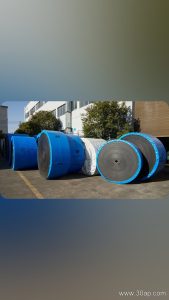
Cross-beam length and mounting hole spacing change with belt width and trough angle, so they should be confirmed on the drawing rather than assumed. A wider belt generally needs a longer, stiffer frame, and a steep 45 degree trough places different loads on the bracket than a shallow 20 degree profile. When a bracket is fabricated for a heavy-duty mining conveyor carrying a thick abrasion resistant conveyor belt, the welds and plate thickness deserve extra attention.
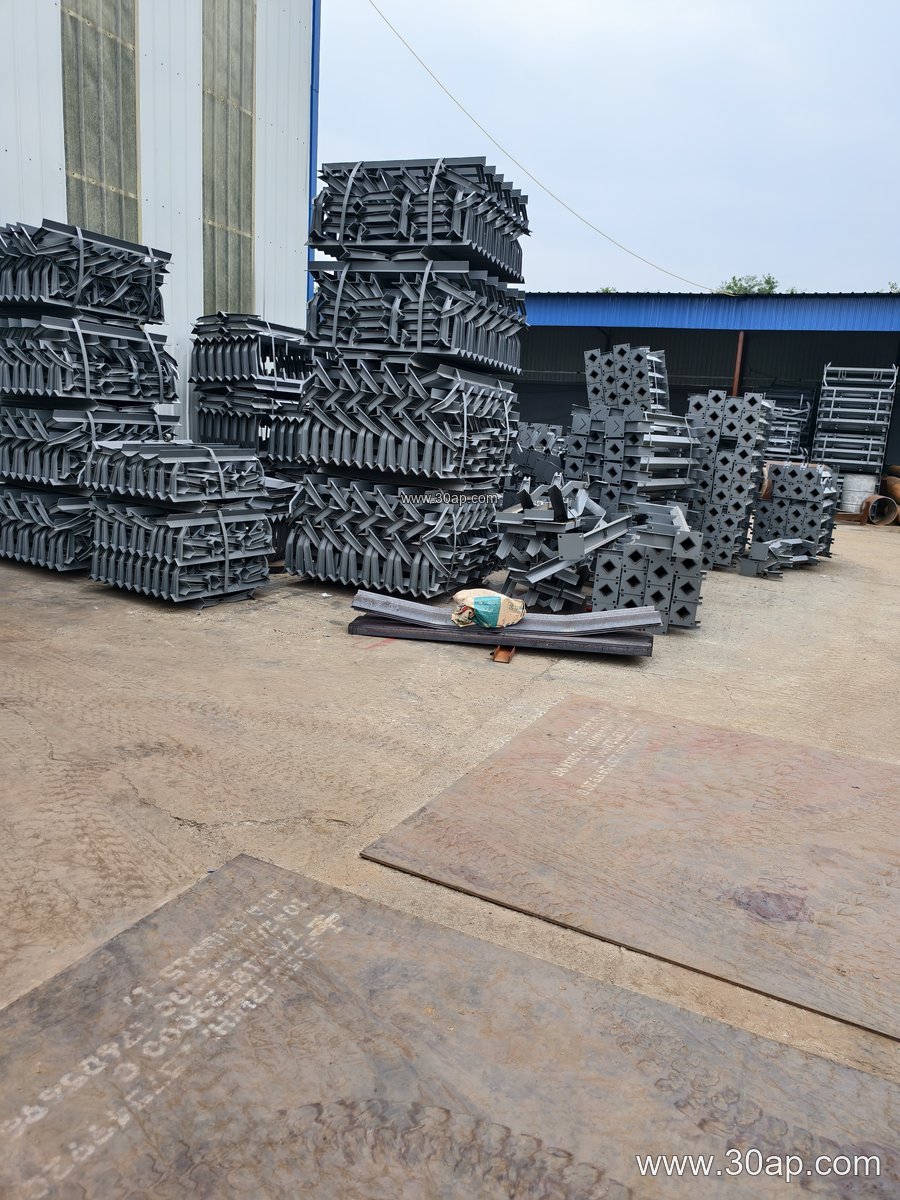
Where Fabricated Brackets Are Used
These frames appear wherever a belt needs support: crushing and screening circuits in a sand and gravel line, limestone and iron ore operations, coal washing plants, cement kilns and clinker lines, and the coal handling systems of power plants. A port ship loader may use long spans of trough brackets, while a tunnel spoil line needs compact, easy-to-move frames. The same bracket design can serve a stone crushing conveyor belt or an ore conveyor belt, provided the load and environment are considered.
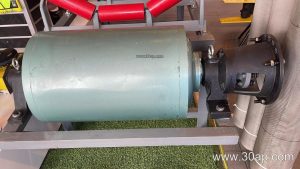
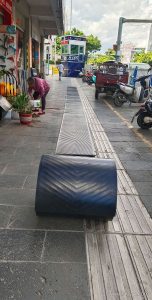
Bracket fabrication should also account for the belt it carries. A heat resistant conveyor belt near a kiln discharge, a flame retardant conveyor belt in a coal mine, or a chevron conveyor belt on an incline all affect roller spacing and frame choice. The bracket and the idler roller work as a pair, and the belt rides on both.
Buyer Checklist
- Confirm belt width, trough angle and roller diameter before release to production
- Ask for a drawing showing hole spacing and cross-beam length
- State the environment: dust, moisture, heat or corrosive splash
- Choose adjustable frames only where angle changes are genuinely expected
- Check that replacement brackets match the existing bolt pattern
- Review weld quality and surface treatment, not just dimensions
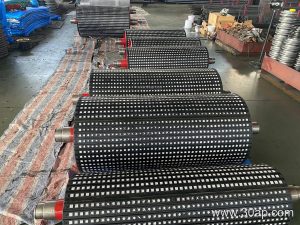
Good conveyor bracket fabrication is measured in straight frames, clean holes and consistent angles. Get those right at the workshop, and the belt, the conveyor pulley and every roller on the line will run with less wear and fewer stoppages.