What a Rubber Lagged Pulley Does
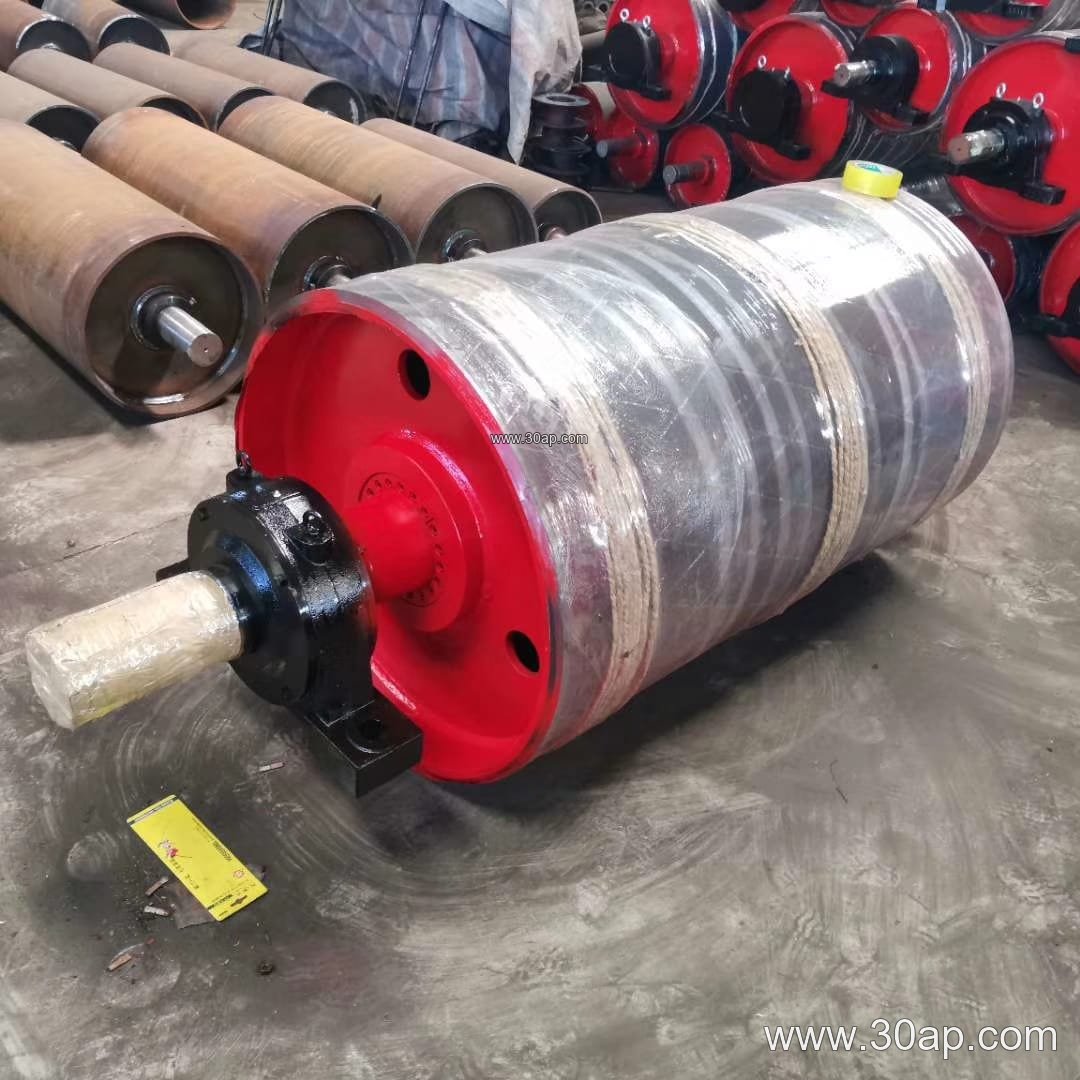
A rubber lagged pulley is a conveyor pulley whose shell is covered with a rubber layer to improve grip on the conveyor belt. This covering, often called lagging, is applied to drive pulleys, tail pulleys, and bend pulleys, but the duty differs by position. On a drive pulley, the rubber lagging raises friction between the pulley and the belt so torque can be transmitted without slip. On a tail or bend pulley, lagging can protect the shell and help maintain belt tracking. The pulley remains a single product family, yet the lagging specification should match the pulley’s role in the conveyor system.
Construction and Surface Options
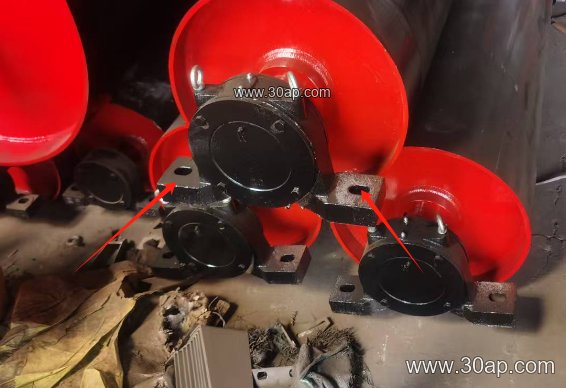
The base is a steel shell with end discs, a shaft, and bearing housings. Rubber lagging is bonded to the shell by cold bonding or hot vulcanization. Common surface forms include plain rubber, diamond pattern, and herringbone pattern. Diamond lagging can help shed water and fines in wet or dusty service, while plain lagging suits cleaner duty. Ceramic lagging is a separate option for very high traction demands. Lagging thickness is often 8, 10, 12, 15, or 20 mm, selected according to belt tension and pulley diameter. The pulley face width is usually slightly greater than the belt width, for example a B800 belt may run on a pulley face around 950 mm, and a B1200 belt on a face around 1400 mm. These are typical references, not fixed rules.
Where It Fits in the Conveyor
In a quarry or aggregate line, a rubber lagged drive pulley at the head end works with an abrasion resistant conveyor belt to move crushed stone. In a coal mining conveyor system, flame retardant conveyor belt and anti-static conveyor belt grades are often required, and the lagging must be compatible with the environment. A cement plant may use a rubber lagged pulley on a clinker conveyor where heat resistant conveyor belt is needed, while a power plant coal handling line may pair it with an EP conveyor belt or steel cord conveyor belt depending on tension. Tail pulleys and bend pulleys may also be lagged to reduce shell wear and improve belt training. The pulley does not replace the conveyor belt, idler roller, or conveyor bracket; it works as part of the whole drive and support arrangement.
Matching Pulley Size to the Application
Belt width and pulley diameter are related to conveyor design but not locked in a one-to-one match. A B500 belt might run on a Ø250 or Ø315 pulley, while a B1400 belt could use a Ø800 or Ø1000 pulley. Shaft diameter depends on torque and load, not simply on belt width. Common shaft sizes include Ø80, Ø100, Ø120, and Ø160, but the final value should come from the conveyor designer. The table below gives reference combinations for planning discussion only.
| Belt Width | Typical Pulley Face | Example Diameter Range | Common Lagging Thickness |
|---|---|---|---|
| B500 | About 600 mm | Ø250 to Ø400 | 8 to 12 mm |
| B800 | About 950 mm | Ø400 to Ø630 | 10 to 15 mm |
| B1000 | About 1150 mm | Ø500 to Ø800 | 10 to 15 mm |
| B1200 | About 1400 mm | Ø630 to Ø1000 | 12 to 20 mm |
| B1400 | About 1600 mm | Ø800 to Ø1250 | 12 to 20 mm |
These values are indicative and should be checked against actual belt tension, speed, and pulley location.
Buyer Checklist
- Confirm the pulley position: drive, tail, or bend pulley; each has a different lagging priority.
- State the conveyor belt type and width, such as EP conveyor belt, NN conveyor belt, or steel cord conveyor belt.
- Specify lagging surface and thickness, for example diamond rubber lagging at 12 mm.
- Provide shaft diameter and bearing size from the conveyor design, not from belt width alone.
- Consider environment: wet, dusty, oily, or high temperature service may call for different rubber compounds.
- Ask for lagging bond method and inspection details without assuming certifications.
For more information on related conveyor components, visit our site at www.example.com/conveyor-pulley or www.example.com/rubber-lagged-pulley. A well-matched rubber lagged pulley helps protect the belt, reduce slip, and keep the conveyor running steadily in mining, quarry, cement, and power plant service.