What a Guide Idler Bracket Does on a Conveyor
A guide idler bracket is the mounting component that holds a guide idler (also called a training idler) in position along the conveyor frame. Its main job is to keep the belt centered as it travels, especially on long runs where misalignment can cause edge damage, spillage, or uneven wear. The bracket itself does not touch the belt directly; it supports the idler roller that does the guiding. In quarry and aggregate circuits, a well-mounted guide idler bracket often makes the difference between a belt that tracks true and one that needs constant adjustment.
Construction and Mounting Positions
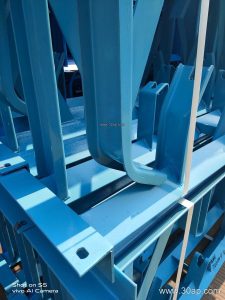
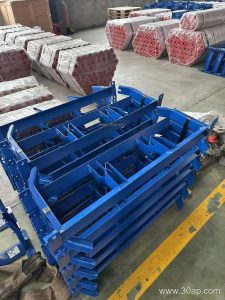
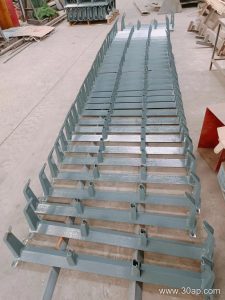
Most guide idler brackets are fabricated from angle steel, channel steel, or folded steel plate. The design usually includes slotted holes or adjustable arms so the idler can be set at the correct angle relative to the belt. Fixed versions are simpler and rely on precise frame alignment during installation. Adjustable versions allow maintenance crews to fine-tune tracking without cutting or welding.
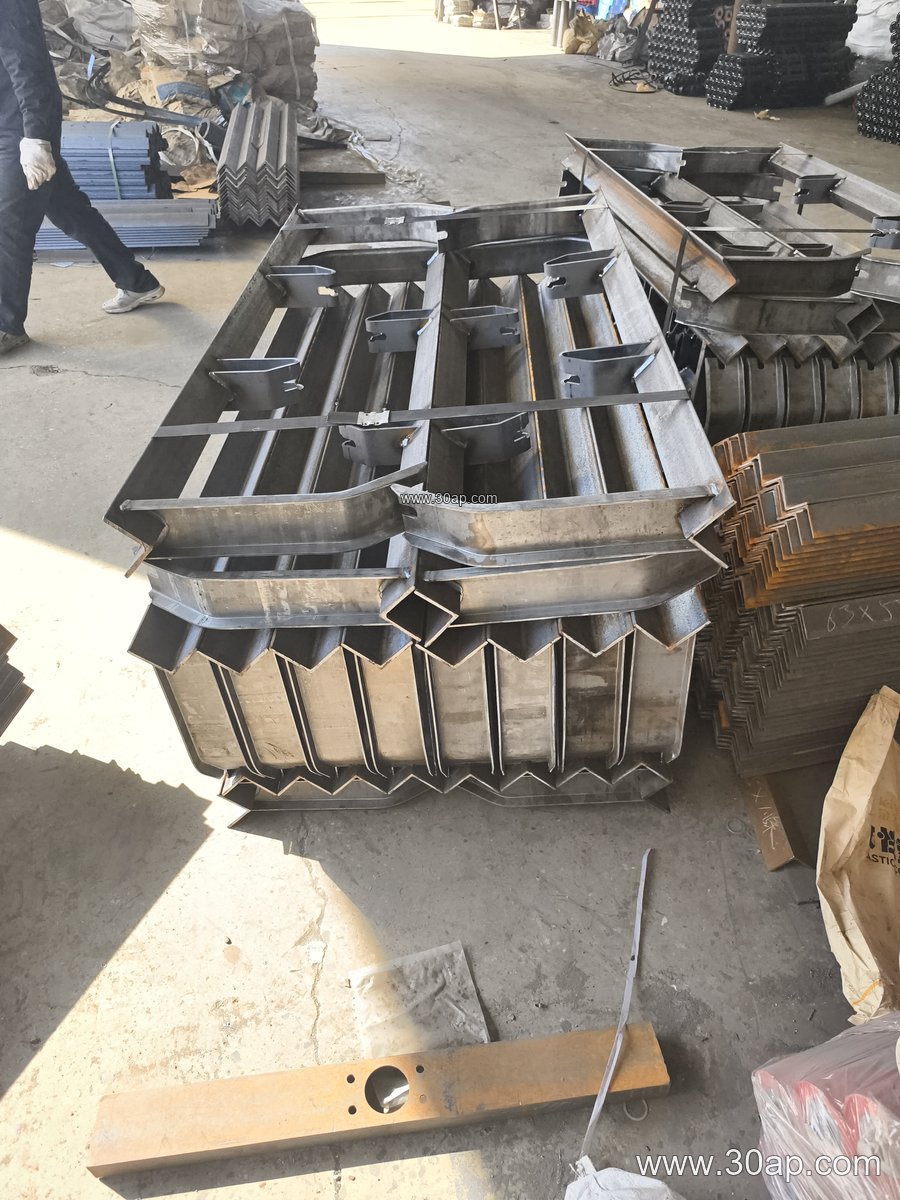
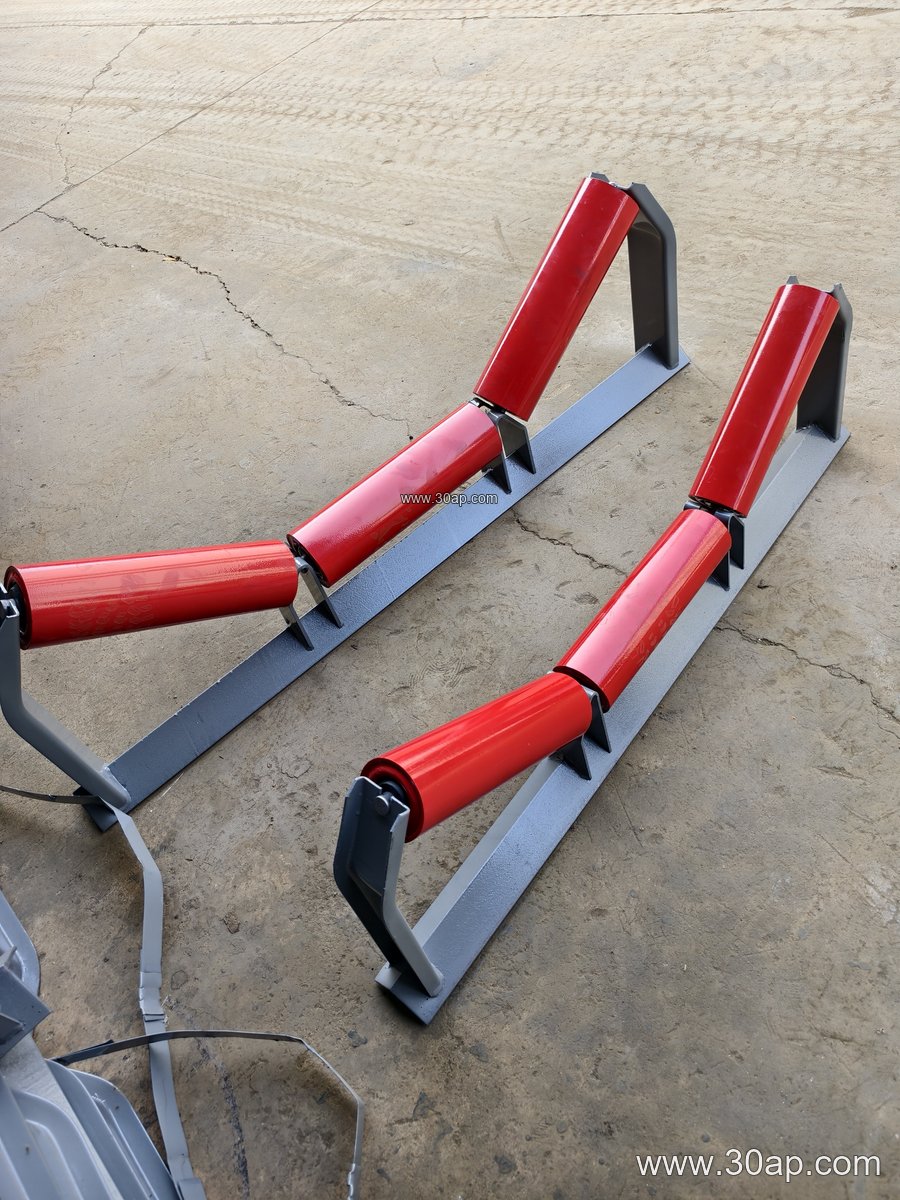
These brackets are commonly installed on the carrying side near the tail pulley, ahead of the head pulley, or at intervals along long conveyors. On the return side, a guide idler bracket may be paired with a V-return arrangement to correct belt wander before it reaches the tail. The bracket must be rigid enough to resist vibration from heavy loads, yet allow the idler to rotate freely.
Common Configurations and Size References
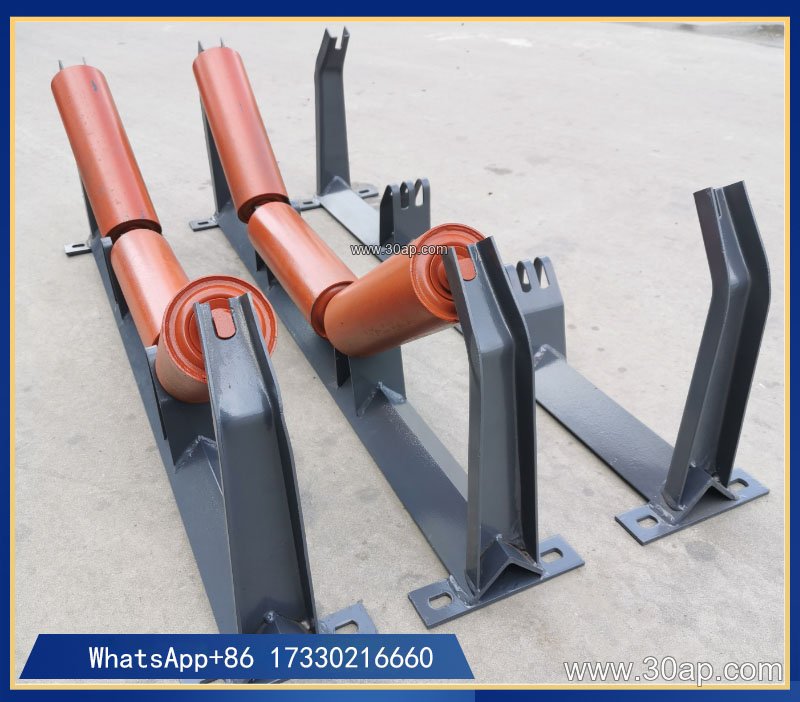
Guide idler brackets are often matched to belt width, trough angle, and idler diameter. The table below shows typical reference combinations, not fixed rules. Actual mounting hole spacing and crossbeam length are determined by the conveyor design.
| Belt Width | Trough Angle | Idler Diameter | Typical Bracket Type |
|---|---|---|---|
| B650 | 30° | Ø89 | Adjustable guide bracket |
| B800 | 35° | Ø108 | Fixed guide bracket |
| B1000 | 35° | Ø133 | Adjustable guide bracket |
| B1200 | 45° | Ø133 | Fixed or adjustable |
| B1400 | 35° | Ø159 | Heavy-duty guide bracket |
| B1600 | 45° | Ø159 | Heavy-duty guide bracket |
For wider belts such as B1800 or B2000, brackets are usually custom-fabricated to suit the frame. The trough angle may be 20°, 30°, 35°, or 45°, and adjustable brackets can be set within that range. A slight forward tilt of about 1.5° to 2° is sometimes used on training idlers to encourage self-centering, but this depends on the idler design and belt tension.
Where Guide Idler Brackets Matter Most
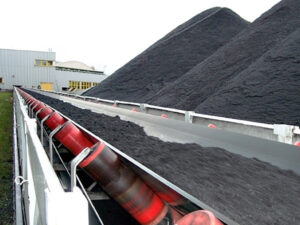
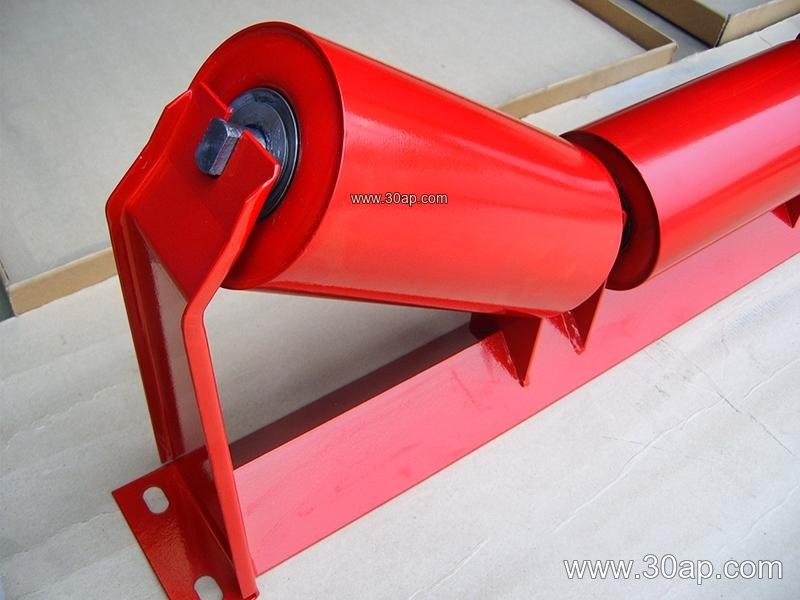
In a limestone quarry, a misaligned belt on a primary crusher discharge can throw rock onto the walkway. A properly set guide idler bracket keeps the belt on the pulleys and reduces spillage. At a coal-fired power plant, belt wander on the coal feeding line can cause edge wear and dust emissions; adjustable guide brackets allow quick correction during scheduled maintenance. Cement plants often use guide idler brackets on clinker conveyors where heat and abrasion are present, so the bracket must be sturdy and the idler must be free-turning.
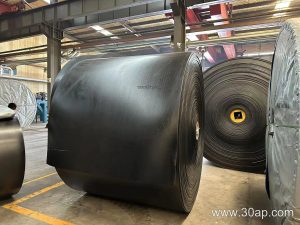
Other industries that rely on these brackets include iron ore handling, sand and gravel plants, and port ship-loading systems. In each case, the bracket works together with the conveyor belt, idler roller, and conveyor pulley to maintain a stable belt path. A worn or bent bracket can cause the guide idler to sit at the wrong angle, leading to belt edge damage and premature idler failure.
Buyer Checklist for Guide Idler Brackets
- Confirm the belt width and frame dimensions so the bracket crossbeam and mounting holes match.
- Decide between fixed and adjustable brackets based on how often tracking corrections are expected.
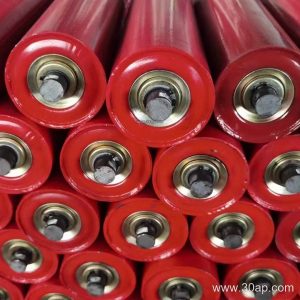
- Check the idler diameter and trough angle to ensure compatibility with existing idler rollers.
- Ask about material thickness and finish, especially for corrosive or high-abrasion environments.
- Review the installation position: carry side, return side, or both, and whether a V-return bracket is needed nearby.
- Verify that the bracket allows the guide idler to rotate freely and can be locked after adjustment.
A guide idler bracket is a small but critical part of conveyor tracking. Selecting the right configuration for the belt width, trough angle, and idler size helps prevent belt misalignment and extends the service life of the conveyor belt and idler roller. For heavy-duty mining conveyor belt systems or long overland runs, adjustable brackets are often preferred because they simplify maintenance and reduce downtime.